Following on from the debacle of last month – yes the photos are lost and yes I did consider chucking it all in, we are back with a full month of gaming.
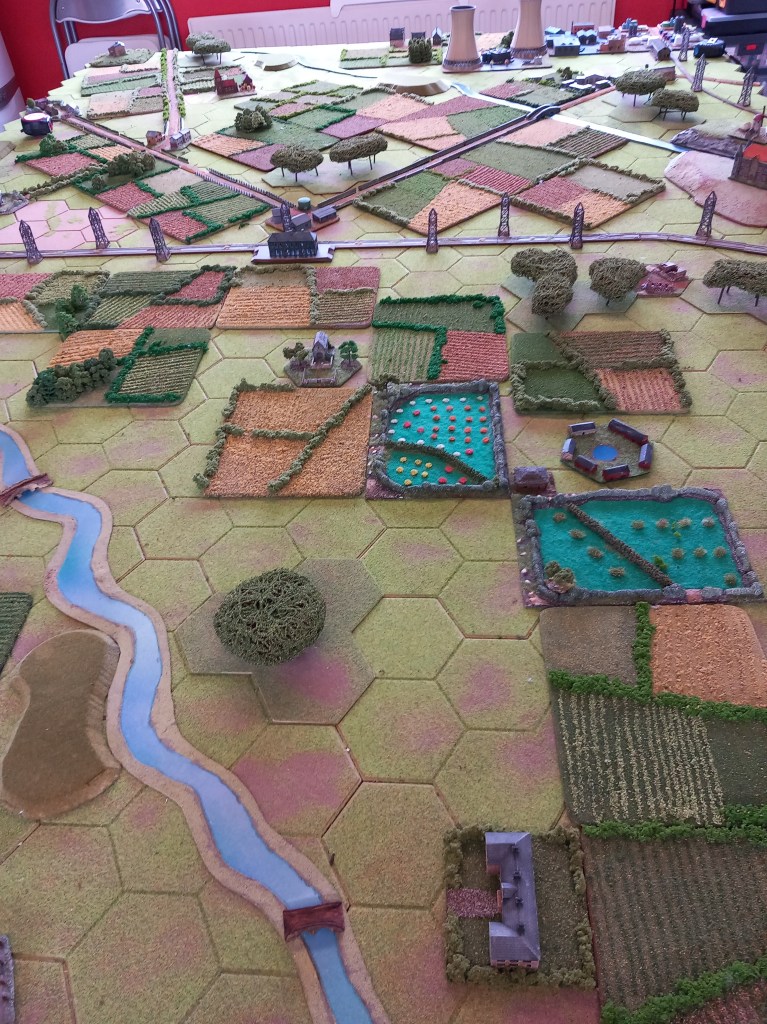
Our opening game was another from our 80s Cold War collection. Soviets v Bundeswehr. The rules were Modern Spearhead – I’m still trying to get hold of a copy so we aren’t reliant on one person looking stuff up.
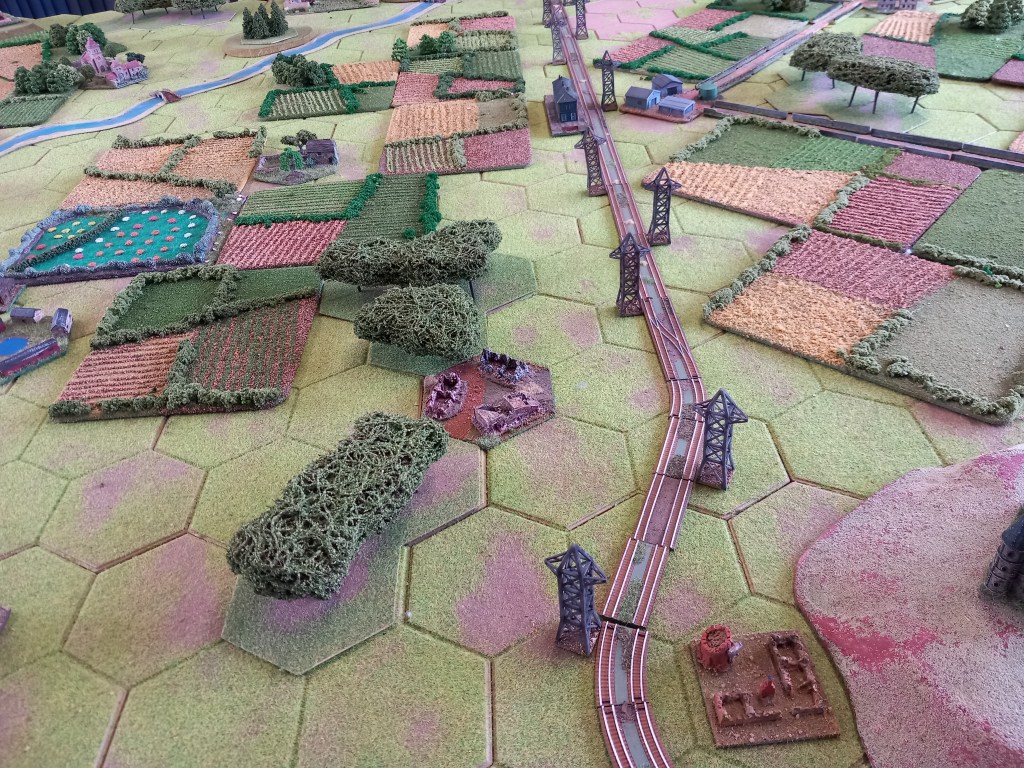
This was originally intended as a two day multi player event but that fell apart so the two of us left standing decided to play out the two days anyway but with a slightly different slant. We would play the attack by a Soviet Guards tank Regiment plus Divisional air & artillery assets against a Bundeswehr Armoured brigade with it’s own less plentiful Divisional assets spread out over a broad front not knowing exactly where the Soviet attack was coming from. Our plan then was to feed in reinforcements if one side (or maybe both) took significant losses – probably more doctrinairely accurate for the Warsaw Pact than NATO.
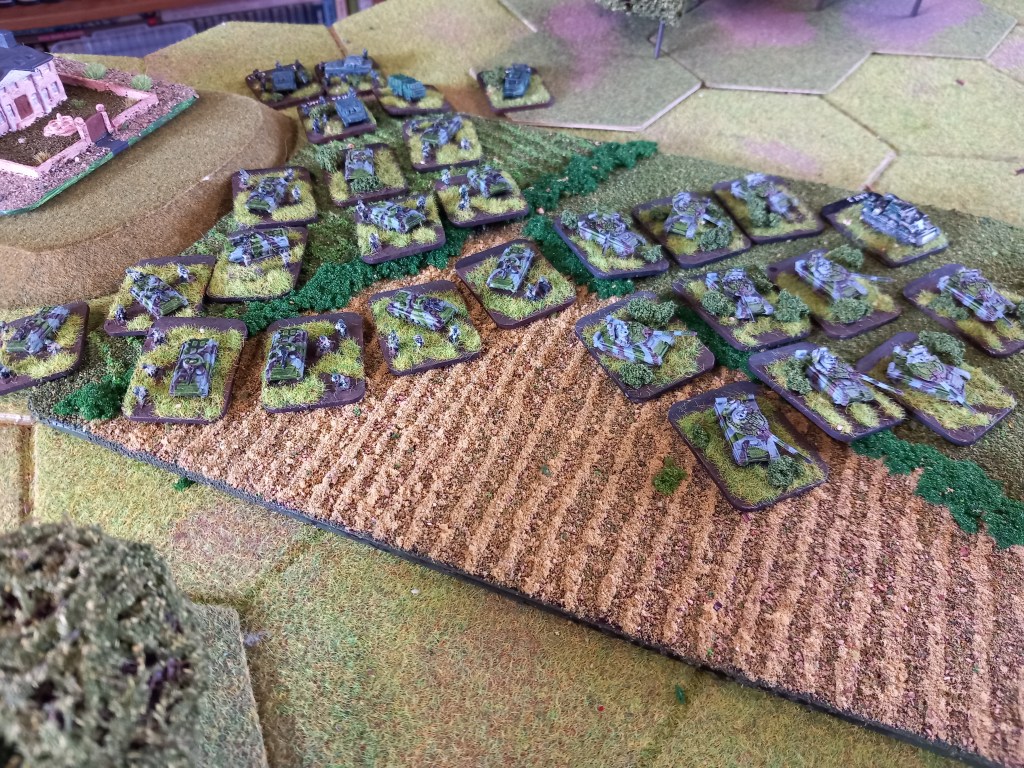
The Soviet thrust was restricted to one side of the table (their right). On the flank one T80 brigade led the way followed by the Motorised Infantry in BMPs making for the hill overlooking the river. The other two T80 brigades were deployed either side of the rail line, one designated to peel left and the other to peel right.
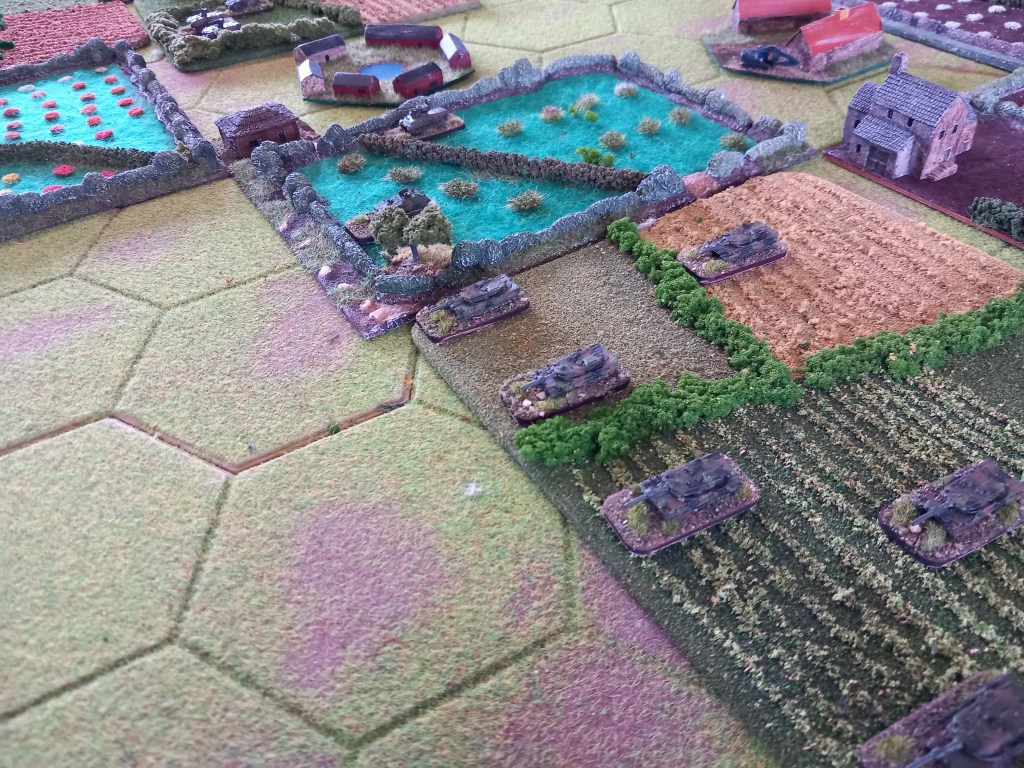
As the defender the Germans were already deployed; one Leopard 2 brigade was deployed opposite the hill the Soviets were headed for and had the same orders so a tank duel was inevitable here at some point, to the right of them was the Mechanised Infantry in Marders detailed with occupying the woods and fields in front of them, to their right was the other Leopard brigade and way out on the right flank was the mixed brigade protecting the chemical works.
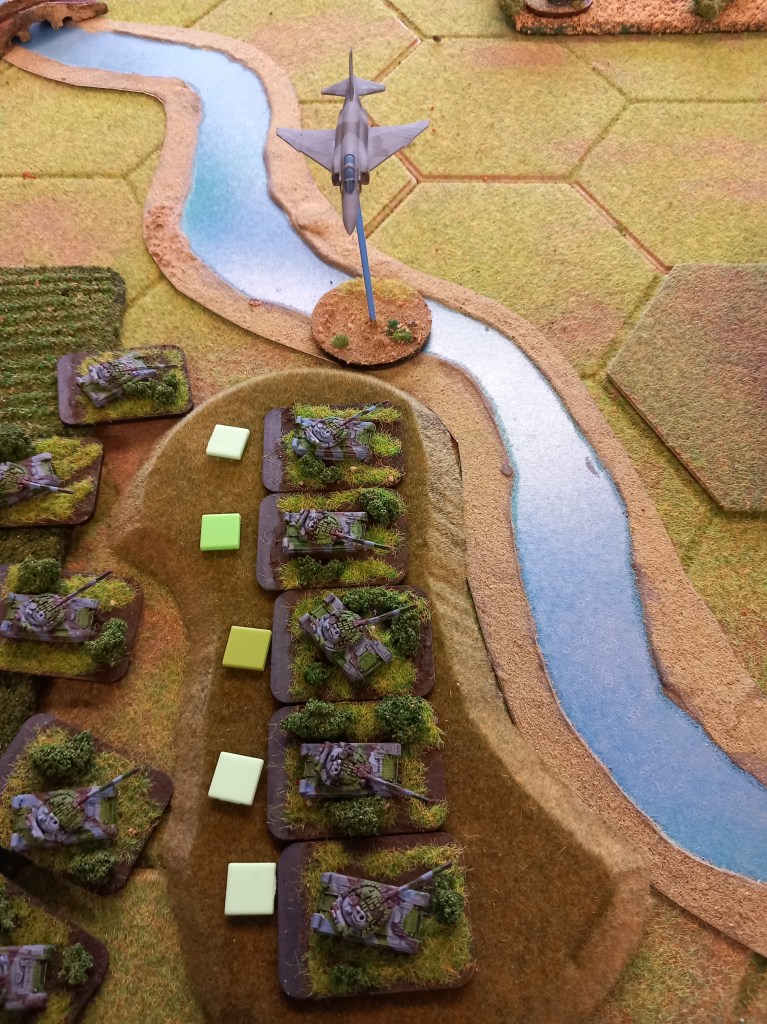
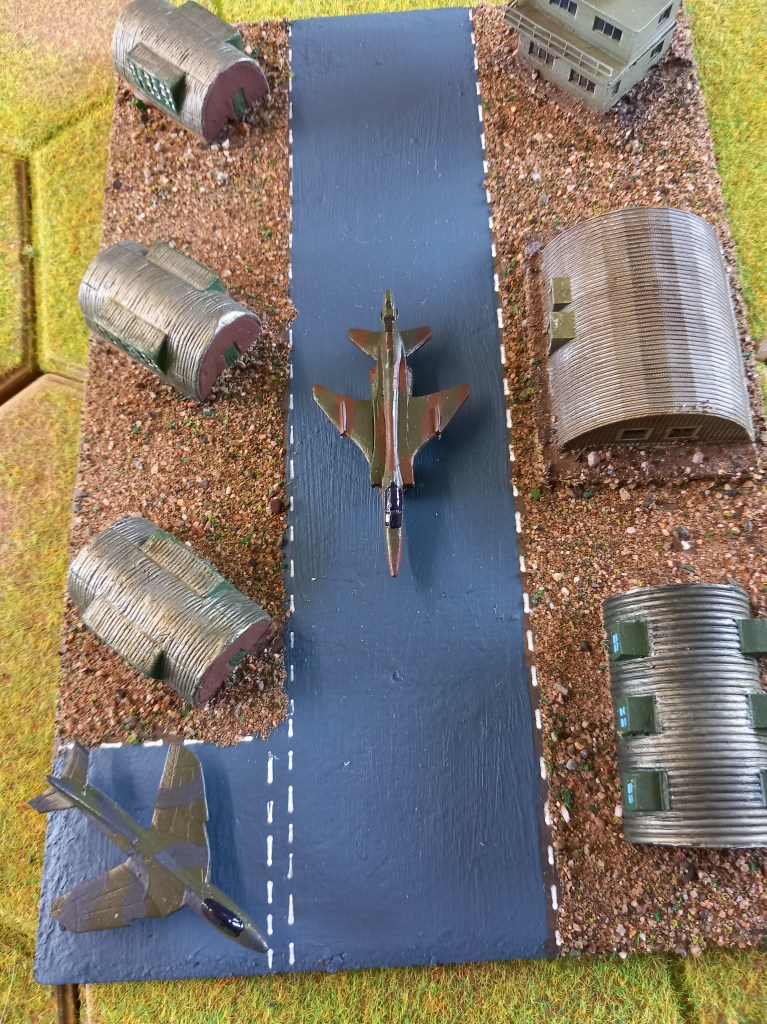
A blow by blow account would be a bit of a bore so we’ll stick to the salient points, the first of which was the high ground overlooking the river. here the T80s easily got to the high ground first where they drew the ineffective attention of several Phantom jet attacks but once the Leopards were up and in range the story changed and the Soviet tanks broke off their advance and withdrew.
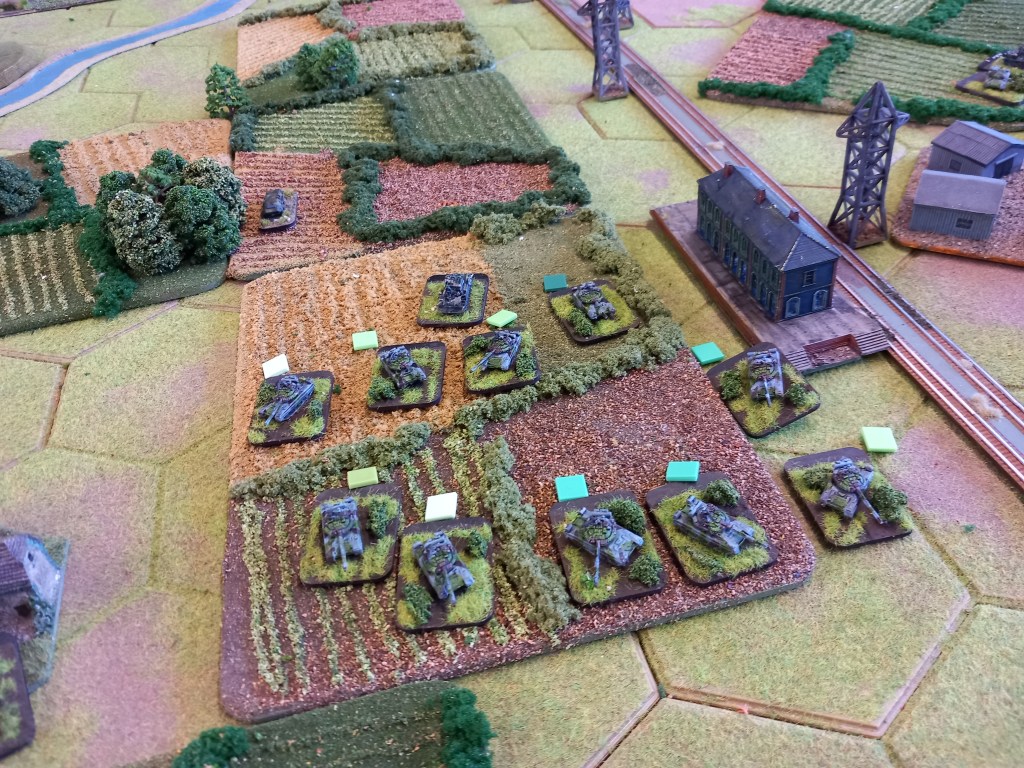
On the Soviet right centre the advancing tank battalion took damage from the Marders and supporting Leopards and so also broke off their attack. The left centre battalion made good use of the woodland and so avoided any losses. By mid afternoon (game time) the Soviet attack had faltered and it was time to send in the second echelon which was an NVA (East German) tank regiment.
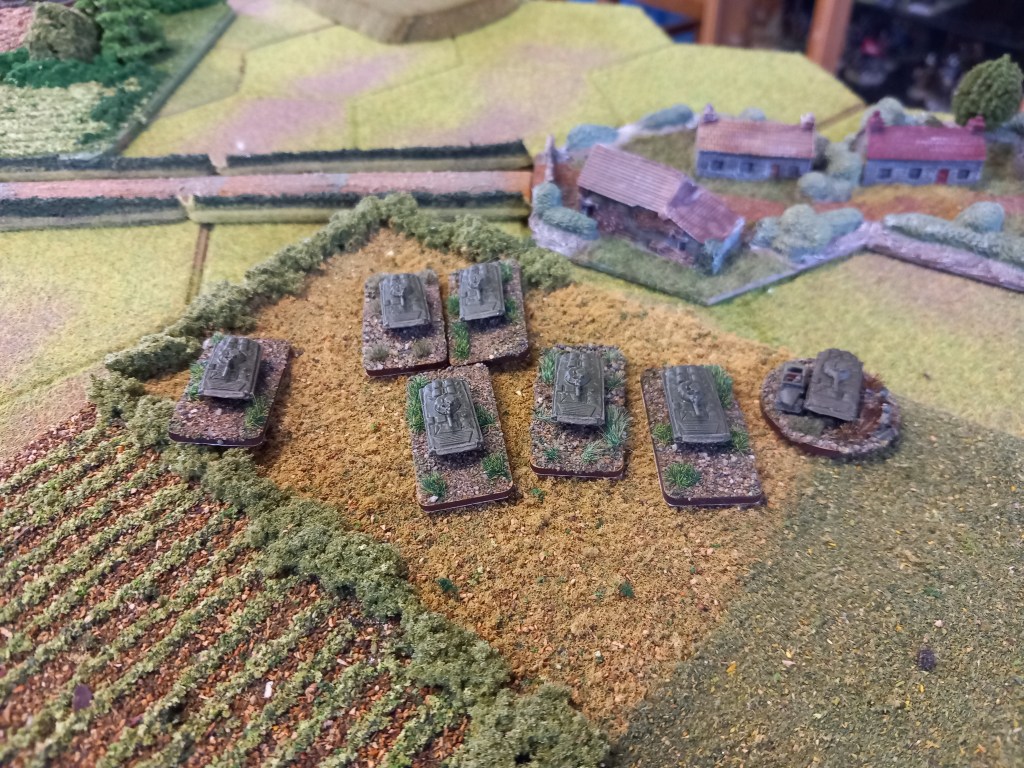
The entry point for the East Germans was randomly generated but as luck would have it the regiment arrived on the left side of the Warsaw Pact table edge and the spread of it’s battalions concentrated them more to the flank than the centre. In effect they were facing the West German mixed brigade defending the chemical works.
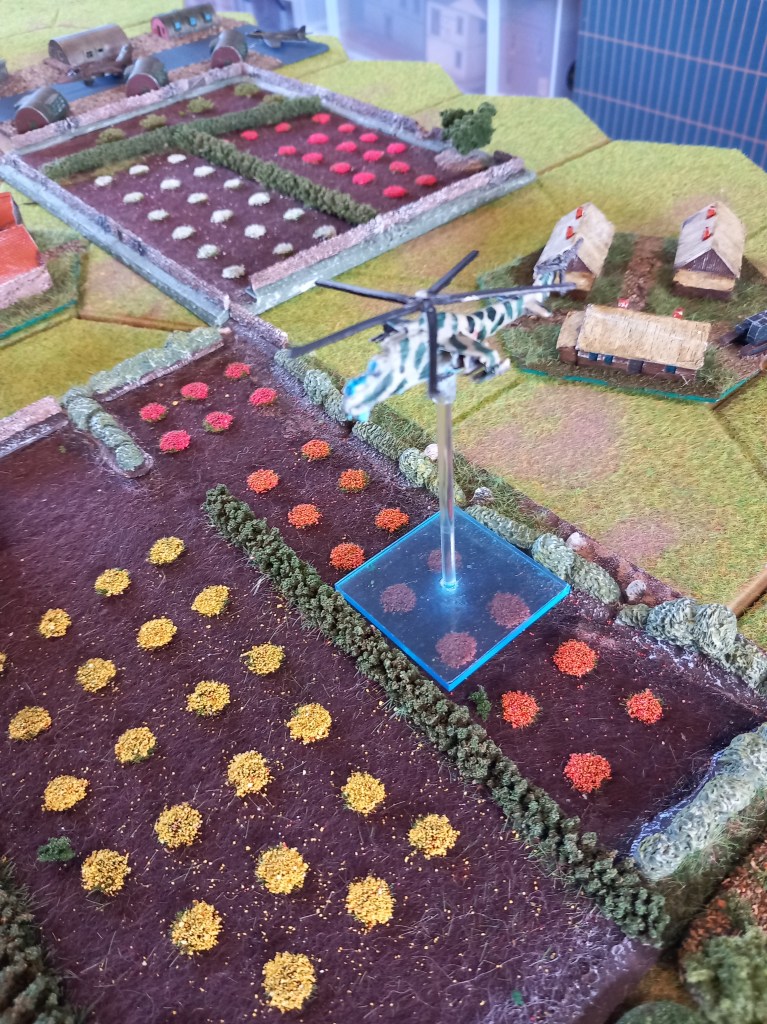
The afternoon saw the previously fallen back Soviet brigades renew their attacks supported by Hinds and SU-25s whilst the fresh East Germans found out that T72s were even worse at facing Leopards than T80s but they had enough to take the losses and the opposing Marders soon brewed up and the mixed battalion broke off ceding the ground.
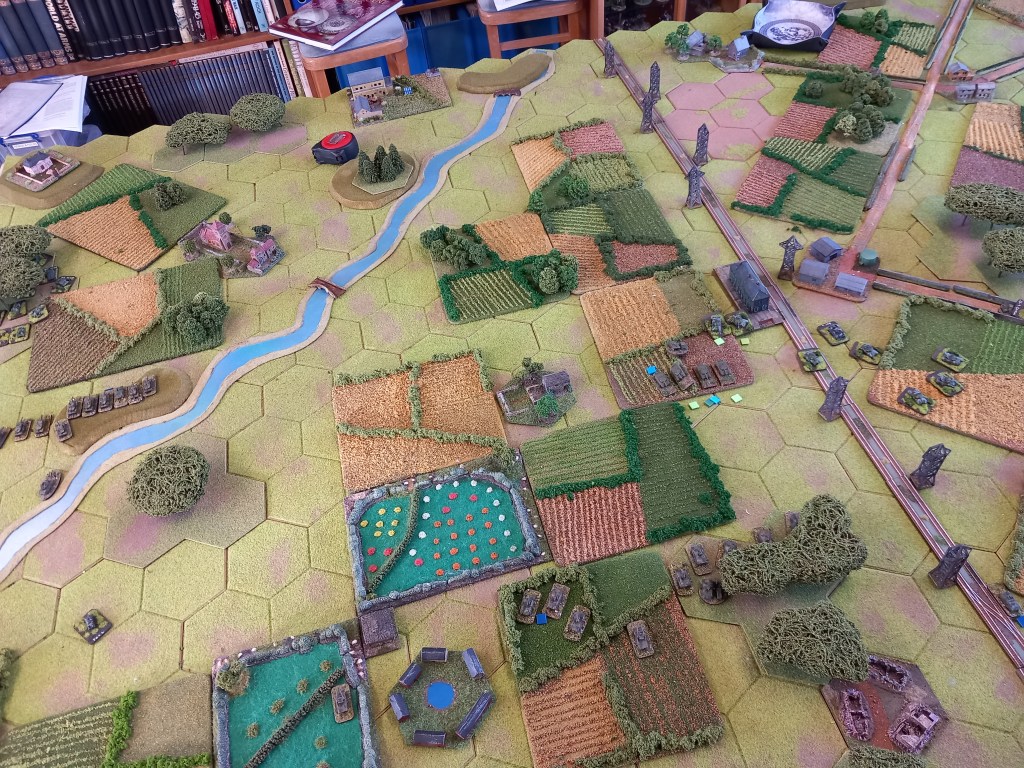
On the Bundeswehr left the tank brigade received new orders to take the hill vacated by the Soviets and repelled the Soviet counter attack which effectively finished off the opposing tanks and made the BMPs reluctant to exit the cover of the woods to the rear. In the centre the Marders held their ground and the renewed Soviet attack petered out.
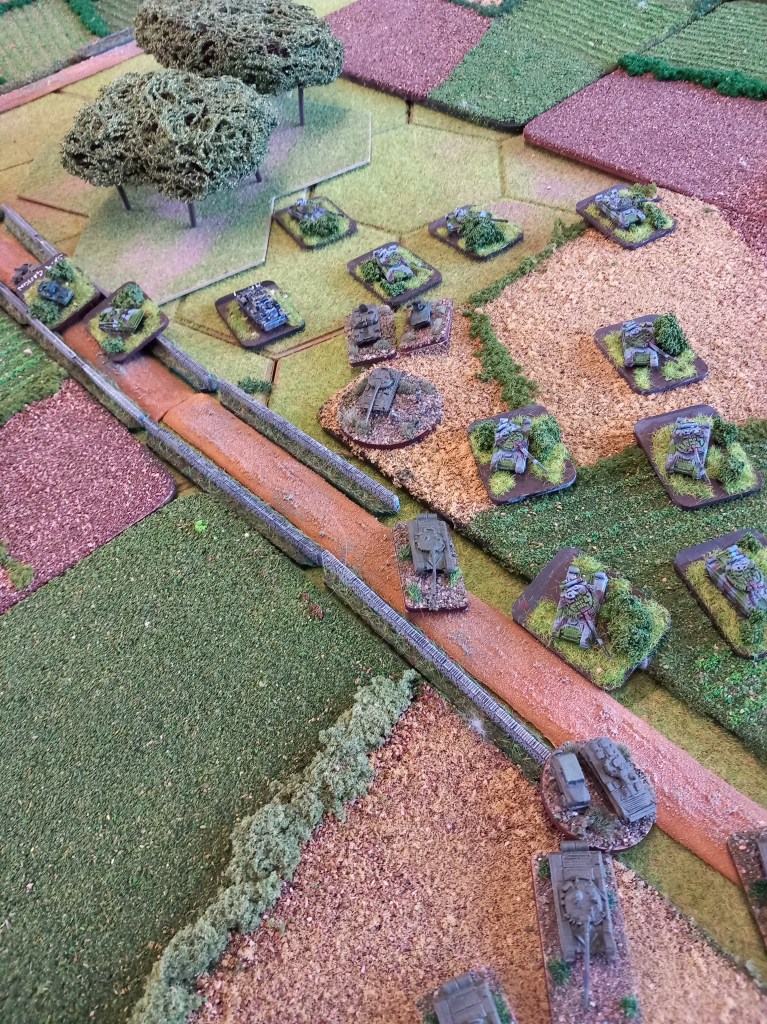
On the Warsaw Pact centre left however it was a different story as the intact T80 battalion that had lurked in the woodland joined with one of the T72 battalions and supported by SU-25 attacks drove off the opposing Leopards.
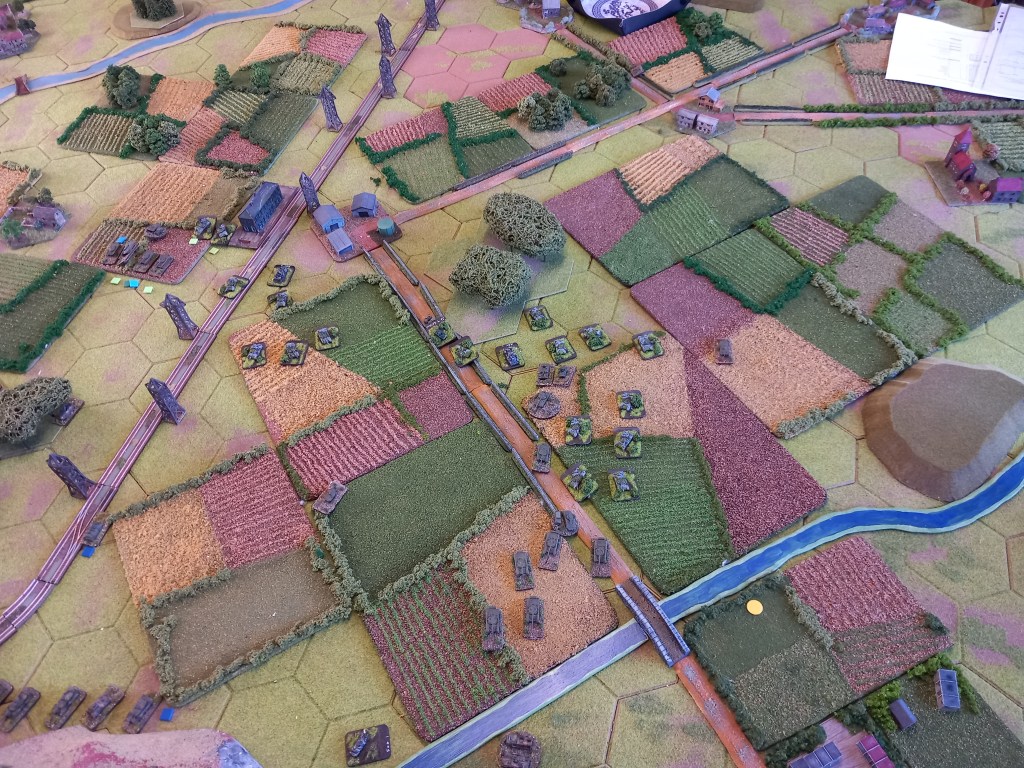
As the game time ran into dusk we fought a couple of turns with reduced visibility which was fun 🙄 and the hole which was appearing on the West German right got bigger as two of the battalions broke off. The West German left was perfectly secure but on the right the East Germans were pouring through and our assessment was that from a strategic perspective the West Germans would have to withdraw to protect the hinterland.
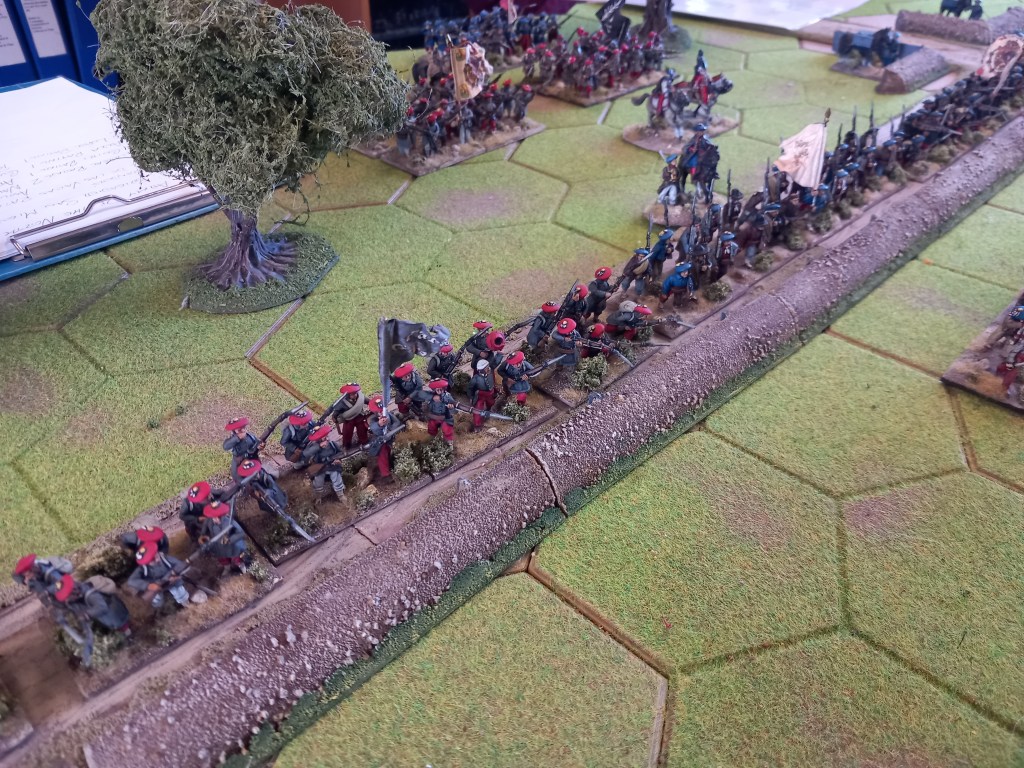
Our next effort was a fictional action from the Carlist Wars. In this one we had a Carlist force occupying a strategic crossroads with entrenched infantry supported by a mountain gun battery. The less numerous but better quality Christino’s could deploy anywhere along their baseline and had ‘proper’ artillery making it’s way forward.
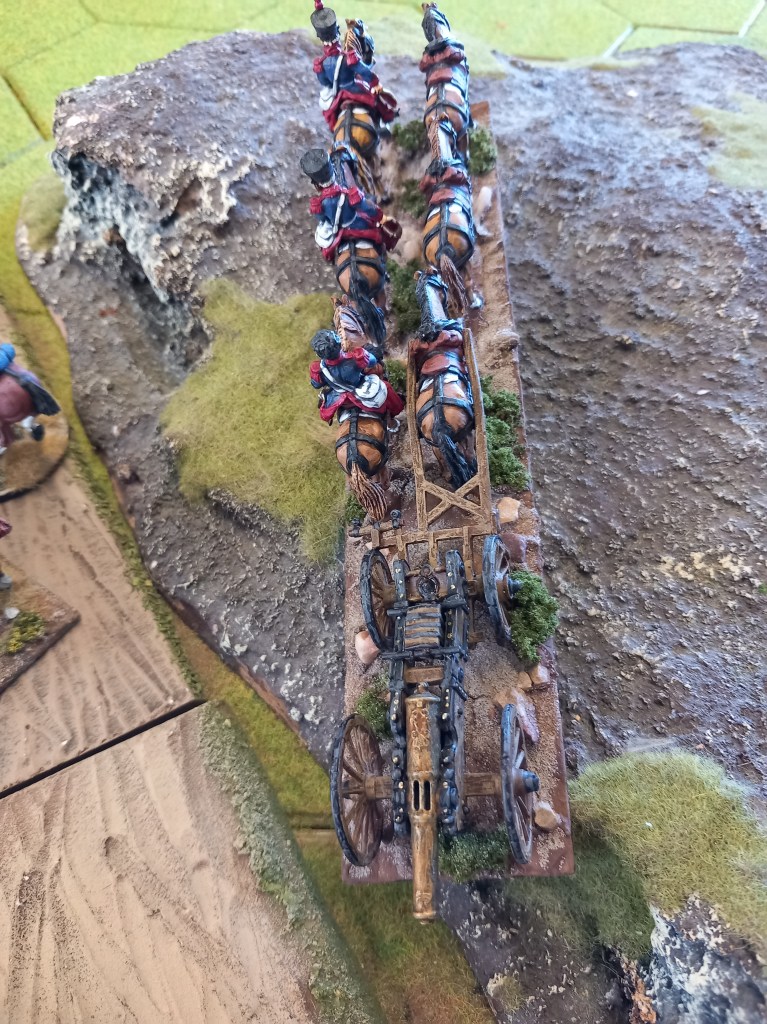
For reasons best known to themselves the Christinos deployed their large Guards brigade and the Volunteers brigade (Veteran and 1st class troops) out on the far right where they had a road cut hill and a wet wood to cross before they got to the section of the Carlist line that didn’t have entrenchments. This left the French Foreign Legion & Portuguese brigade (veteran troops) and the Line brigade (2nd class troops 😒) to assault the entrenchments.
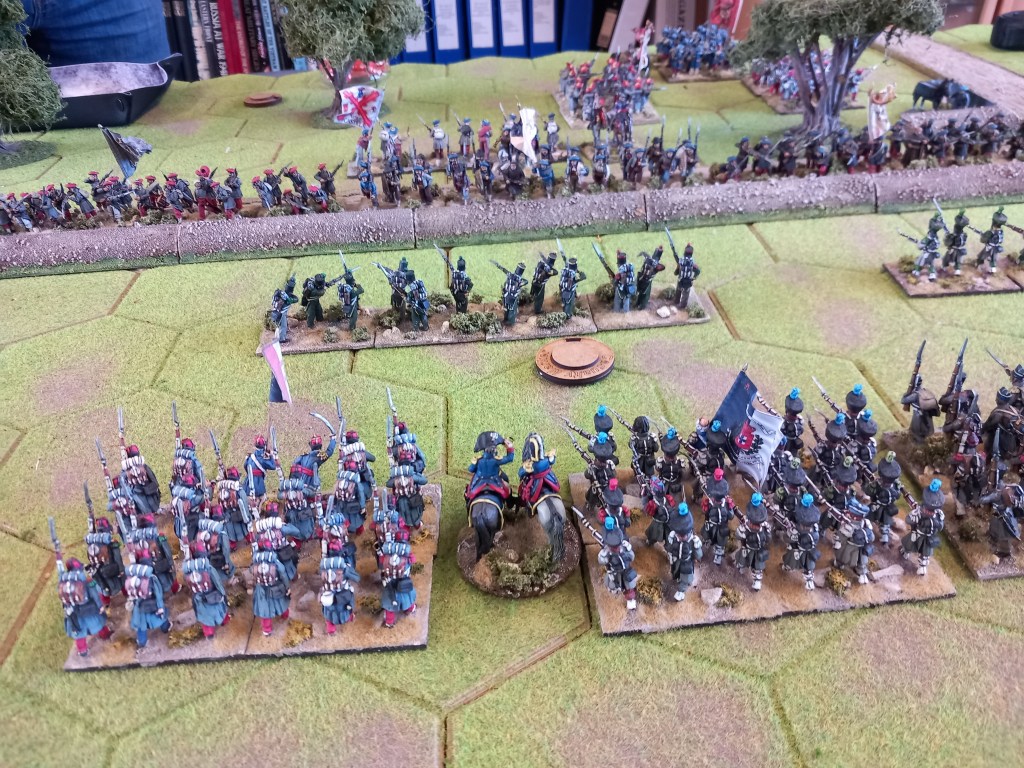
The initial turns went well for the Christinos. The centre endured shot and shell and their own artillery began to inflict some steady losses while out on the right no losses were recorded as they were either in woods or hidden by the hill. The slow going of the right did however mean that the centre was going to be up and in action before the flank attack. The Carlists of course just stood there although a flurry of messengers to the Reserve and the far right brigade meant that plans were about to change.
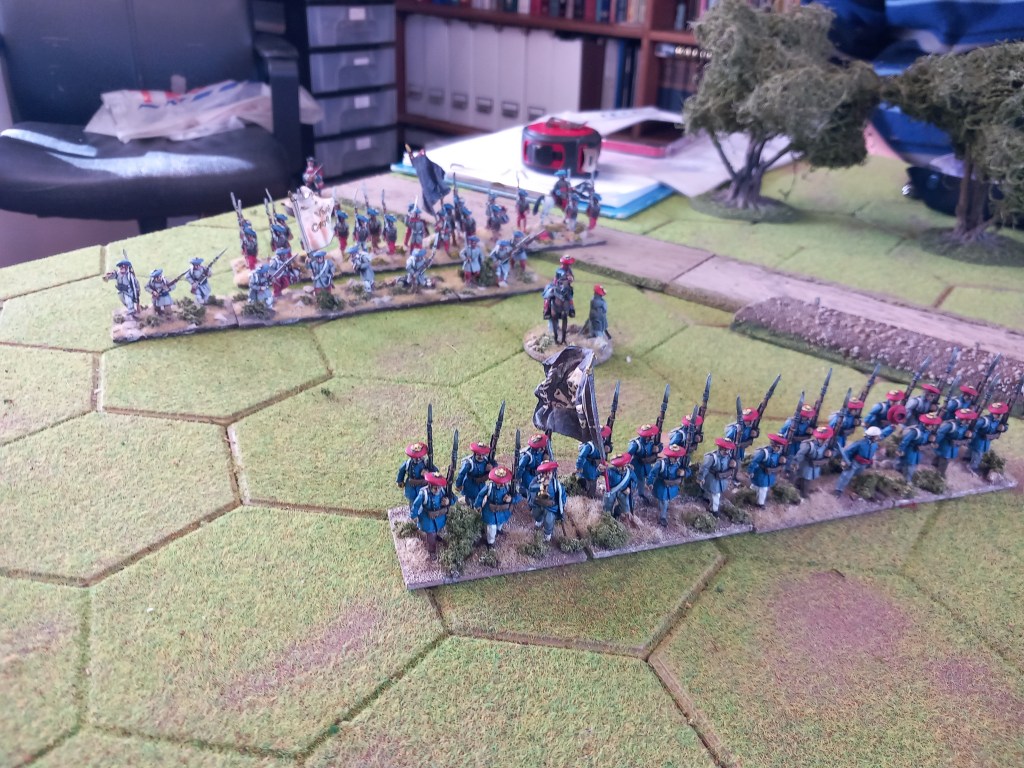
The phrase ‘cunning plan’ came to mind when the nature of the order changes on the Carlist side were revealed. The unengaged right flank brigade left it’s positions and swung round onto the flank of the Foreign Legion as it prepared to assault the breastworks and the Reserve moved off to reinforce the left. I think we can see where this is going 😃
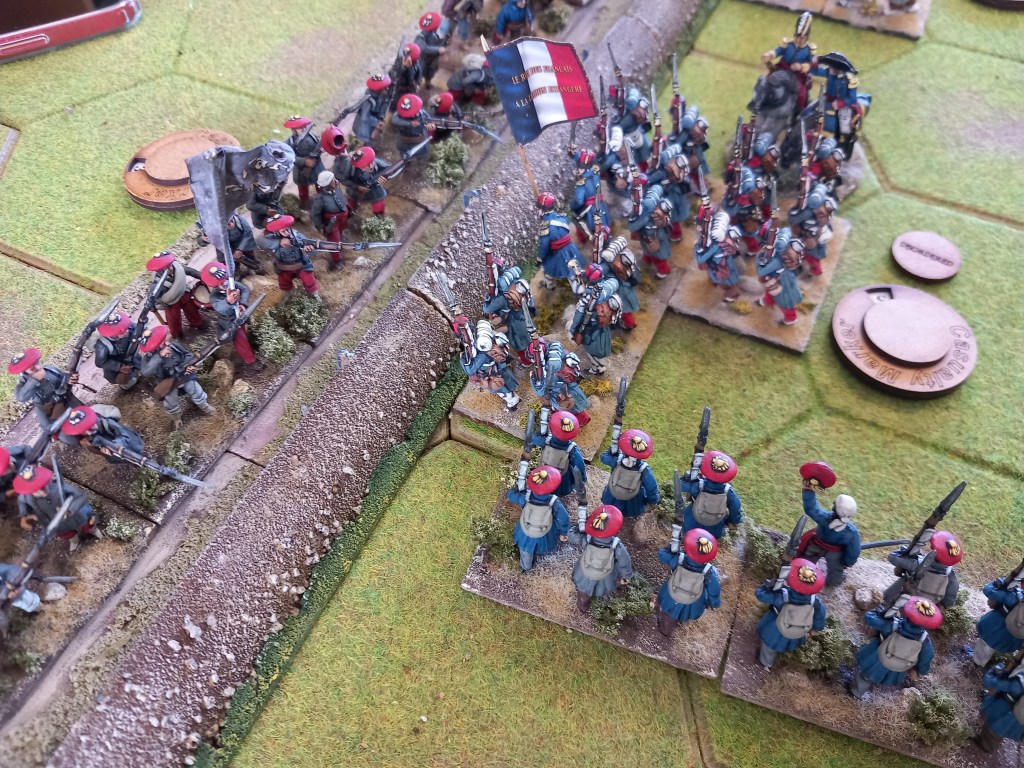
Predictably the Legion were caught as they stormed the entrenchments.
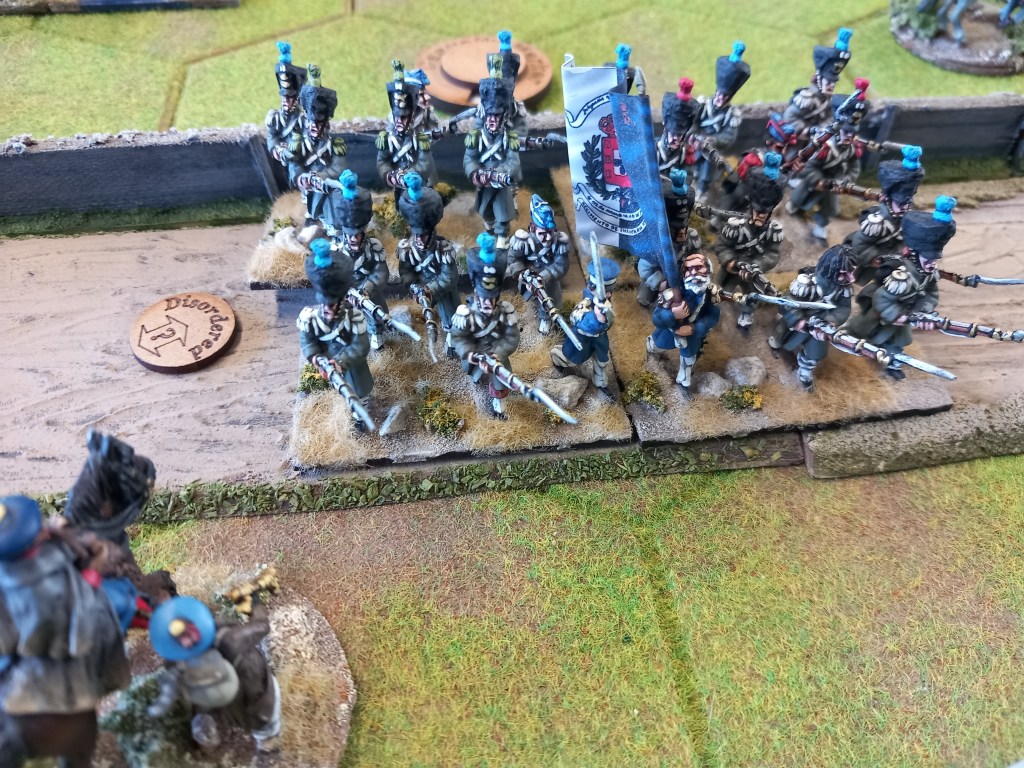
The Portuguese however stormed across successfully.
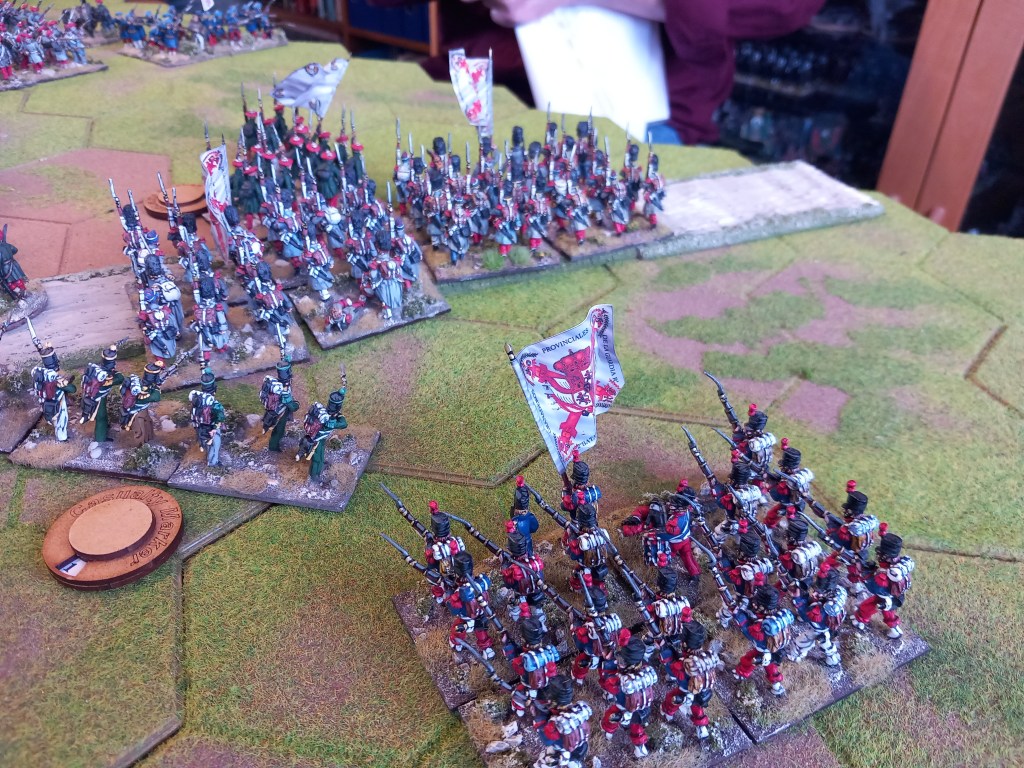
Out on the right the Guards were starting to make an impression but it had been hard work.
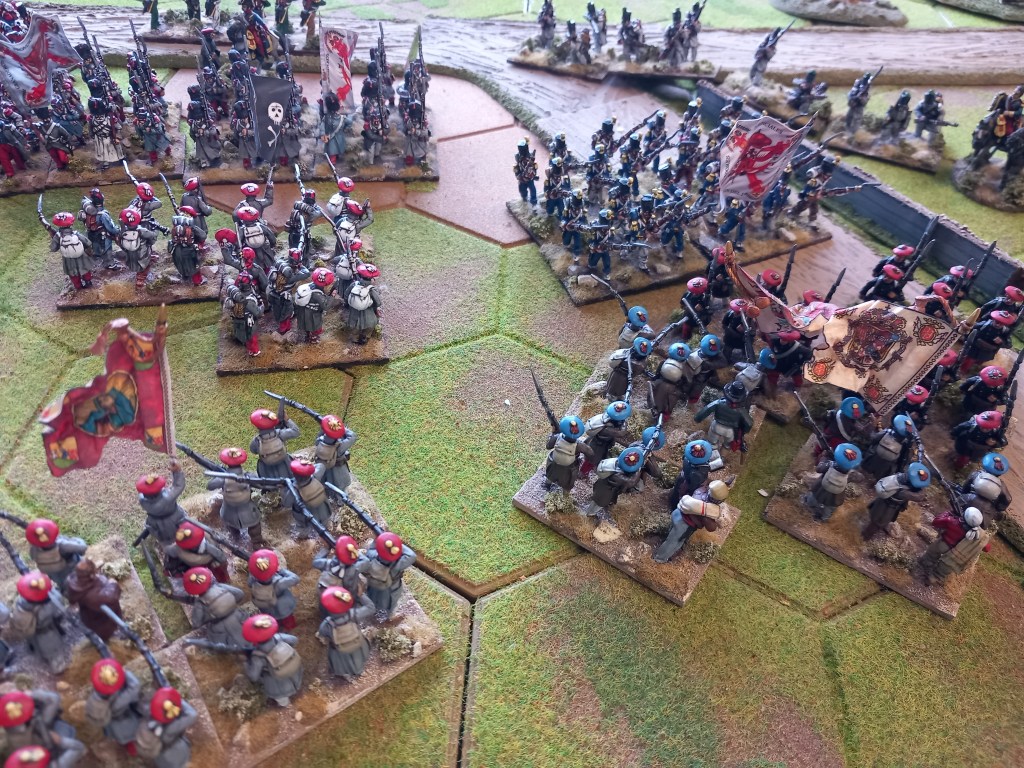
The Carlist reserves stabilised the left and time was called. The crossroads were still very much in the hands of the Carlists so victory to them.
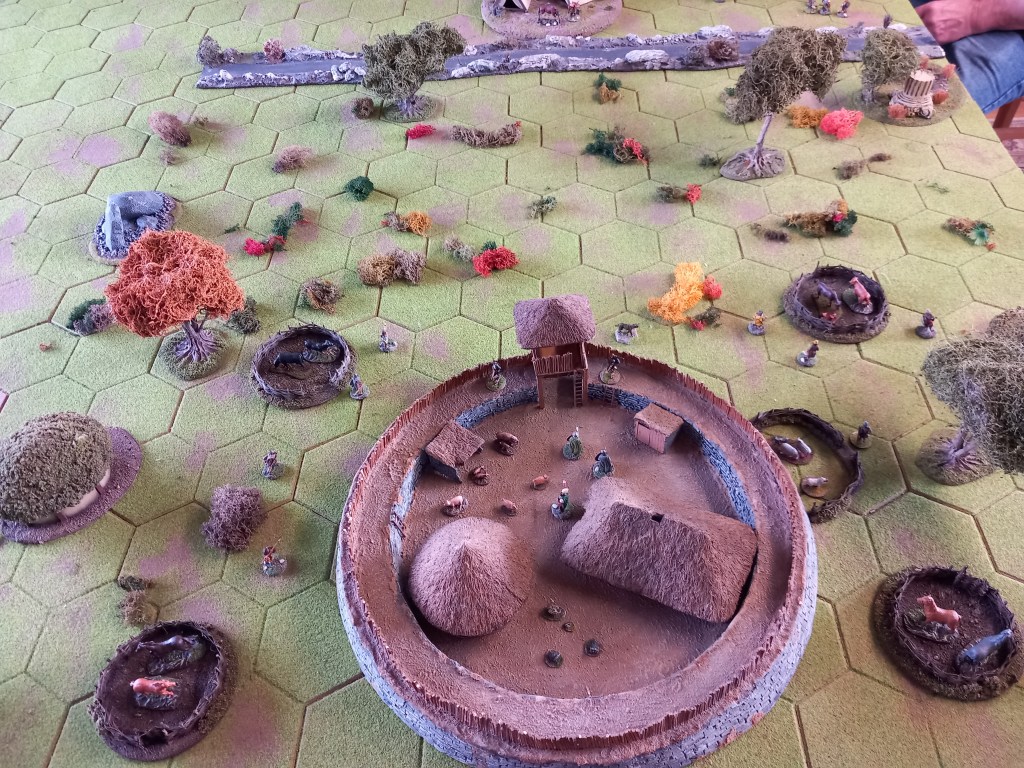
Next up was a couple of dark age skirmish games. A notionally Swedish raiding force attacks a Slav settlement in northern Russia – Vikings v Rus if you want to keep it simple.
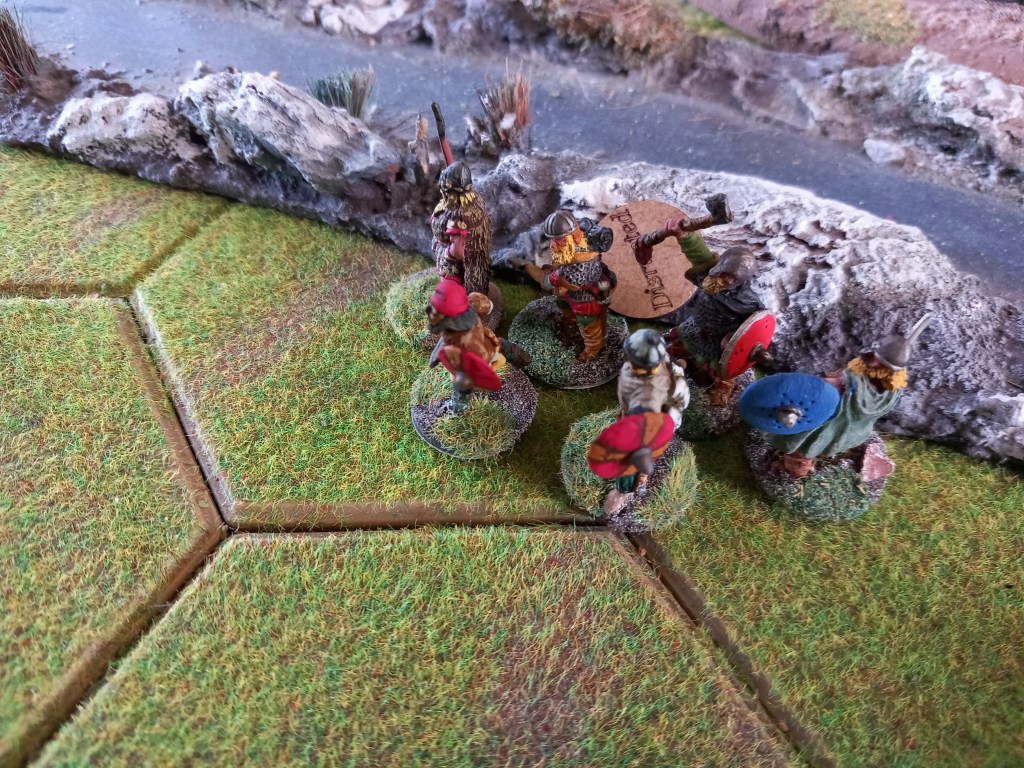
The first game saw the Vikings cross the stream separating their camp from the Rus settlement in two groups.
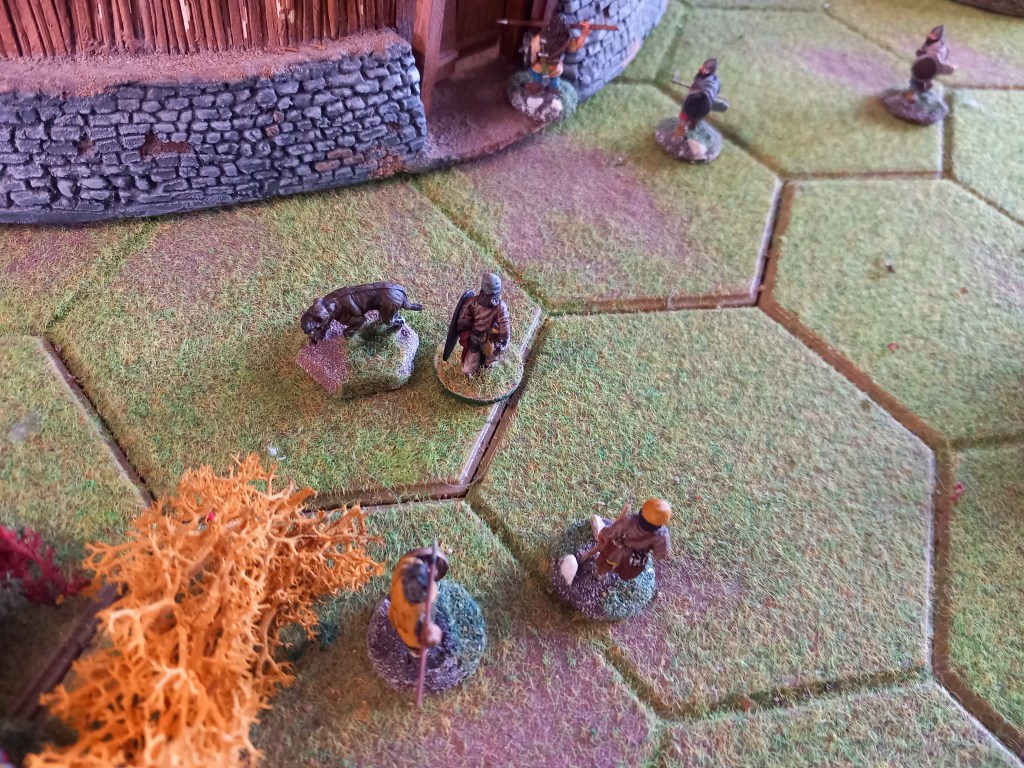
The hounds barked and the horns sounded: some of the Rus headed for the stockade, some stood and fought.
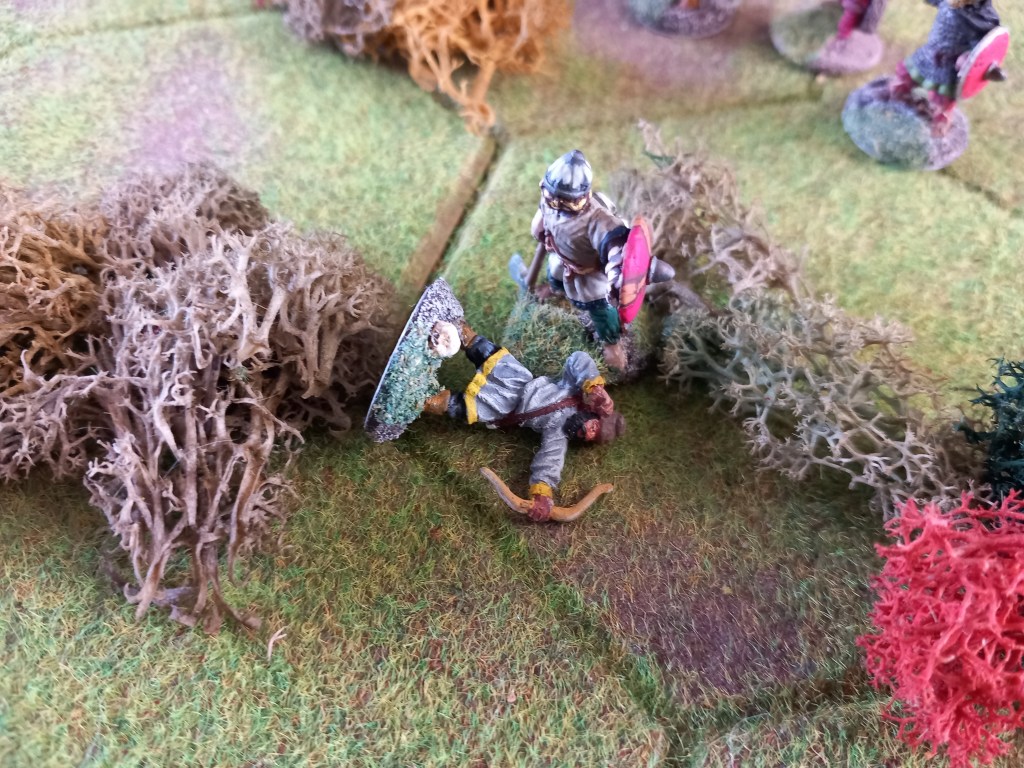
The price for resistance was high.
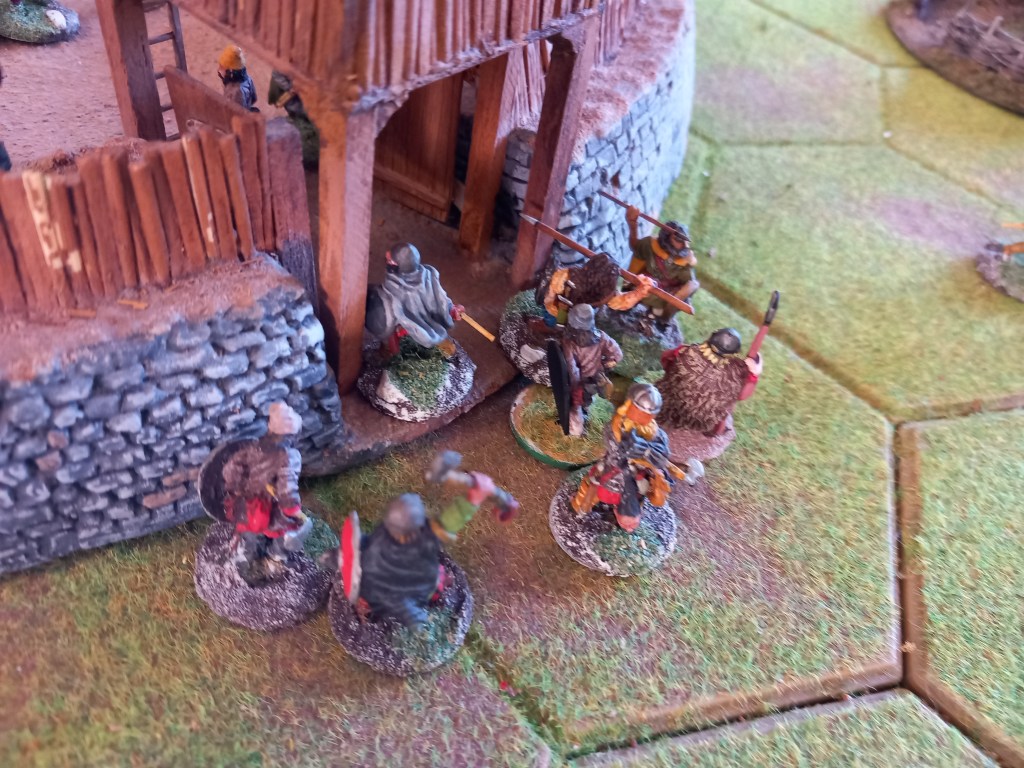
Retreating troops caught at the gate and slaughtered, the gate is open!
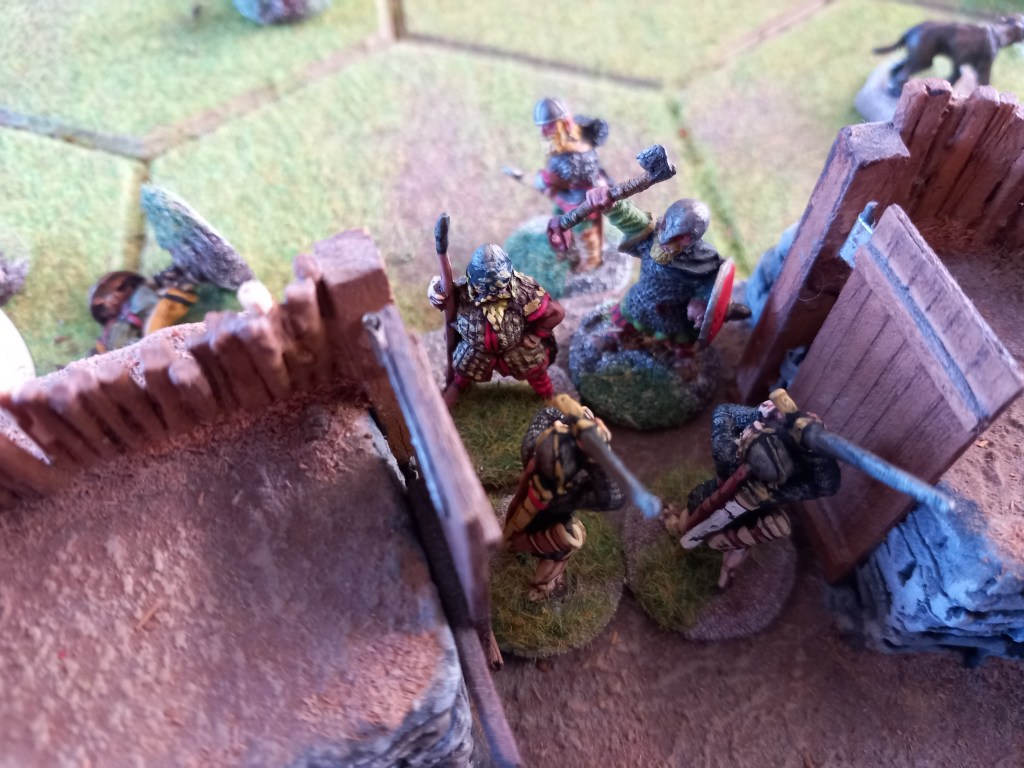
The fighting at the gate was pretty desperate, men fell on both sides but eventually the Vikings drew off taking captured livestock with them but no treasure (rumoured to have been in the stockade).
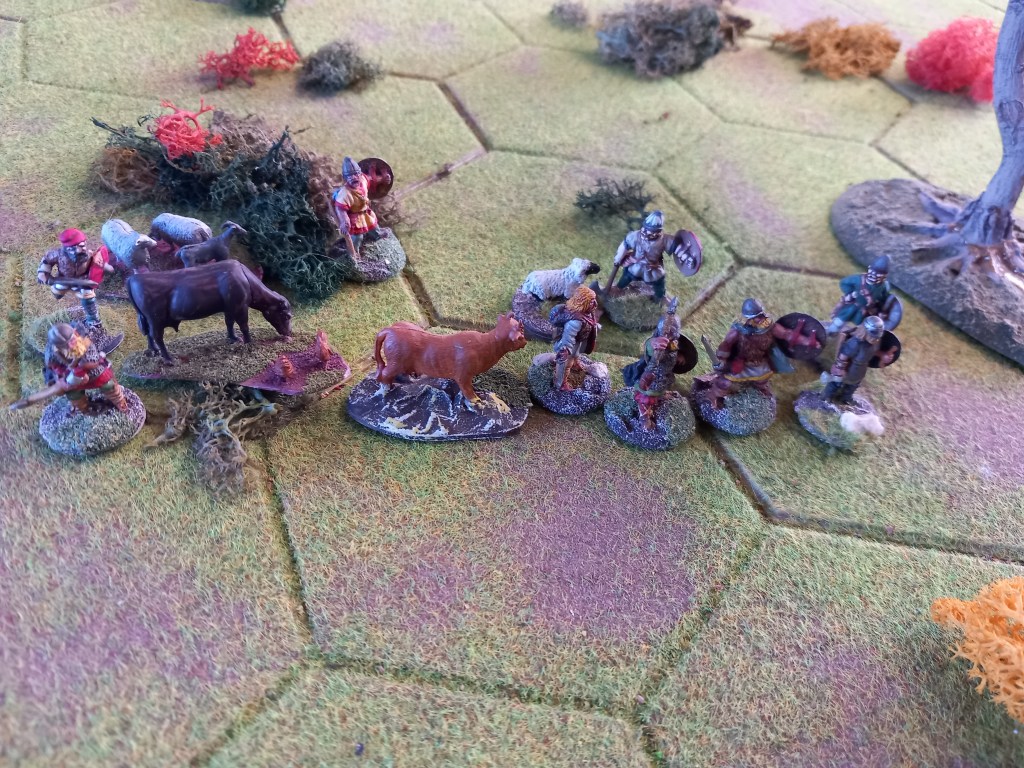
We had a couple of follow on scenarios up our sleeve dependent on the outcome of the first and whether we had the time. We did have the time so we ran the lazy Viking tries to steal the loot of the hardworking Viking 😁
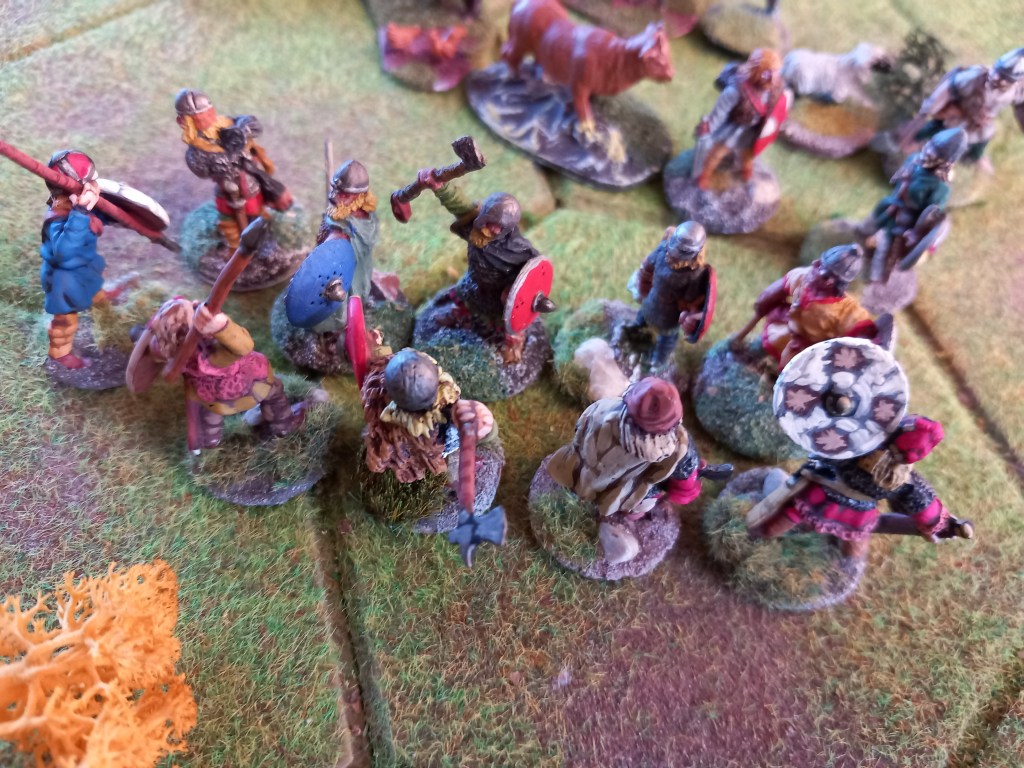
This very quickly became a trial of arms with meat being back on the menu at stake 😀
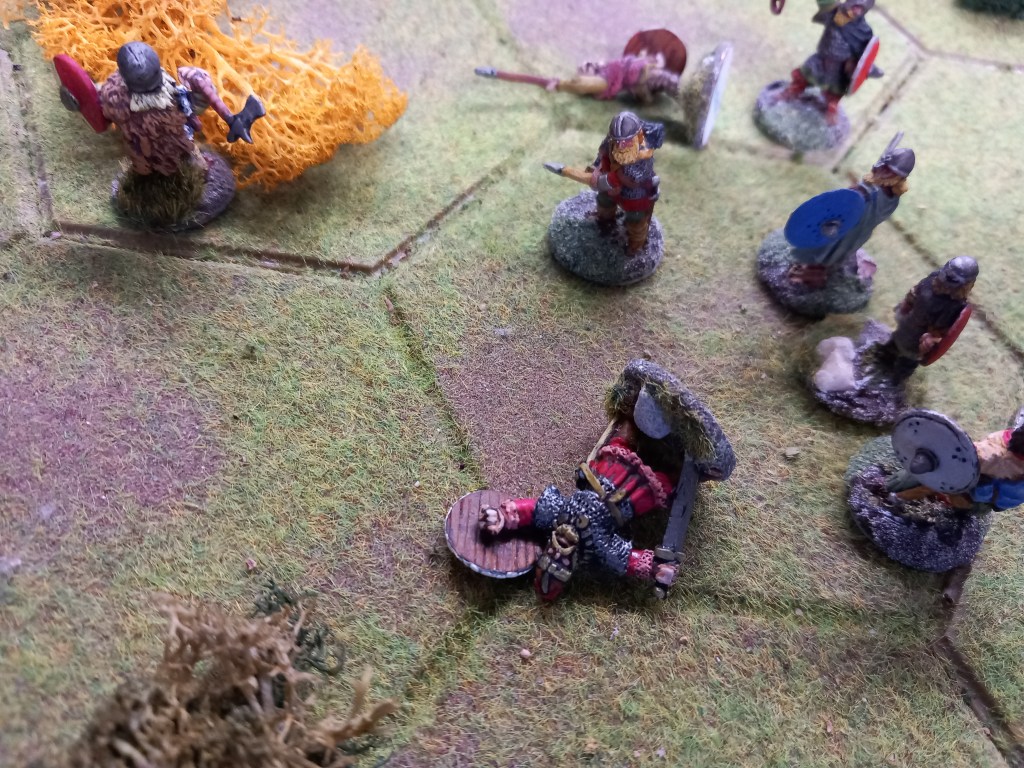
After a proper stand up fight the would be thieves lost their leader and retreated, the raiders carried on to their ship gathering up the wandering livestock and nursing their wounds. A good couple of games which reminded us you can have a good afternoon’s gaming with just a dozen figures or so.
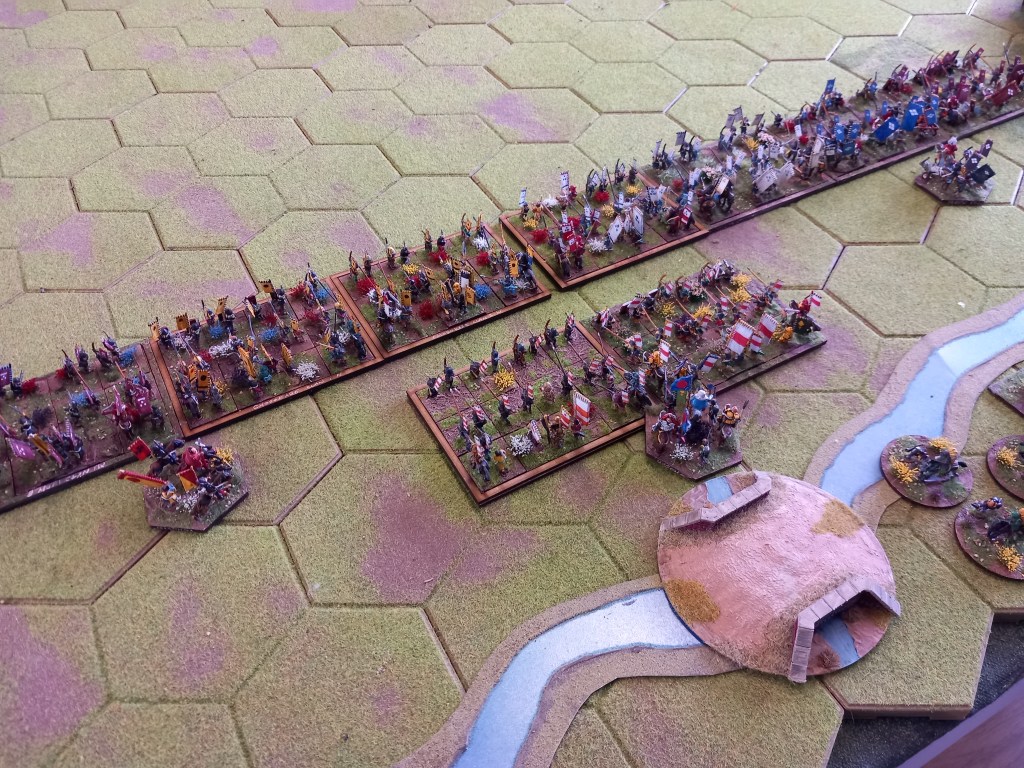
Back to serious battle gaming for our next meet up with the C16th Samurai collection on the table. Ieyasu Tokugawa v Ishida Mitsunari. Before anybody asks, no I don’t know why the bridge is the wrong way on 🤣
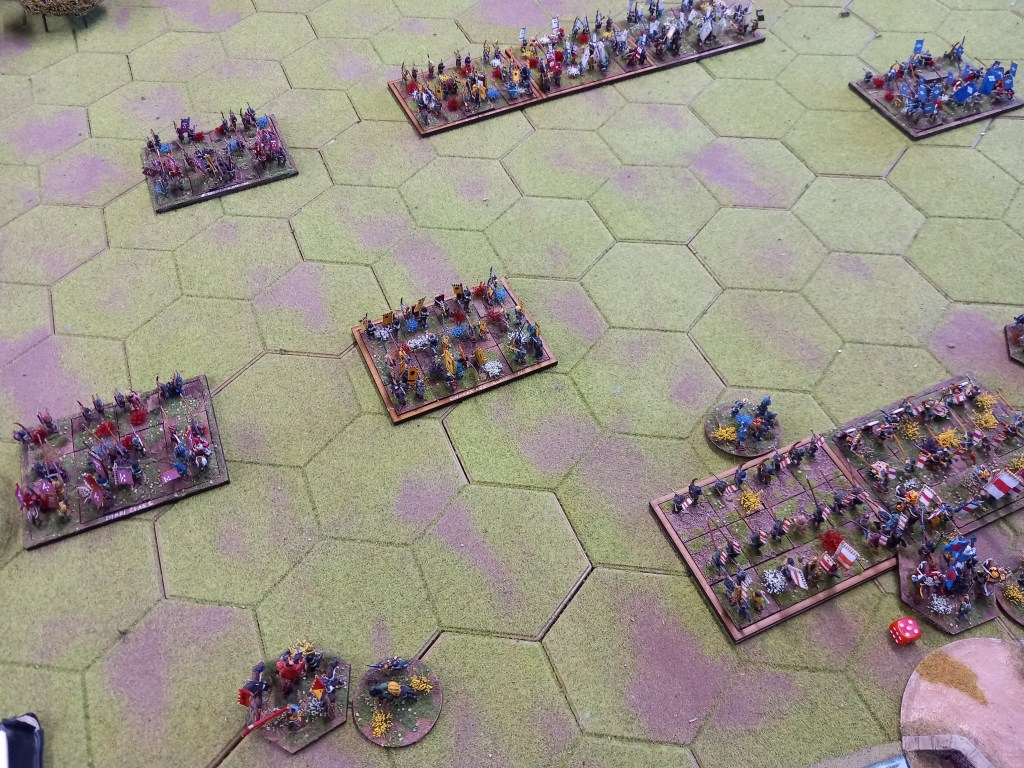
Ishida was declared the Attacker after the pre game dice rolling and advanced his 3 Sonei in a fairly shambolic fashion.
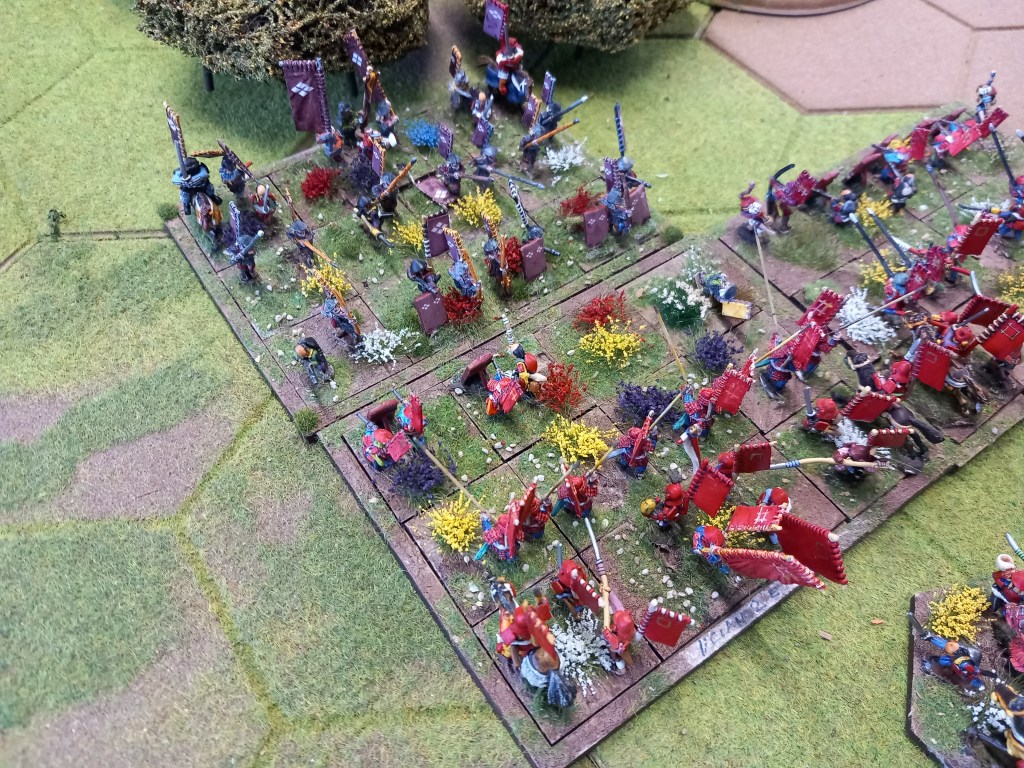
From his success in the pre game, Ishida had the opportunity to spring an ambush but it was a complete fail.
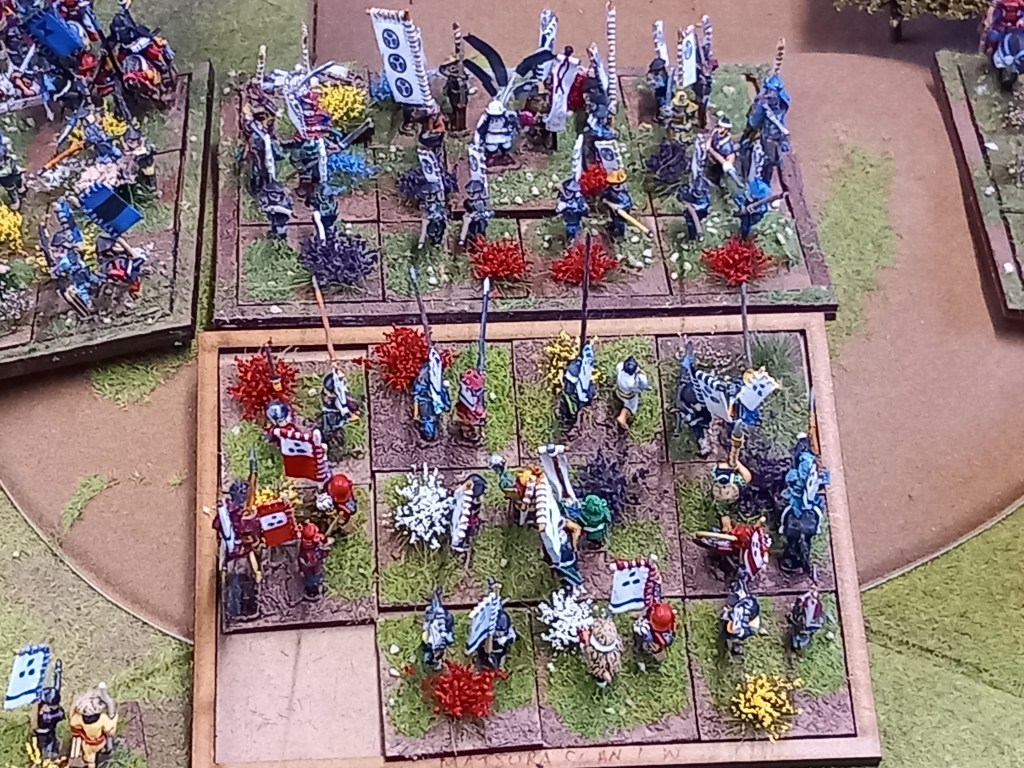
The first clash was for a hill in the centre of the battlefield – it could have been on the moon and we would have both gone for it, wargamers can’t resist a hill 🤣
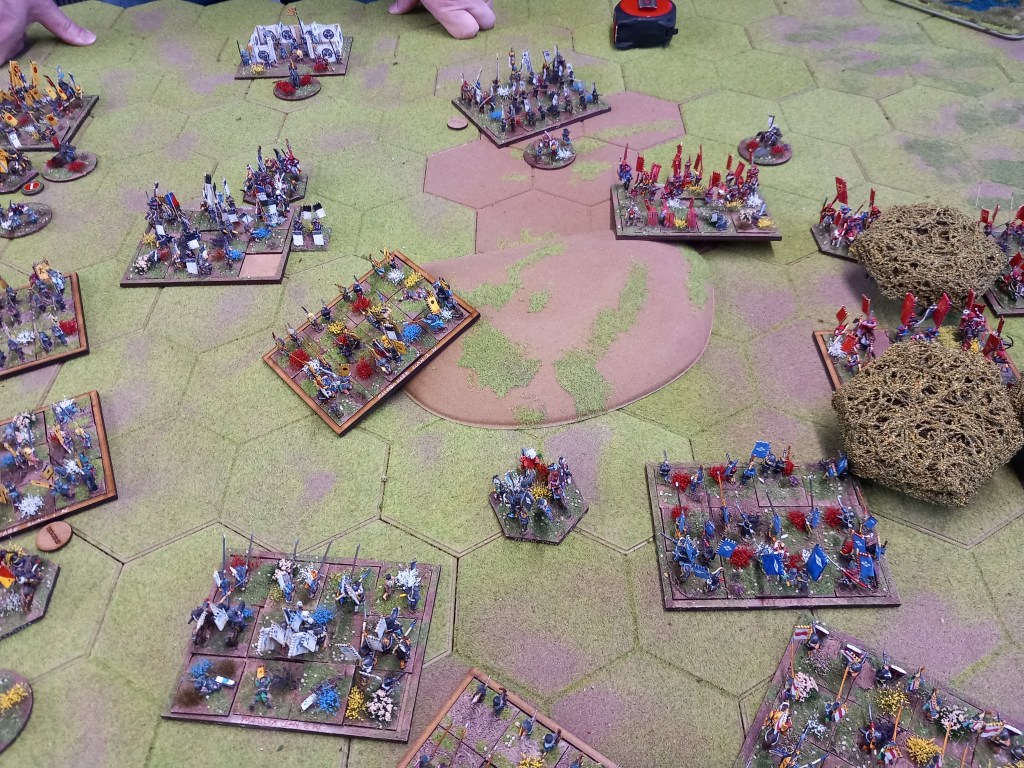
The battle started to open out as more clans got into the action and subsequently were eliminated – where there is a big open space there was a clan stand.
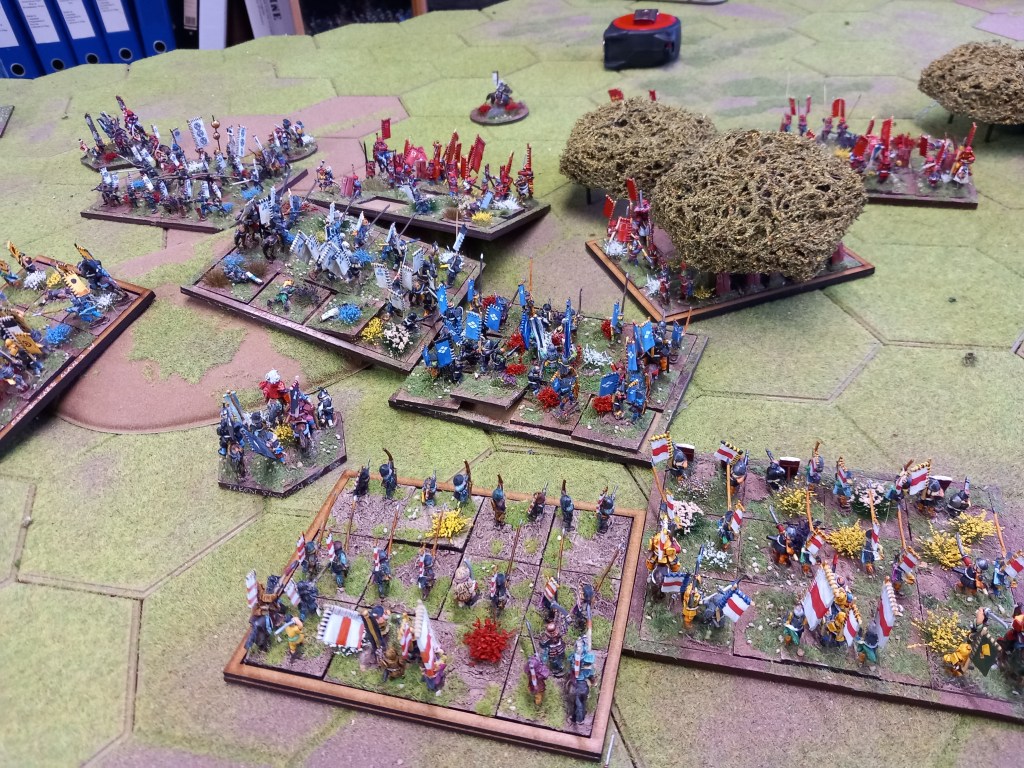
The fighting became pretty savage as both sides comitted.
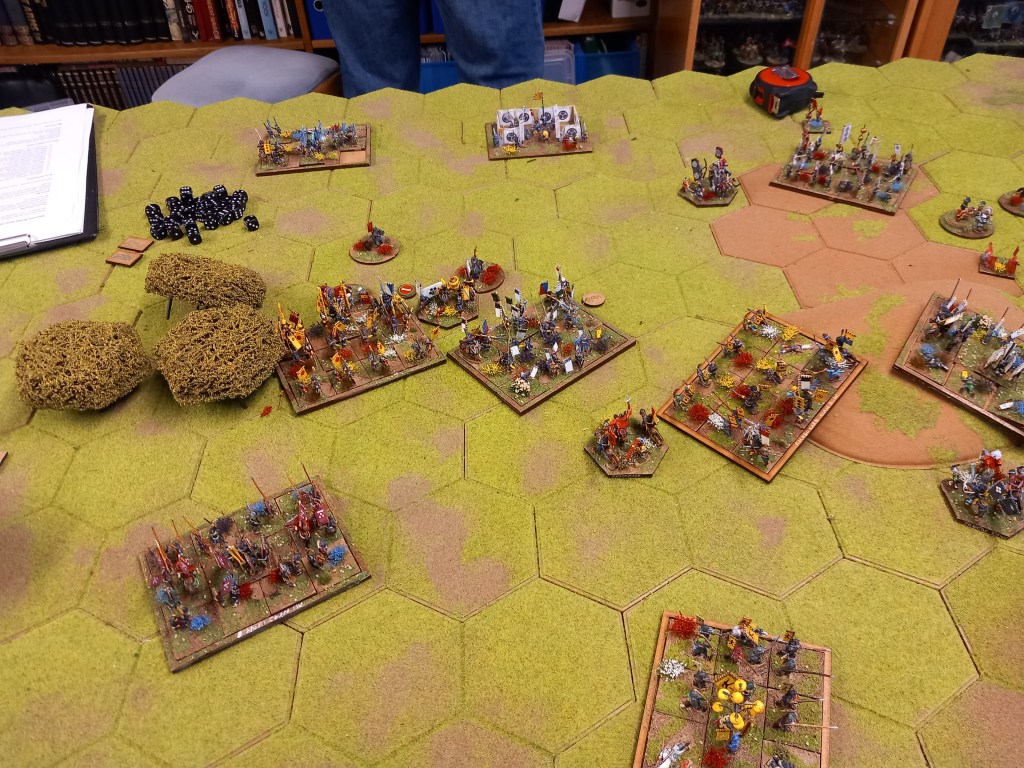
But ultimately, in the penultimate turn, the forces of Ishida Mitsunari prevailed. Not a period we play very often but one that always provides a challenge.
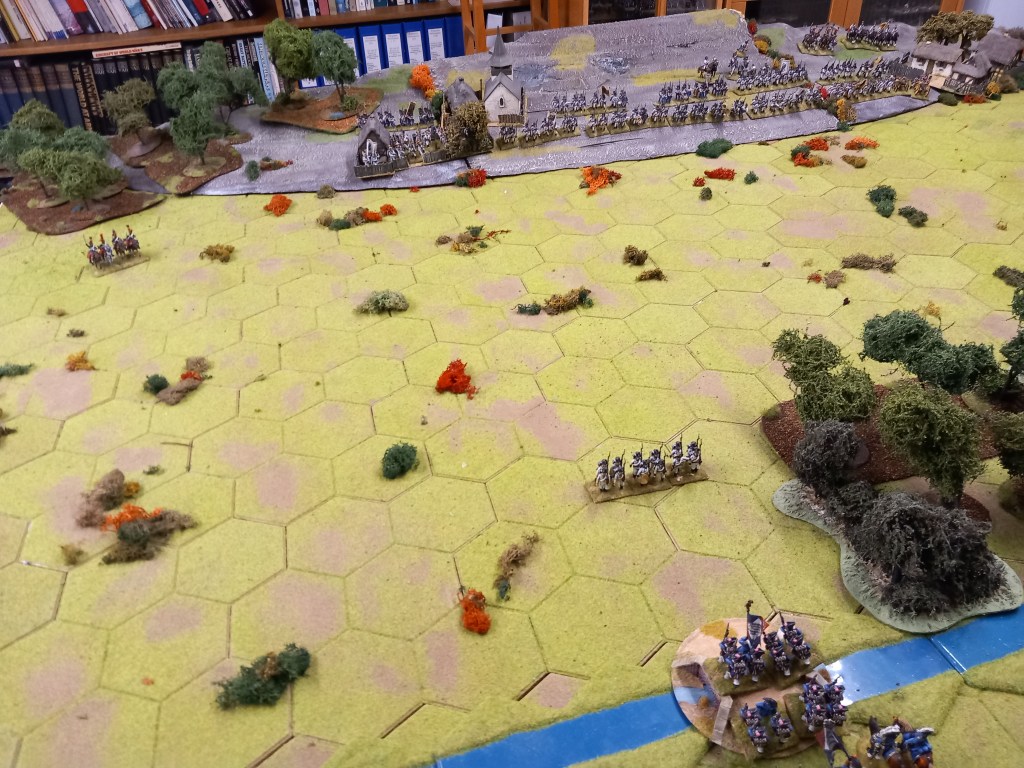
Our next endeavour was a Napoleonic refight, the battle of Elchingen 1805, Austrians v French.
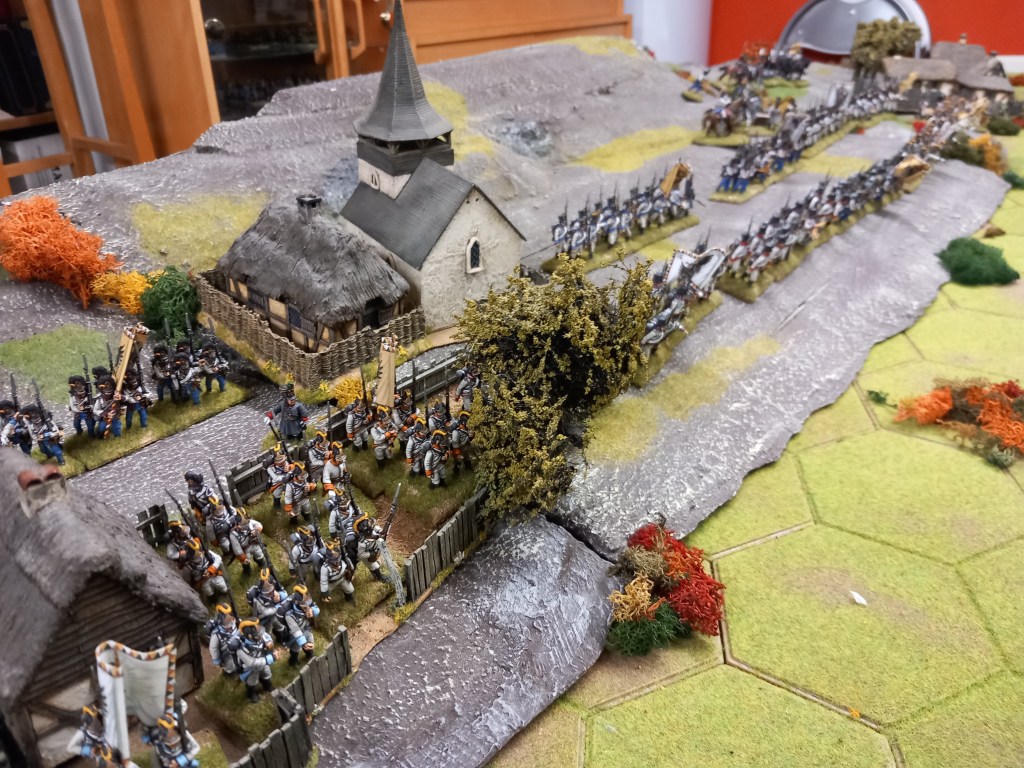
If played with any semblance of historical accuracy the Austrians are on a bit of a hiding to nothing. Yes they are deployed on the high ground (except for individual units stuck out way beyond the main line), their command hierarchy is awful and their troop class is way inferior to the oncoming French.
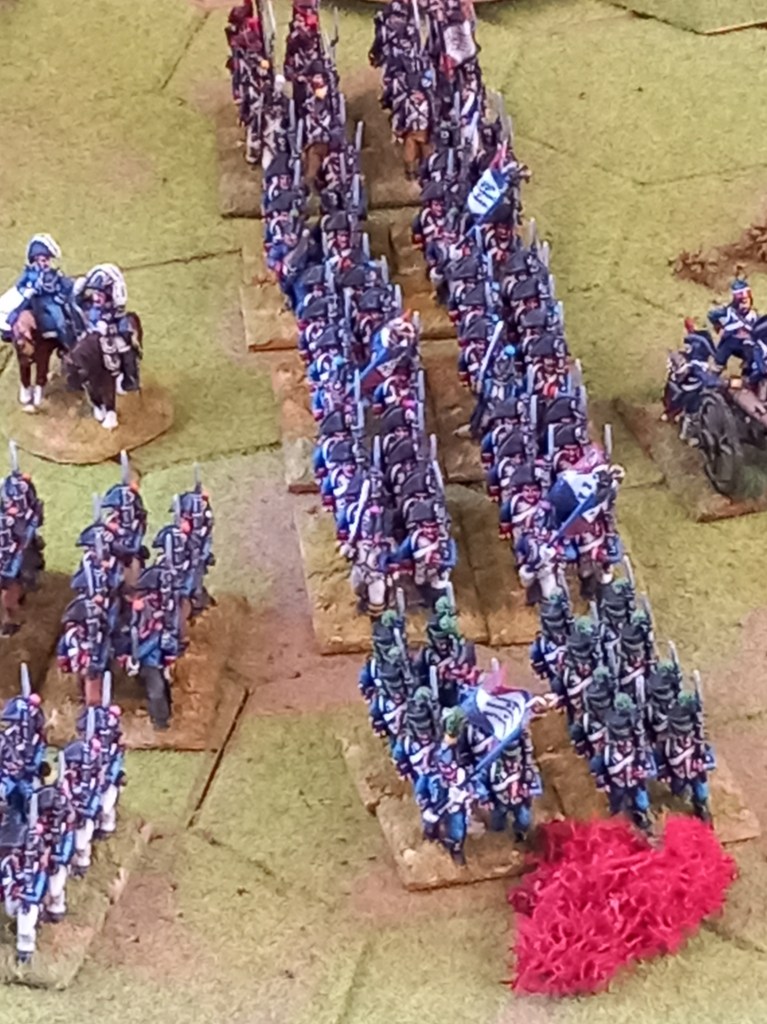
The French quickly swept away the token Austrian resistance at the bridge crossing onto the battlefield.
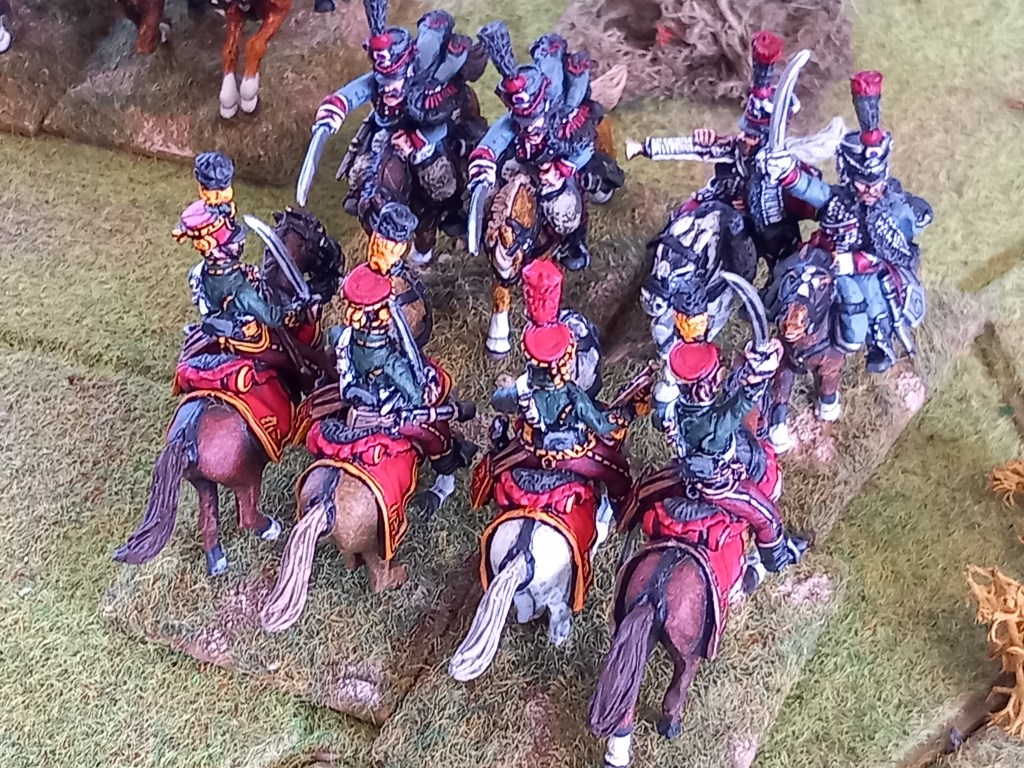
Seeking to delay the inevitable the Austrians threw their cavalry against the mixed French brigade that was attempting to turn their left flank. This nearly worked and perhaps could have but for the incredibly bad die roles that plagued the Austrian commander all game 😢
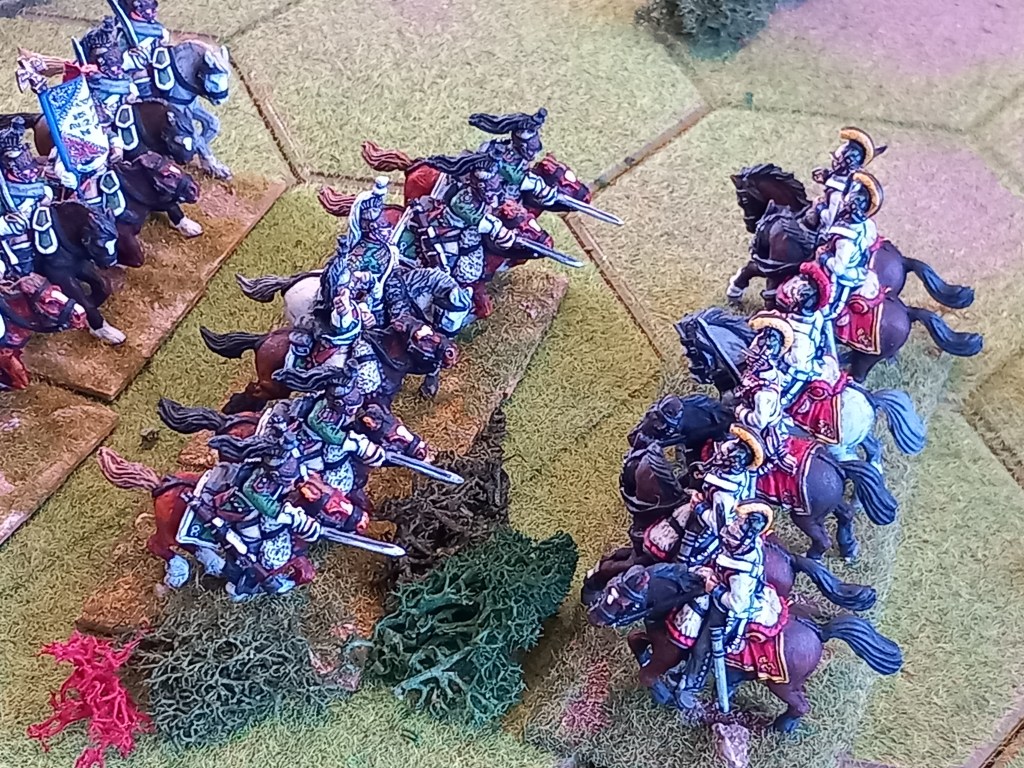
In fact the main Austrian effort was with their outnumbered cavalry trying to stem the tide but 1 cuirassier regiment taking on 3 dragoon regiments was only going to go one way.
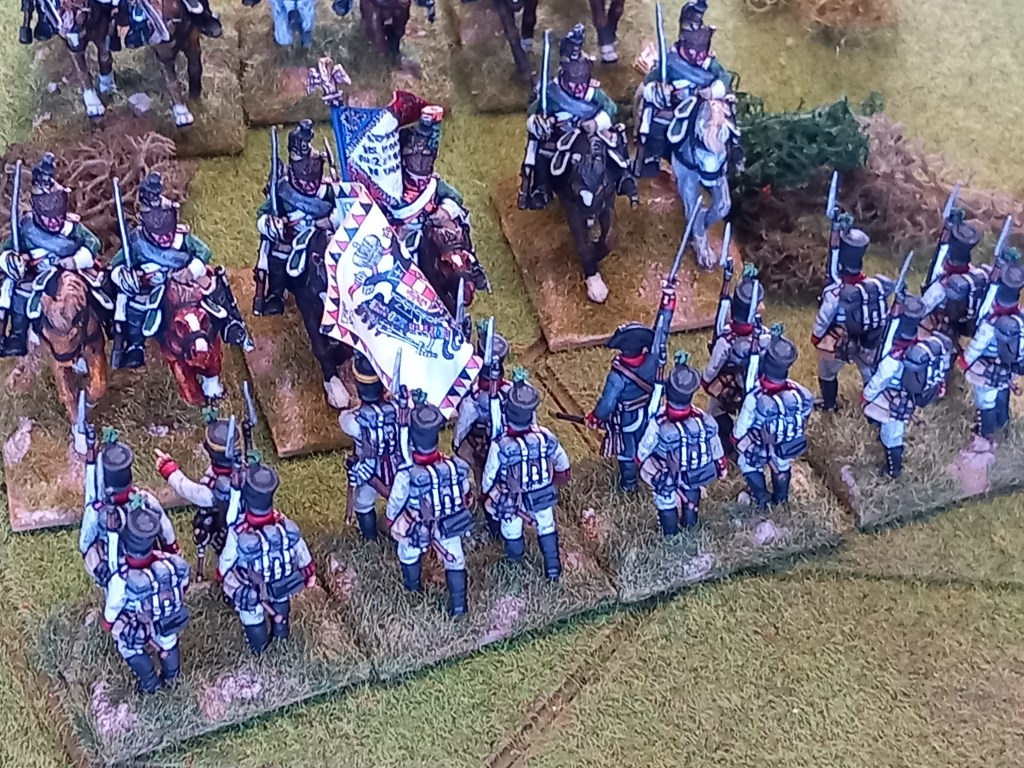
With their cavalry gone, the Austrian foot were left to hold the flank. They tried hard but ultimately just weren’t good enough. This whole fight for the Austrian left was quite exciting and although the end result was somewhat inevitable the delay meant the battle would be decided elsewhere.
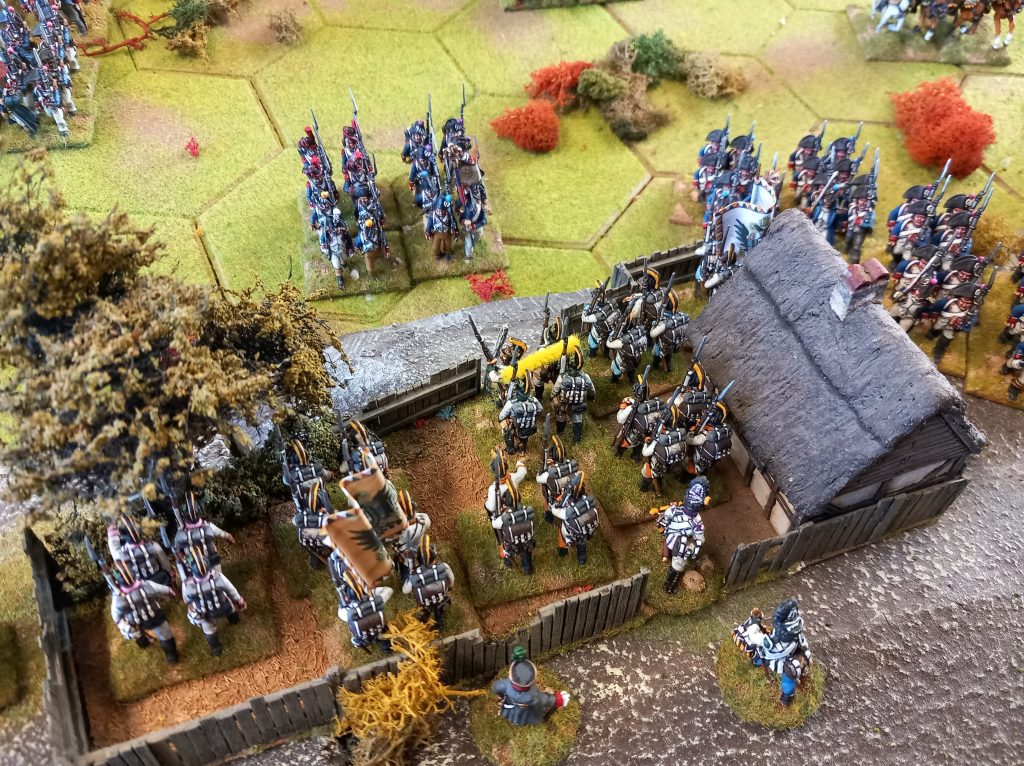
And that elsewhere was on the slopes of Elchingen where the French threw in assault columns as their brigades came up and a series of turns of deseperate fighting ensued.
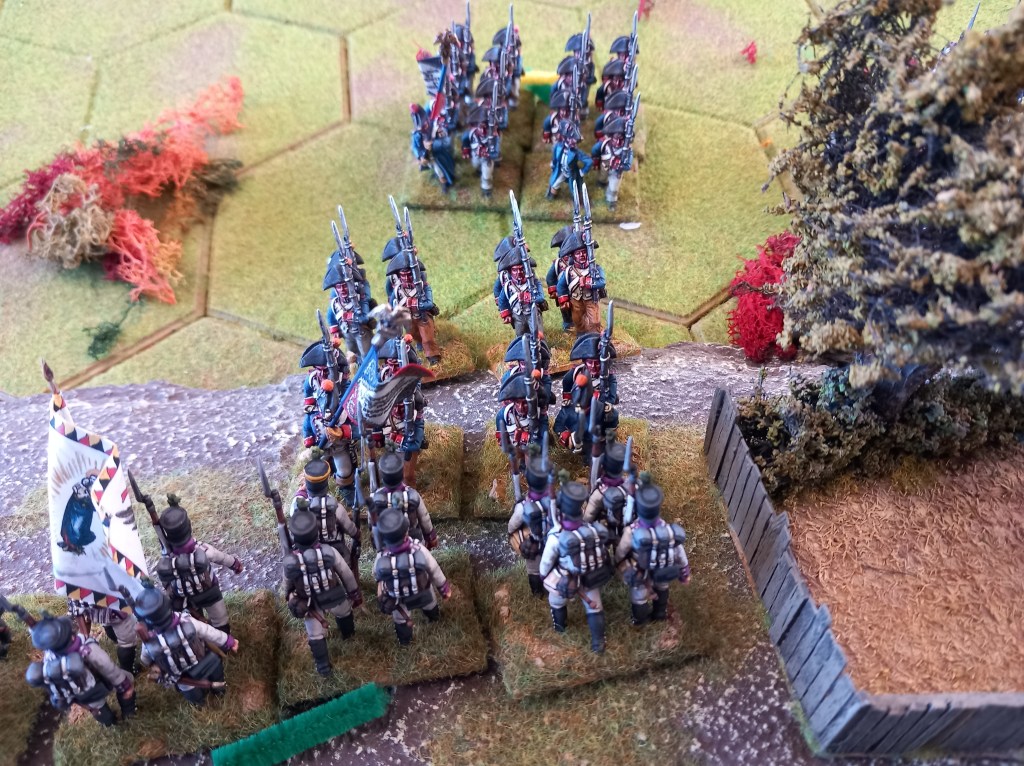
And the French keep on coming.
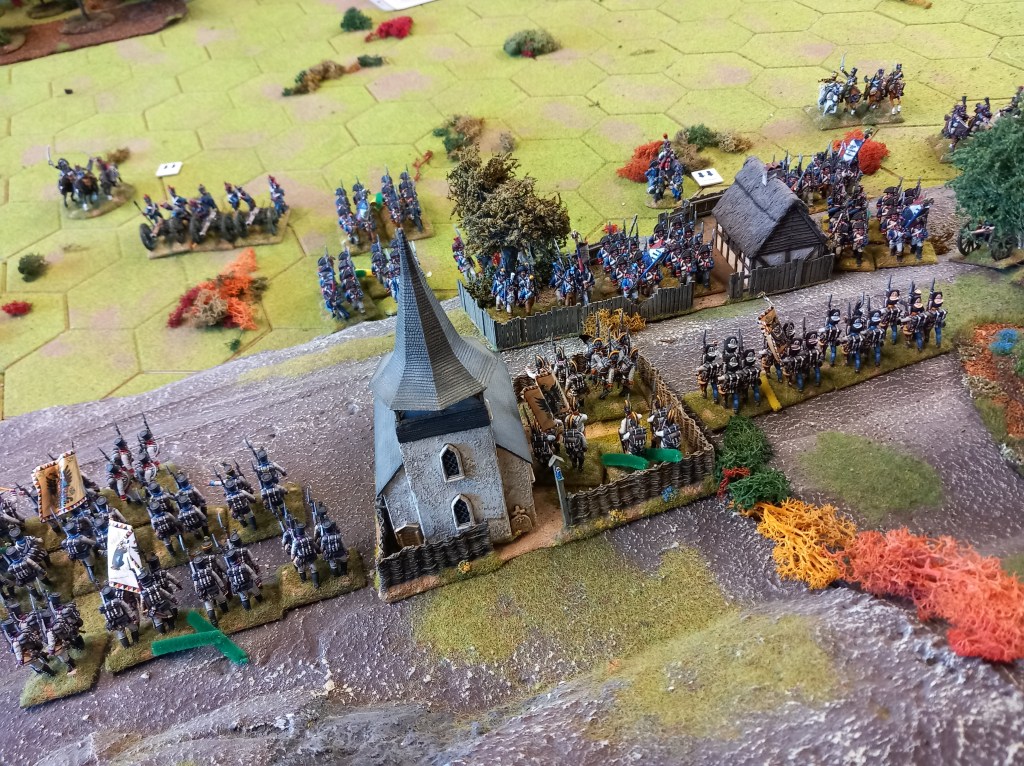
And finally the village is taken and the Austrians withdraw with a good proportion of their army intact much like history.
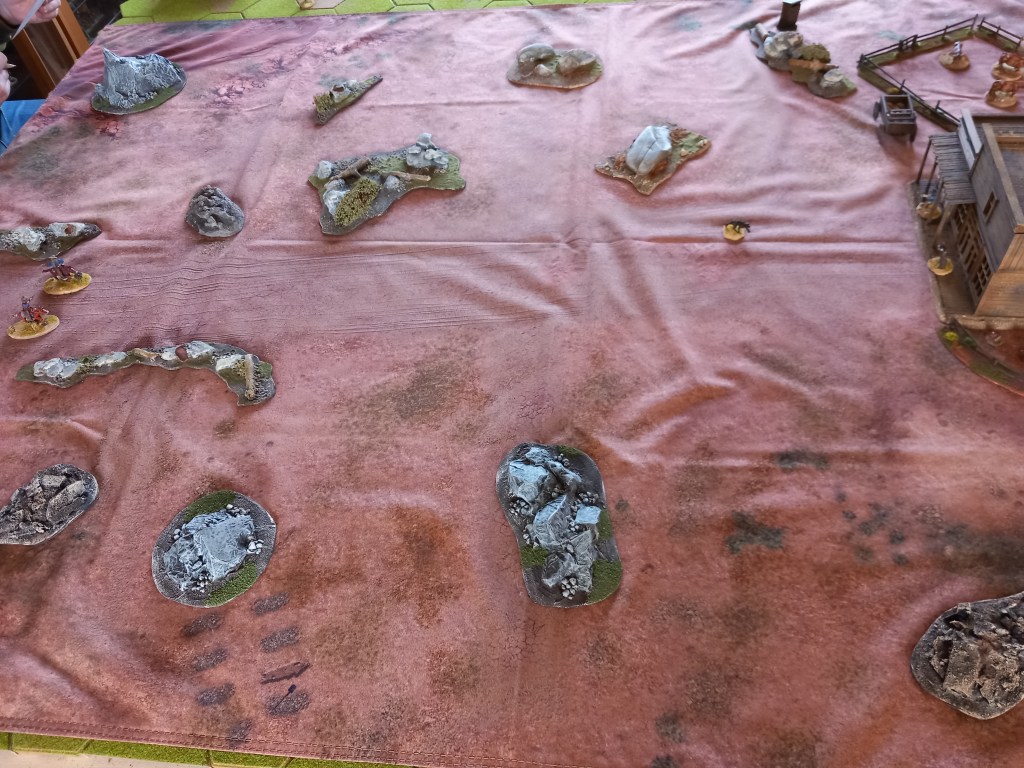
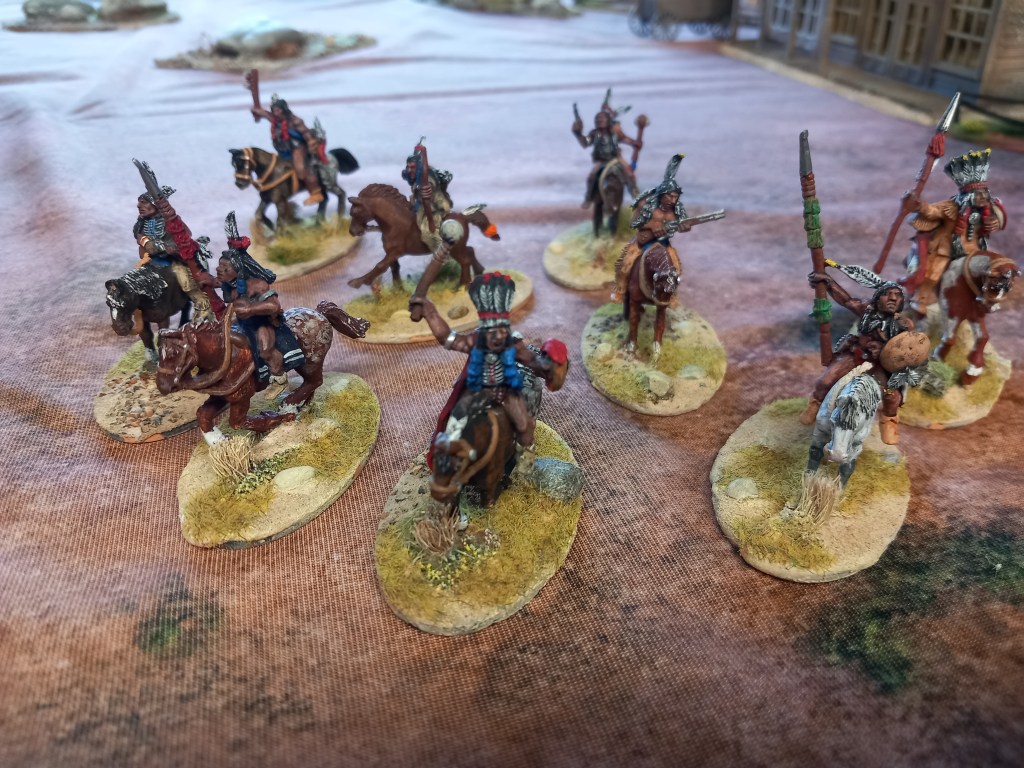
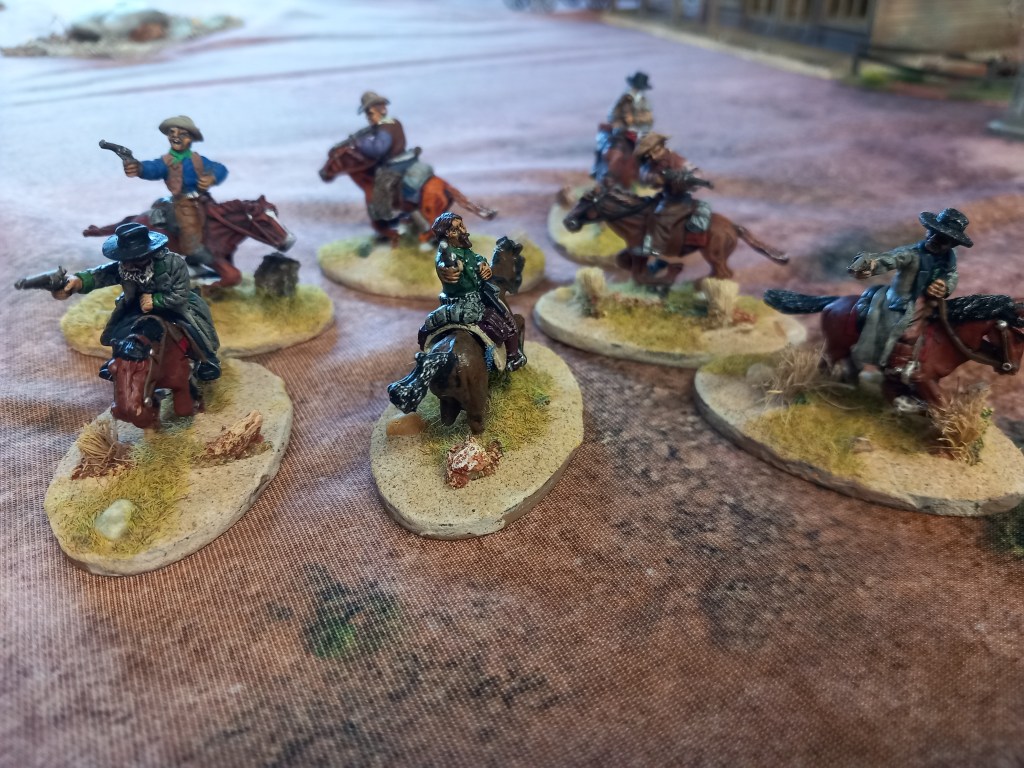
Our final action was a western gunfight style game from our long dormant irregular campaign in 1870s Dardanell County. On this occasion two cowhands are hightailing it back to the Yates small holding chased by Indians who slipped the Reservation.
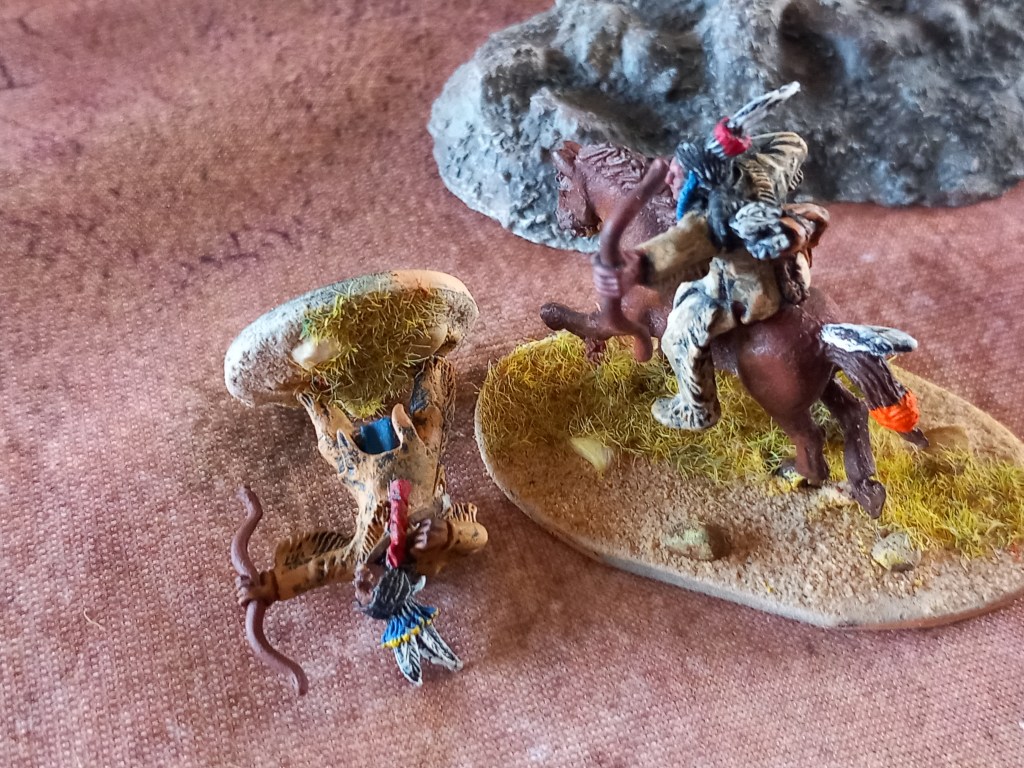
My experience of most skirmish games is that besides the more up close and personal nature of the drama there will be some element of dumb assery and this game proved no exception with the Indian horses being galloped over rock strewn ground (the small holding was just down from the hills) and inevitably stumbling and throwing their riders. The % chance was really quite low but 6 out of the 9 threw their riders – no animals were hurt in this recreation.
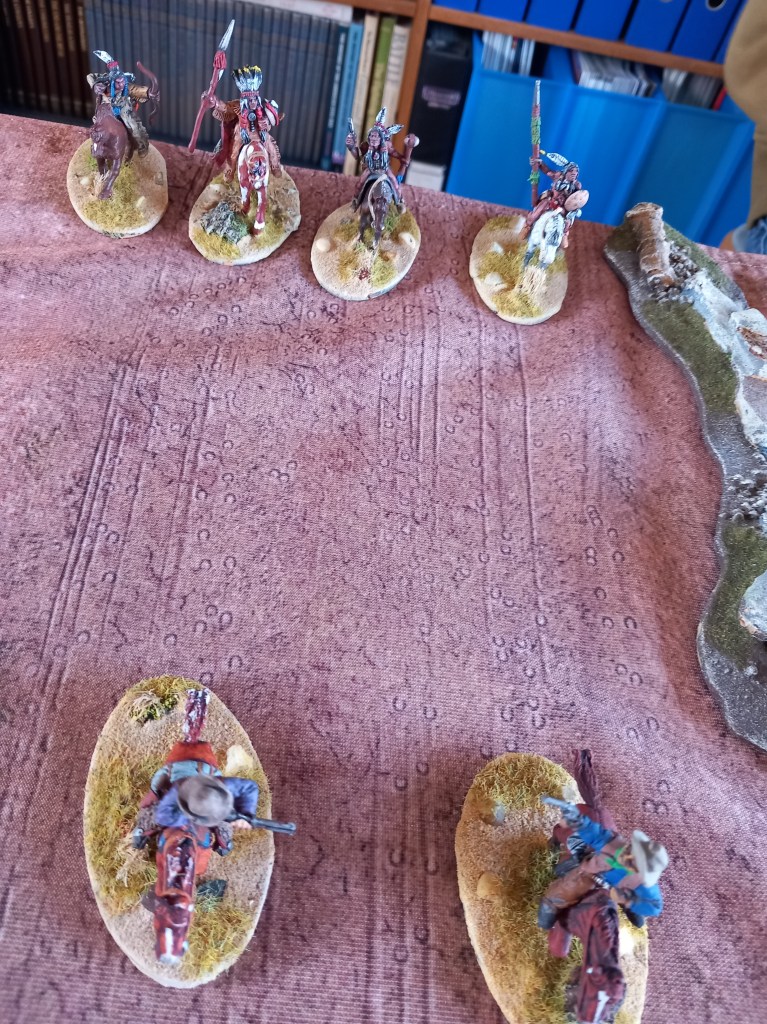
This tom foolery did enable the two cowhands to get far enough away to dismount safely and take up decent defensive positions.
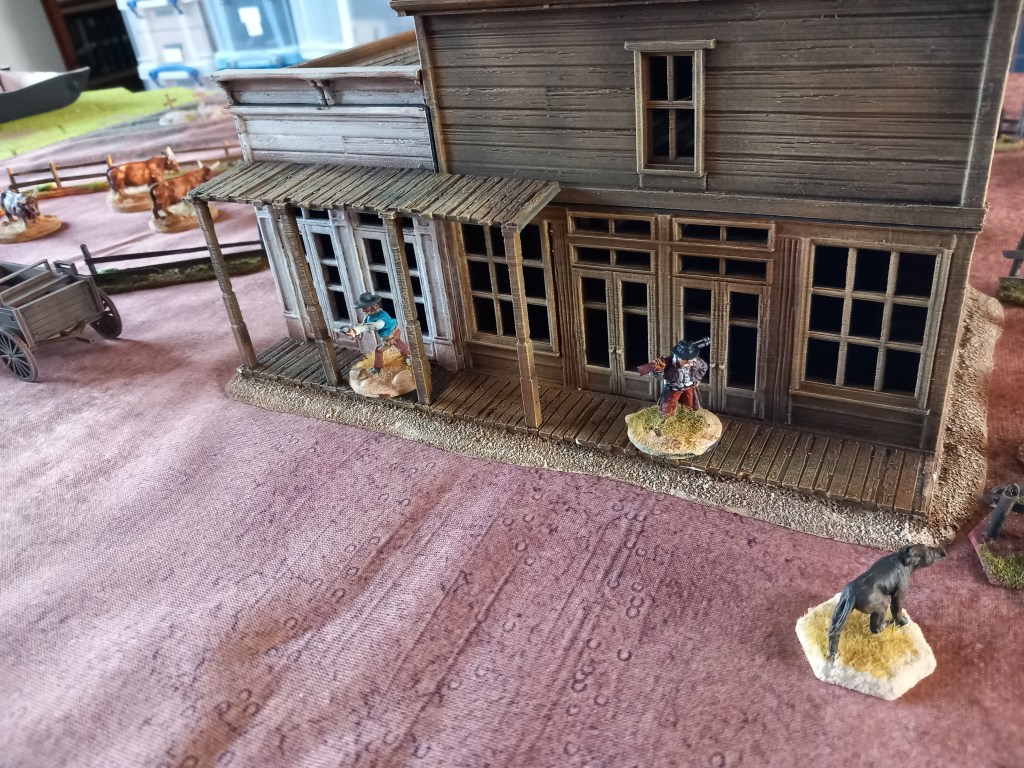
At the house Yates Snr and his son took the fateful decision to stand their ground on the porch rather than retreat inside the logic being that they had a better sight of where the hostiles were from the outside and once inside the house they would be stuck – it nearly worked.
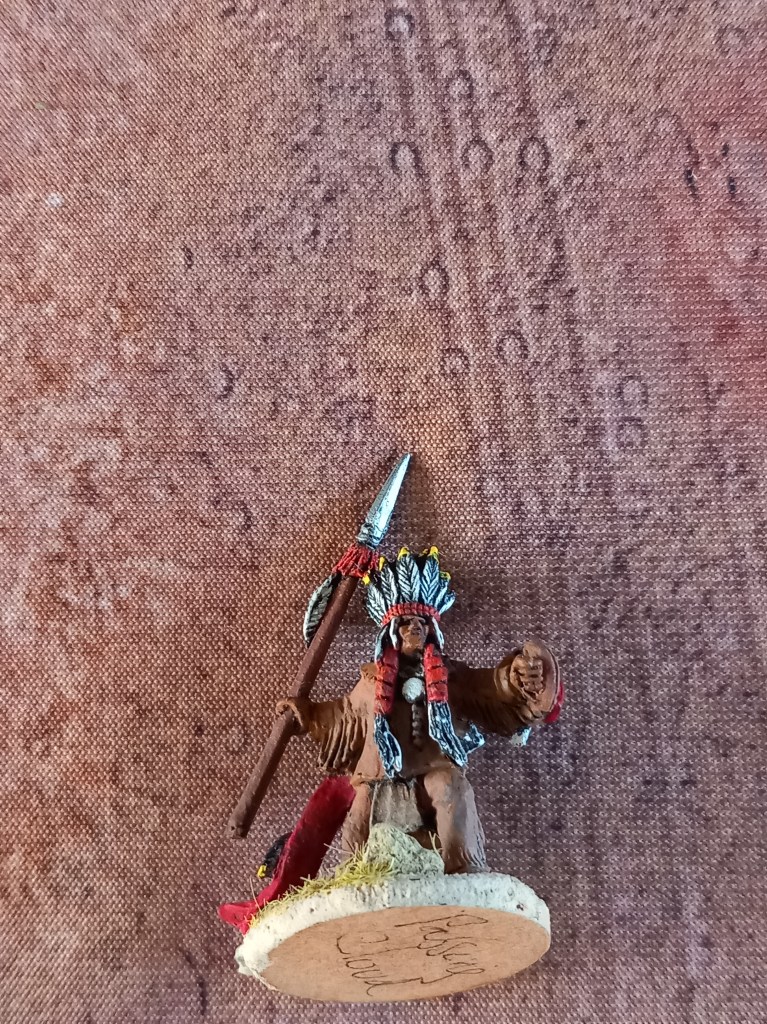
The initial exchanges certainly favoured the whitemen,
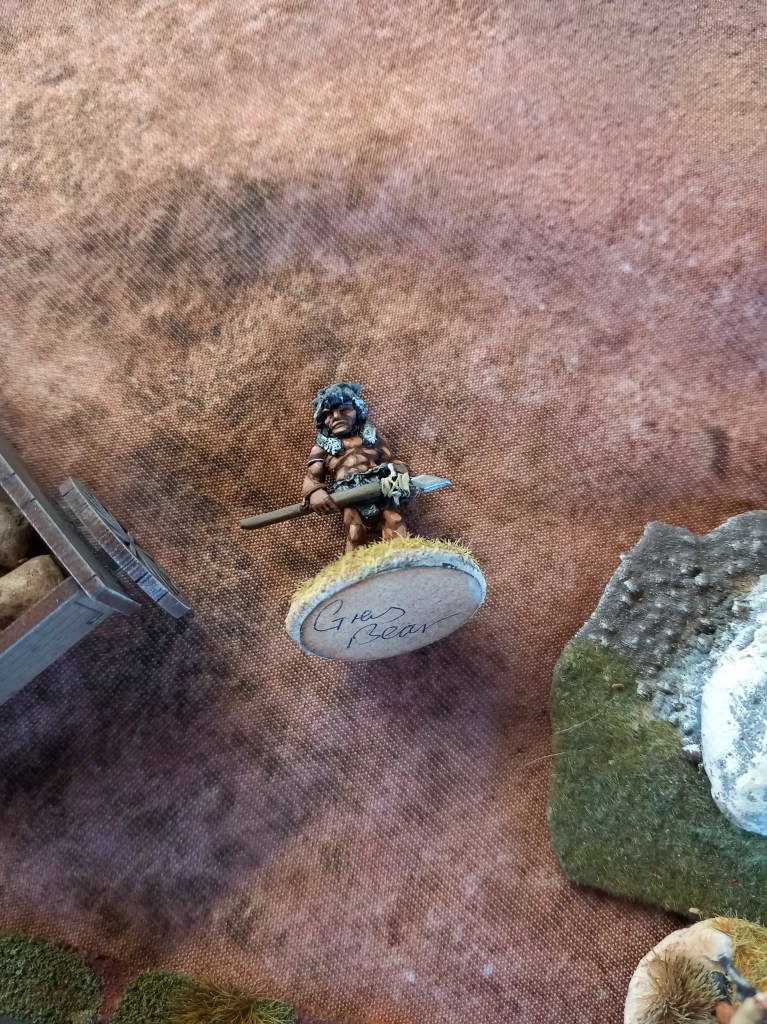
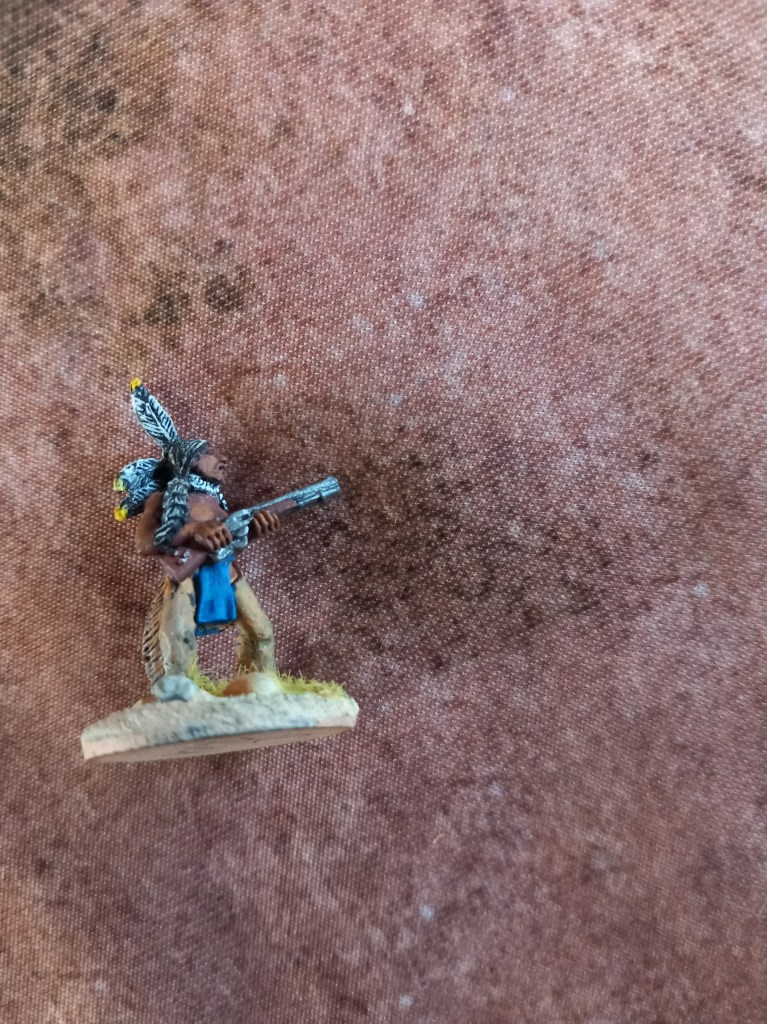
But not every ‘injun’ was a dead one and as the game progressed a couple did stagger to their feet. The more important issue was that the Indians were low on firepower but high in melee weapons.
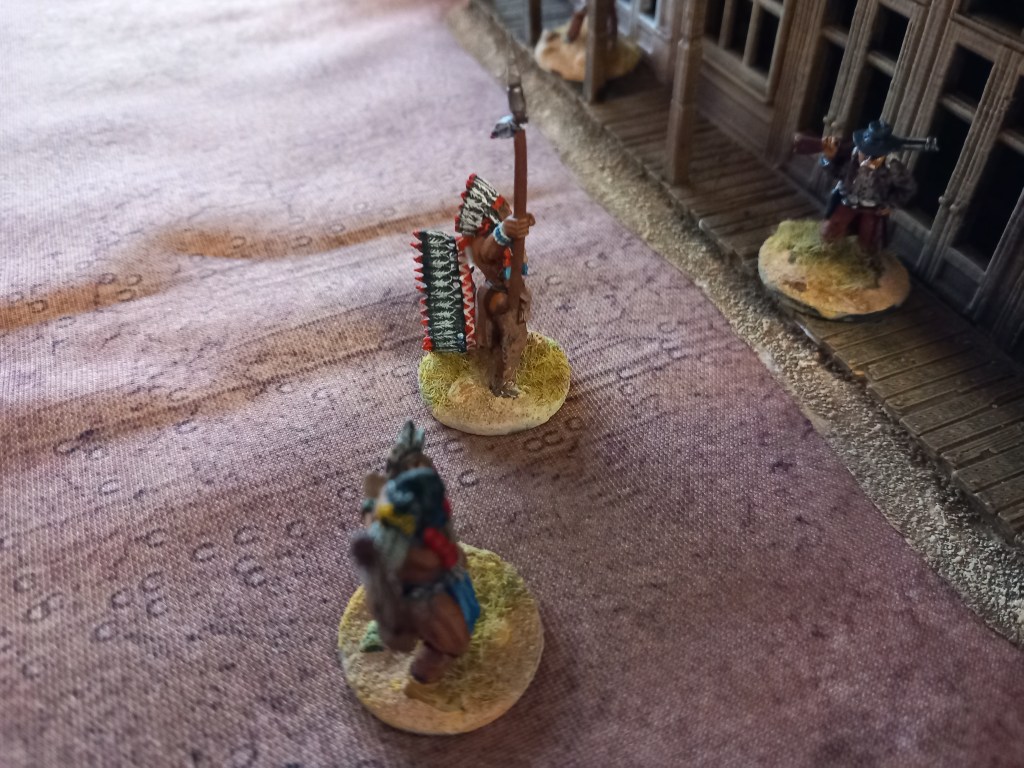
Soon the Indians were closing on the porch.
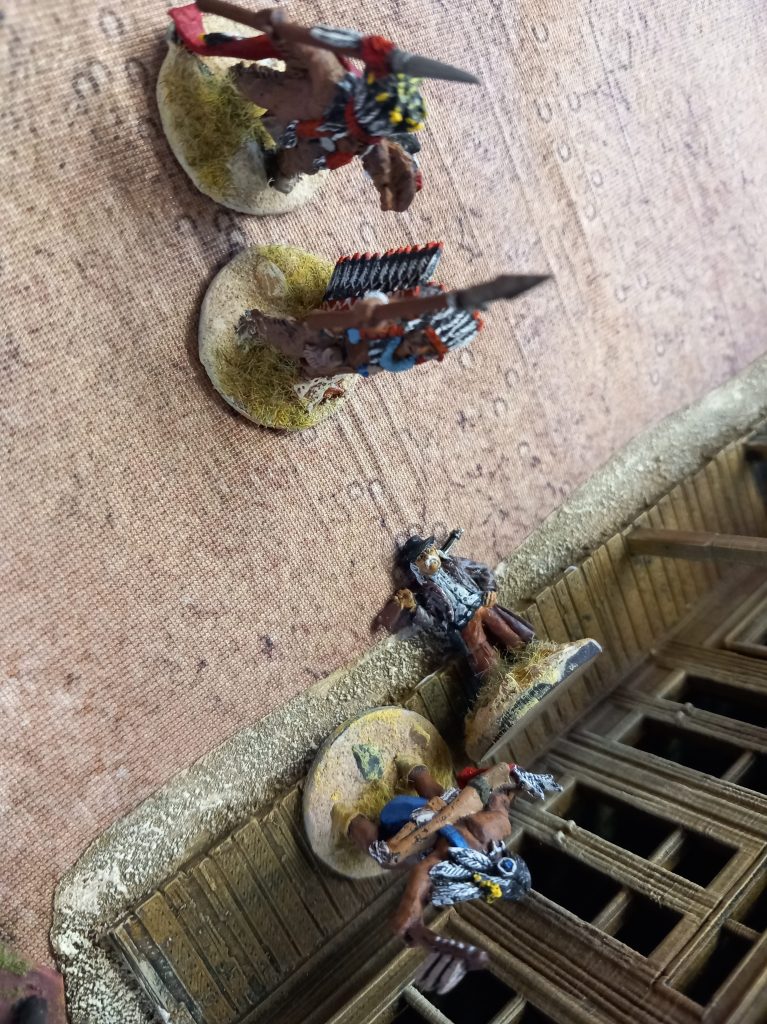
Yates Snr was the first to go down and the war party moved to get inside.
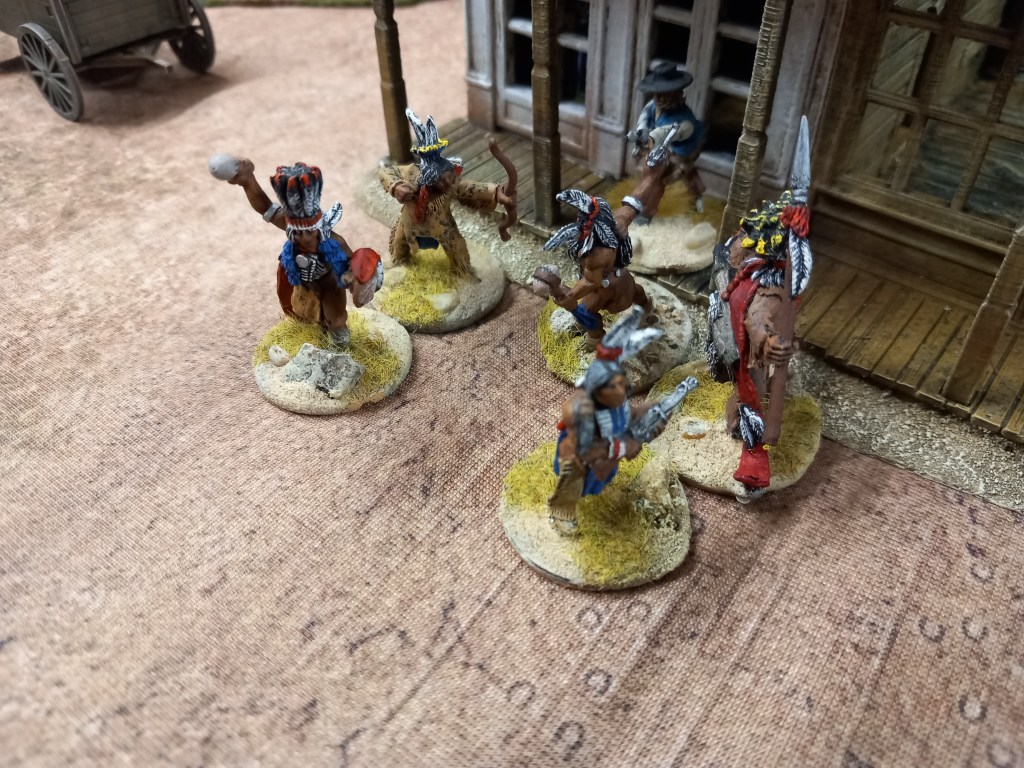
At the other end of the porch Junior prepares to sell his life dearly while his mother frantically and ineffectively shoots into the crowd from inside the house.
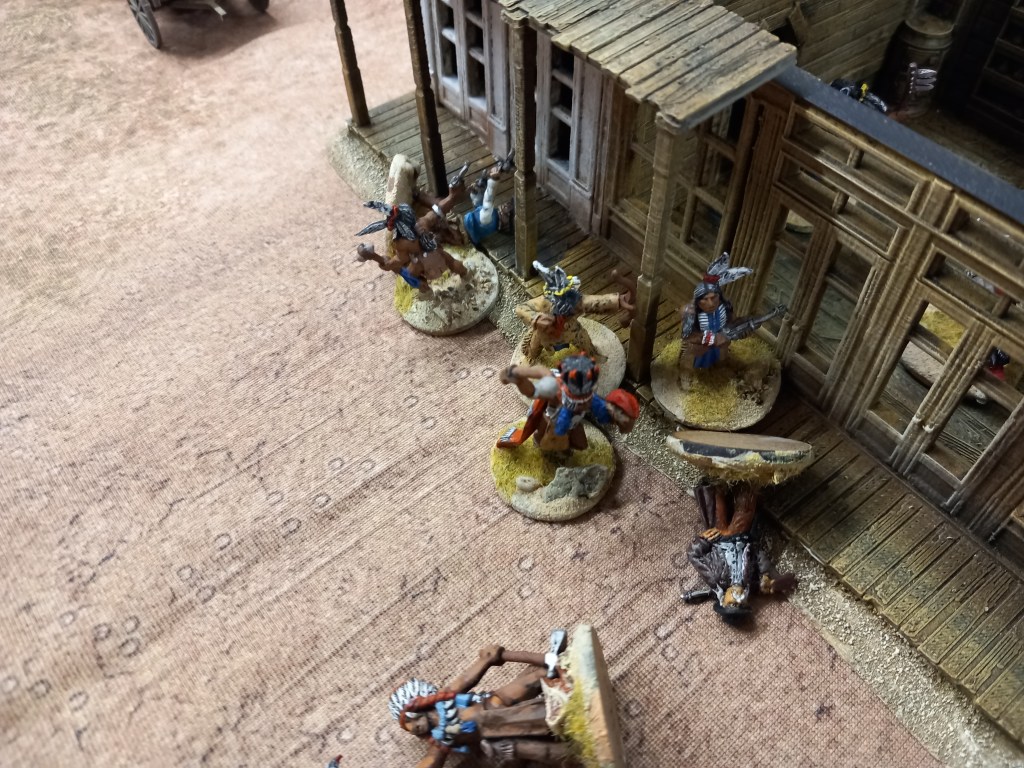
Despite his considerable physical strength Junior is beaten down and the end is nigh.
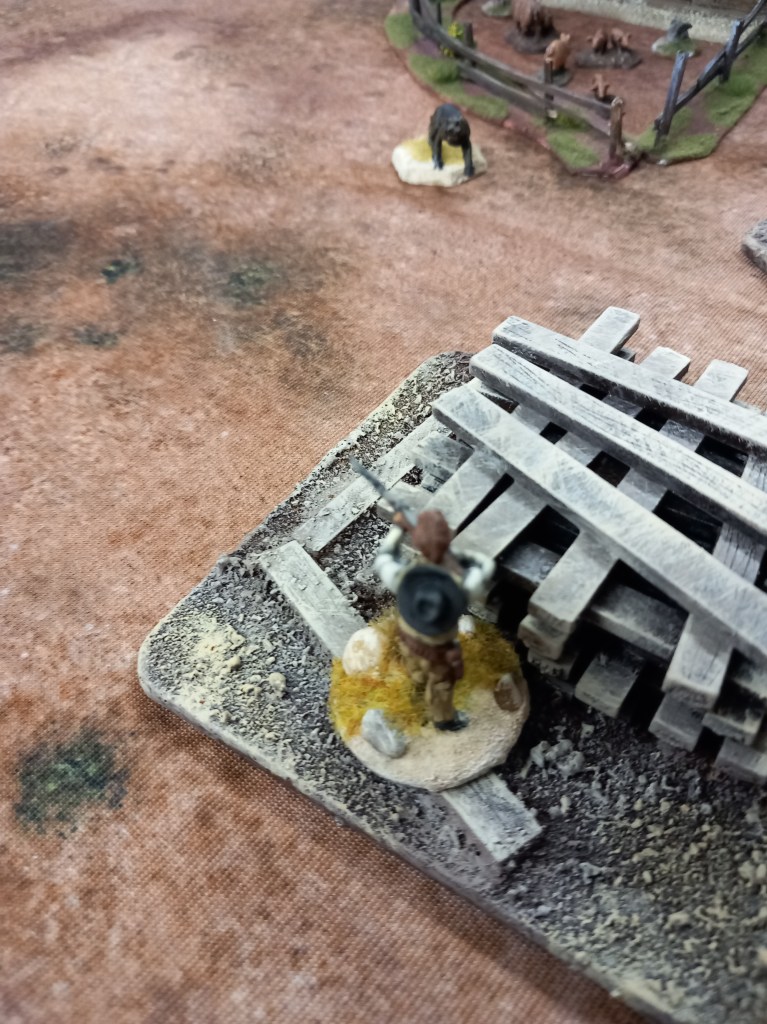
But what of the cowhands I hear you say? Well they have been shooting and getting hits but the war party has been ignoring them and keeping their eye on the prize.
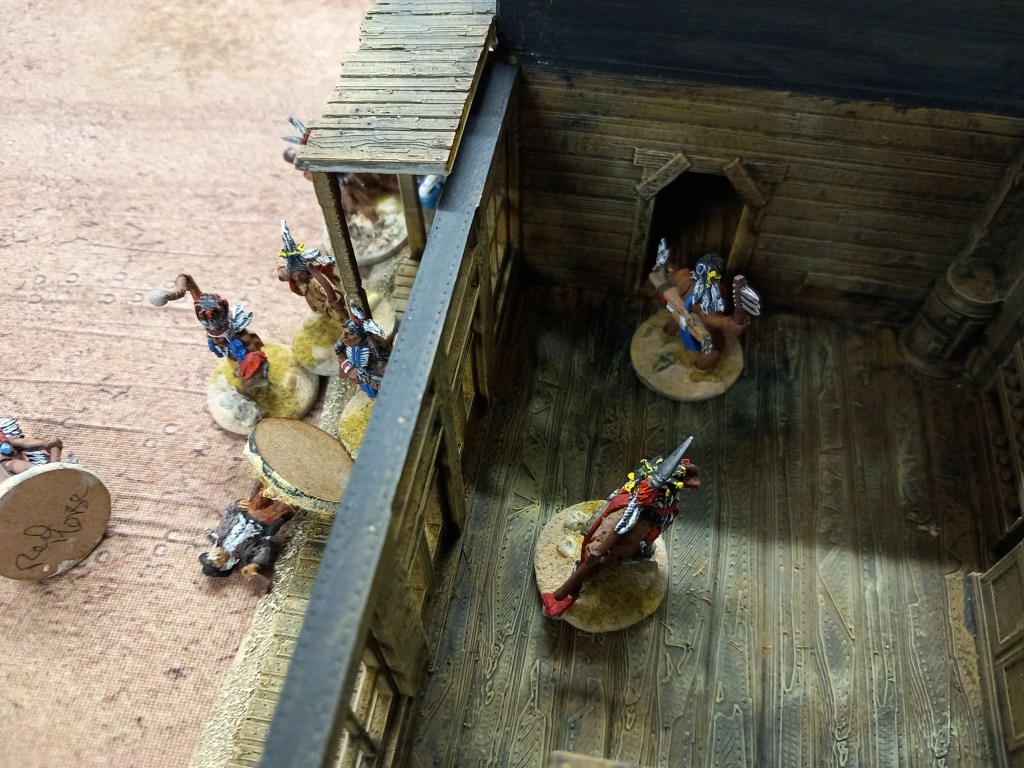
And the prize is nearly theirs. They are in the house.
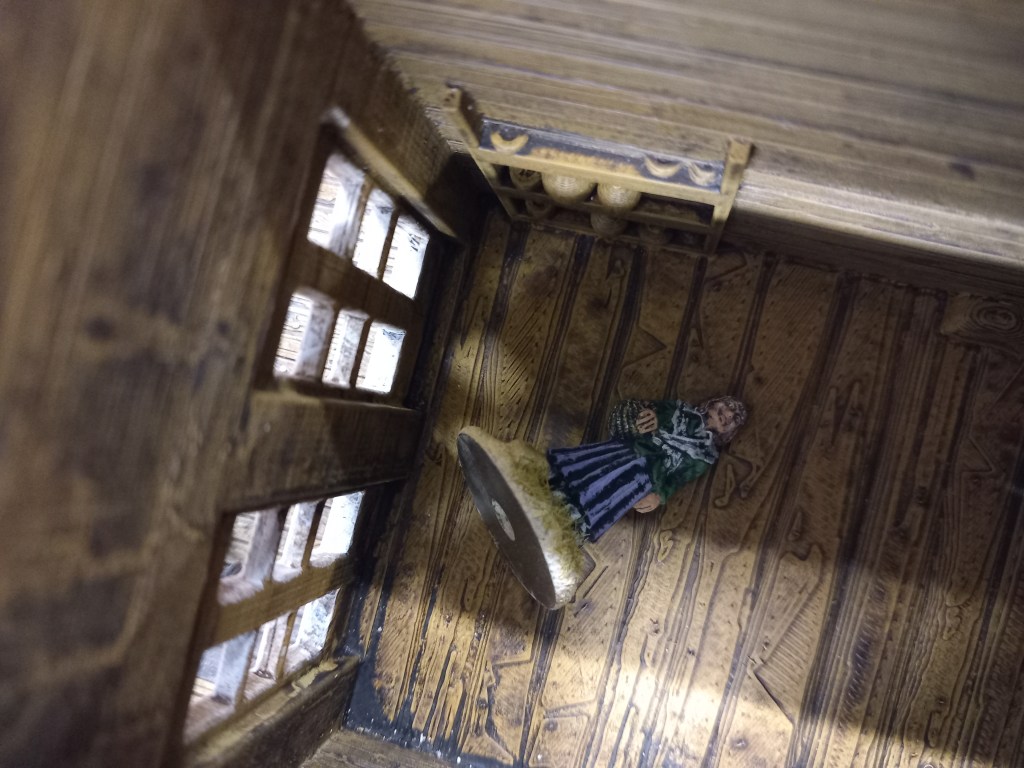
Mrs Yates takes her own life.
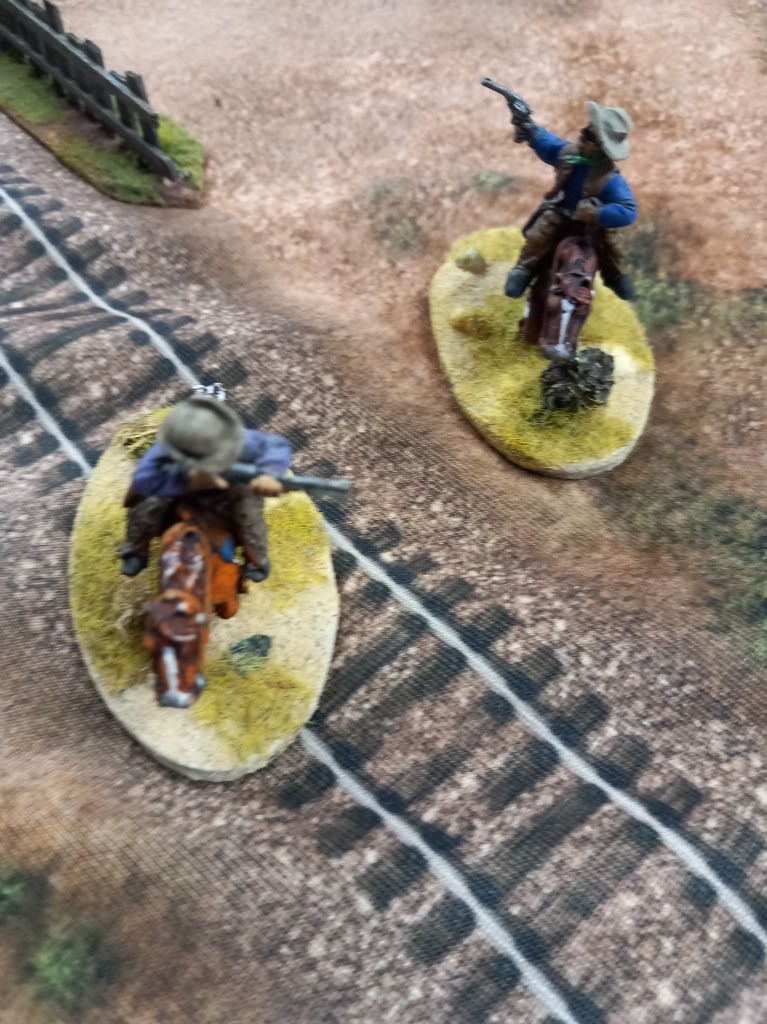
And the cowhands gallop off to raise the alarm. A good afternoon’s gaming.
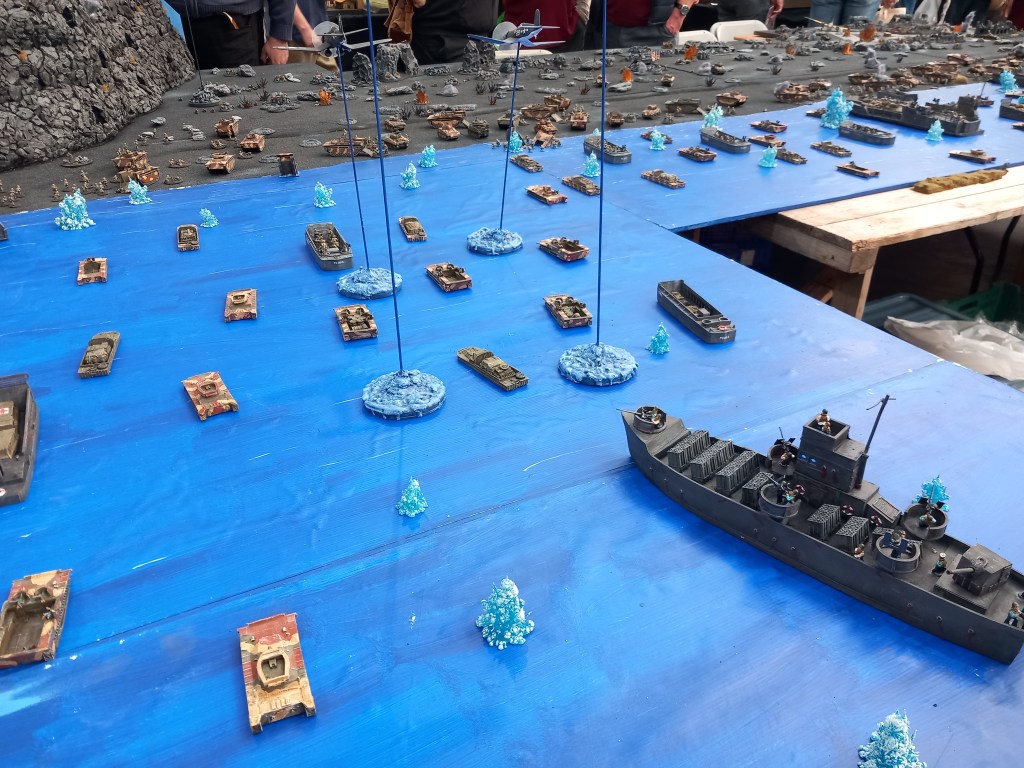
Also this month was our visit to The Other Partizan and I forgot to mention that last month featured a trip to the Newbury show. Both trips were enjoyable and comparisons are a bit redundant; for me Partizan clearly aces it in terms of the number and quality of the games, not every game is great and some are clearly for spectacle only which I’m not so keen on, in terms of shopping/overall experience it was Newbury for me this year, the venue is more spacious which makes the experience more endurable. We did try the tabletop sale experience this year at Partizan and would say full marks to the organisers both in terms of booking a slot and getting us onto a table on the day.
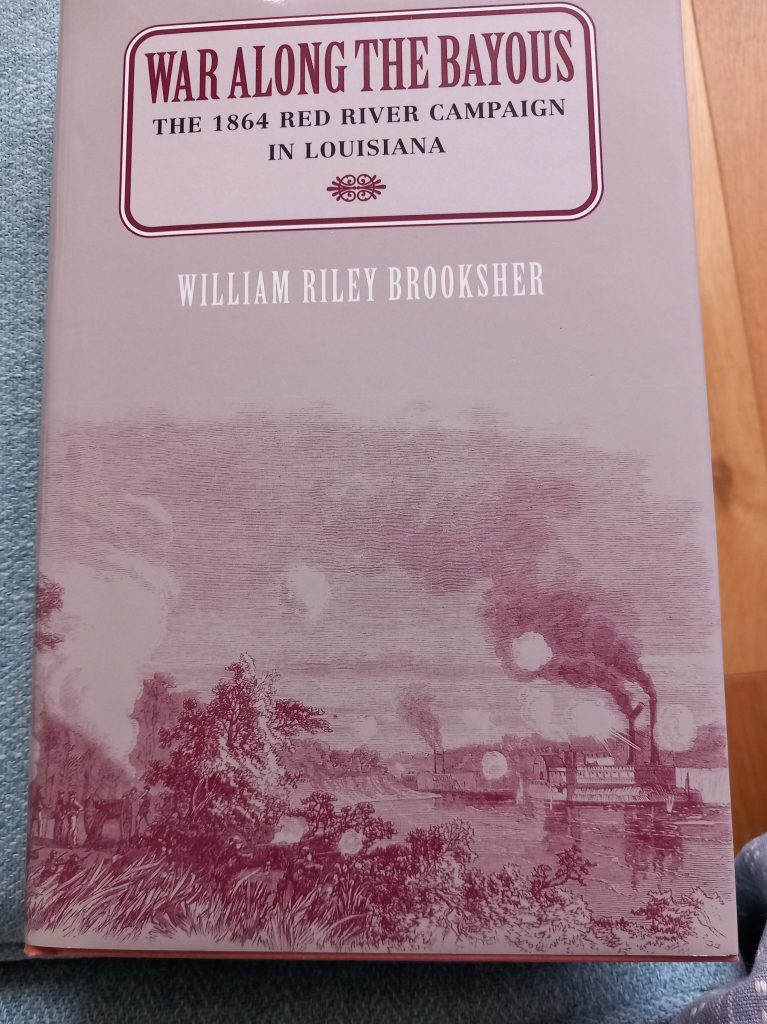
On the reading front this was my choice, one of the many unread ACW books sitting on my shelves which is somewhat ironic given that we gave up playing the period two years ago and sold off the collections. That said this was a fine read, a well written examination of one of those peripheral campaigns that happened for the wrong reasons and achieved nothing other than dead men. Very gameable as a mini campaign and the battles are easily doable. A lost opportunity for us.
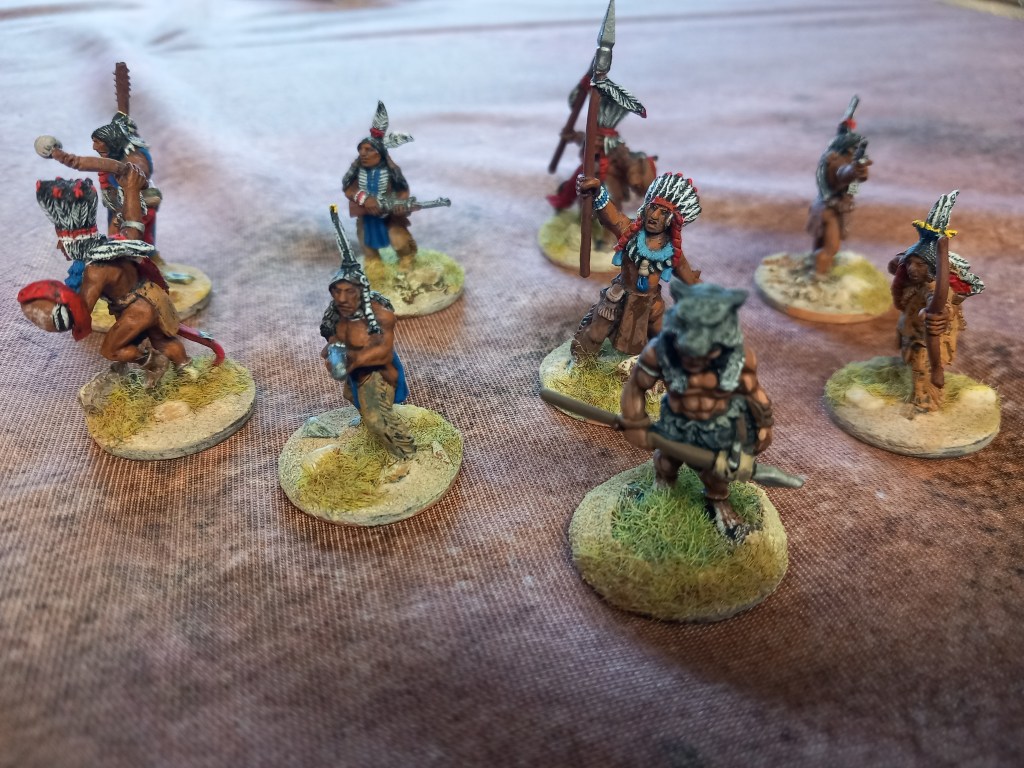
Painting has been finishing off figures that had sat around for years very nearly done but not quite, some of which got played with this month.
And that’s it, November is under way. I’ll sign off now as the Cowboys Cardinals game is about to start.

