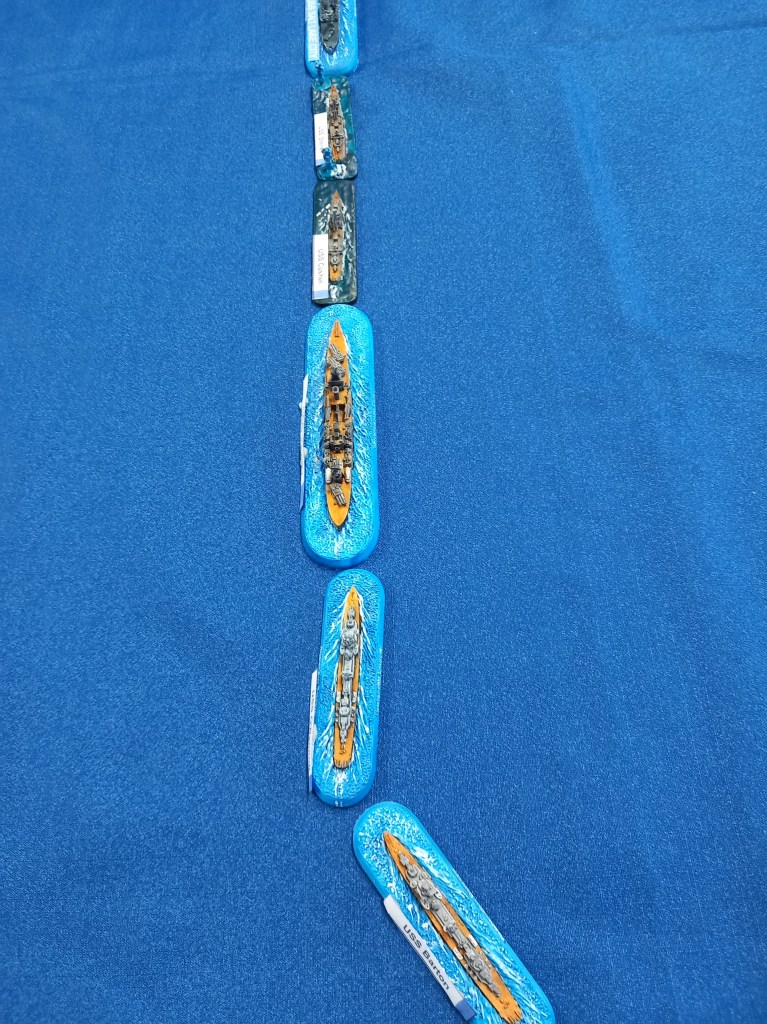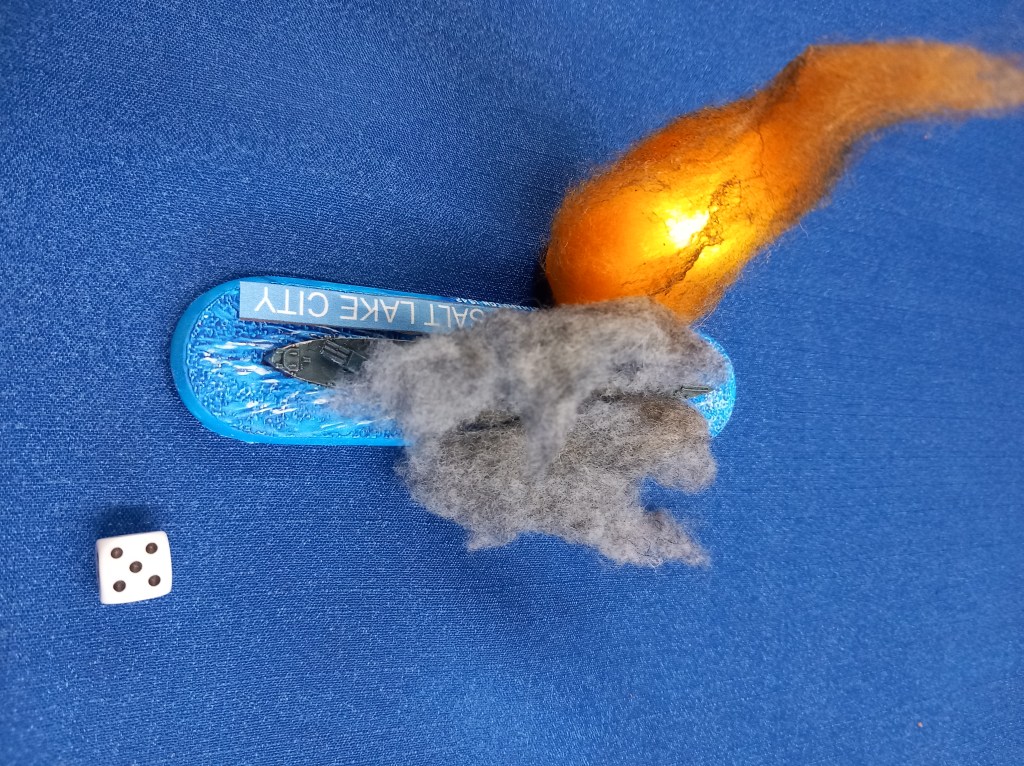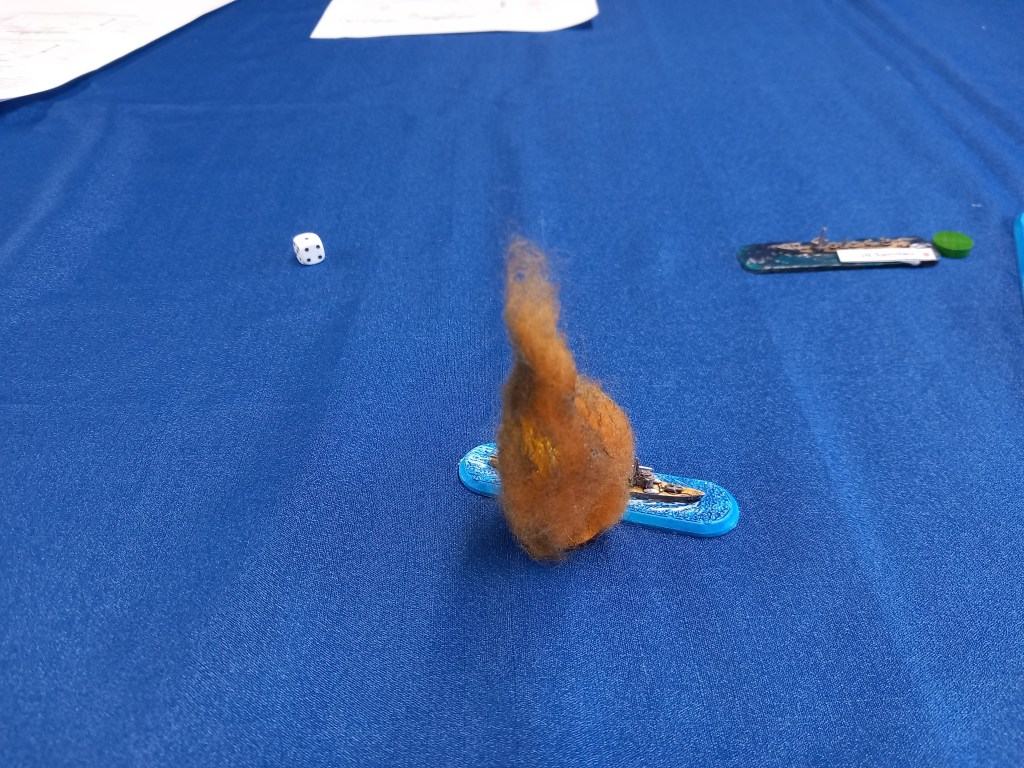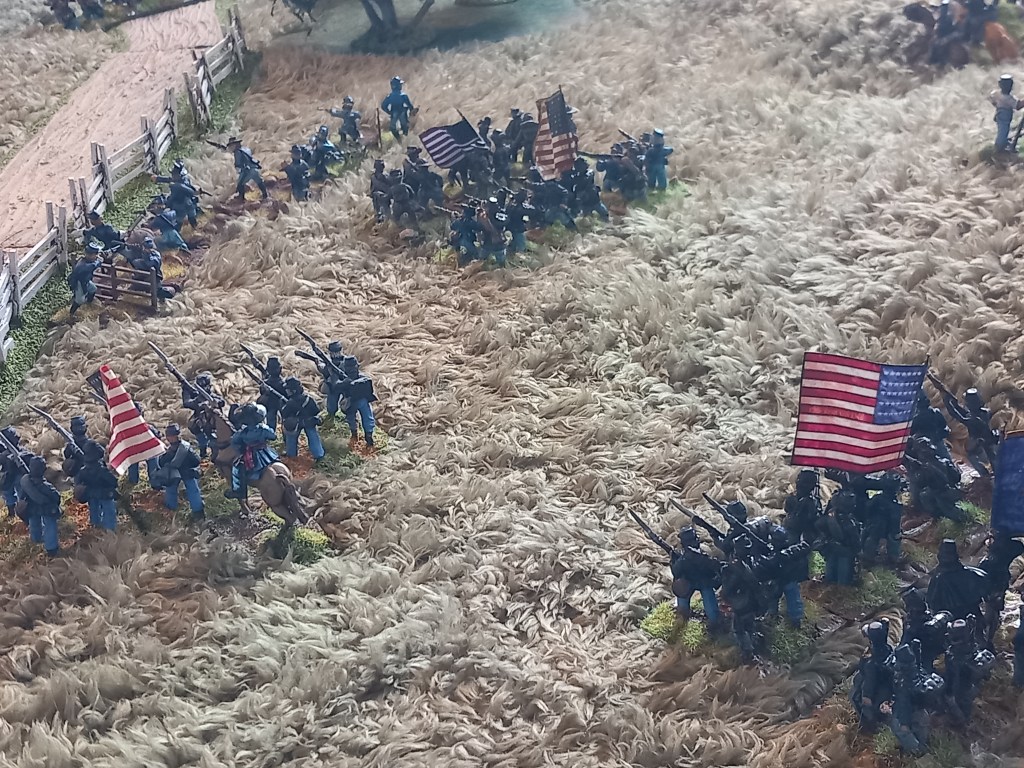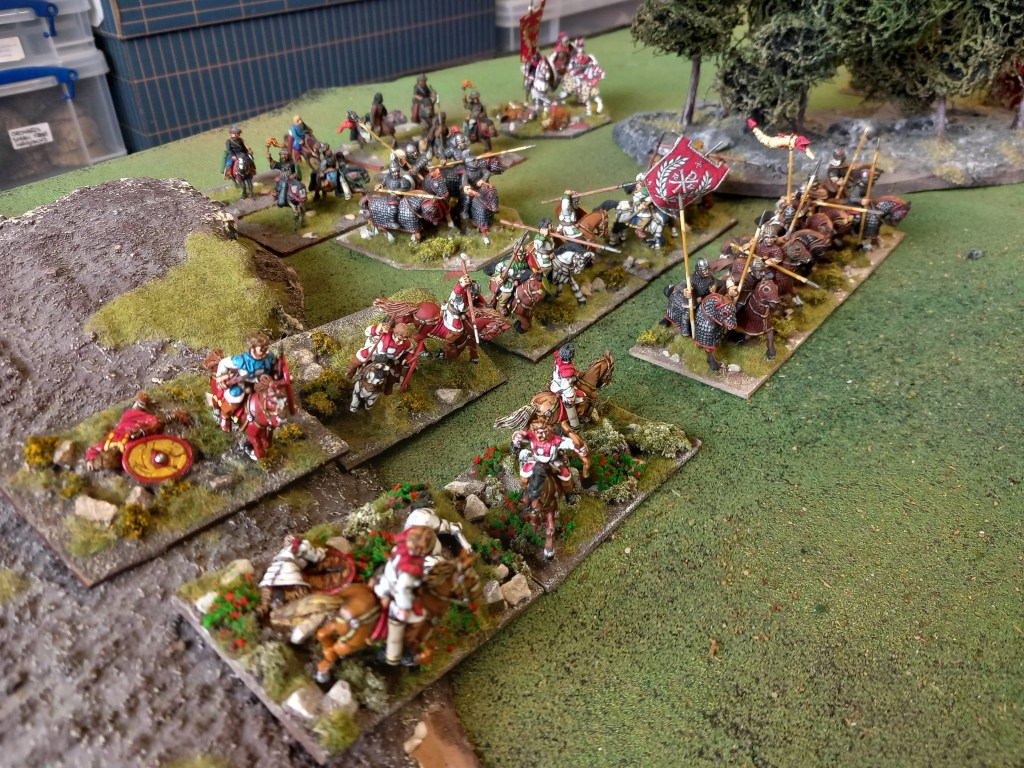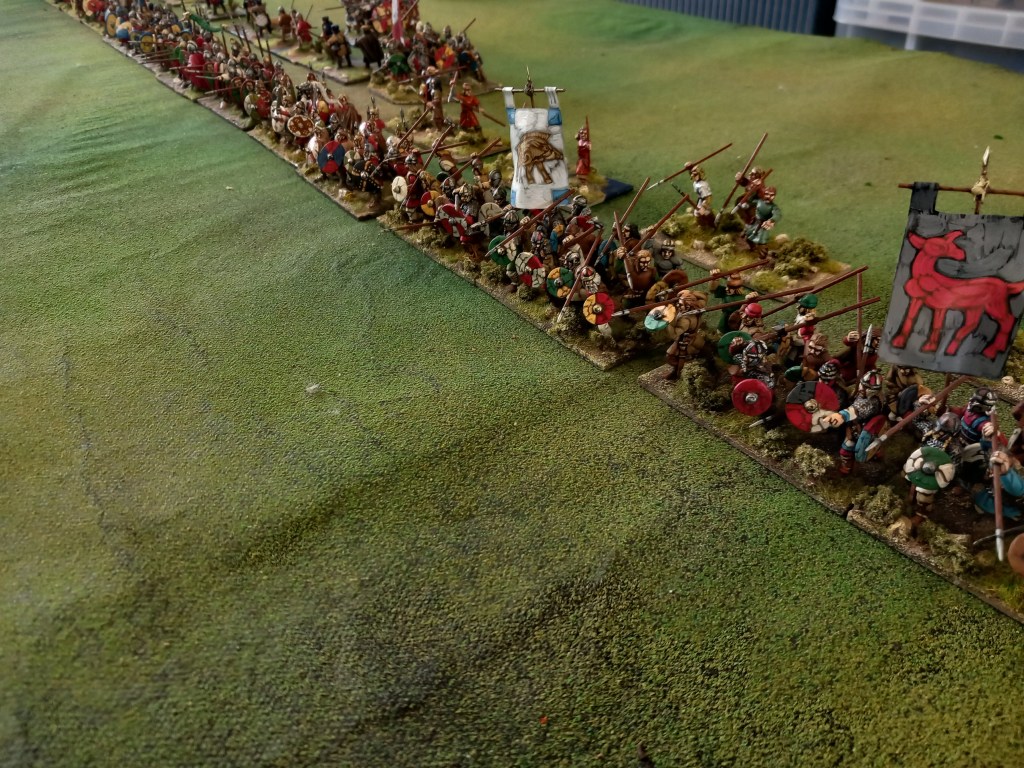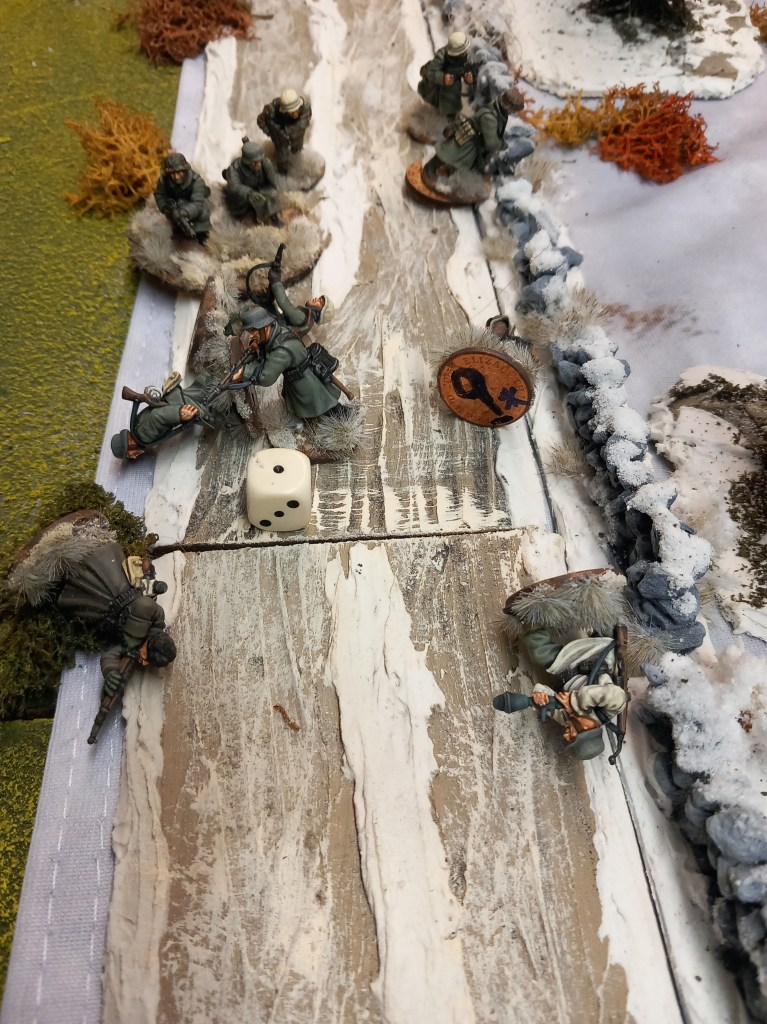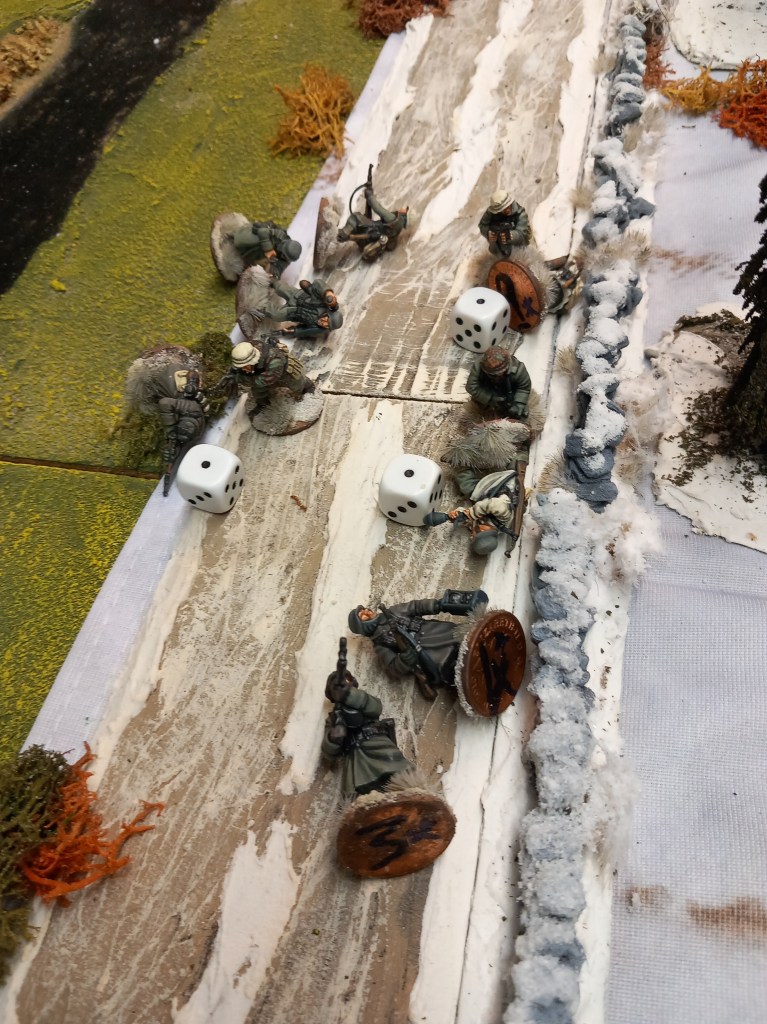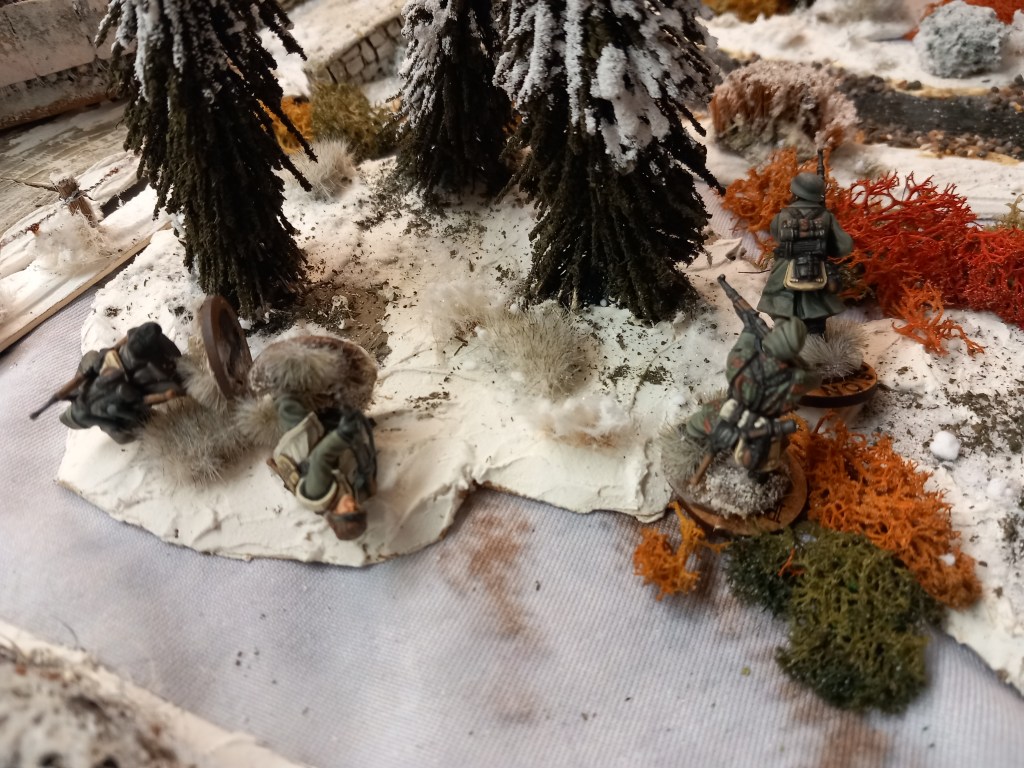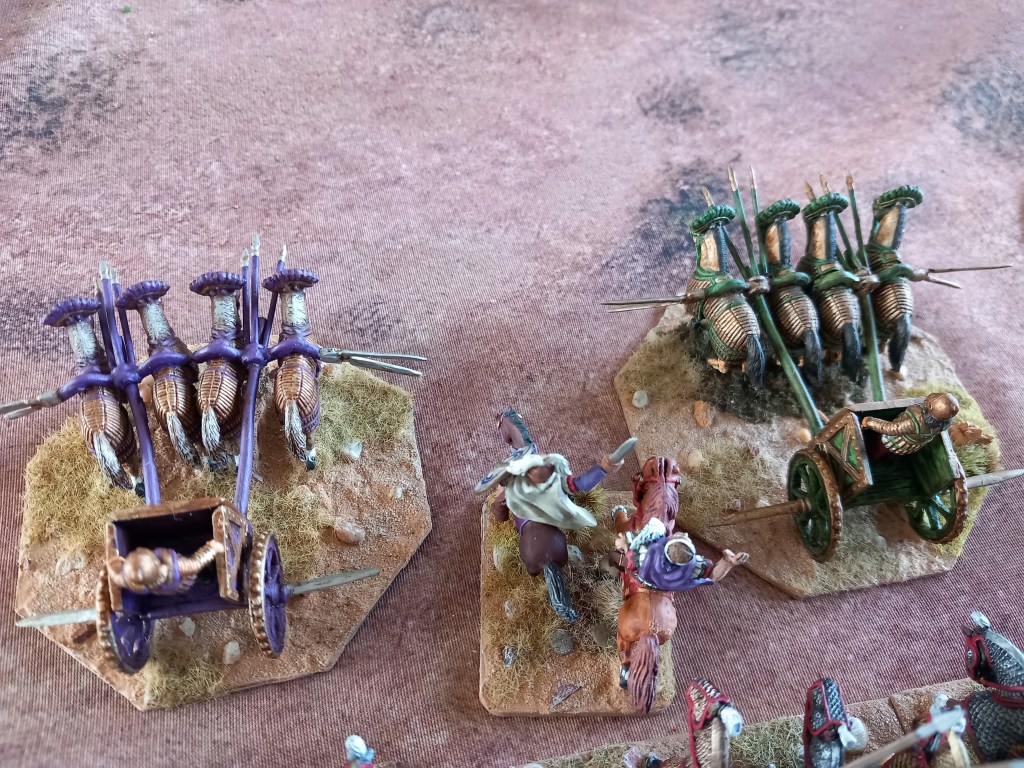
November 2025 Report

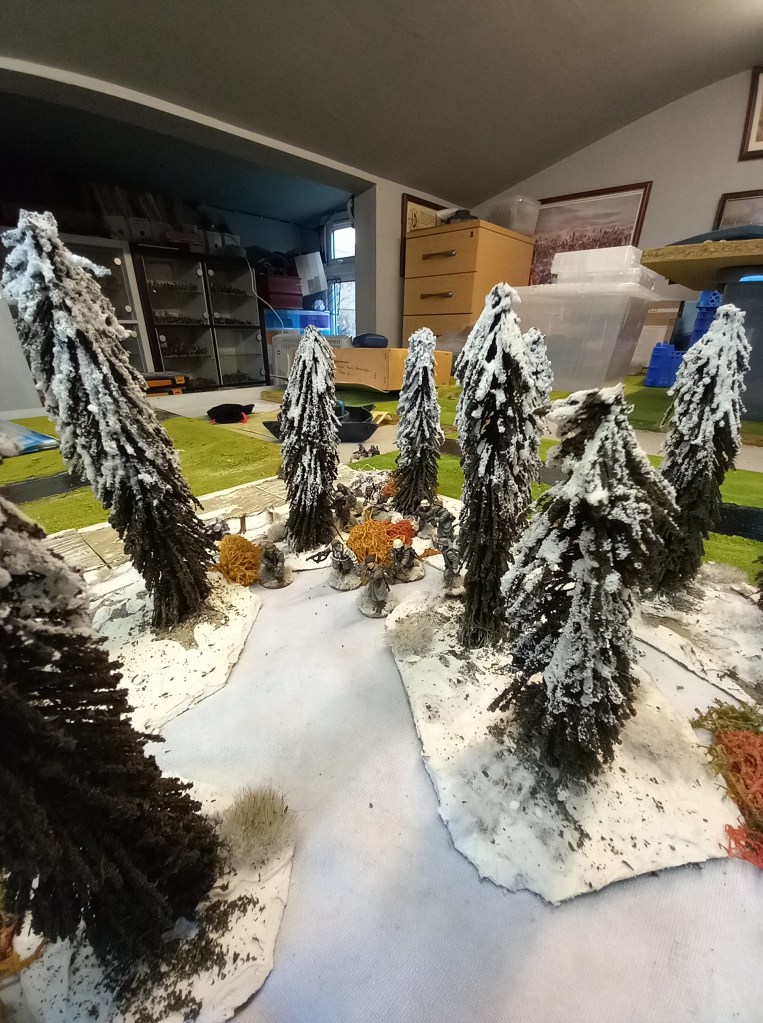
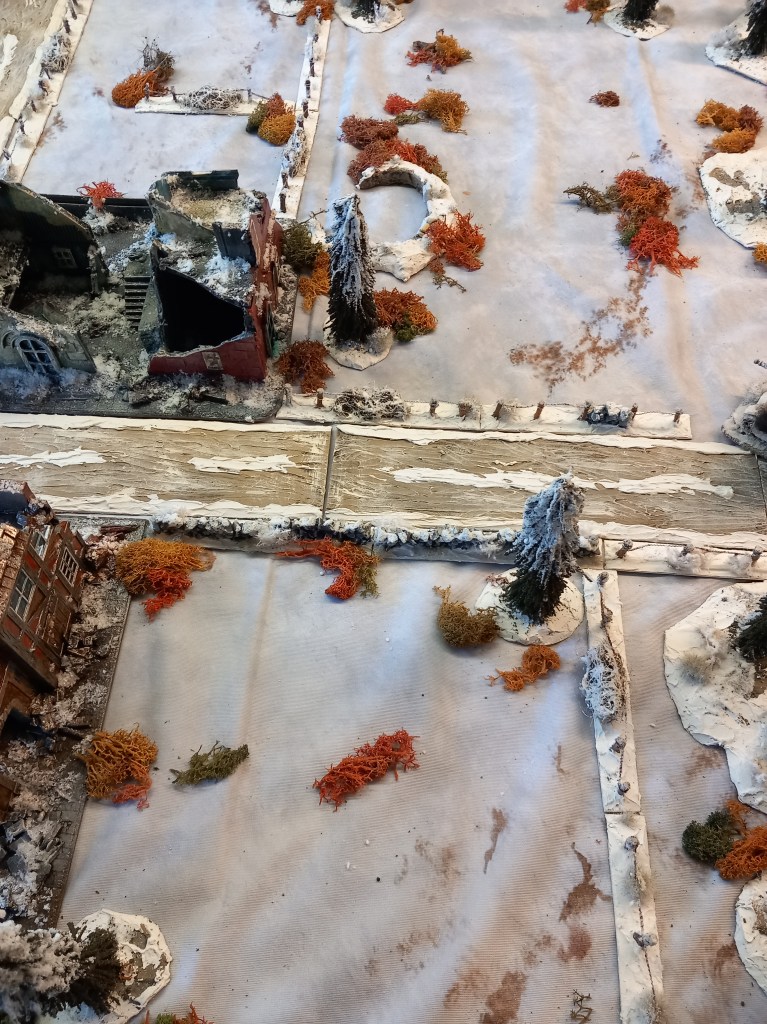
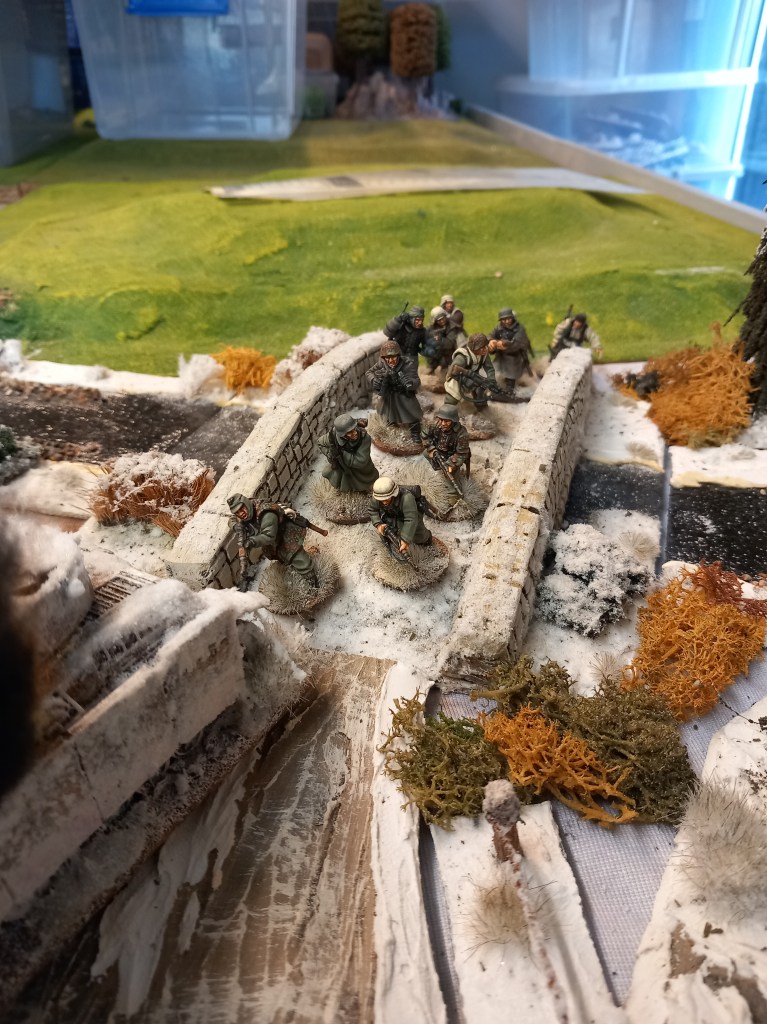
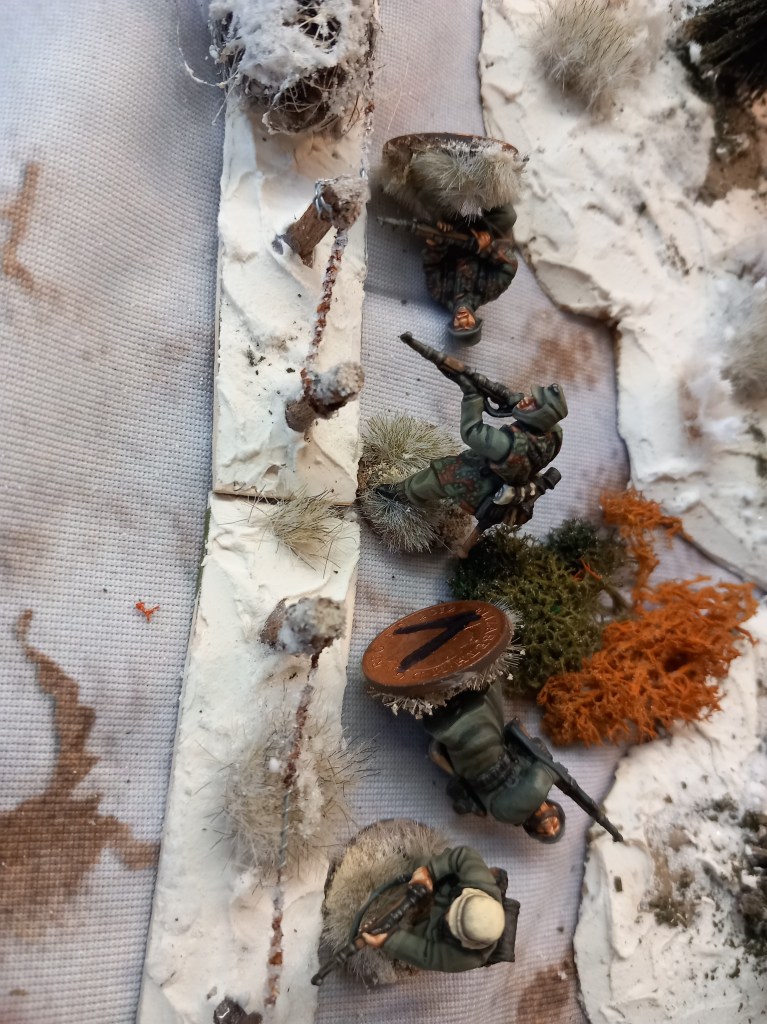
Winter is coming. The games however are undeterred.
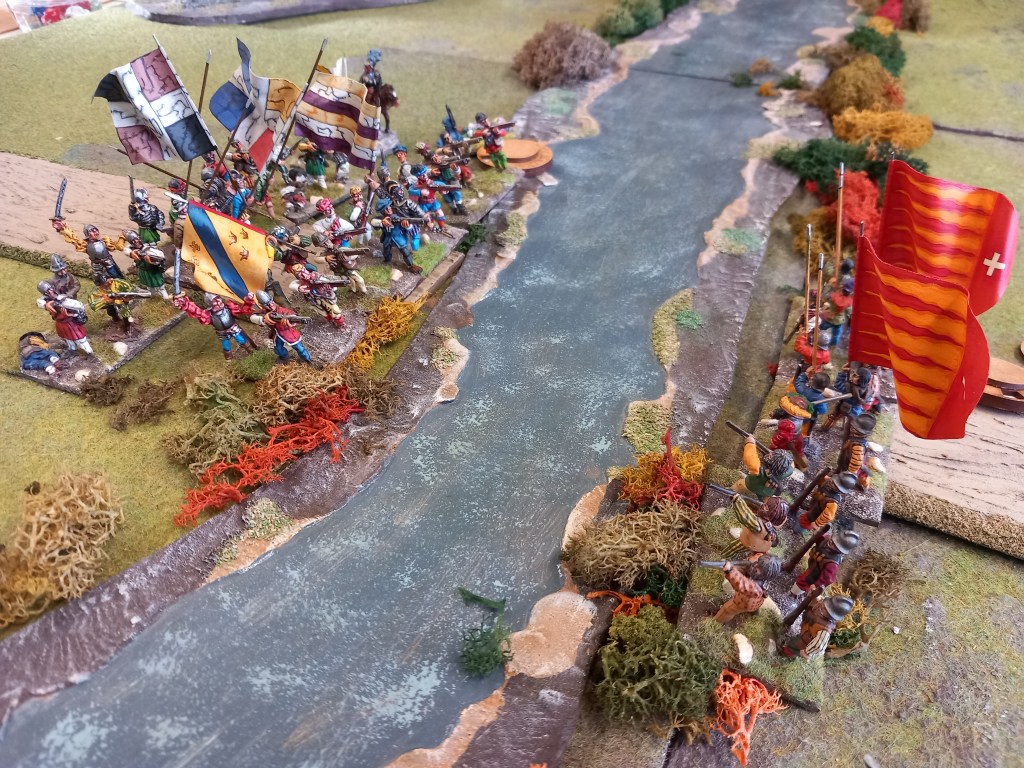
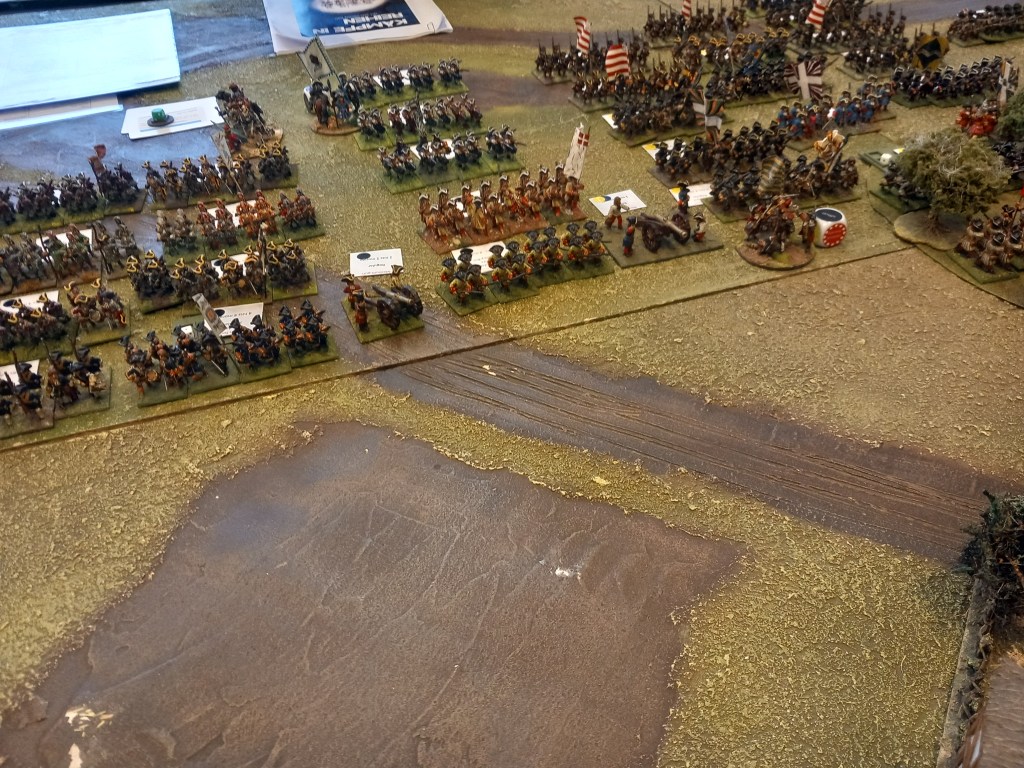
First game of the month was from our GNW collection – “Action at Sychevka” a narrative game.

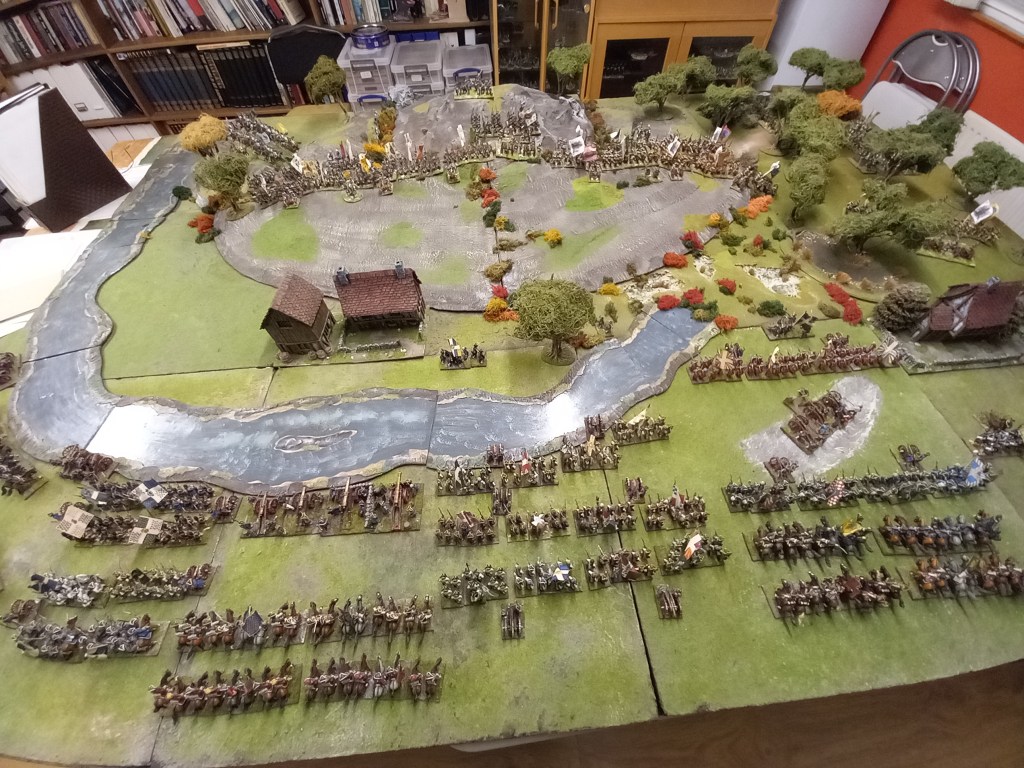
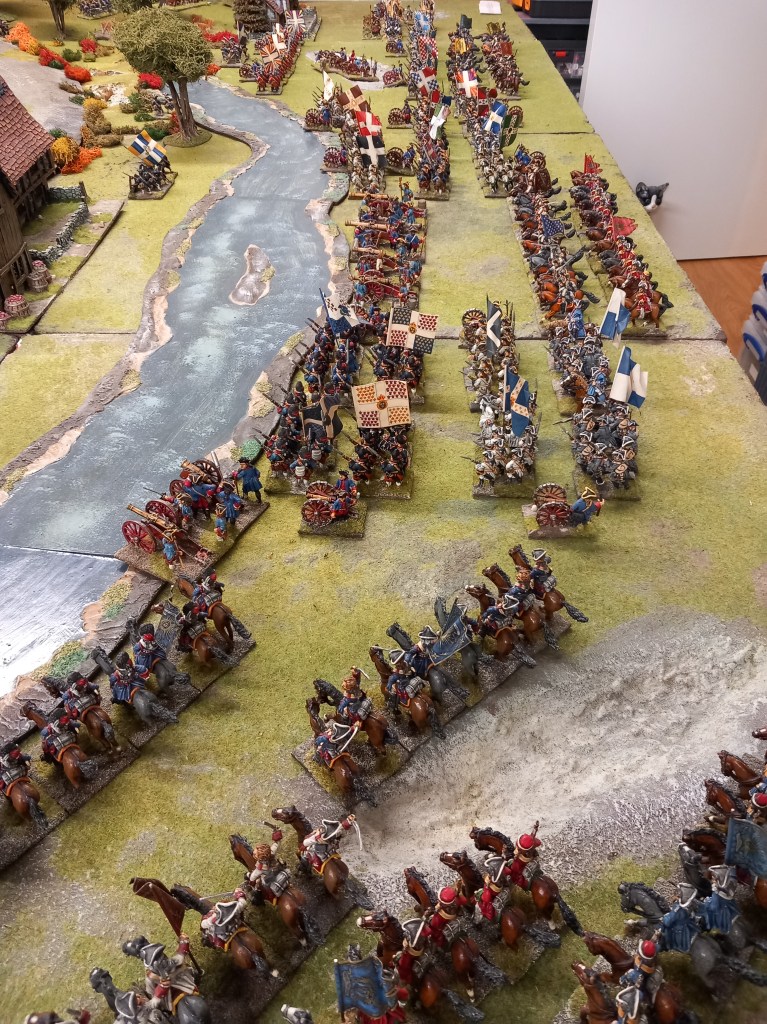
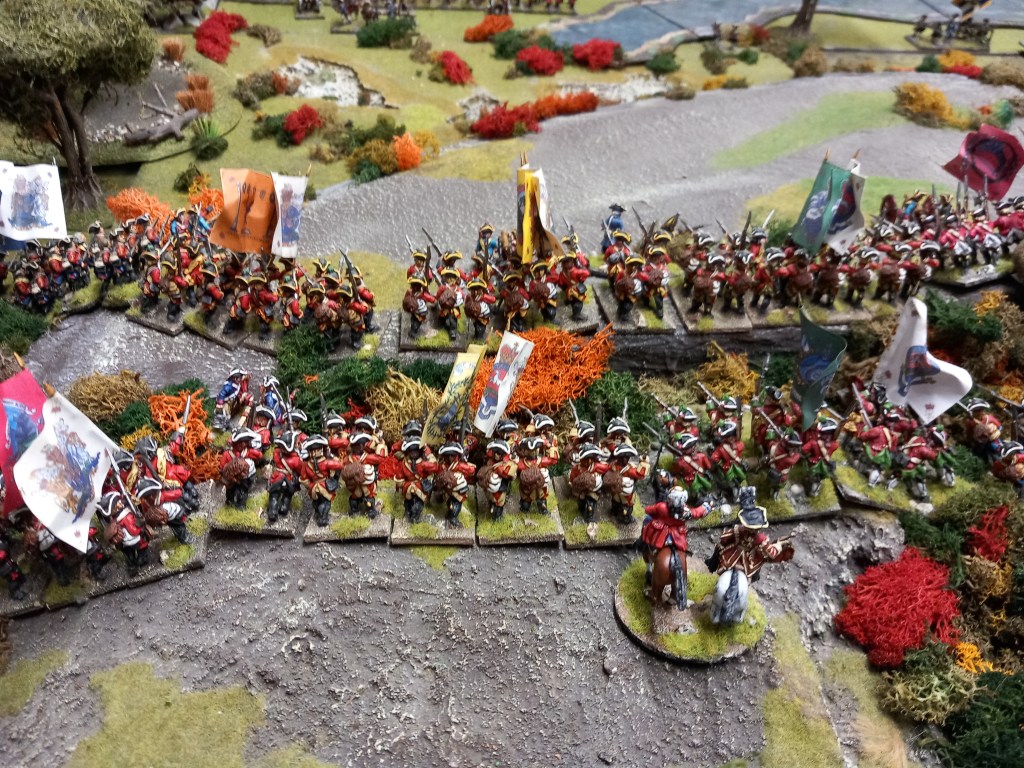
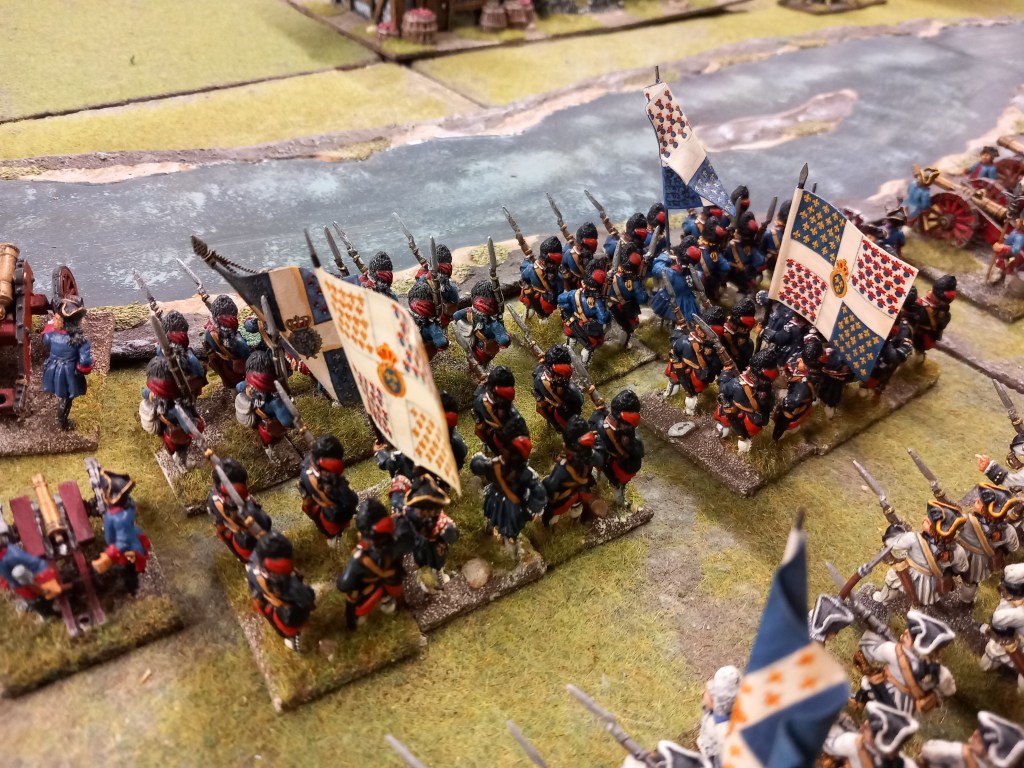
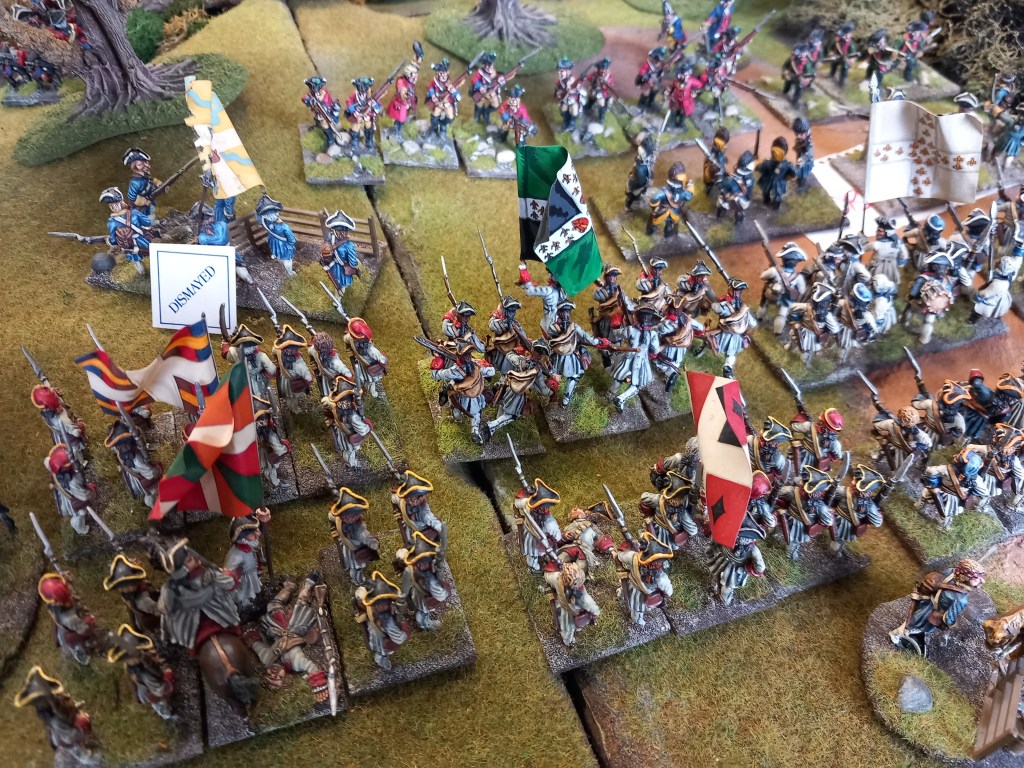
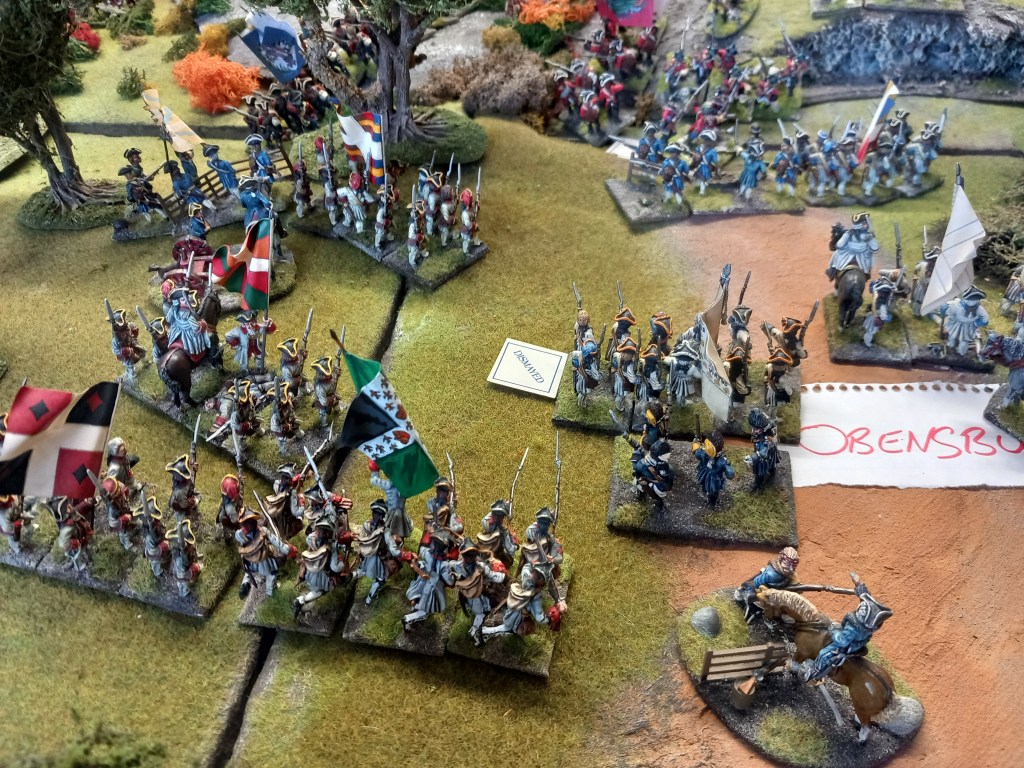
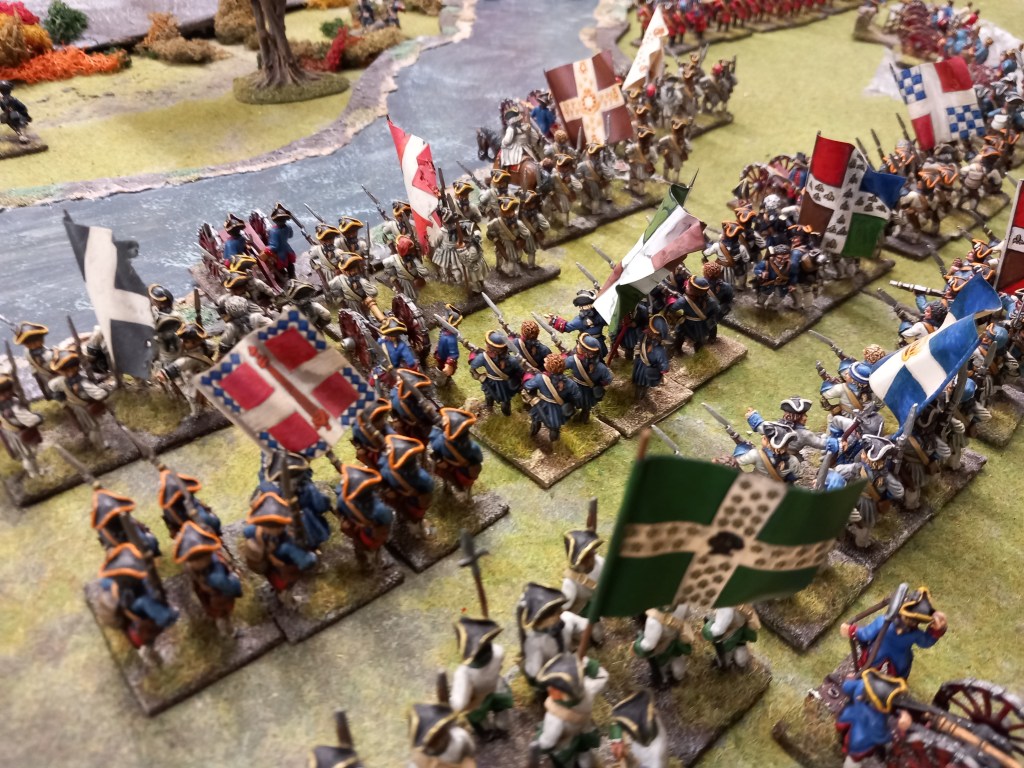
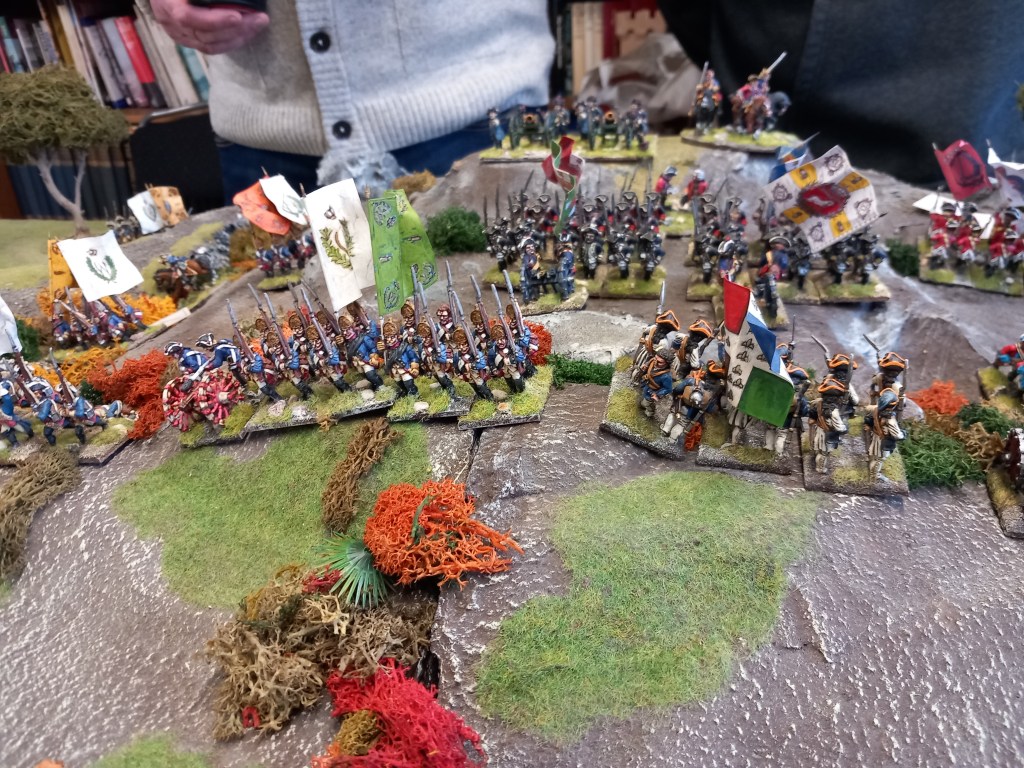
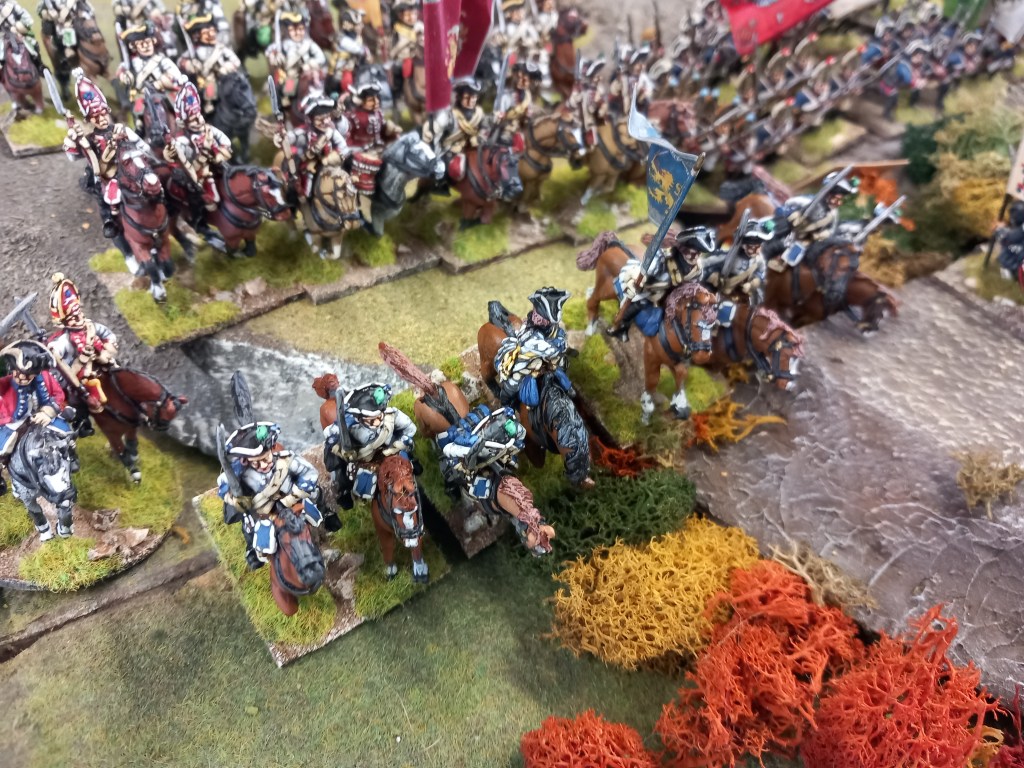
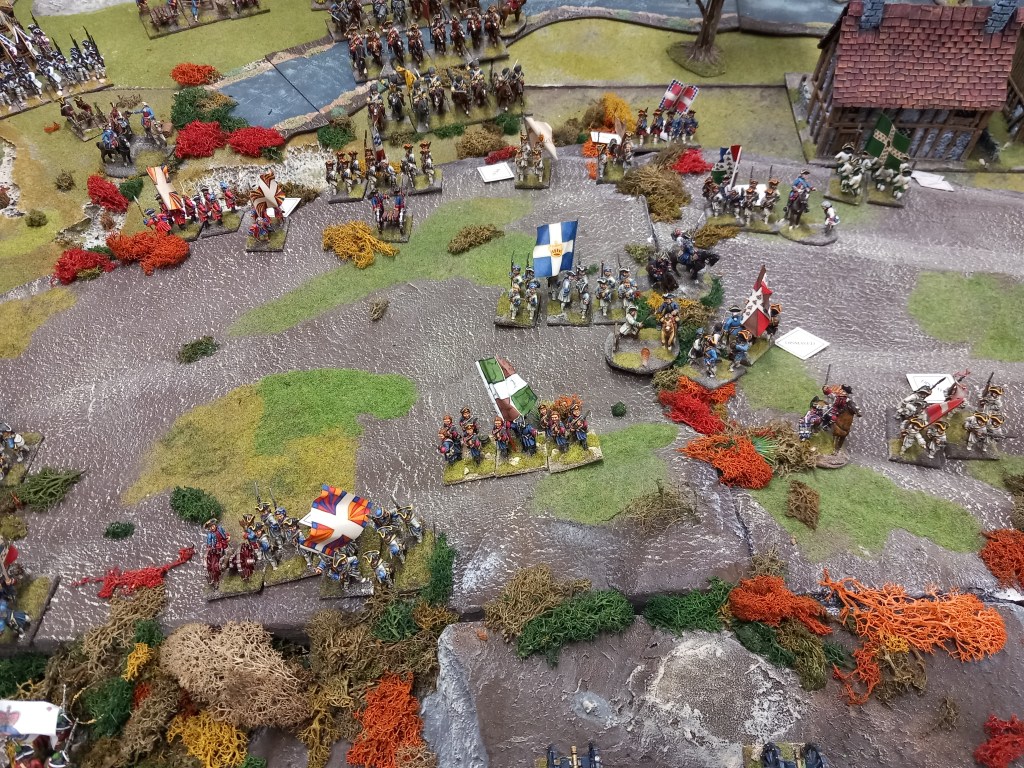
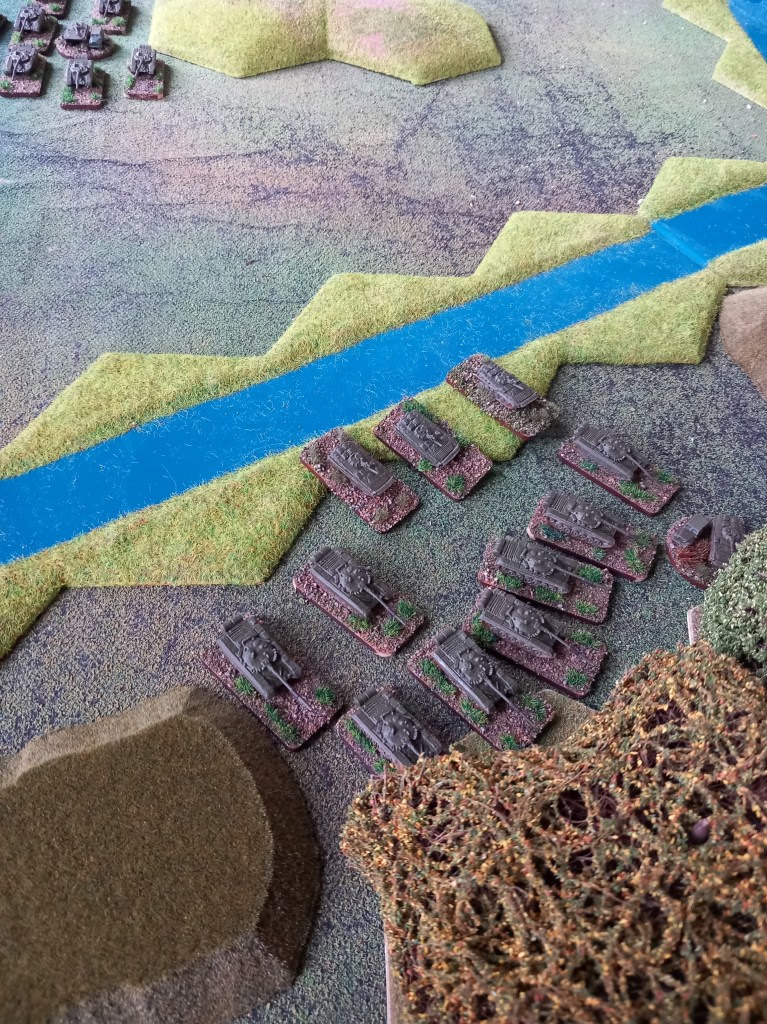
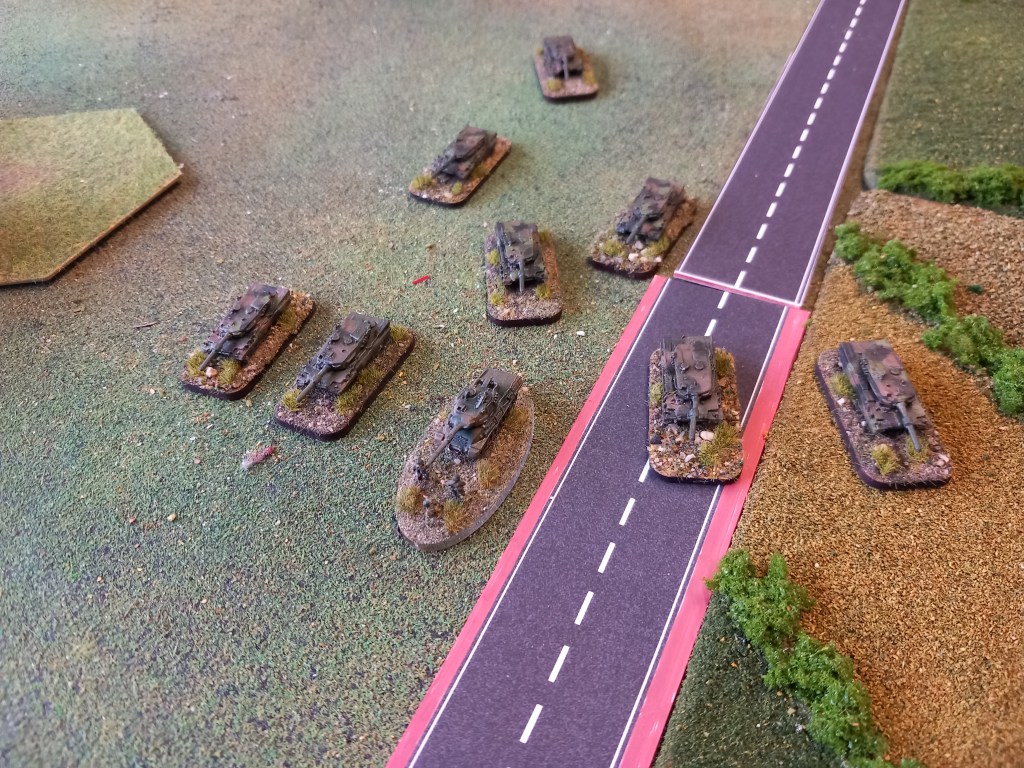
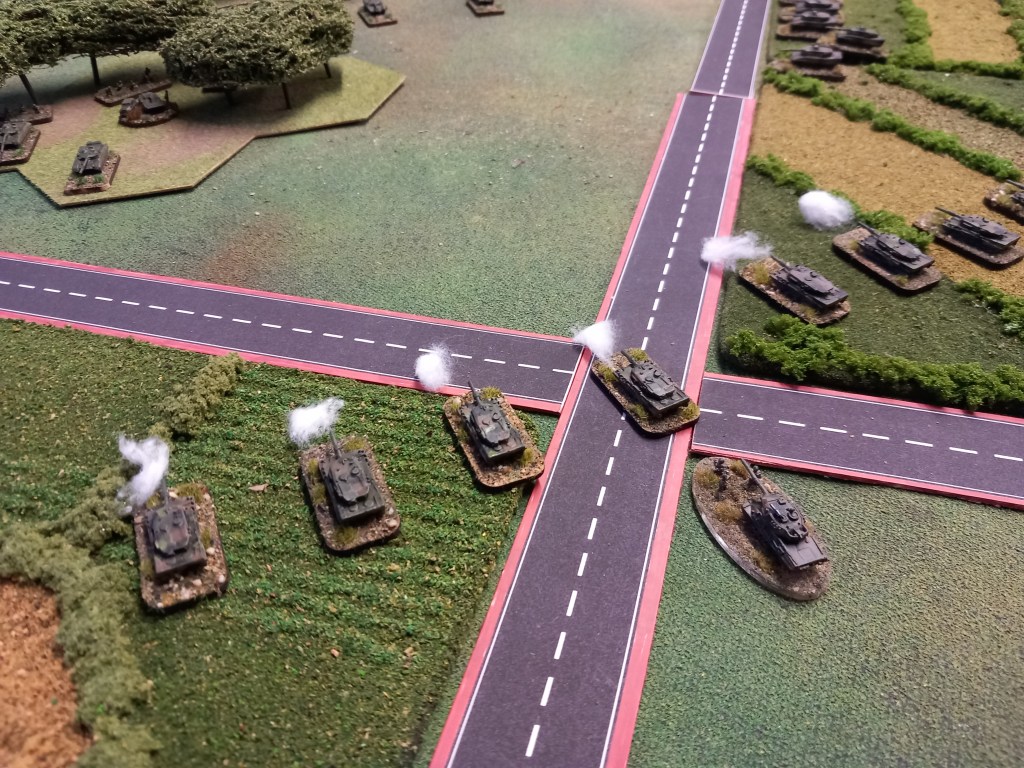
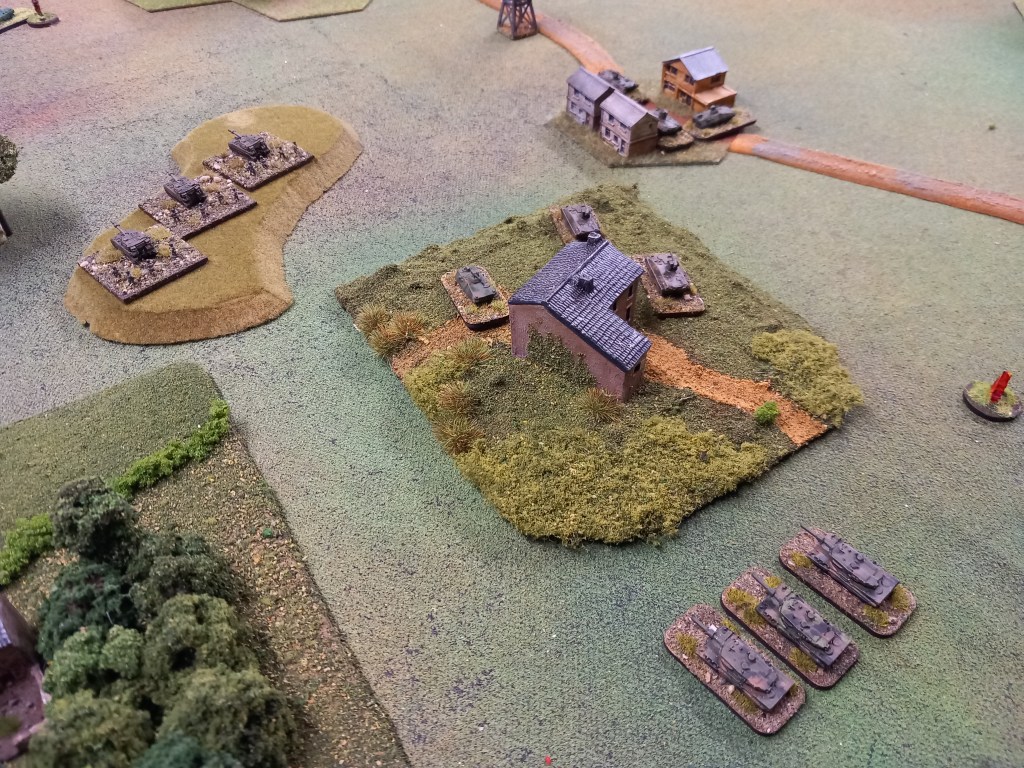
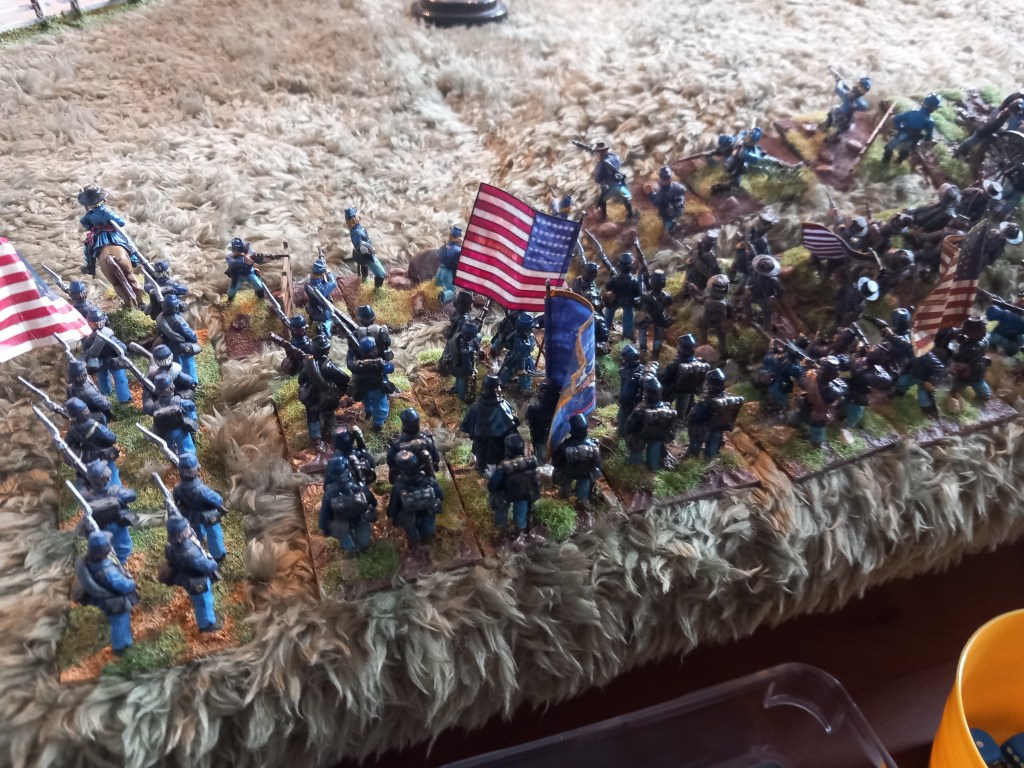
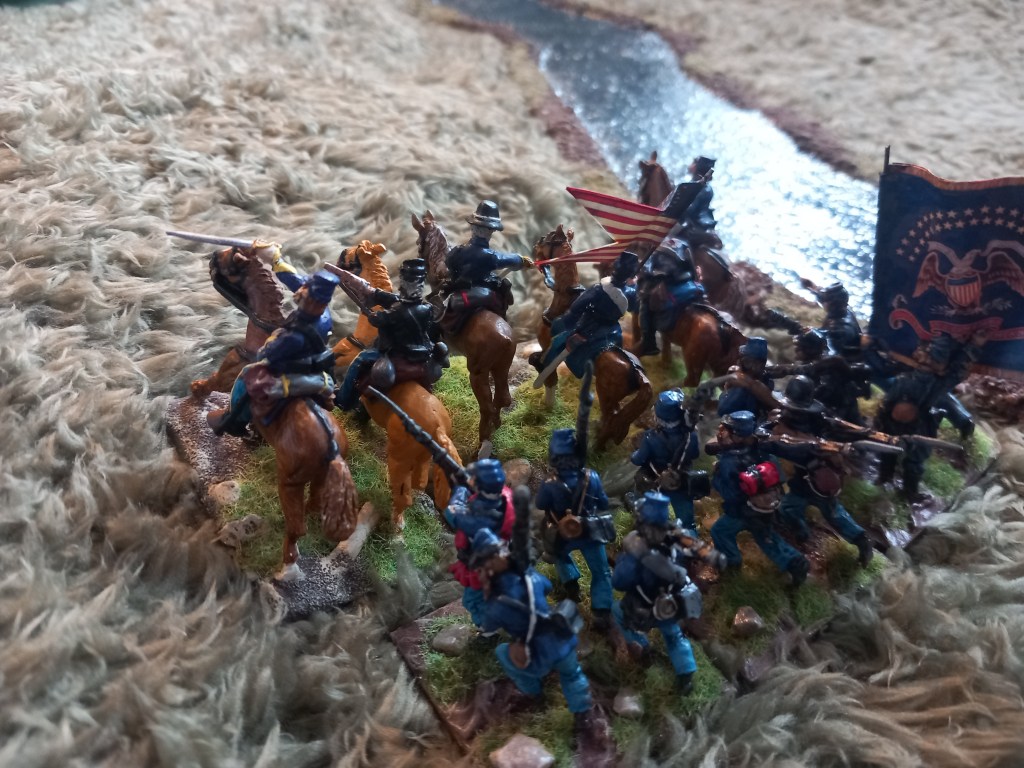
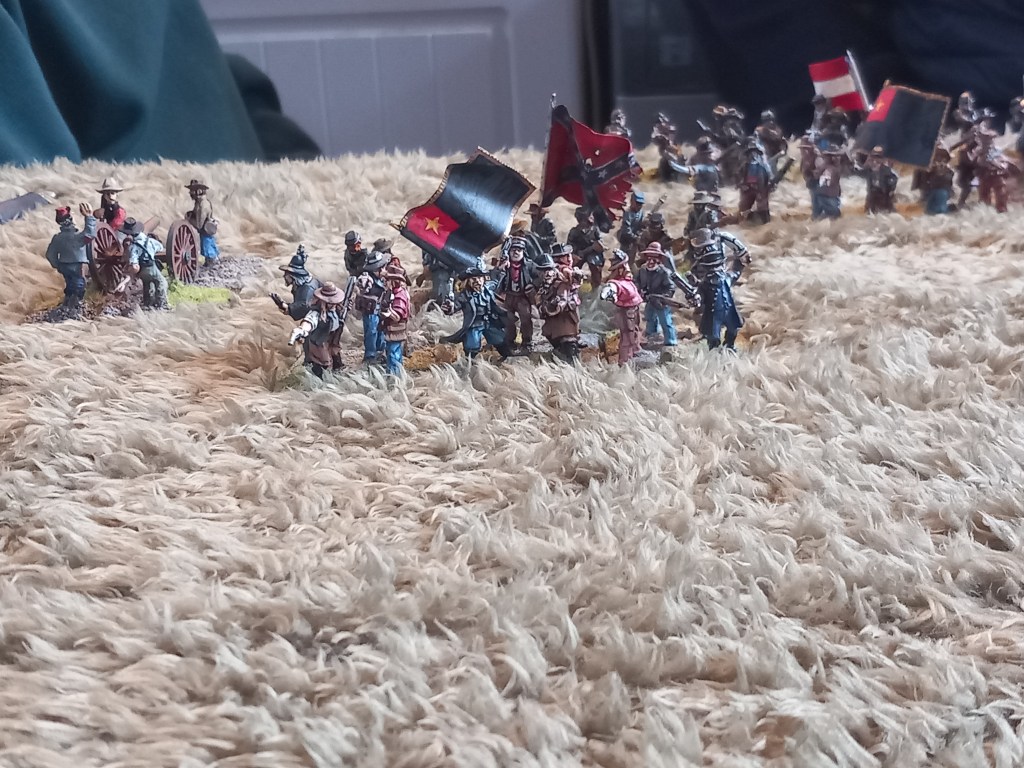
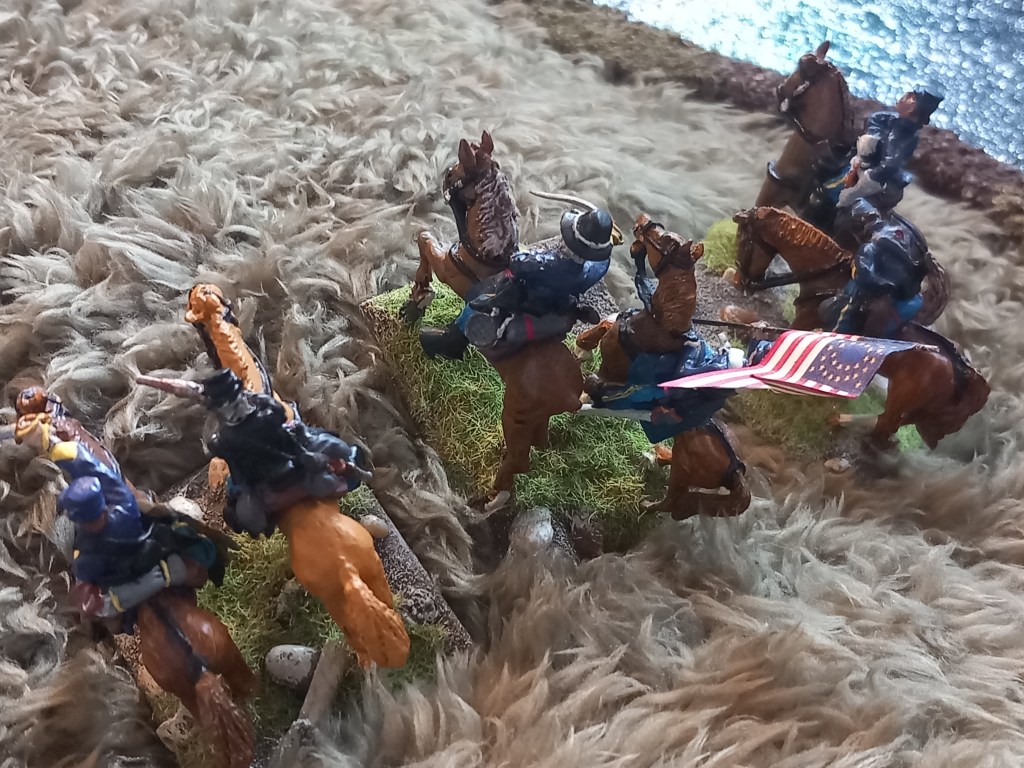
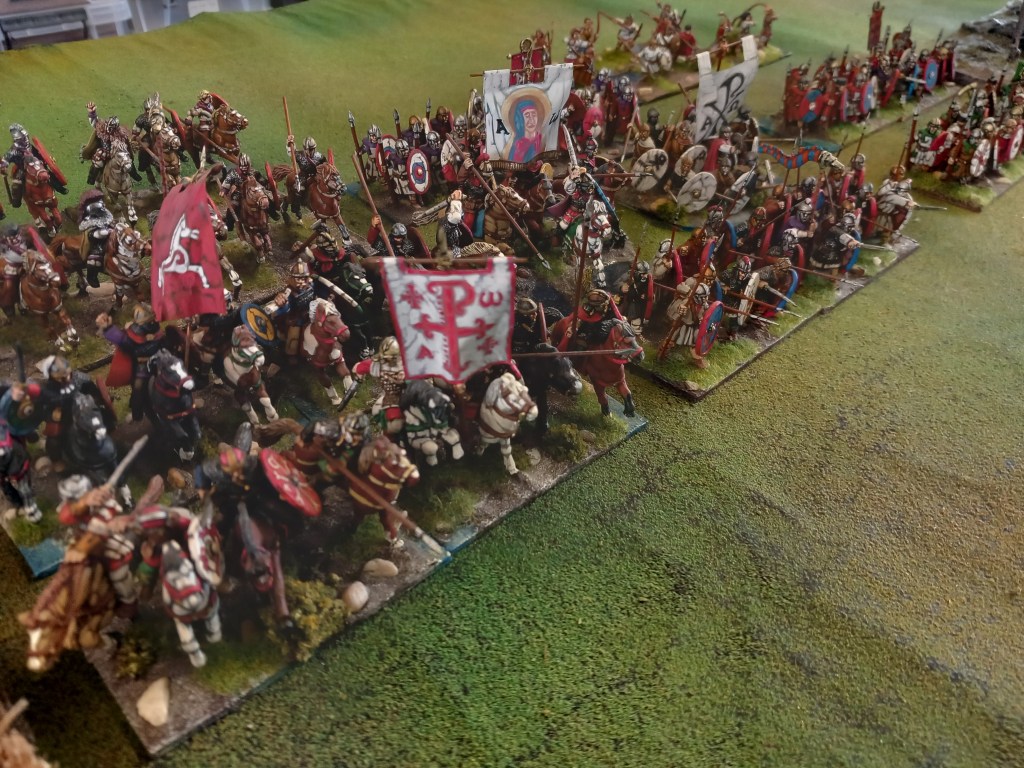
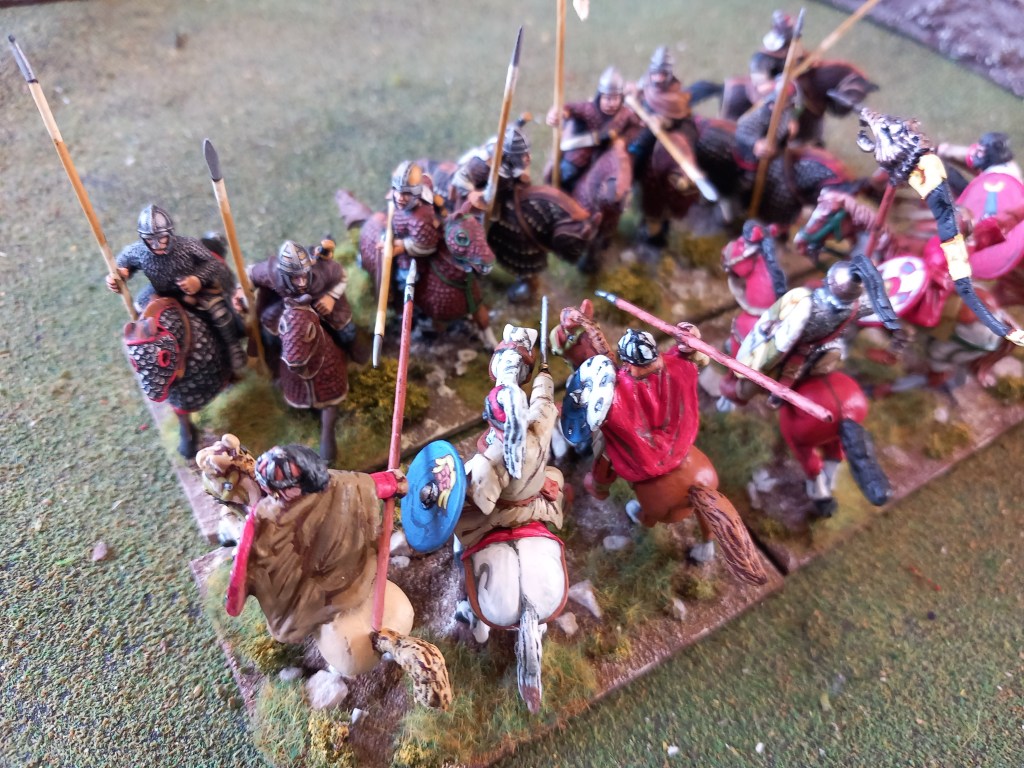
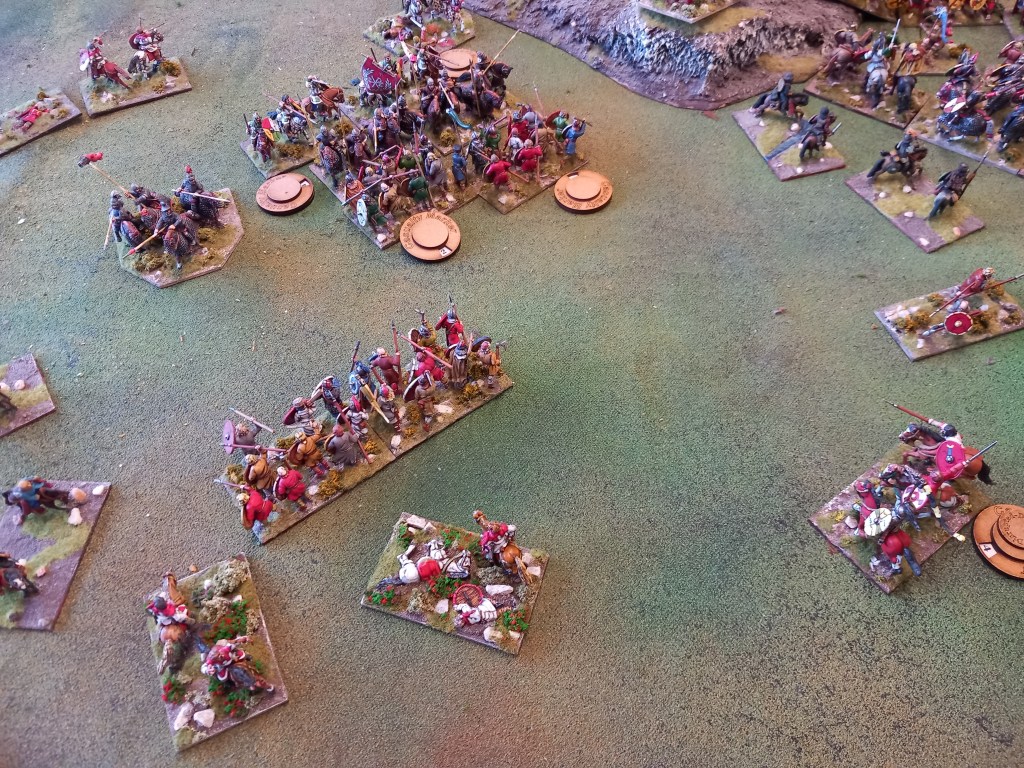
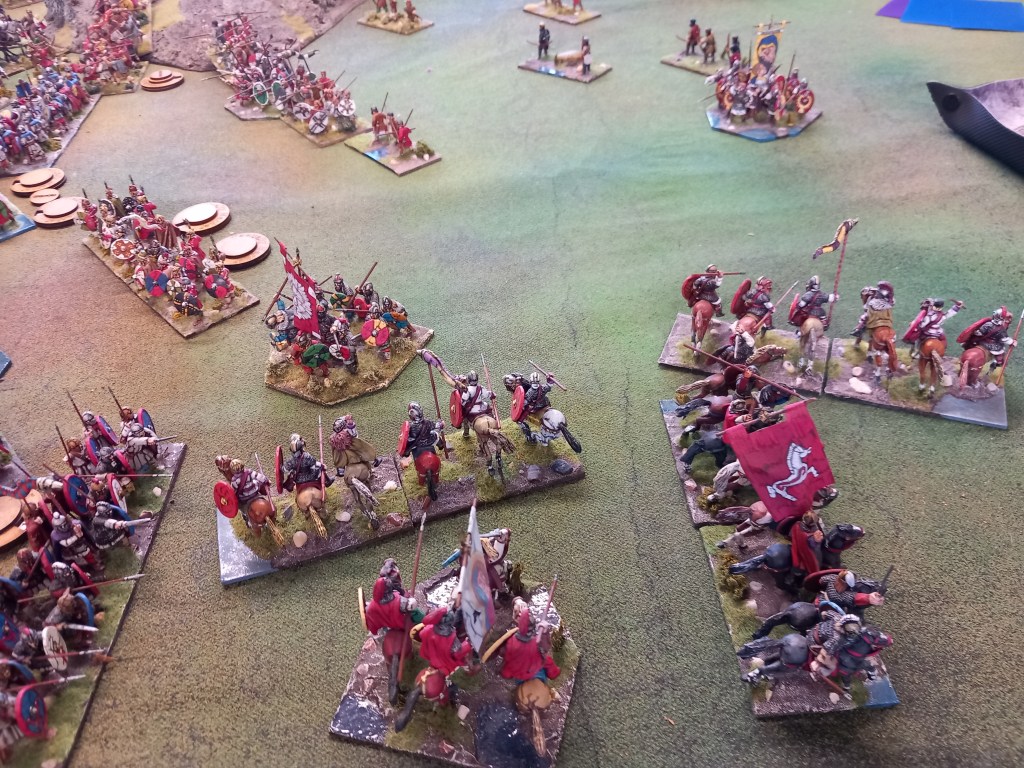
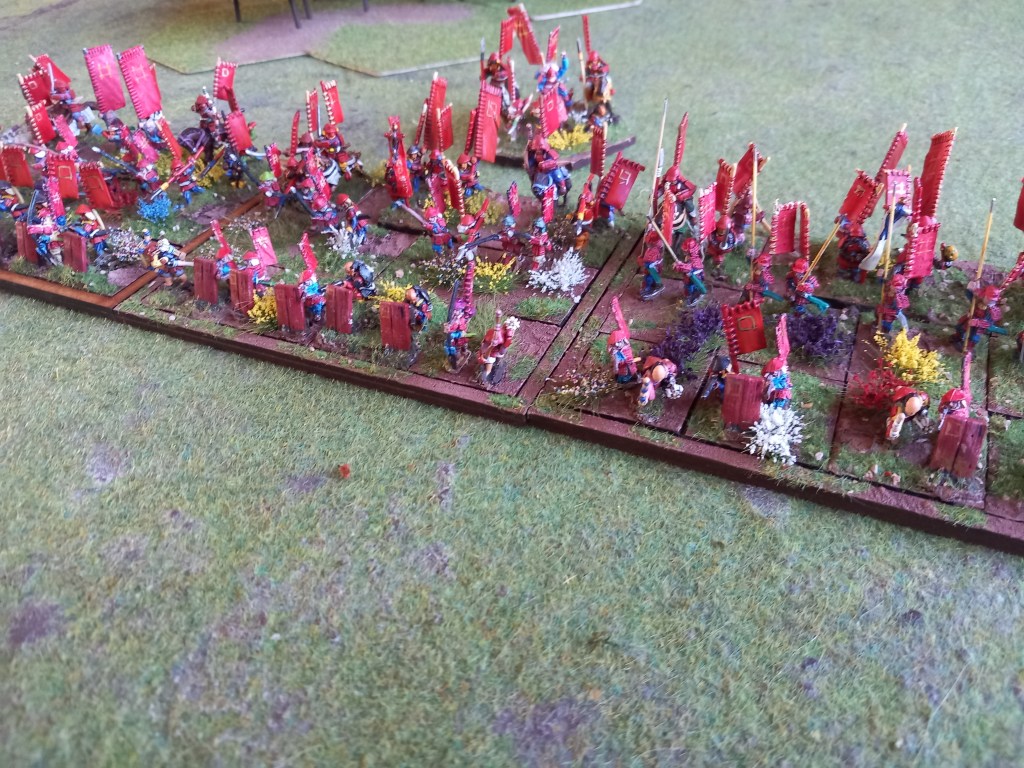
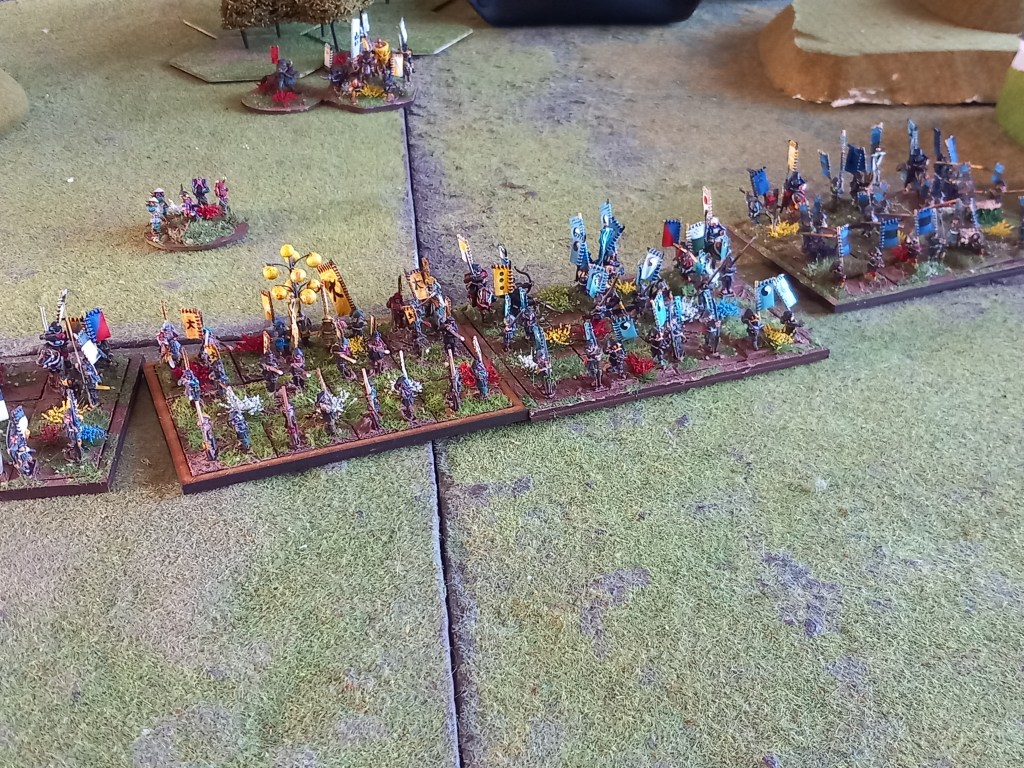
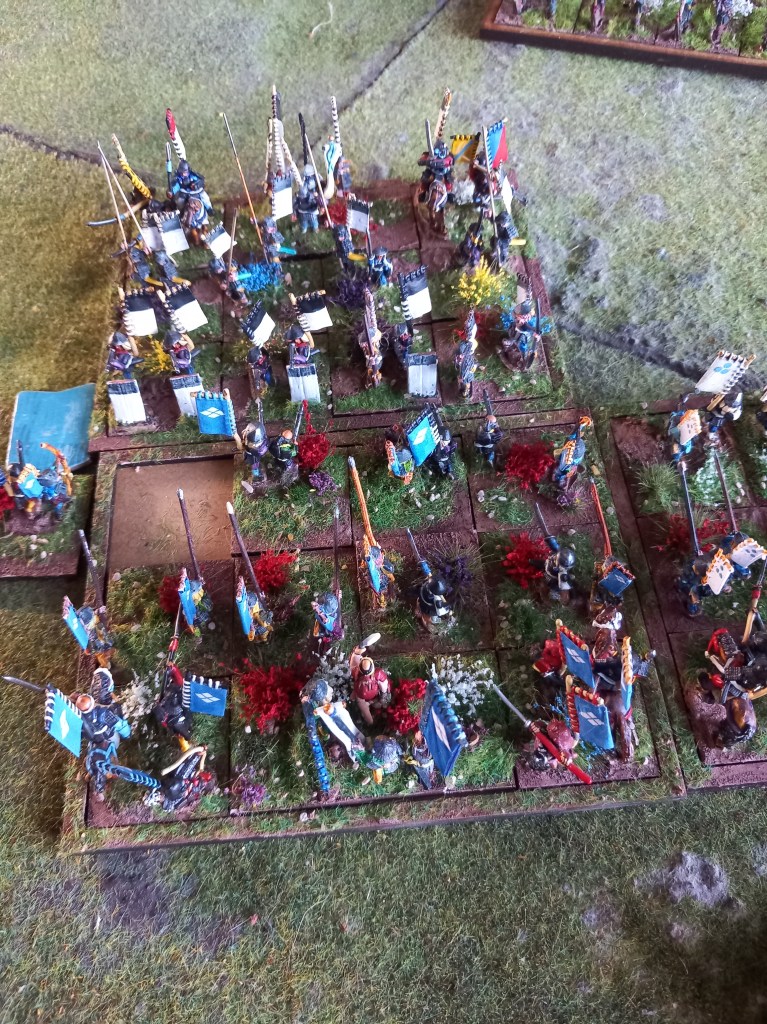
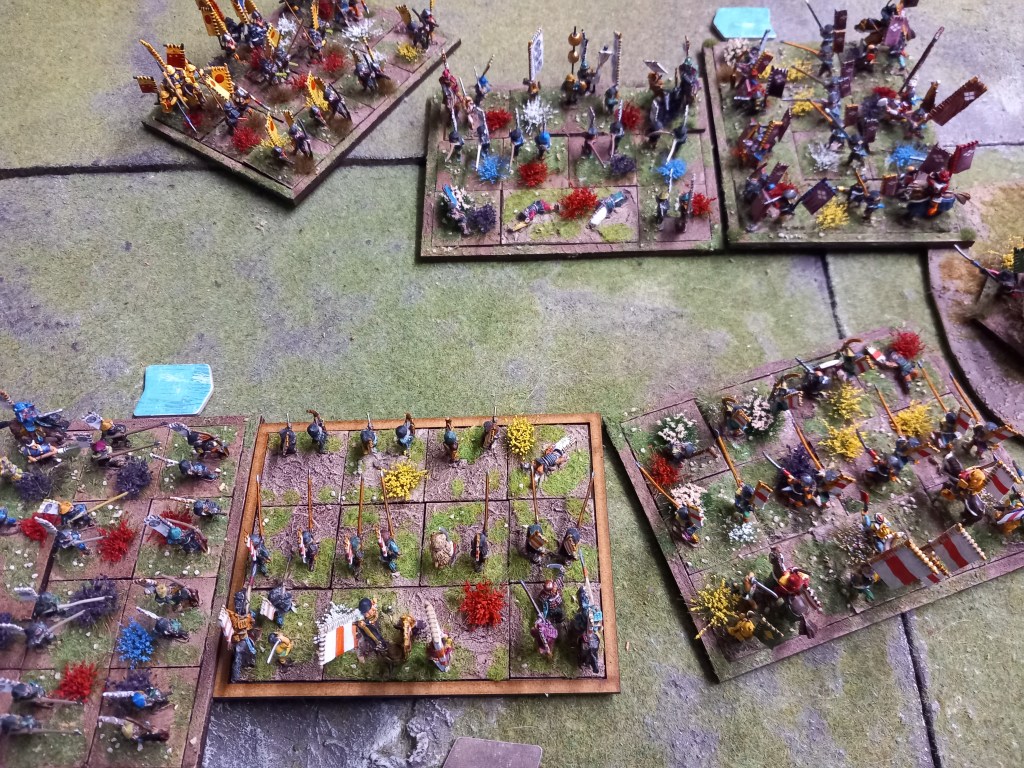
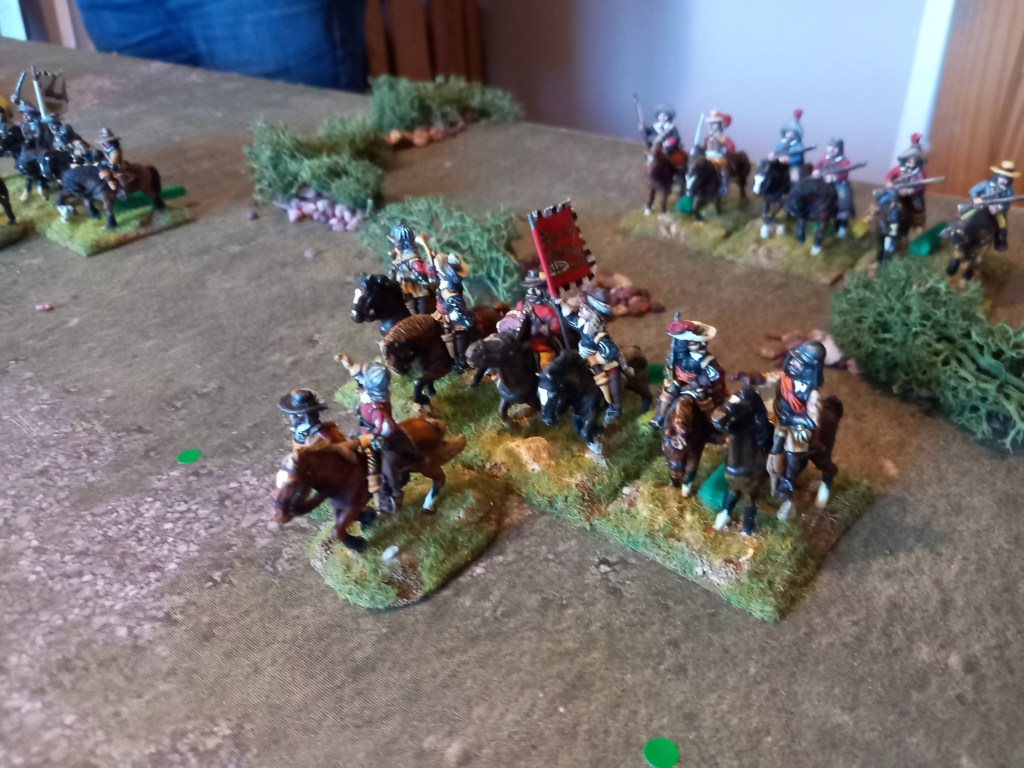
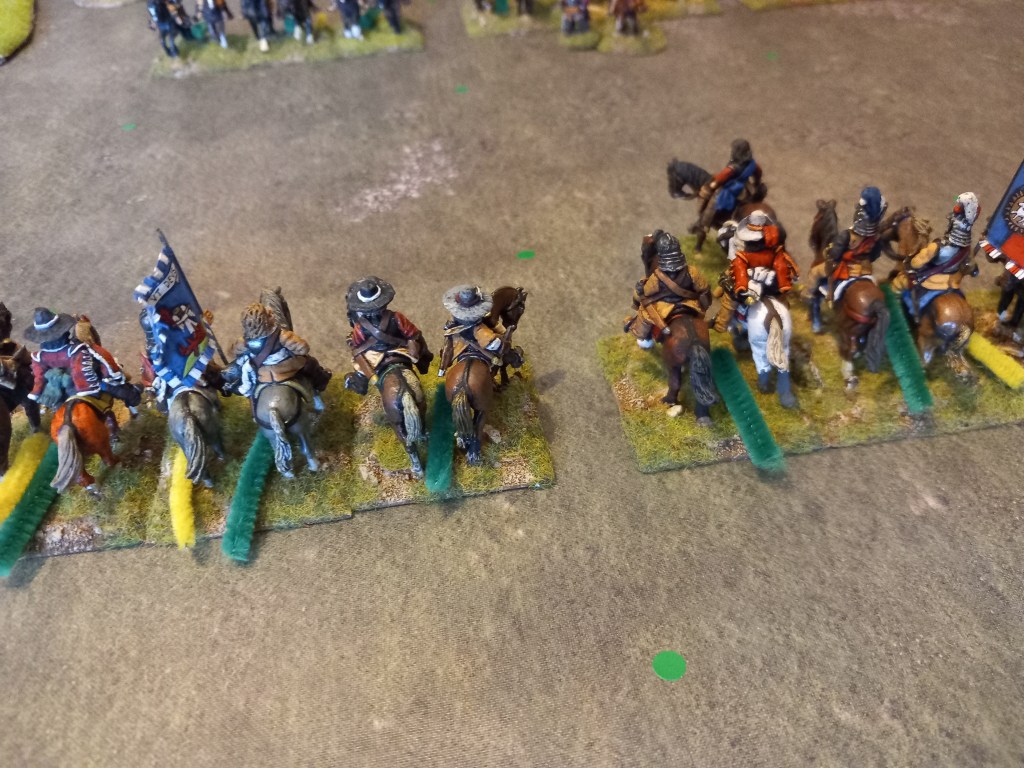
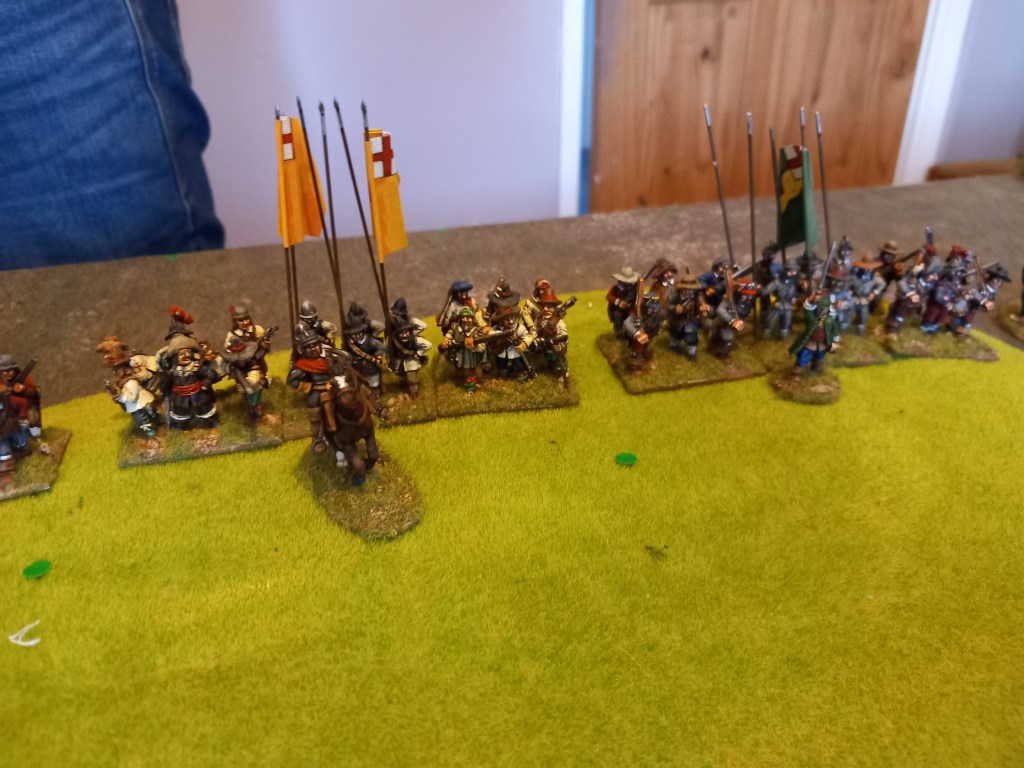
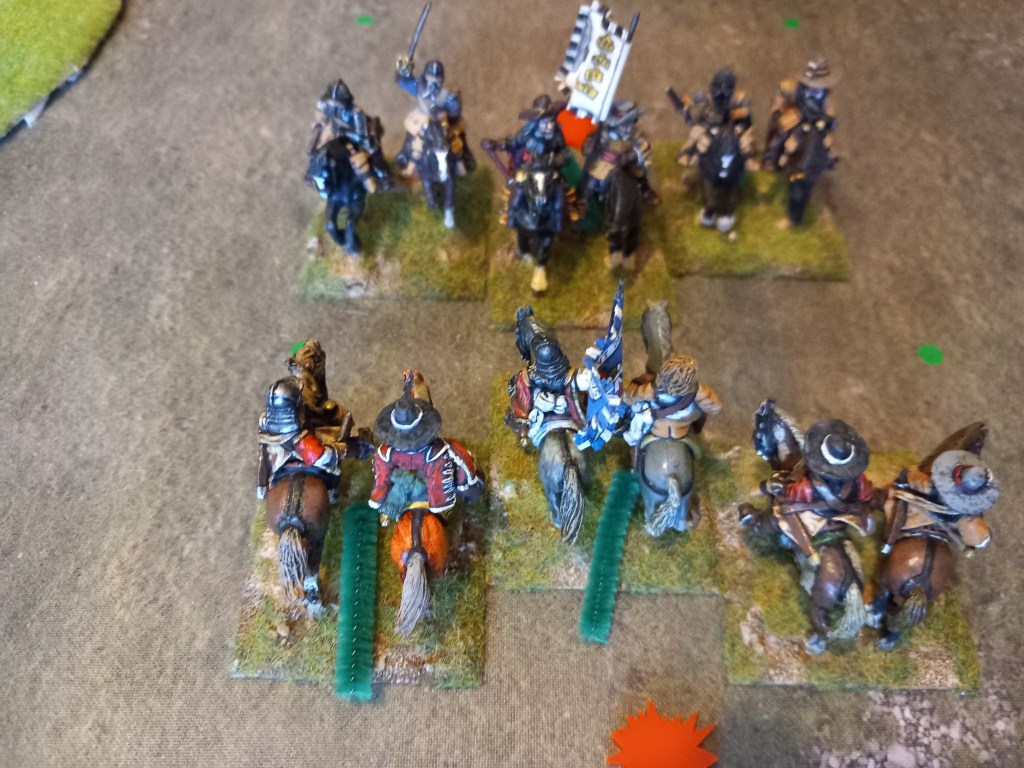
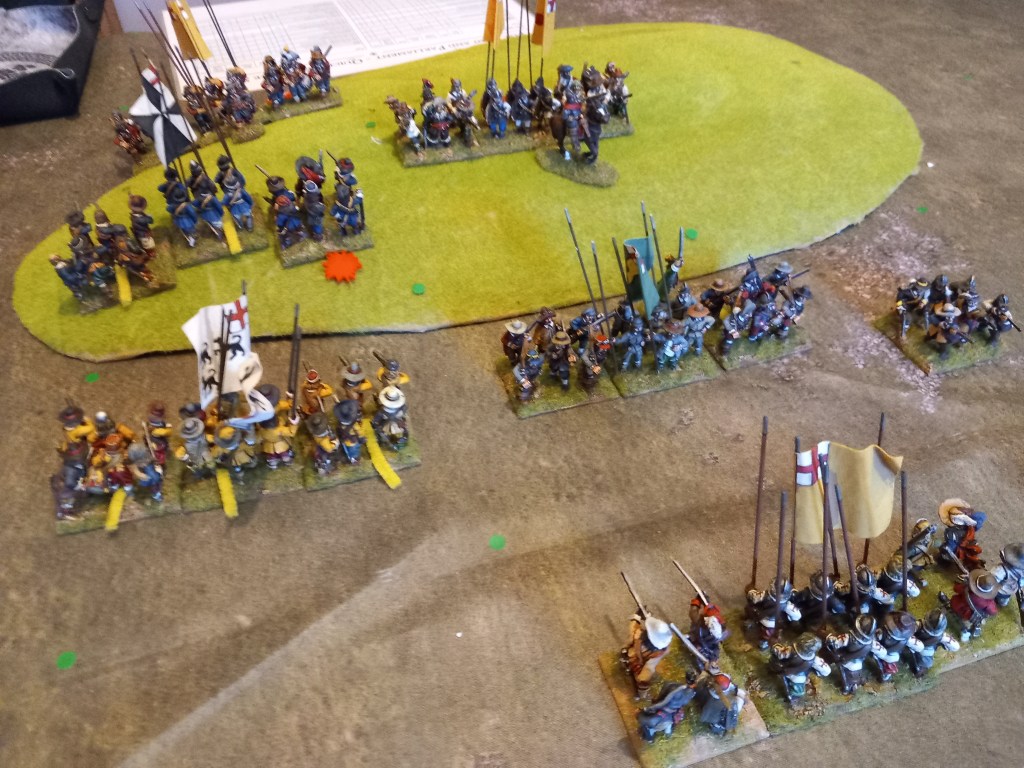
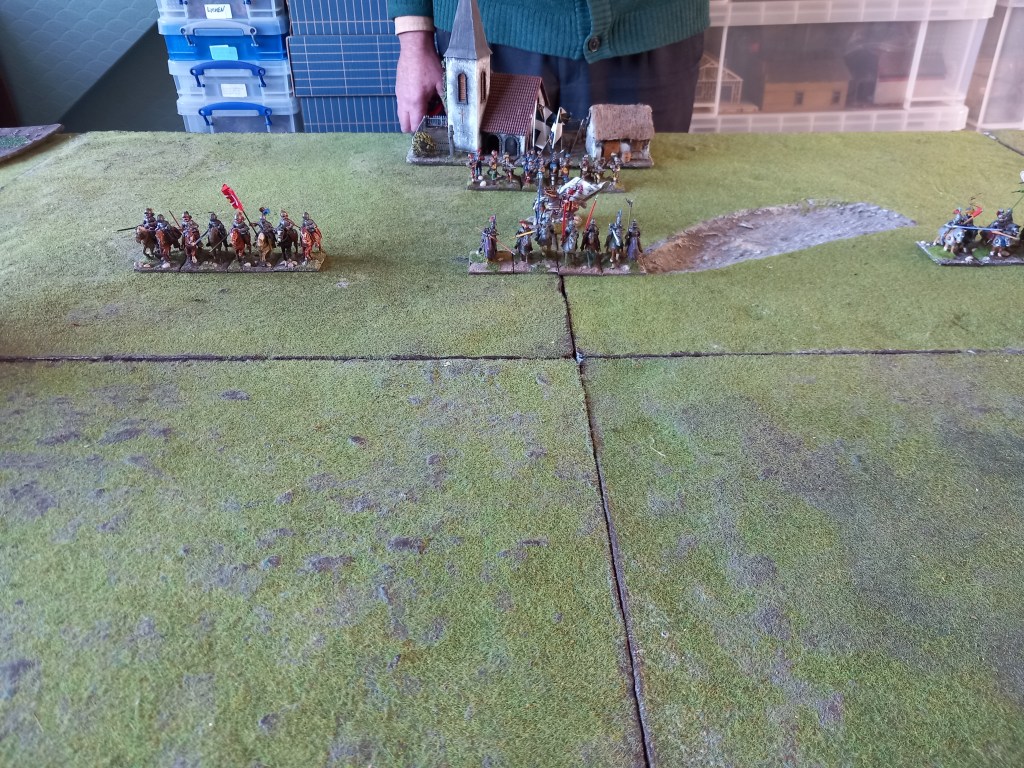
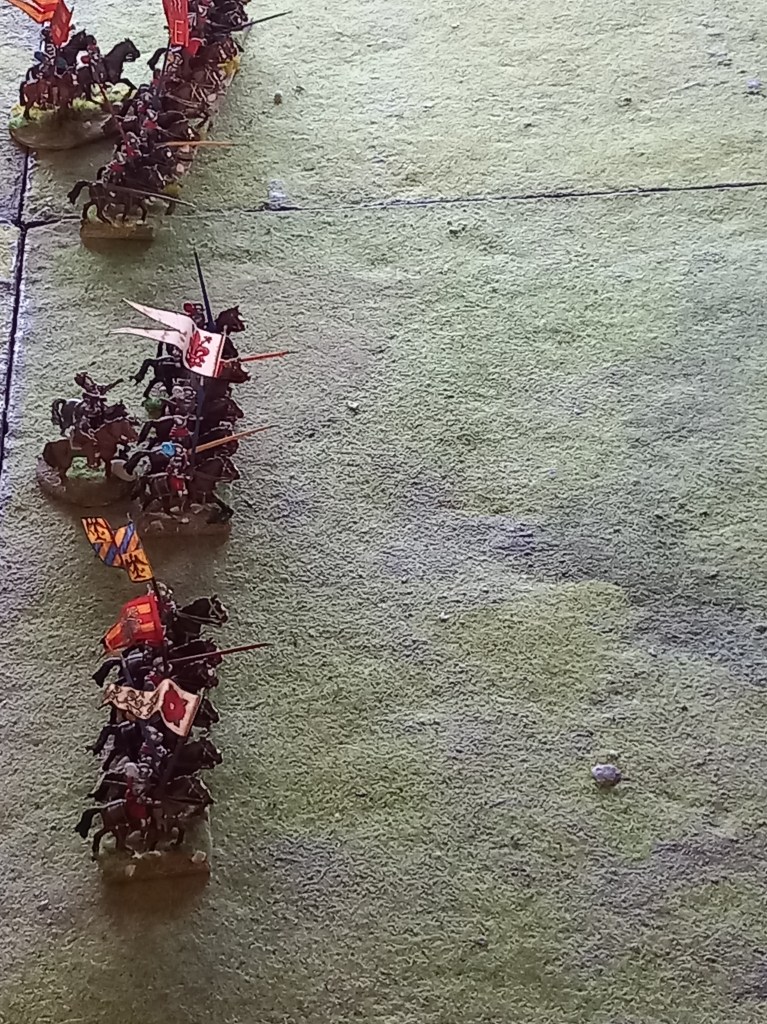
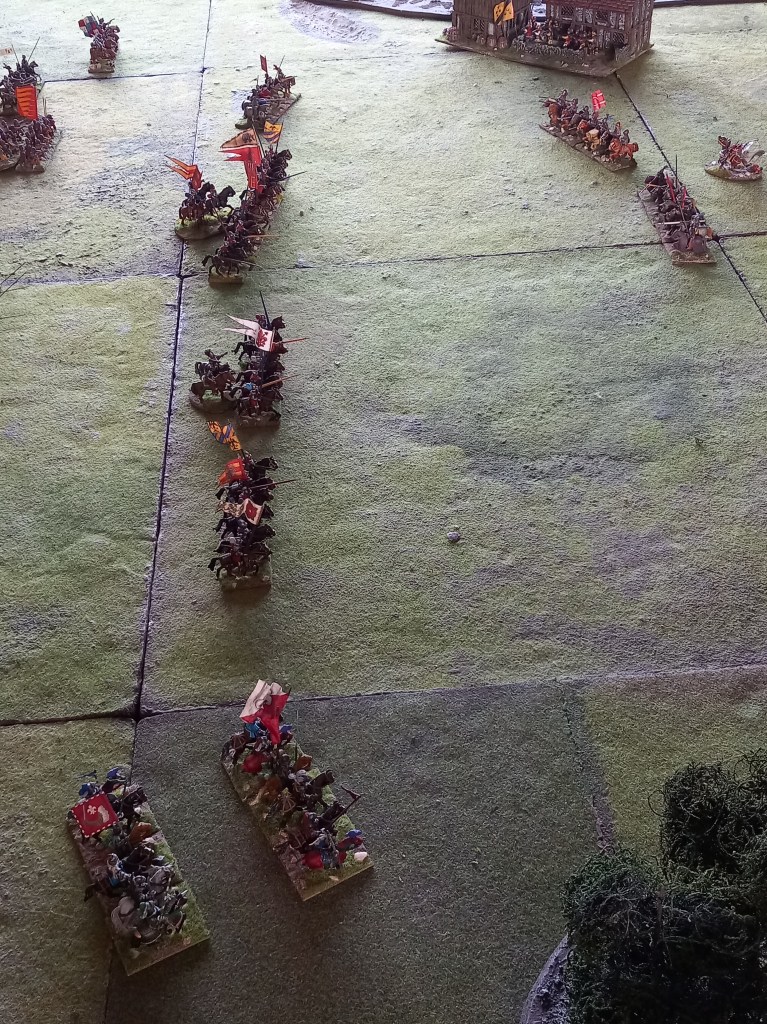
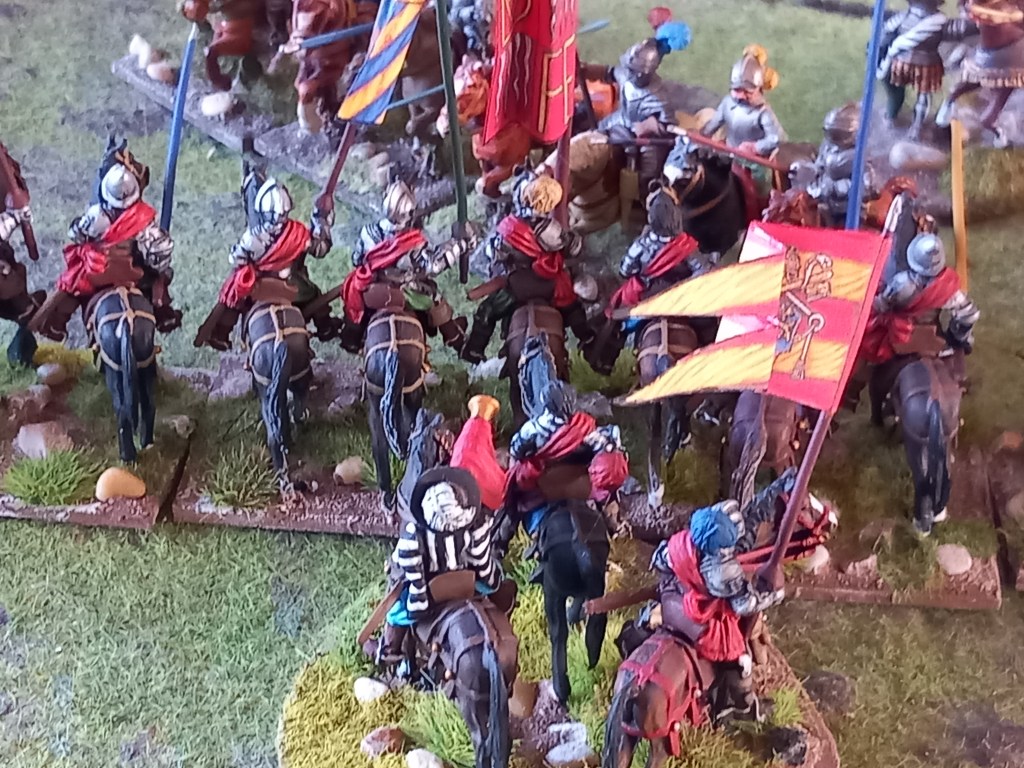
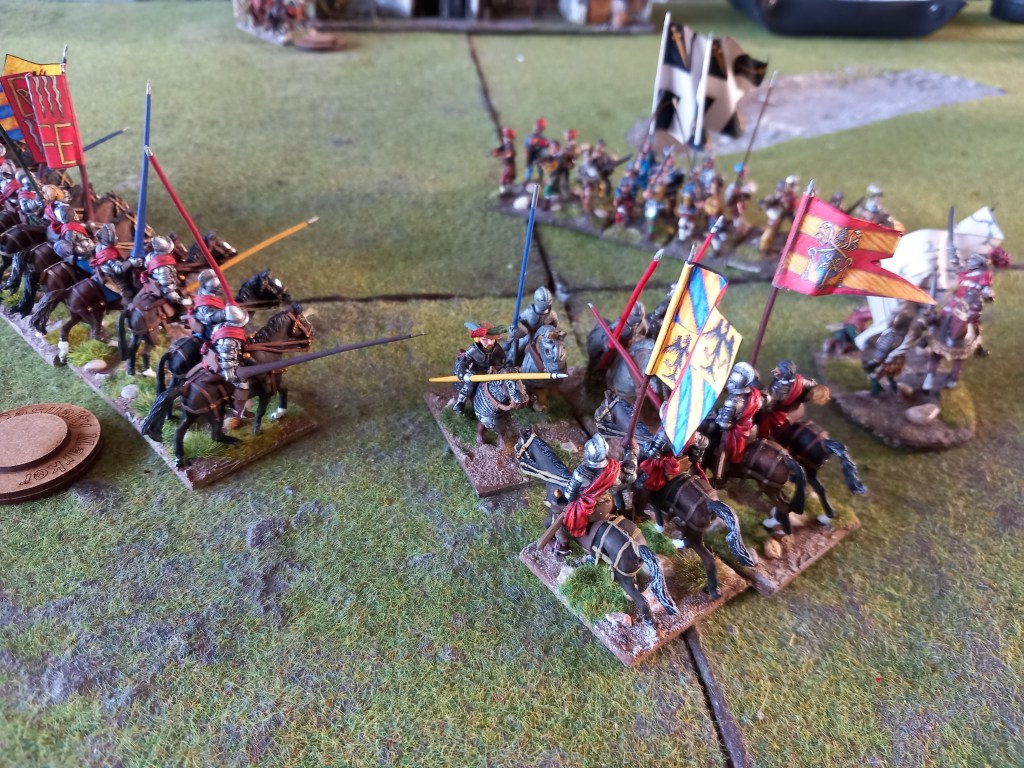
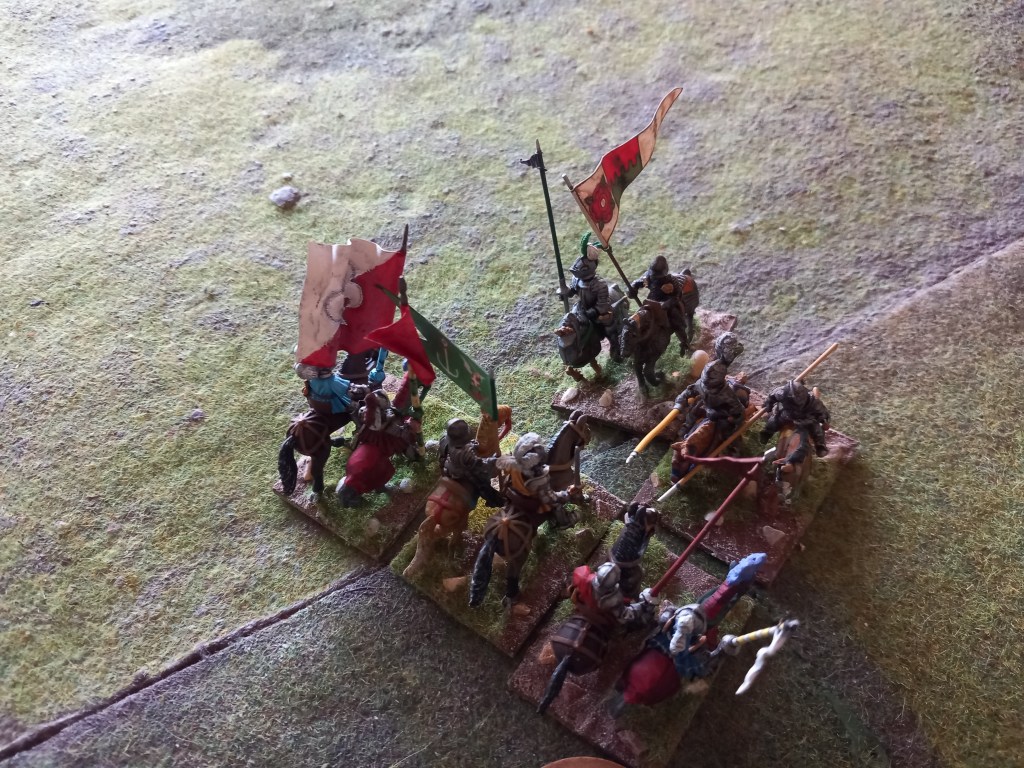
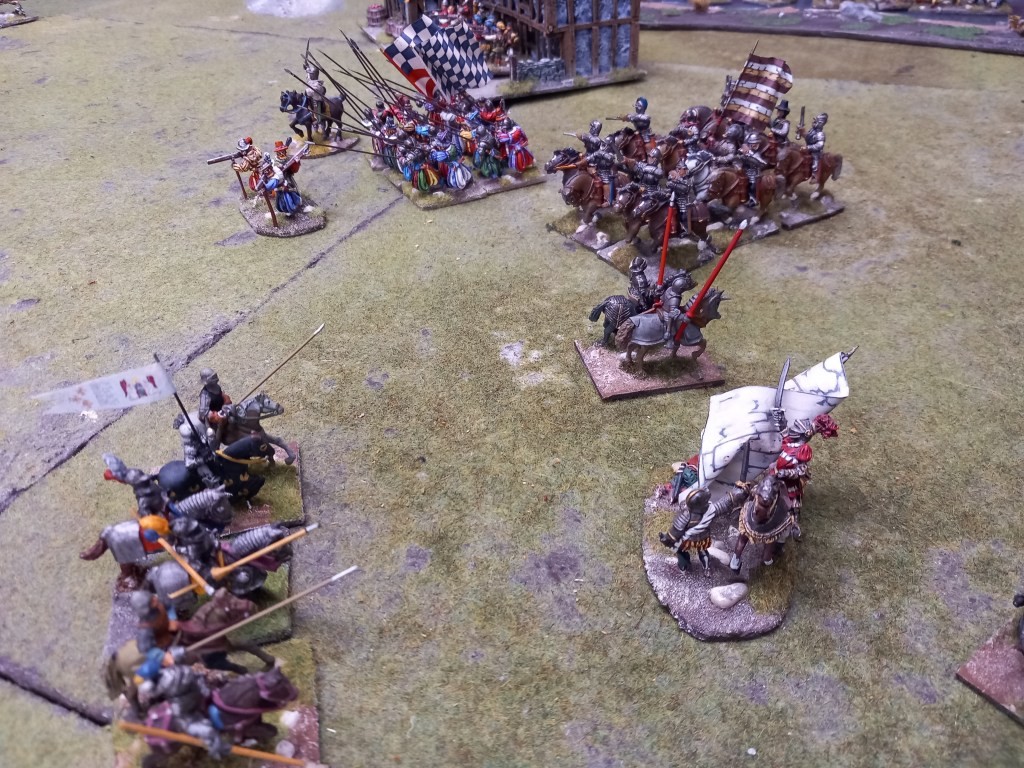
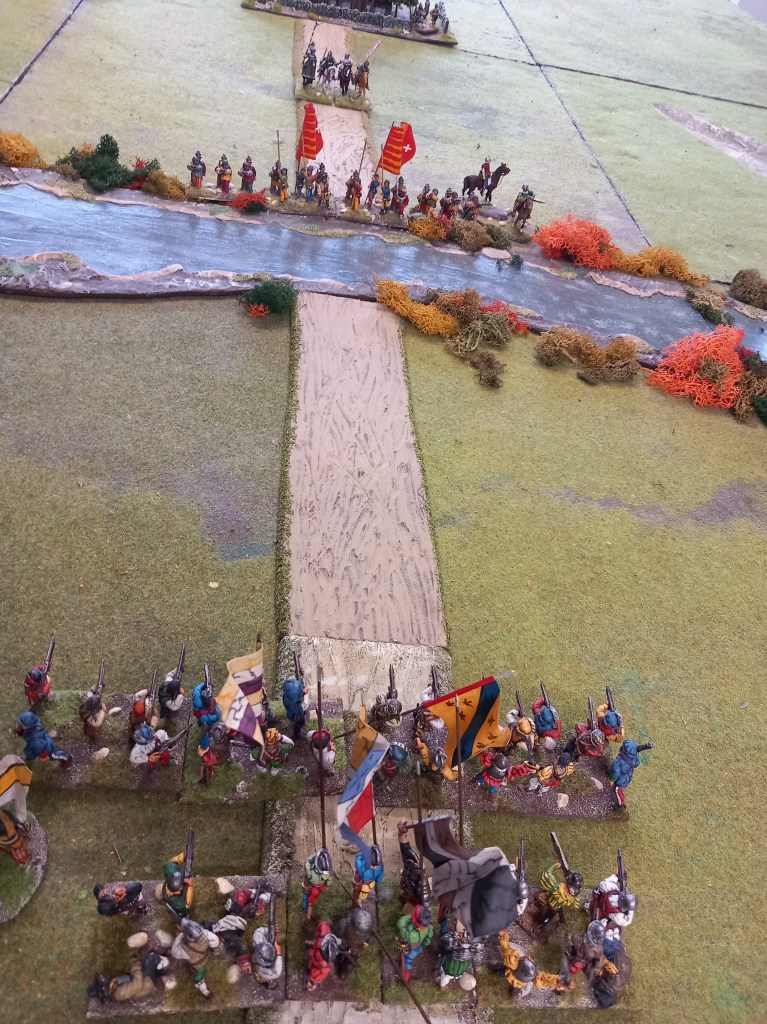
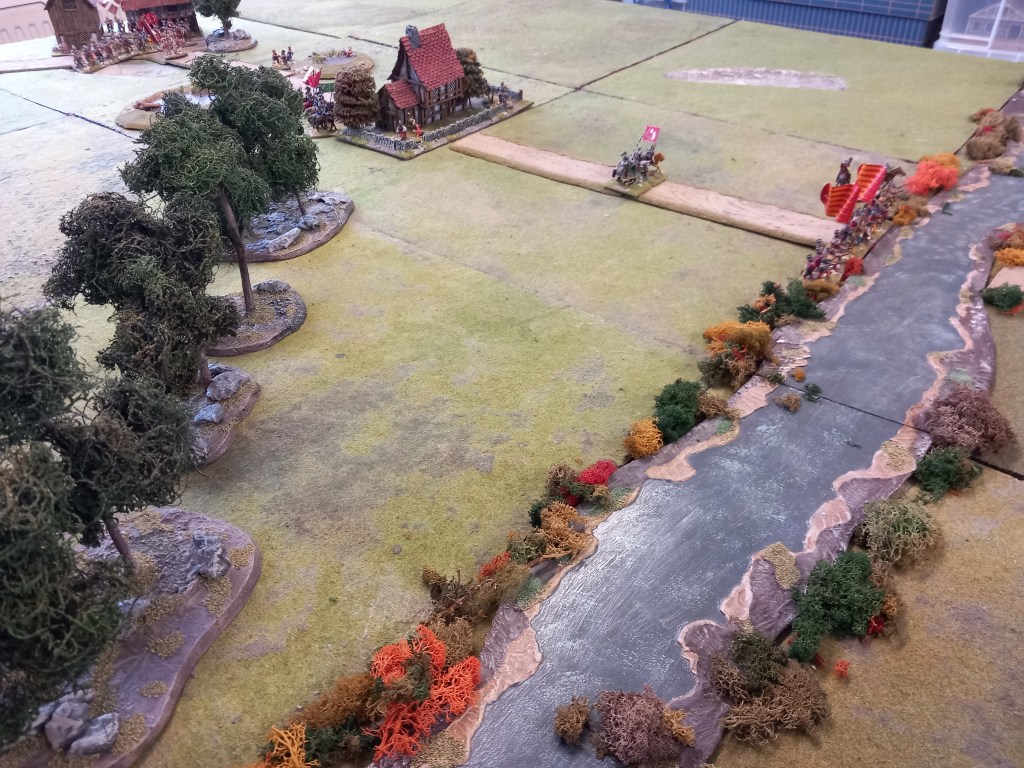
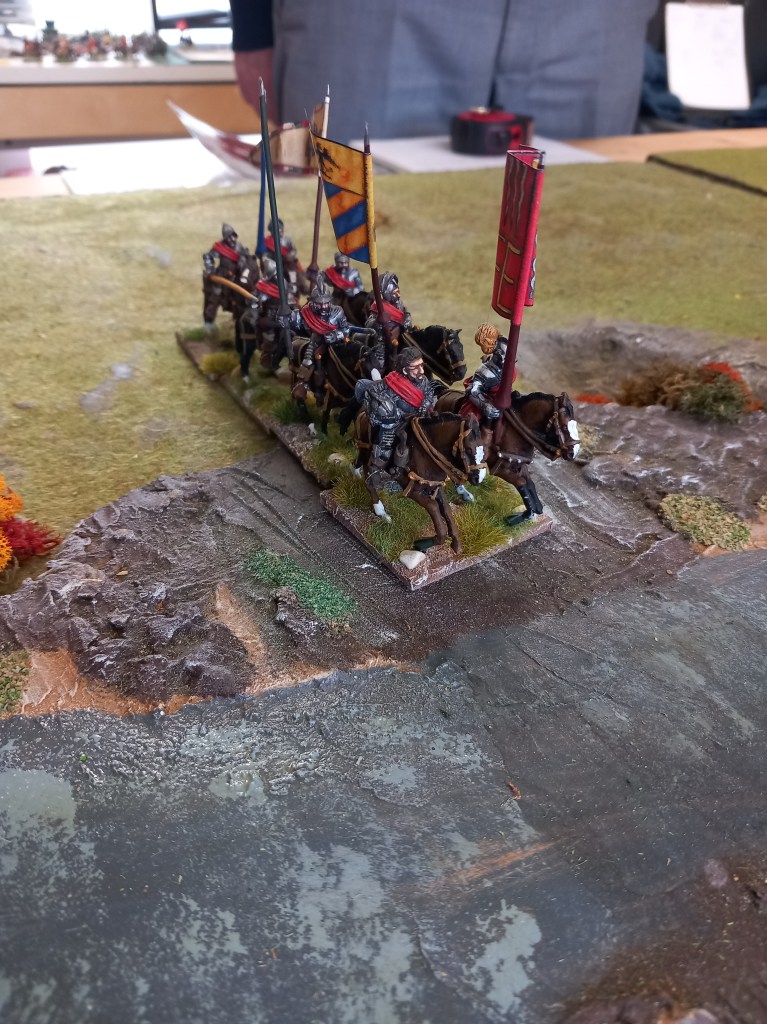
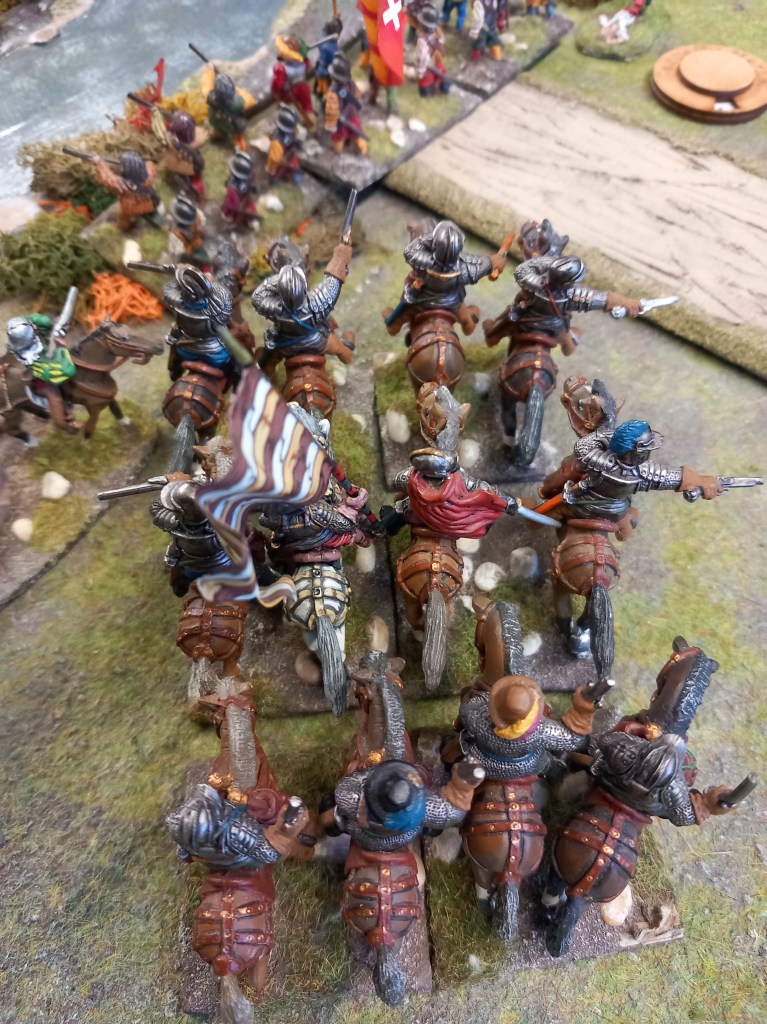
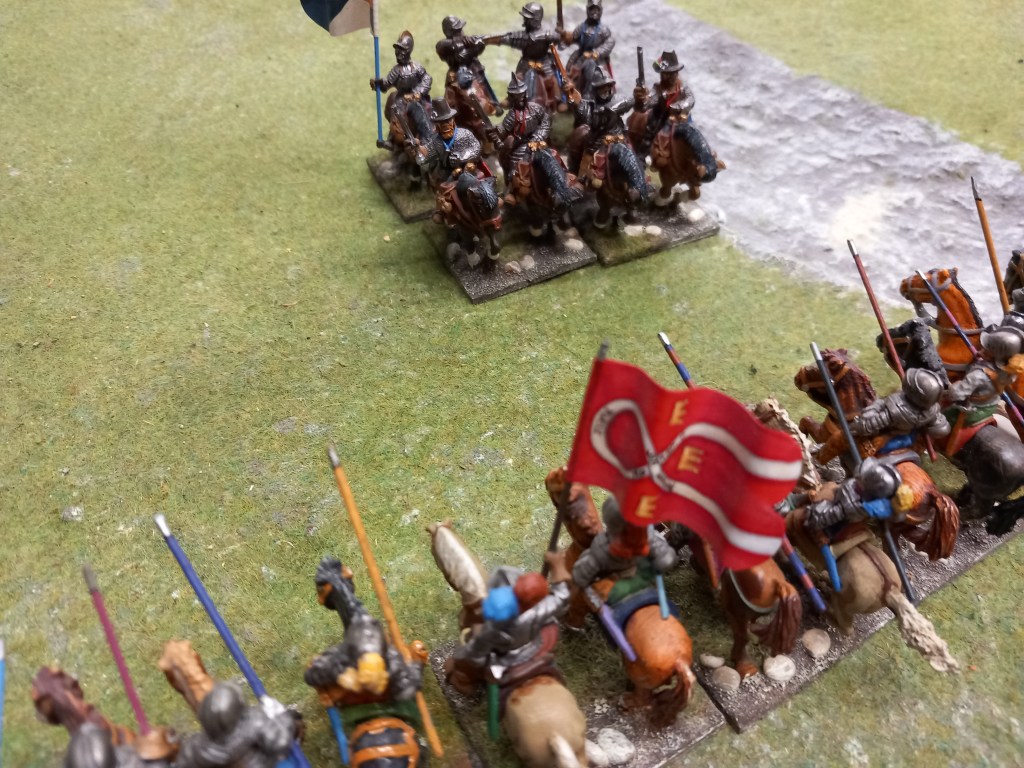
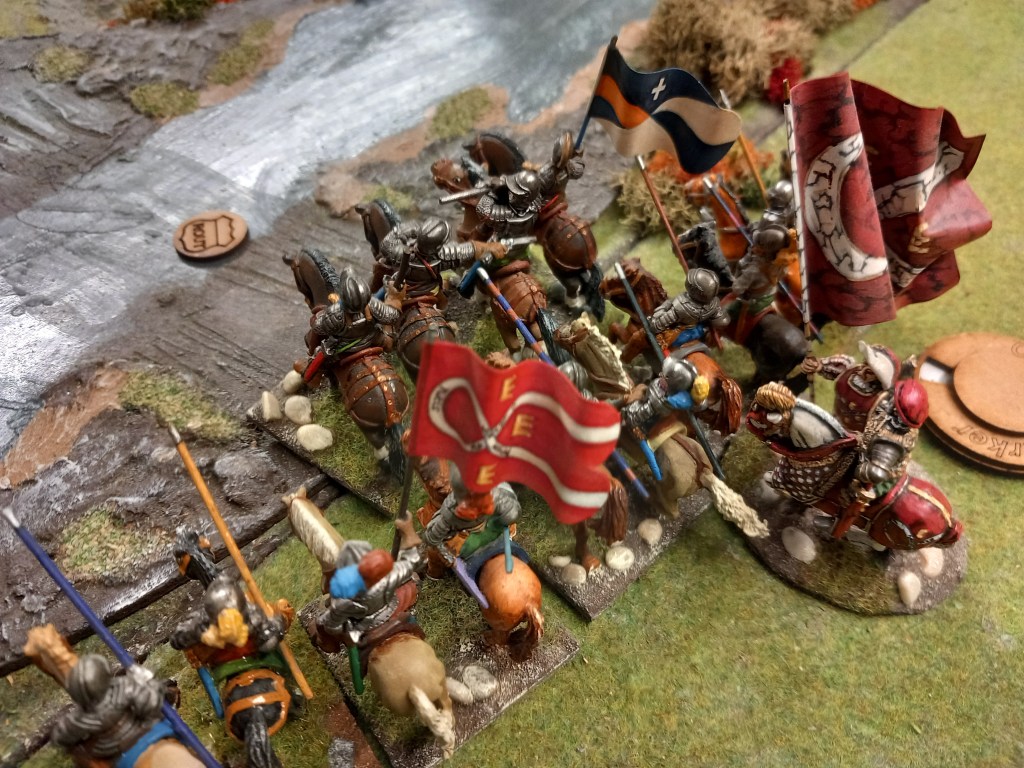
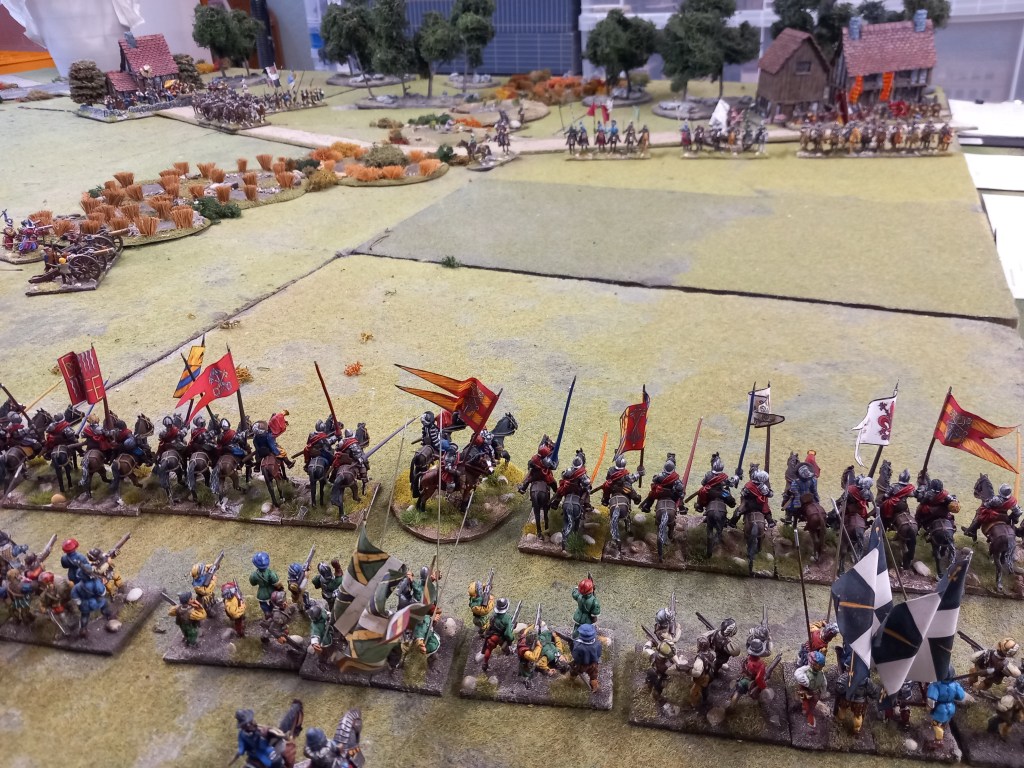
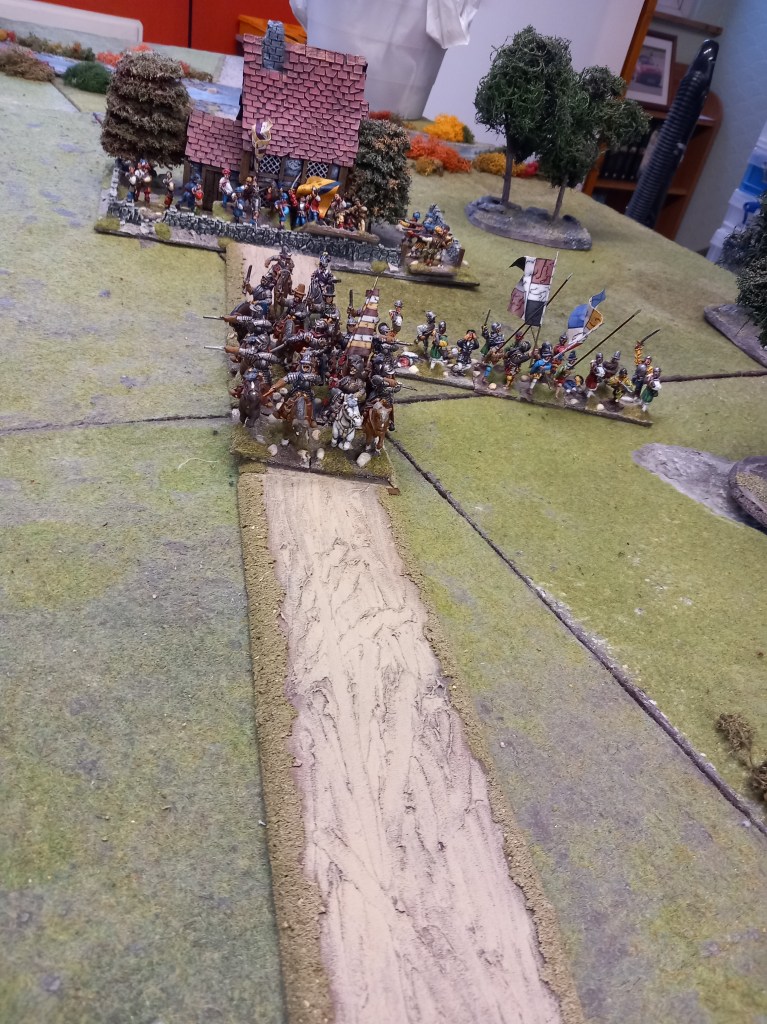
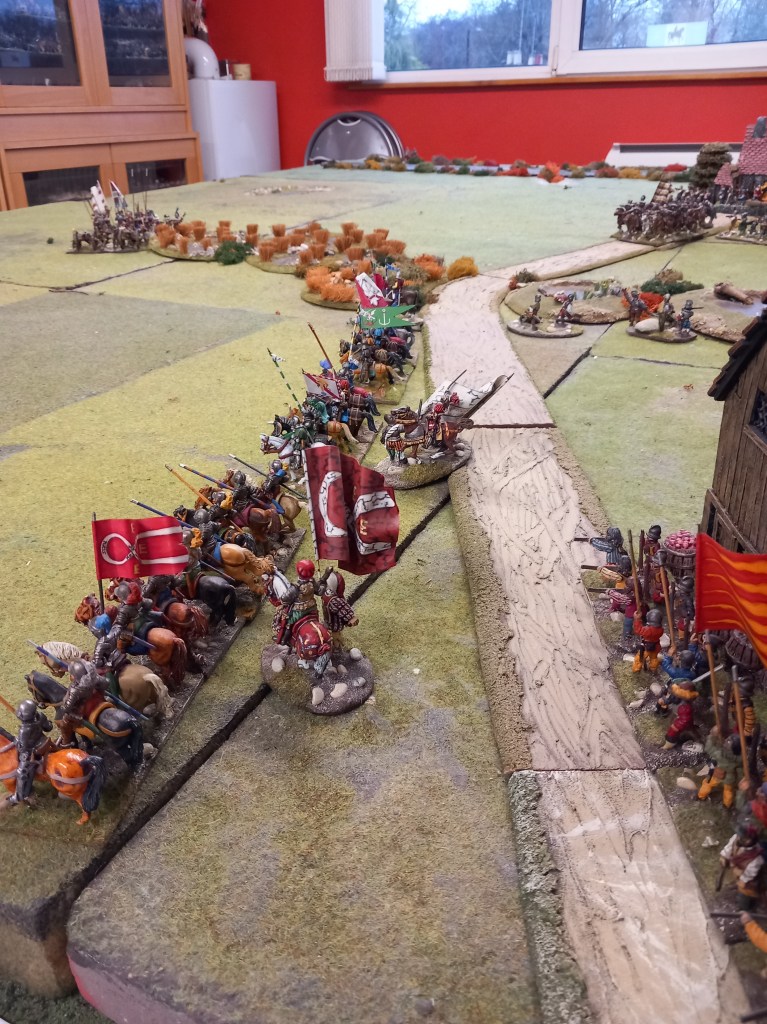
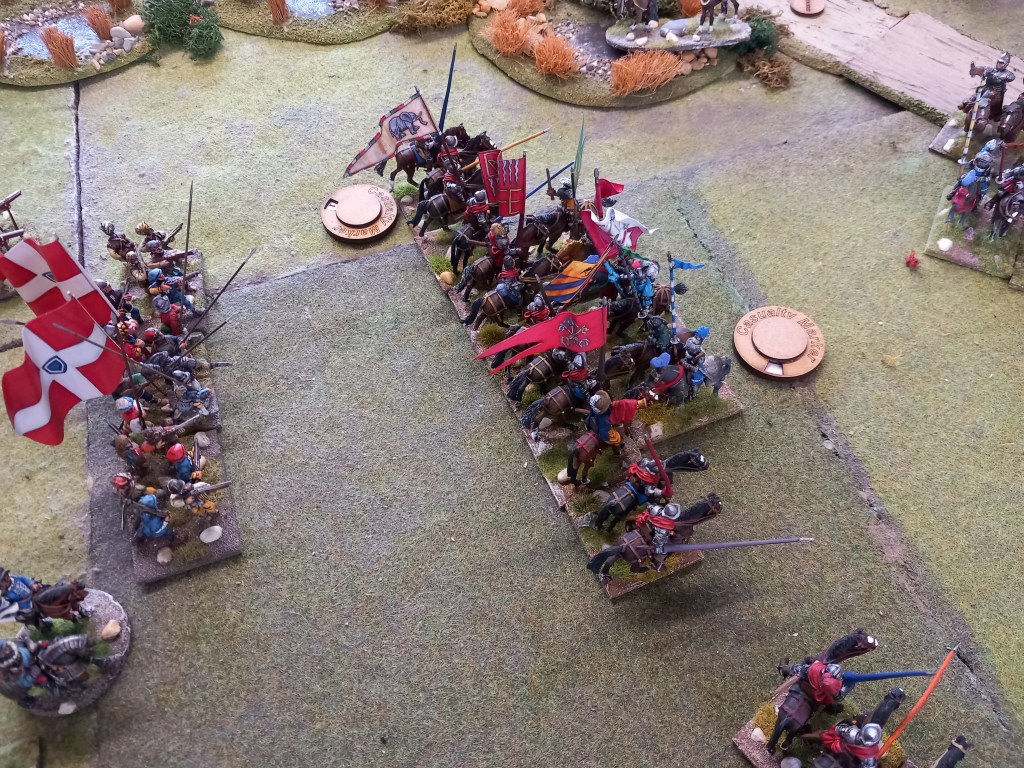
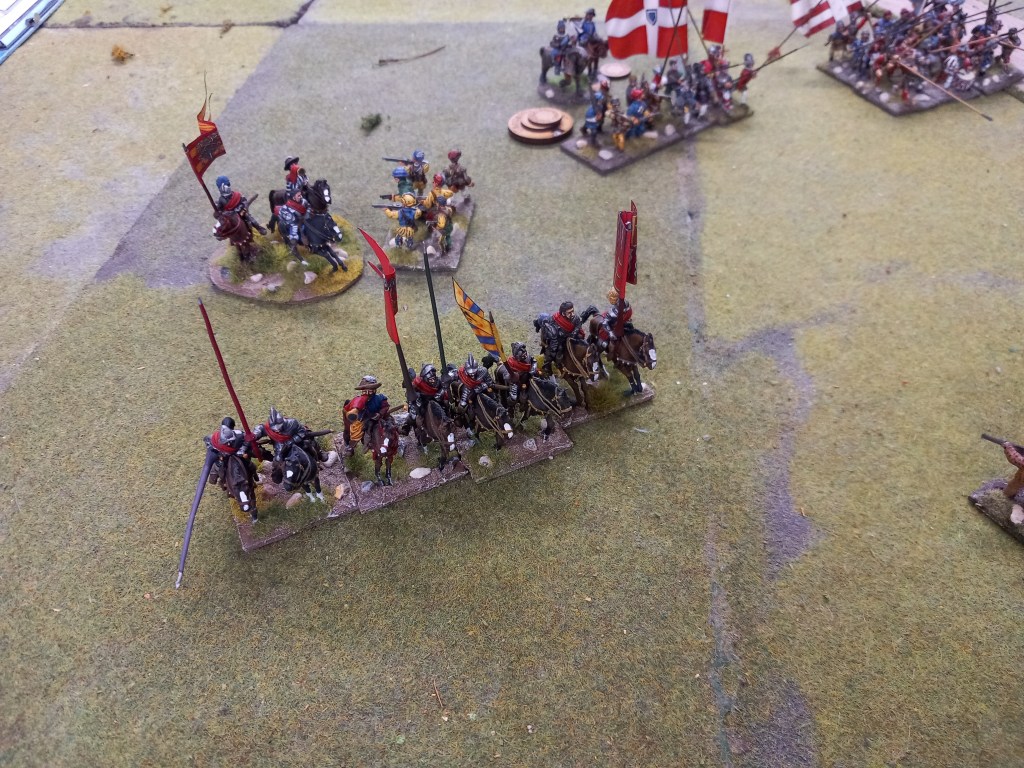
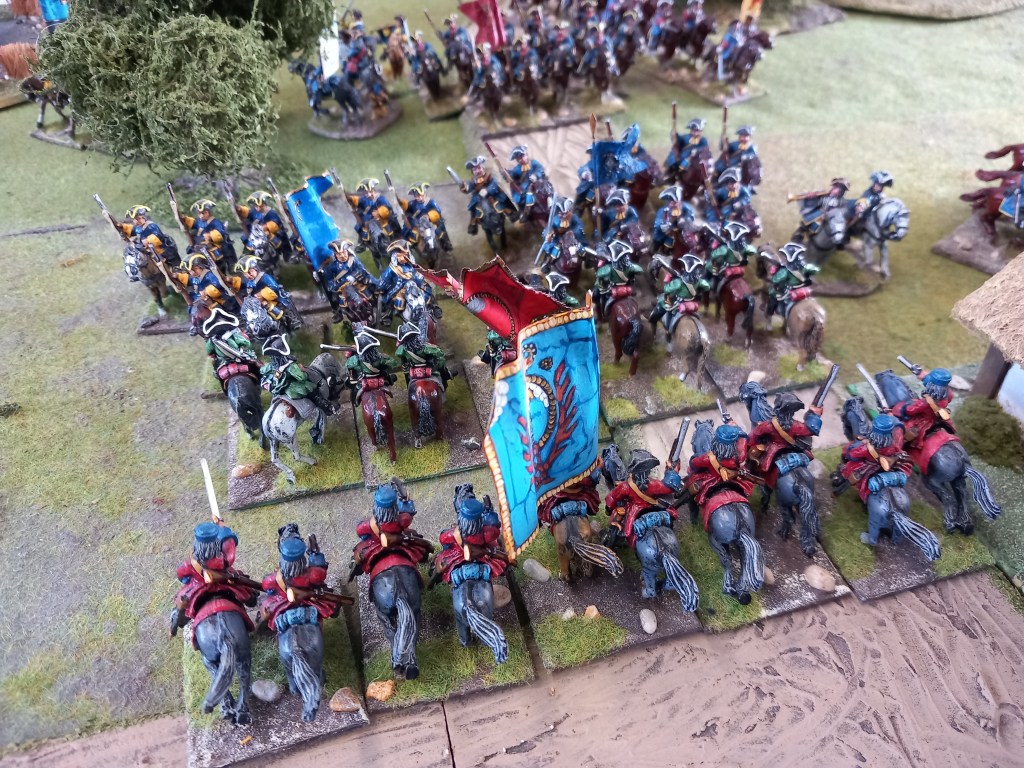
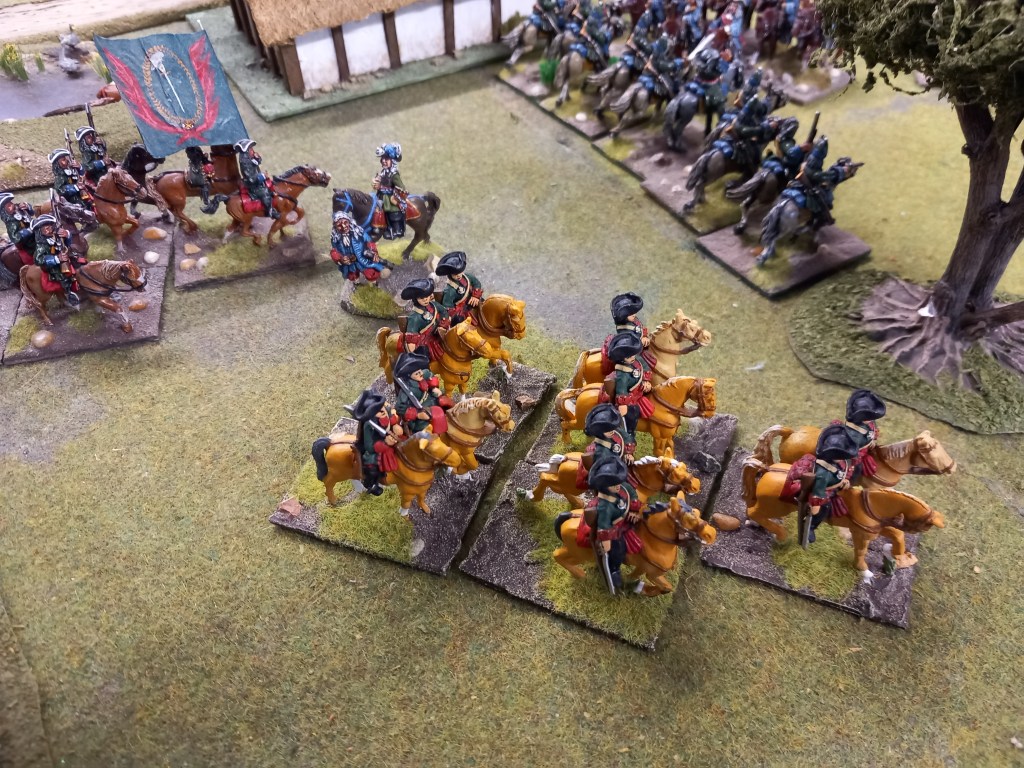
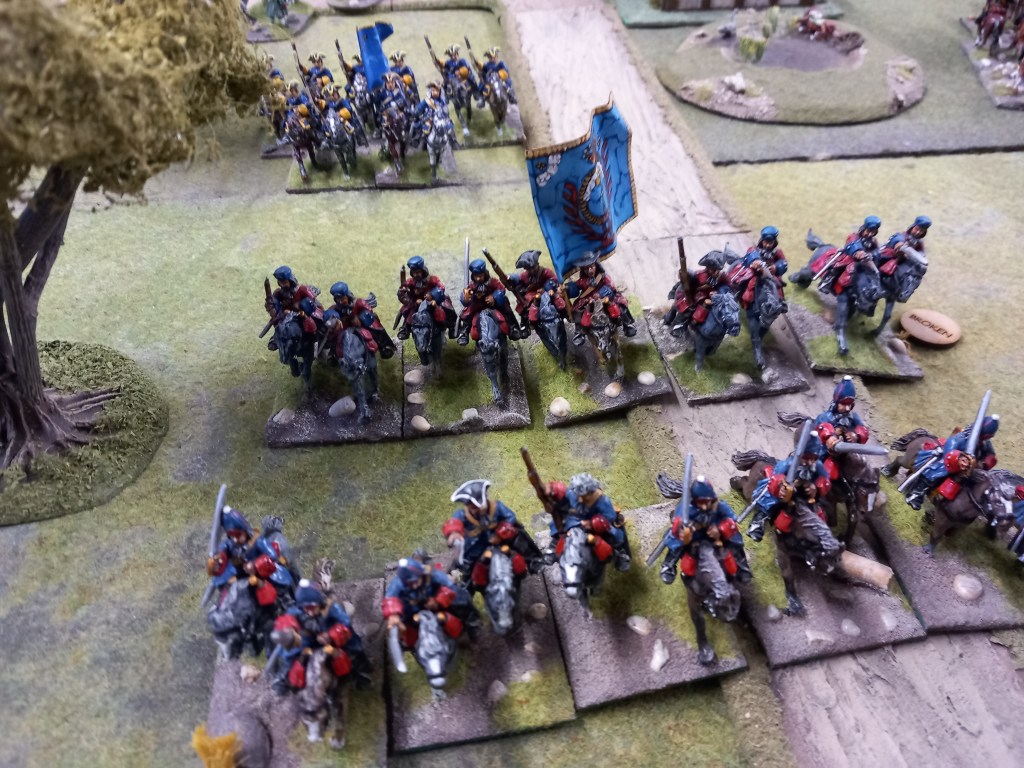
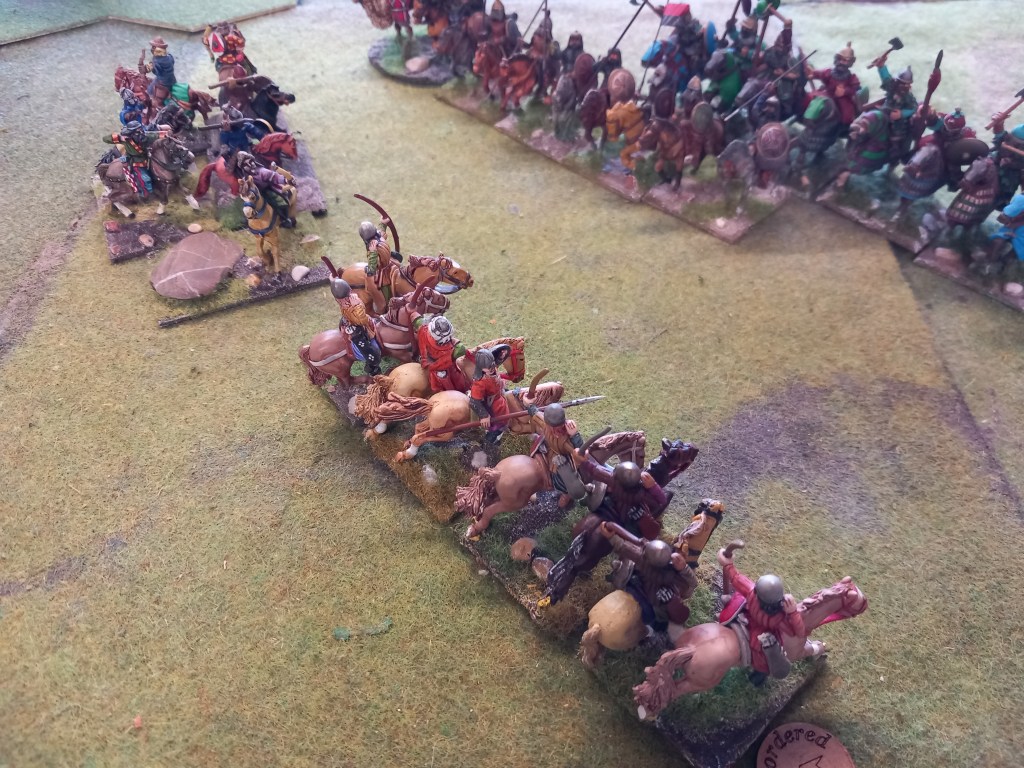
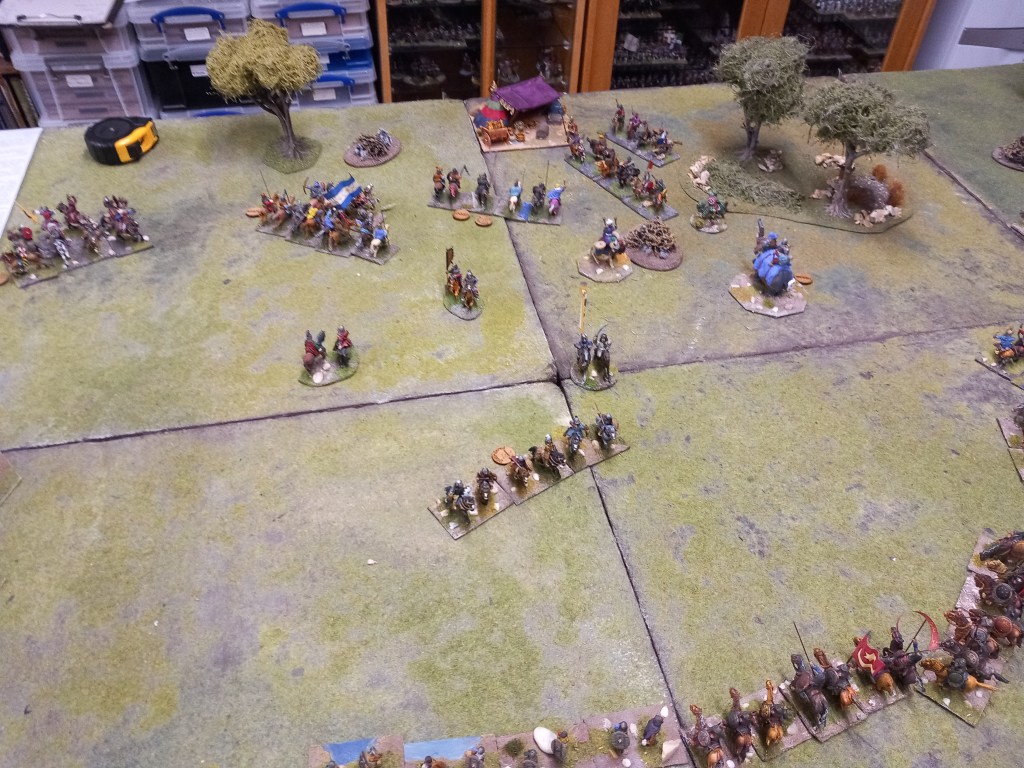
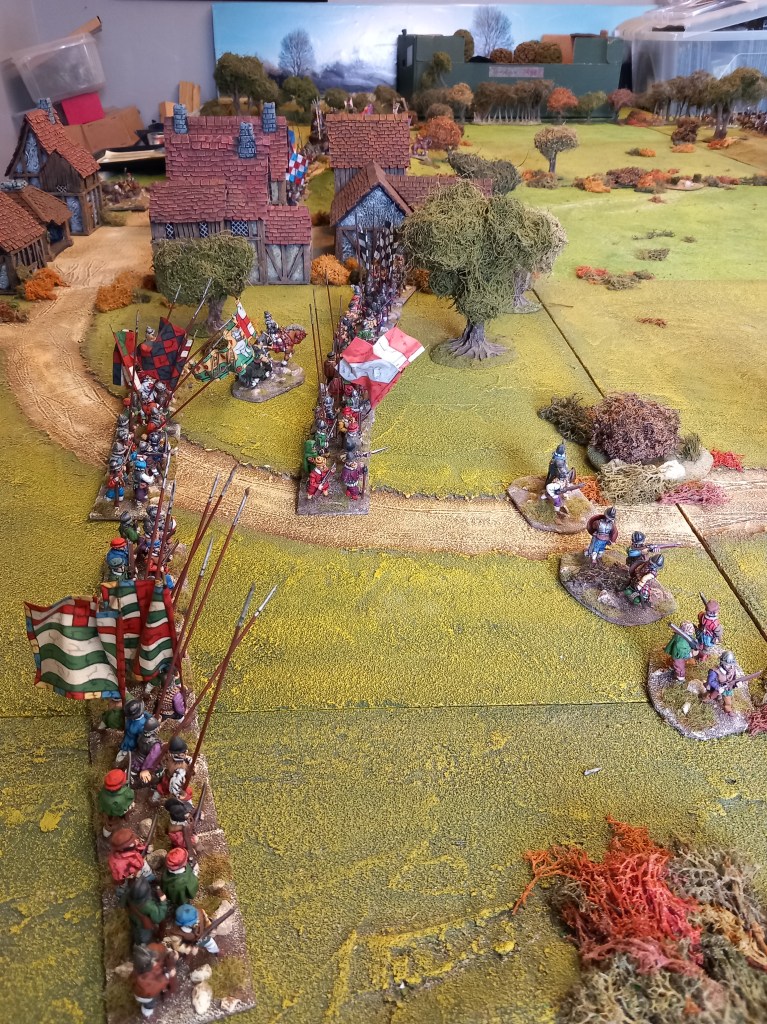
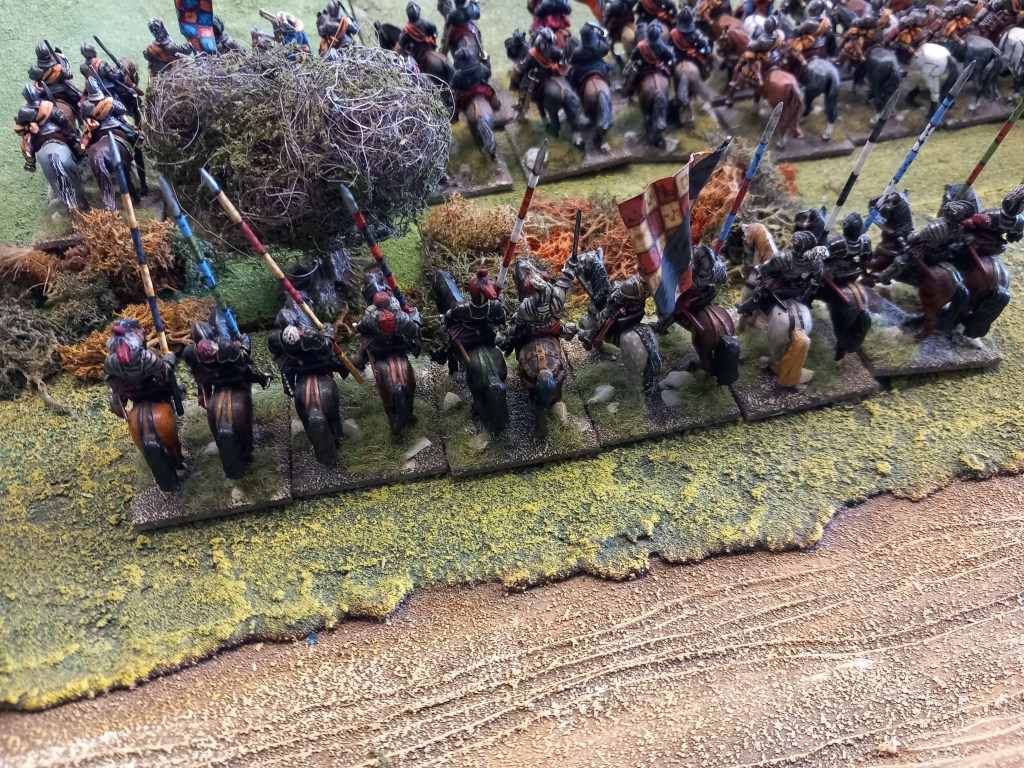
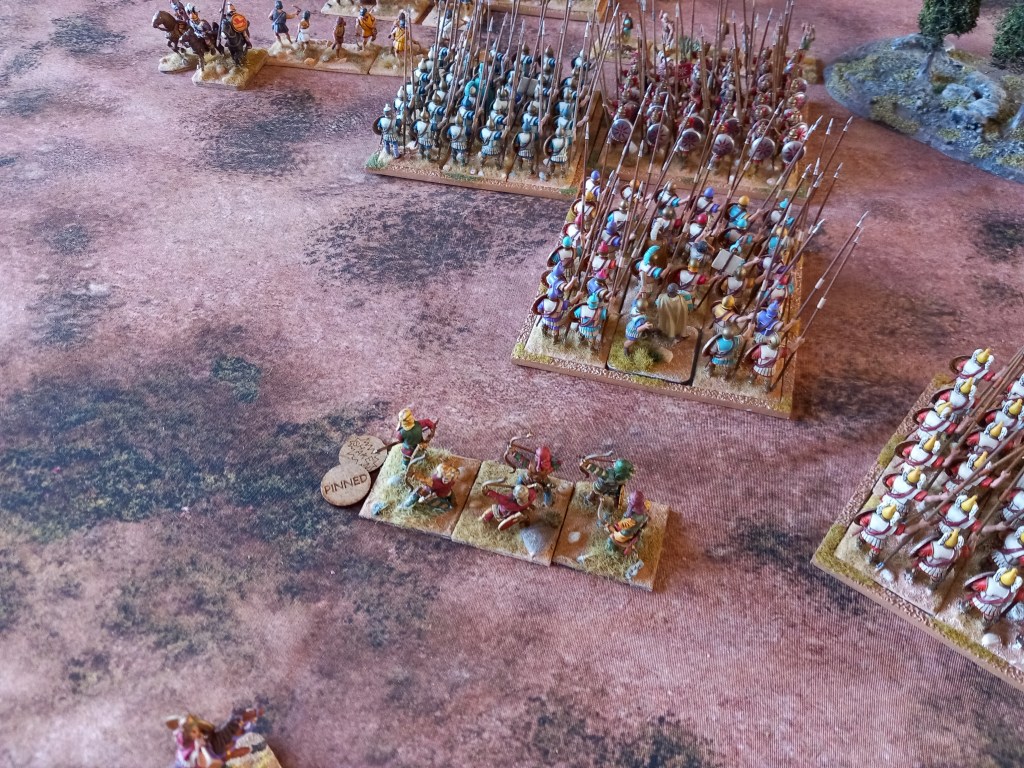
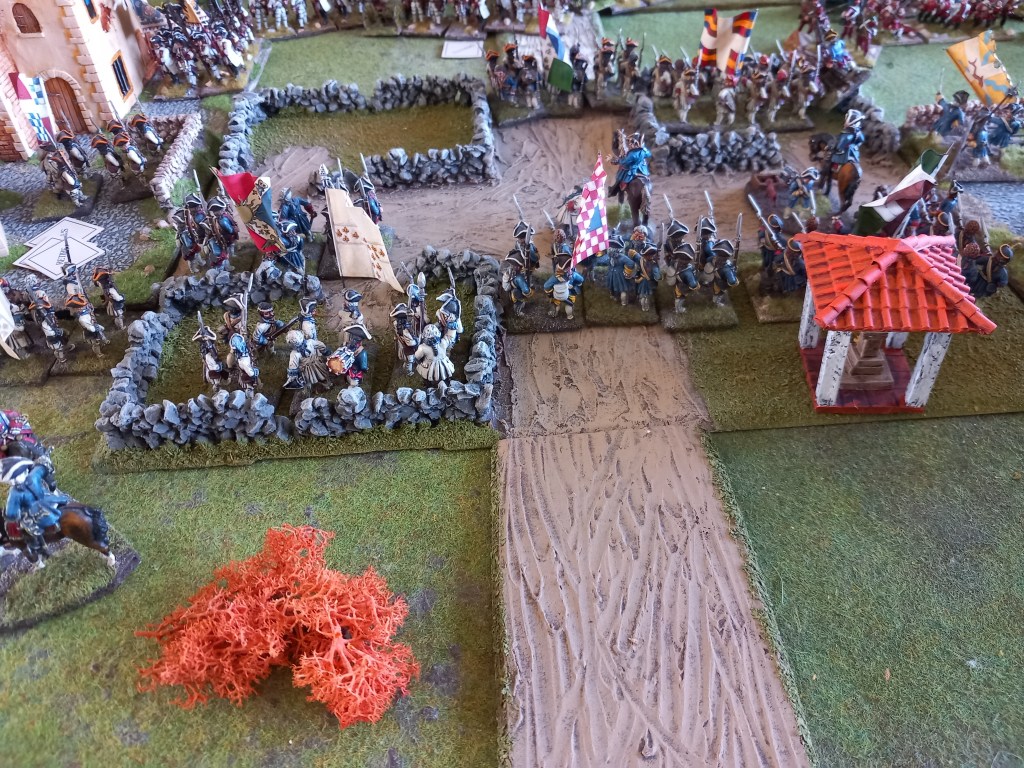
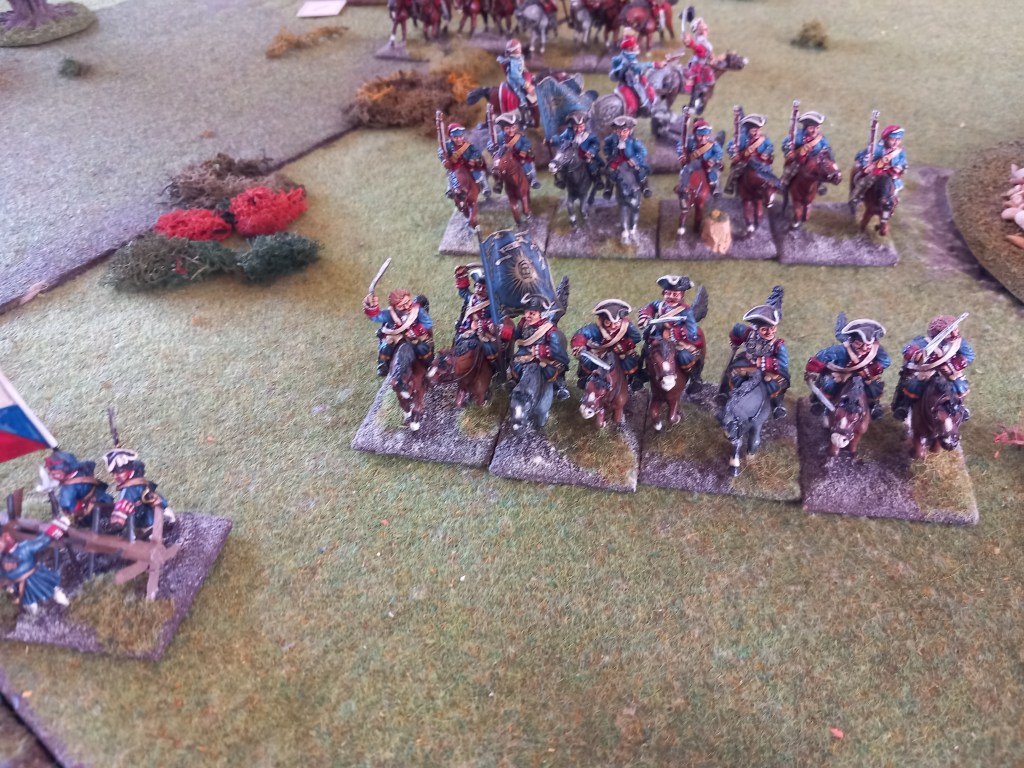
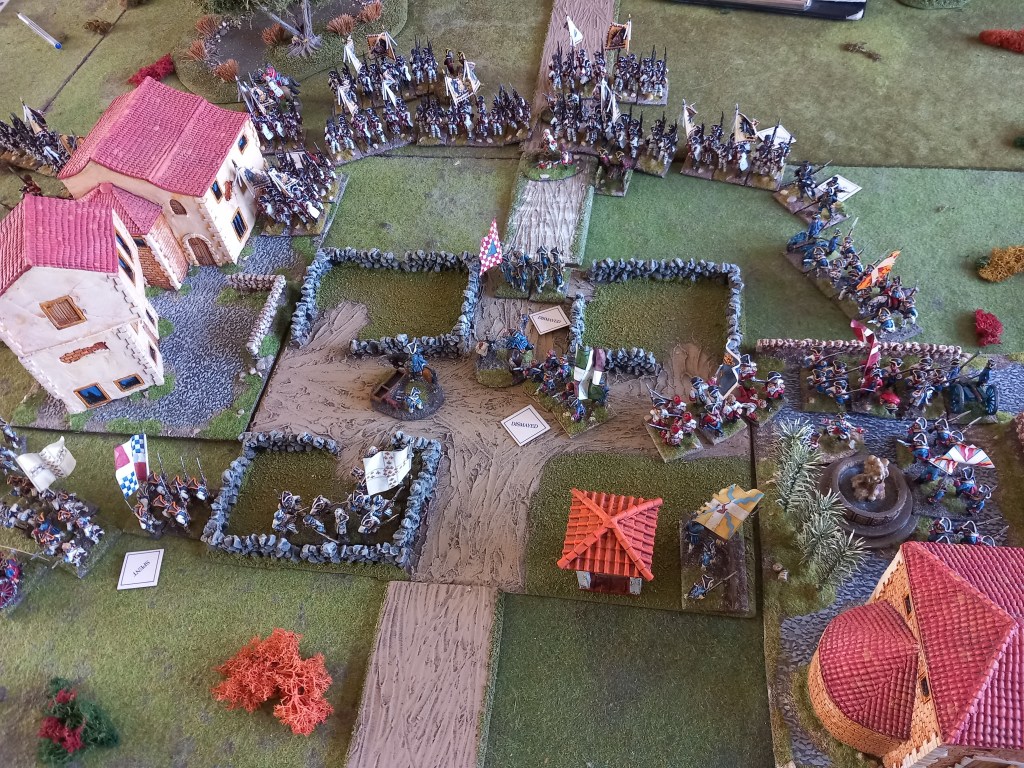
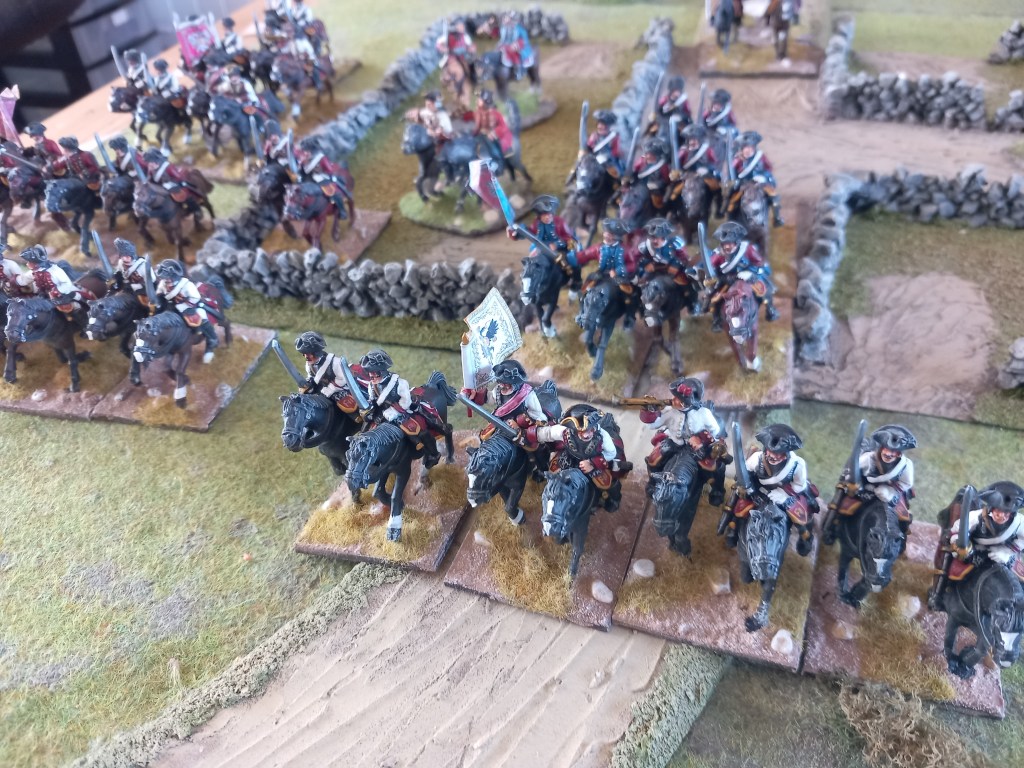
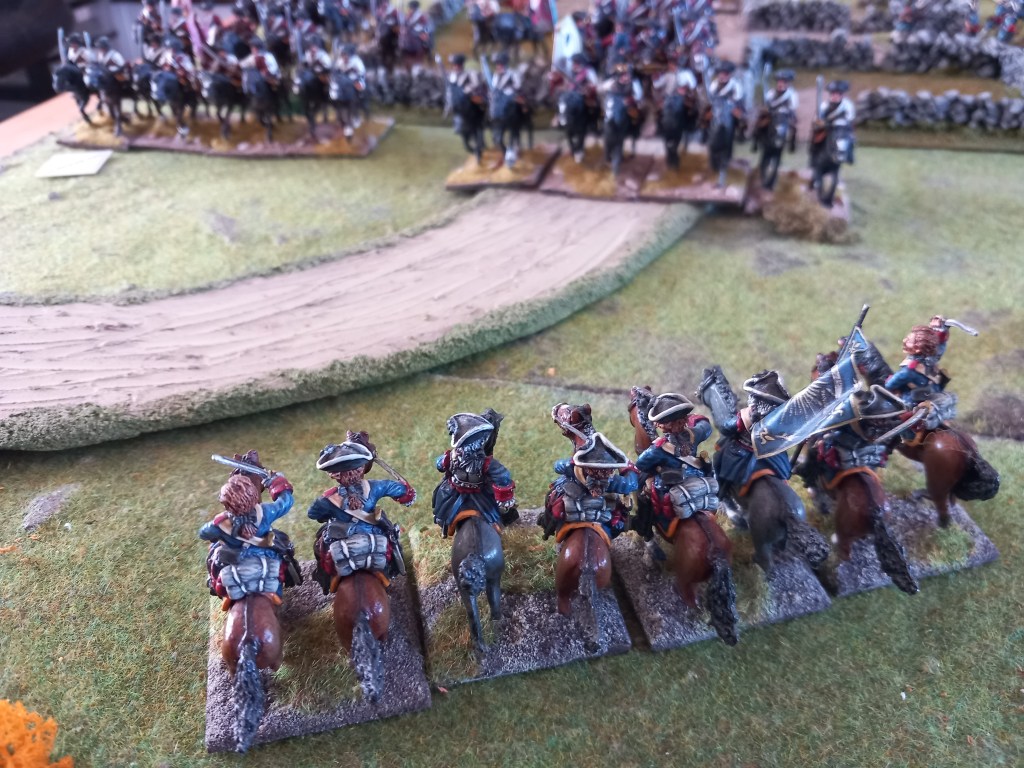
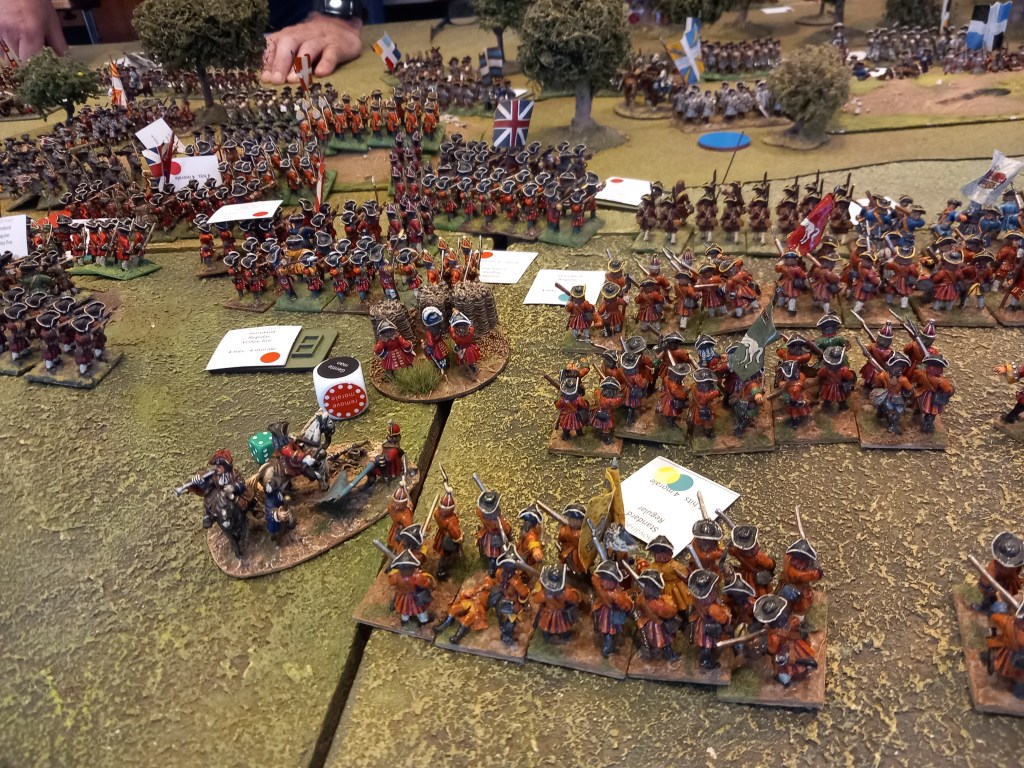
In this fictional encounter both sides – Russians and Swedes were heading for the village of Sychevka, the Swedes thinking there are supplies there, the Russians because they have heard that’s where the Swedes are going. Both sides had separate columns heading towards the village; the Swedes had a cavalry vanguard under Horn (above) out in front but they got lost and have turned up on the far right of the Swedish advance and are awaiting orders, in the centre a 3 brigade infantry column under Count Lewenhaupt is advancing on the village and out on the left a 2 brigade cavalry column under Major General Creutz is emerging from a defile somewhat surprised to find Horn in the wrong place! The Russians had a 2 brigade cavalry column under Major General Bauer marching on, the centre and left was under the overall command of Field Marshal Sheremetiev comprising a cavalry & infantry force out on the left – 1 x cavalry & 2 x infantry brigades and a similar cavalry & infantry force in the centre with a cavalry brigade leading and 2 infantry brigades following.
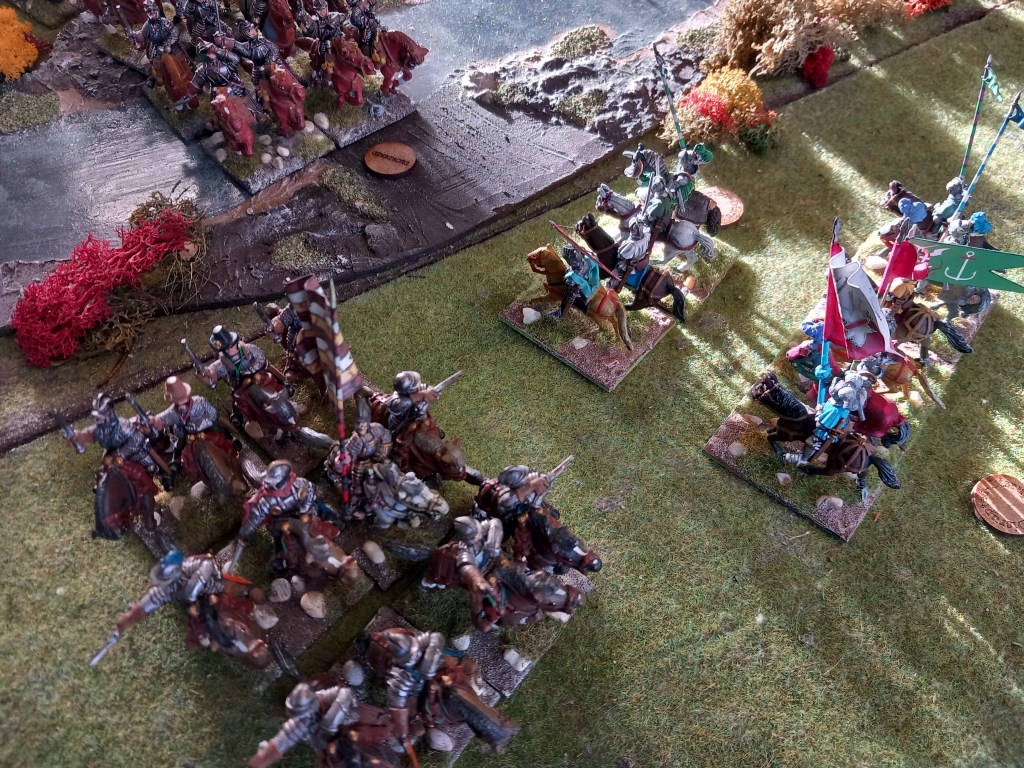
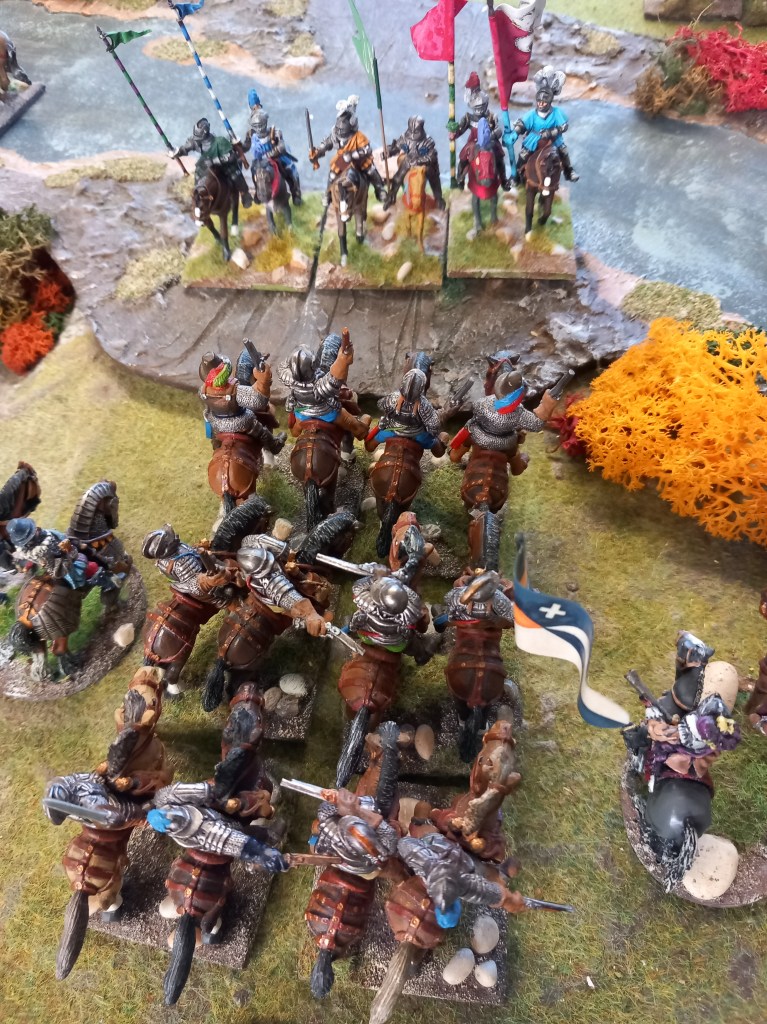
Both sides had general orders of “advance to the village of Sychevka” (except Horn who was sitting around wondering what to do) and so senior commanders were having to issue orders as the enemy became visible and as brigades marched on. In the initial stages this rather favoured the Russians whose centre dragoon brigade under Tiernischov duly advanced on the village and got off their horses.

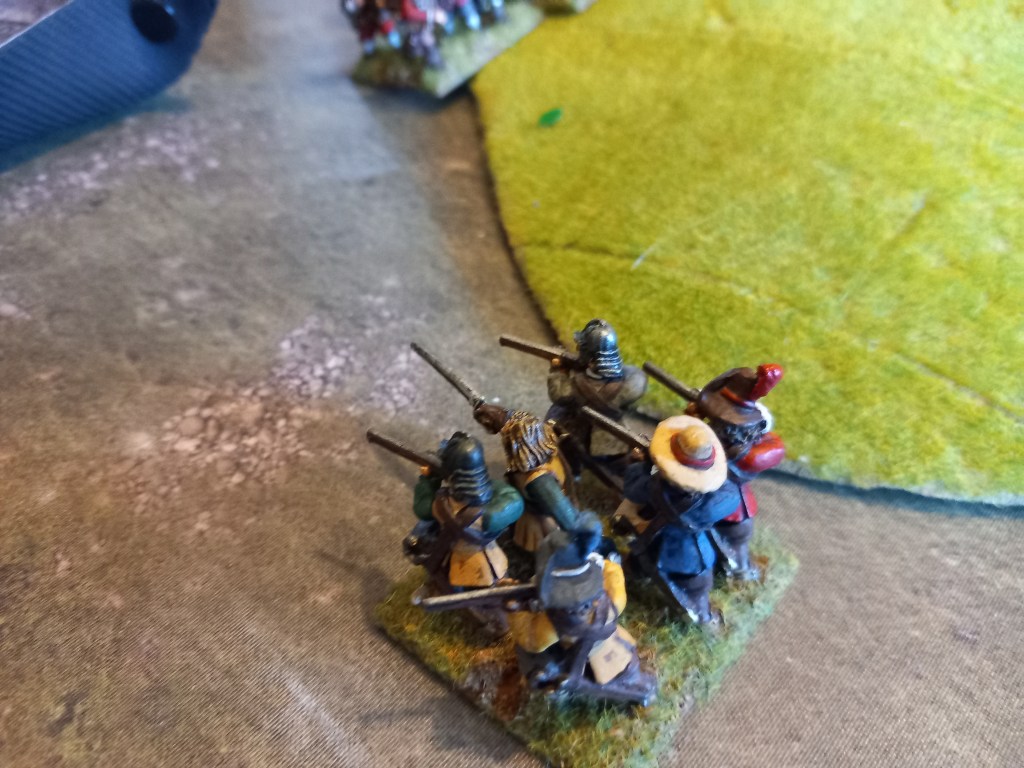
The opening action therefore centred around the dragoons holding the village which they did remarkably well – partly due to a rules cock up by the umpire (me!) and partly due to the normally aggressive Swedes being over cautious.

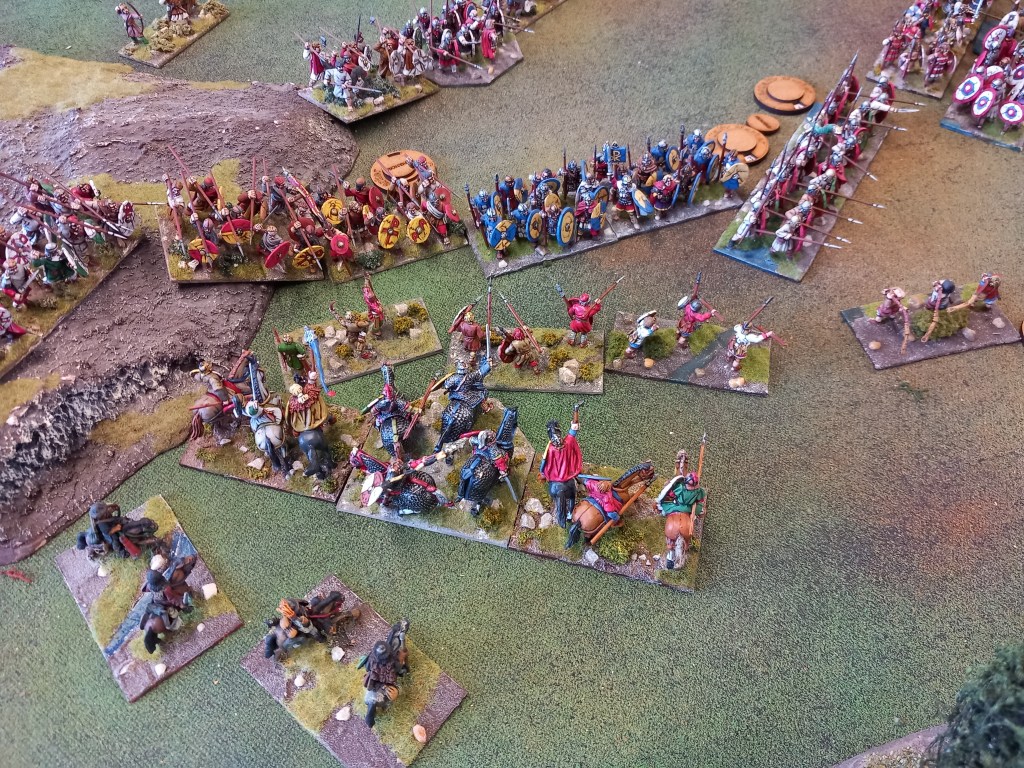
While the infantry struggle for the village developed the first cavalry action commenced on the Russian right as Kroptov and Golitsyn committed their brigades against Hard and Armfeldt.

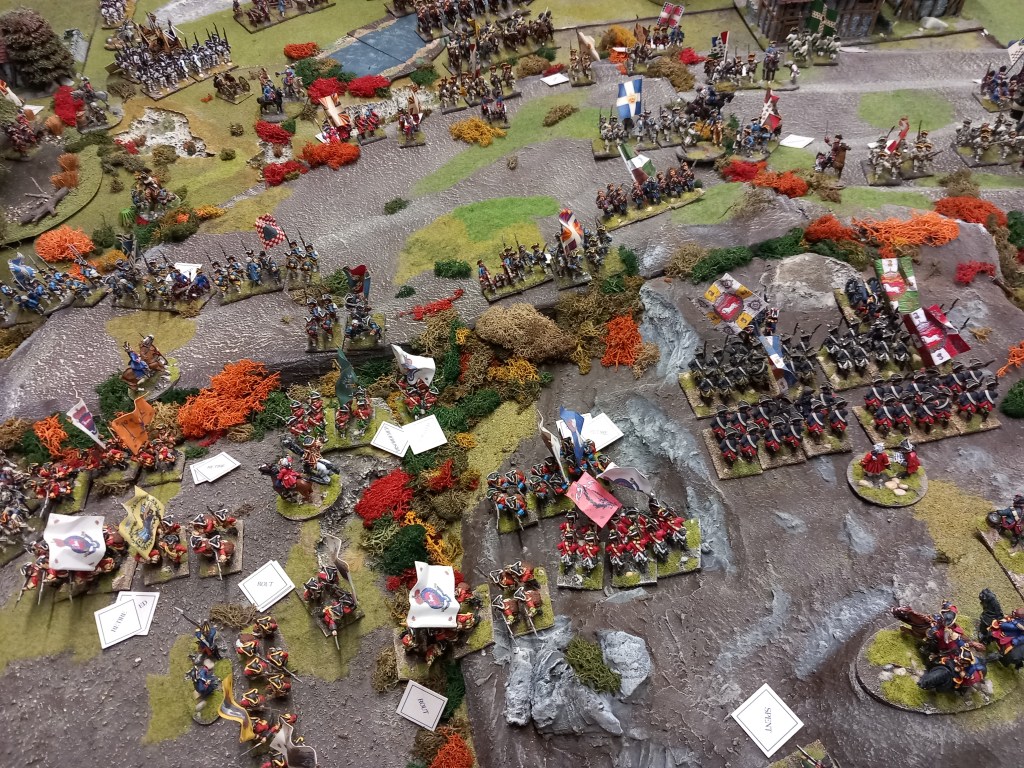
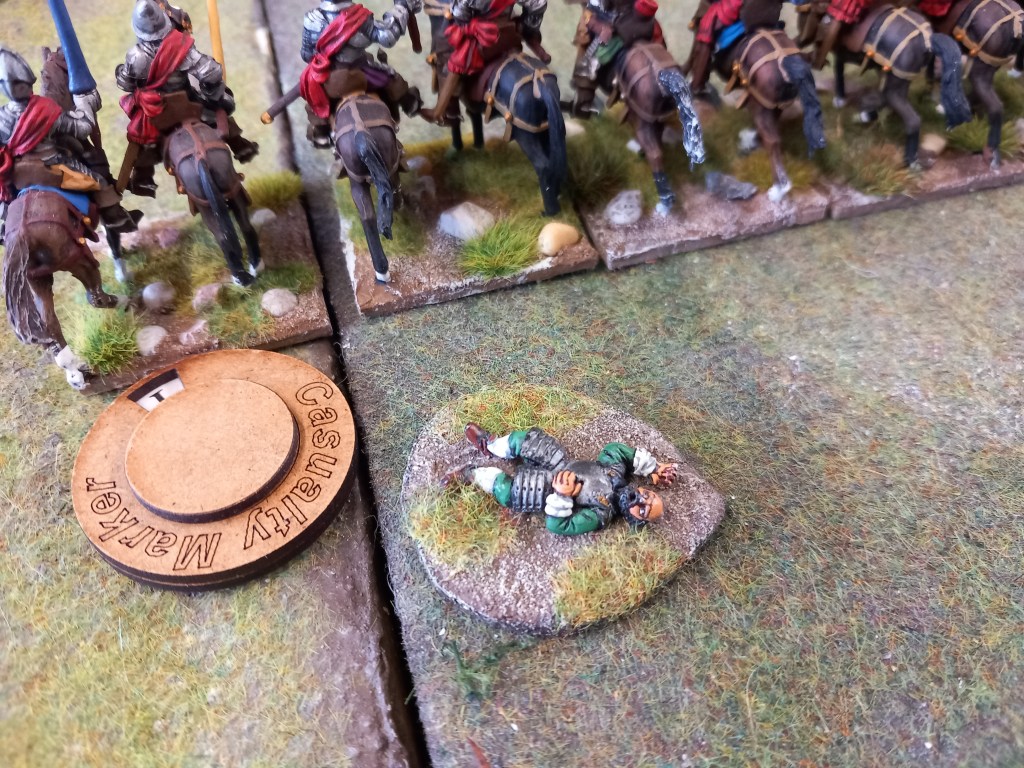
This rolling cavalry melee occupied most of the game with Swedish regiments, Taube, Ducker, Smaland and Ostgota taking serious losses – Taube was in fact lost from the battle, while Kroptov’s horse grenadiers, and regiments, Archangelski, St Petersburgski, Tverski and Narvski took equally heavy losses. Both sides saw their brigades fail morale but the difference that decided the day was the better ability of the Swedes to rally.

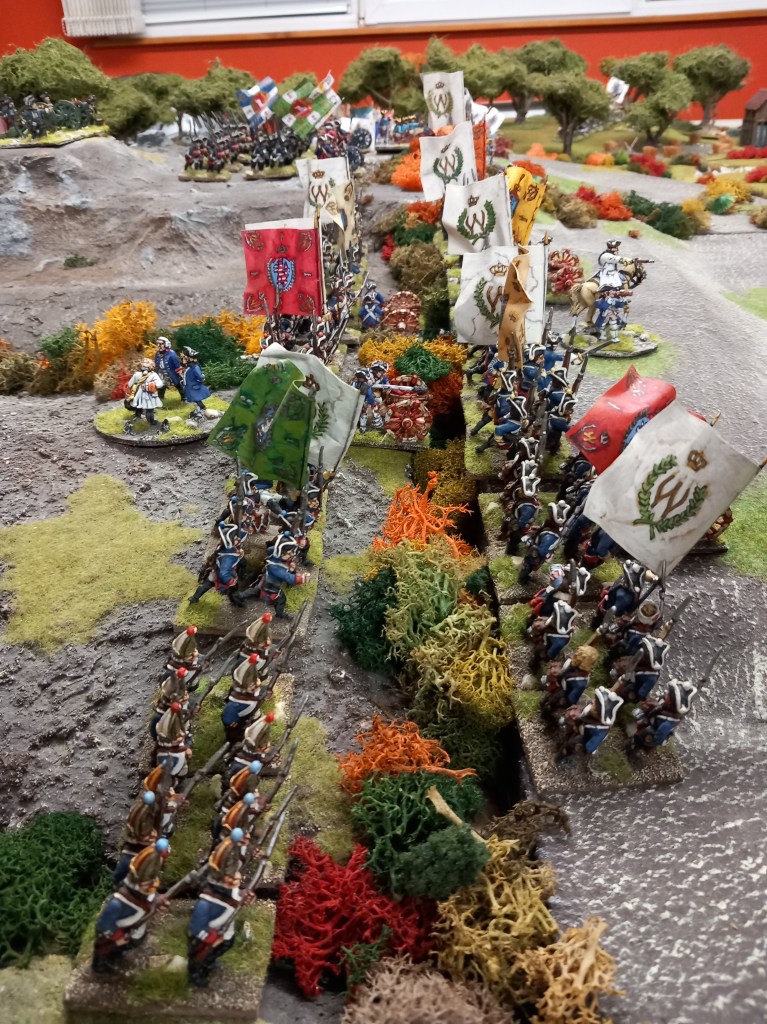
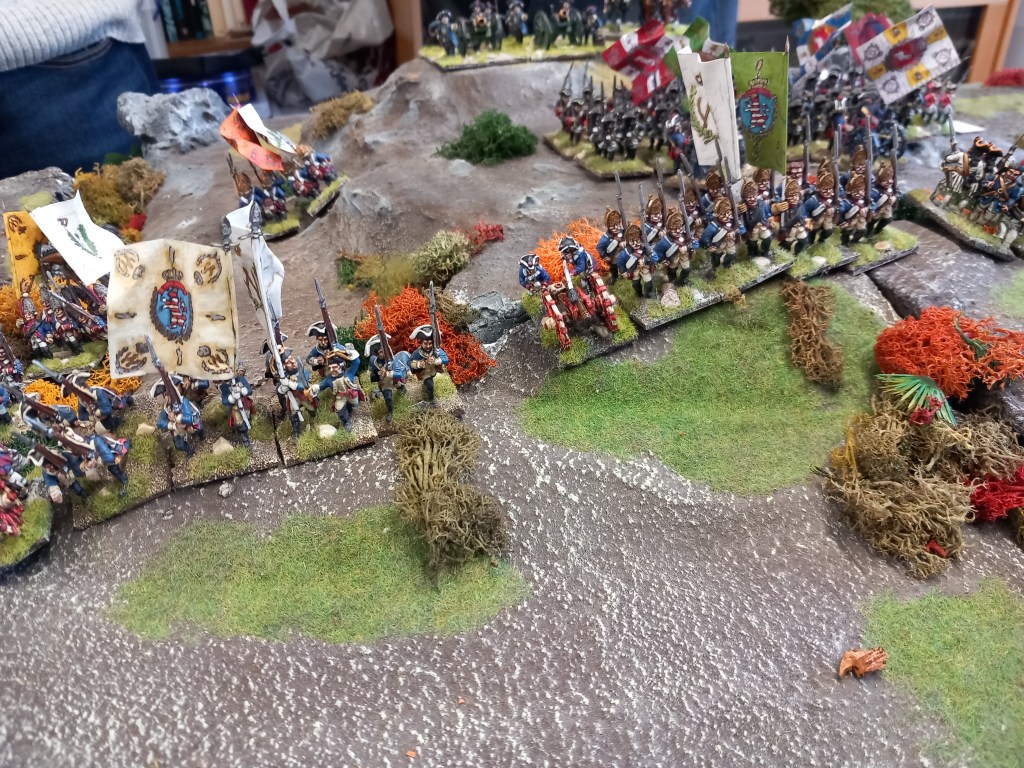
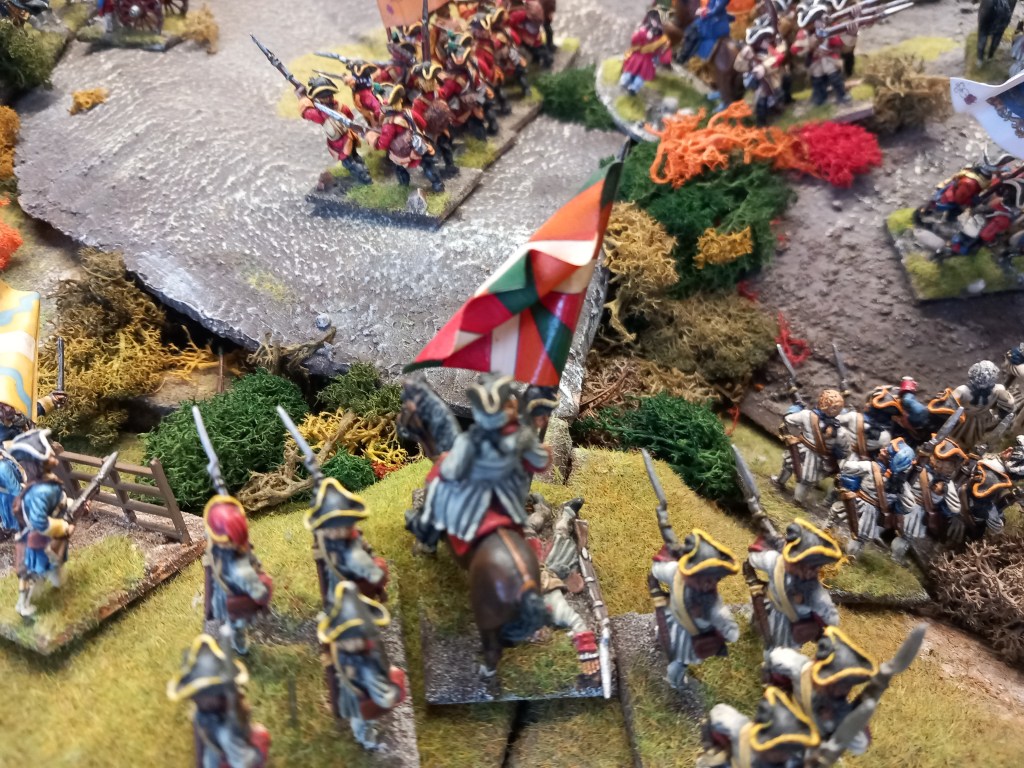
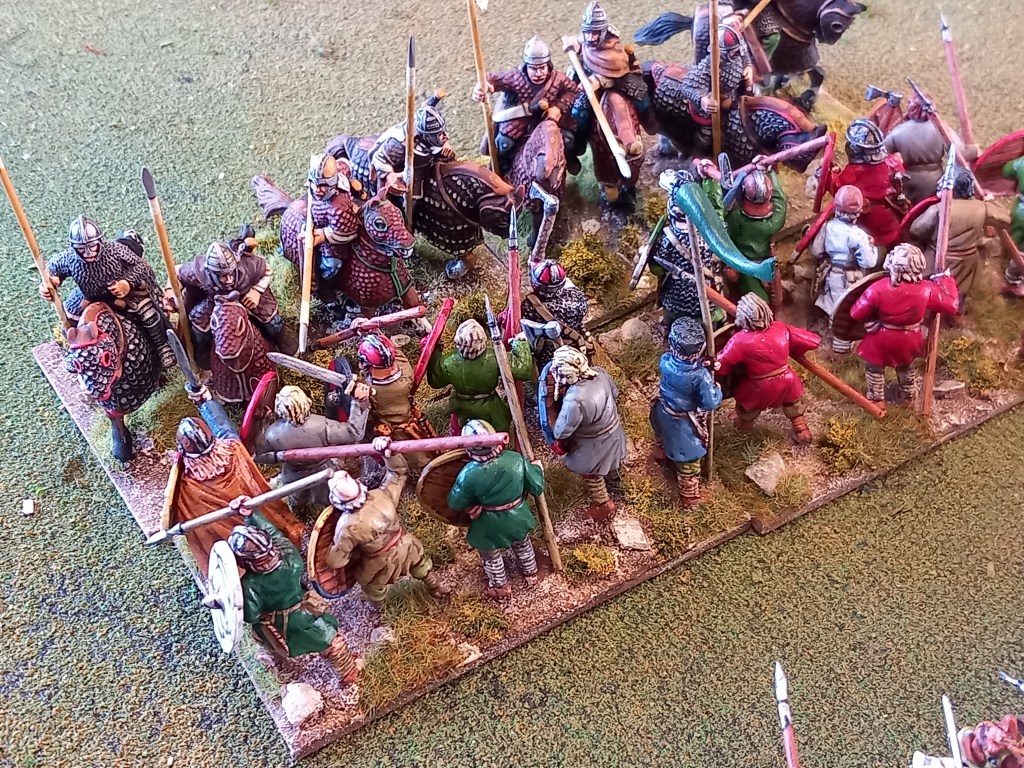
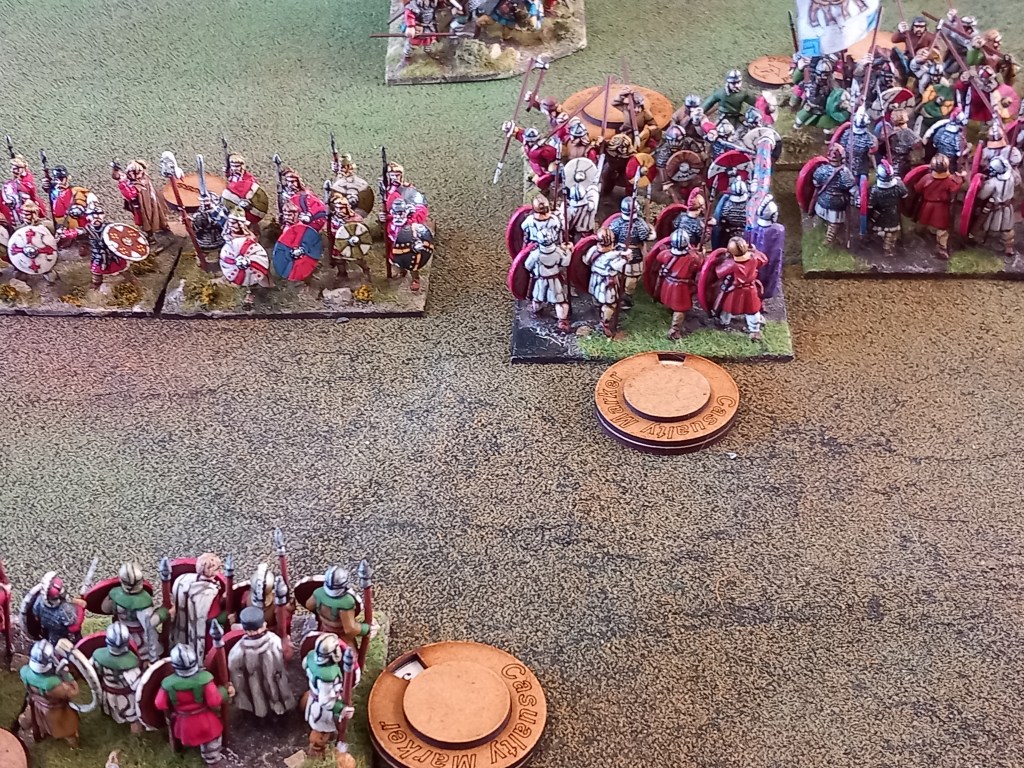
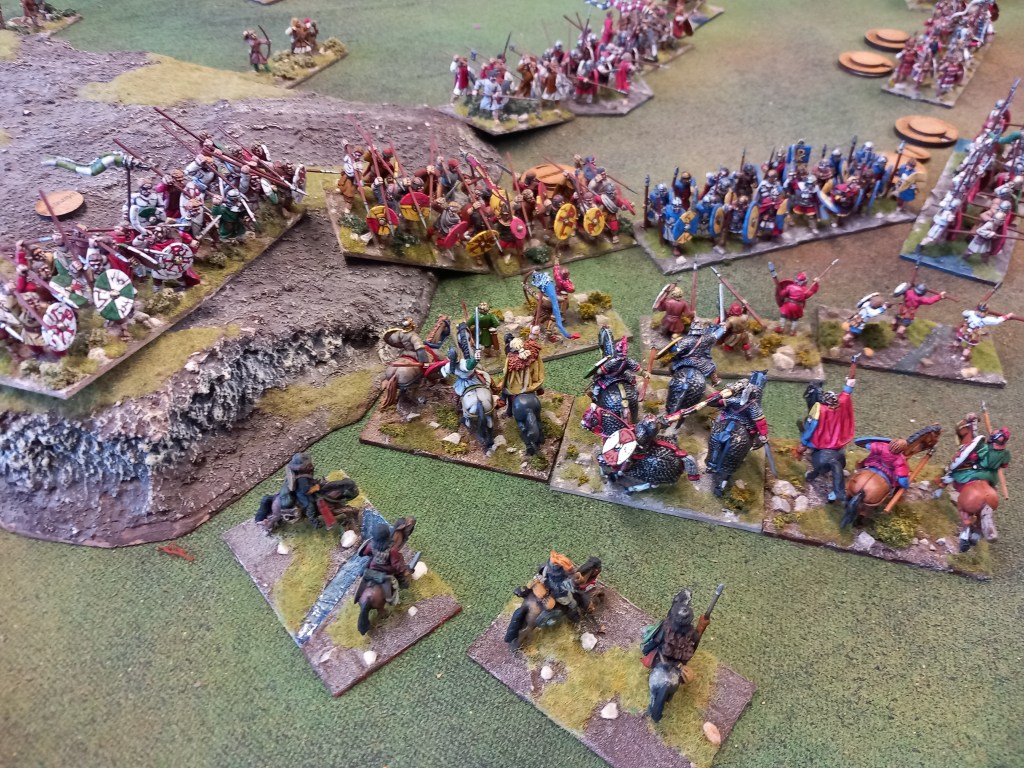
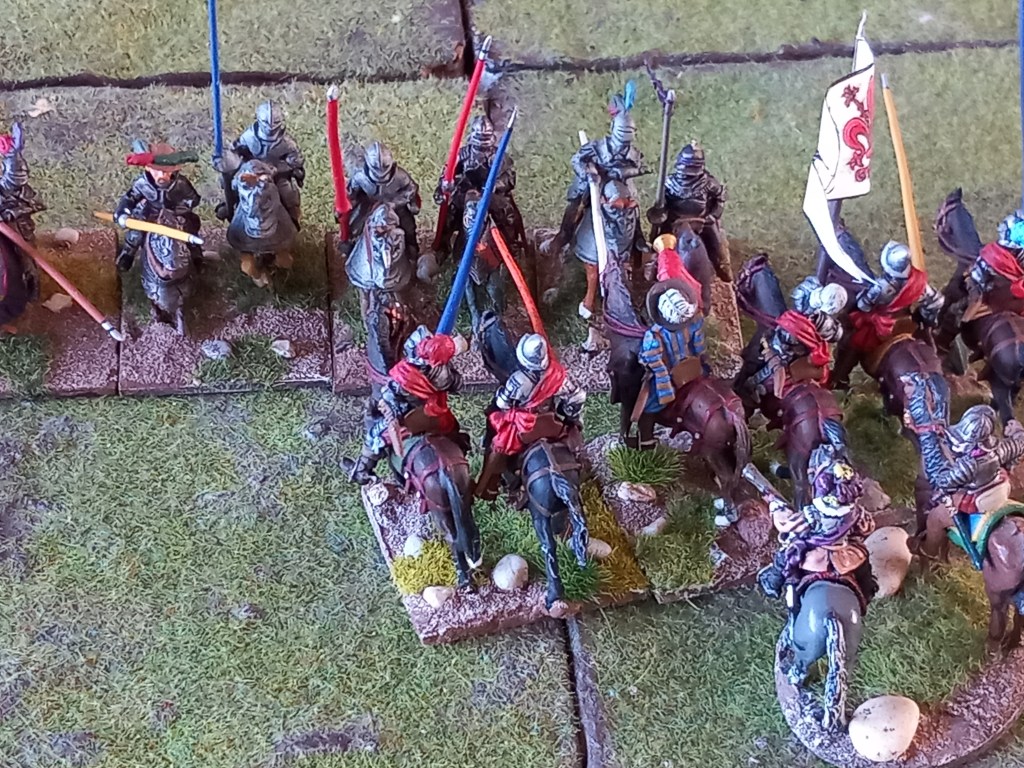
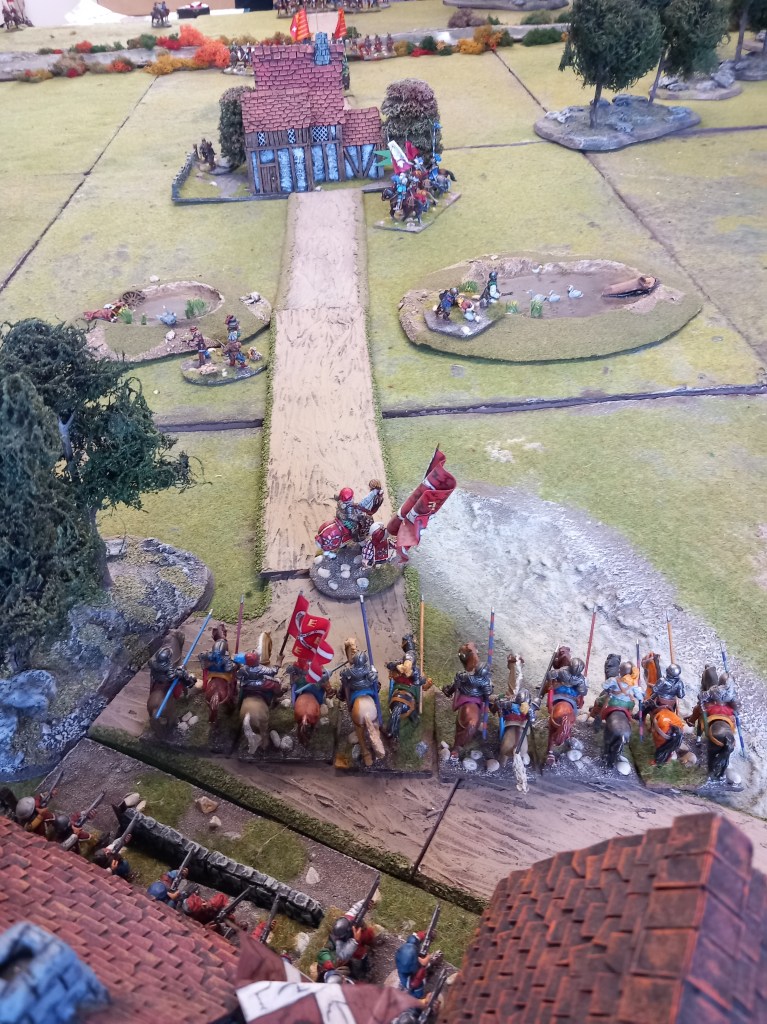
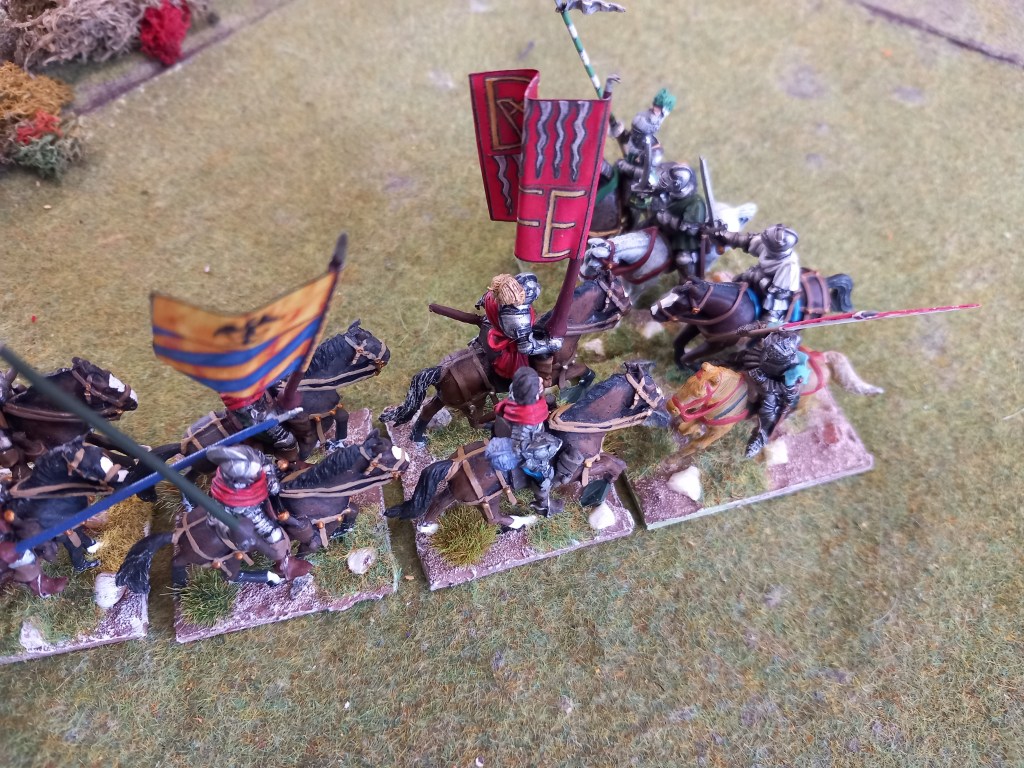
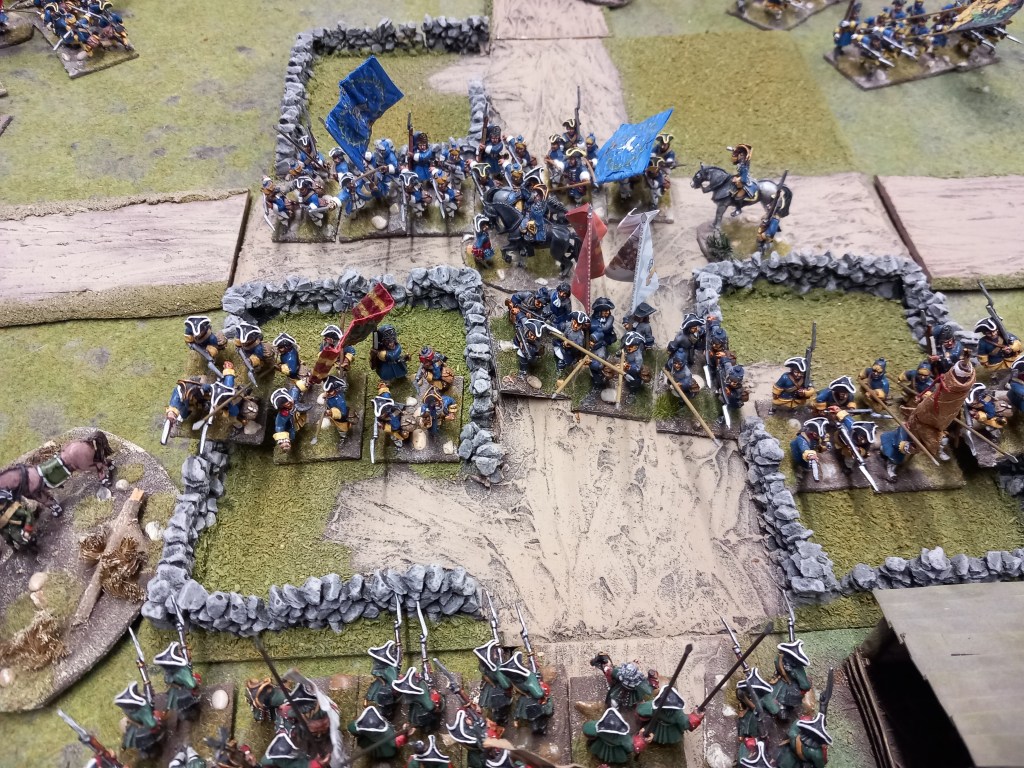
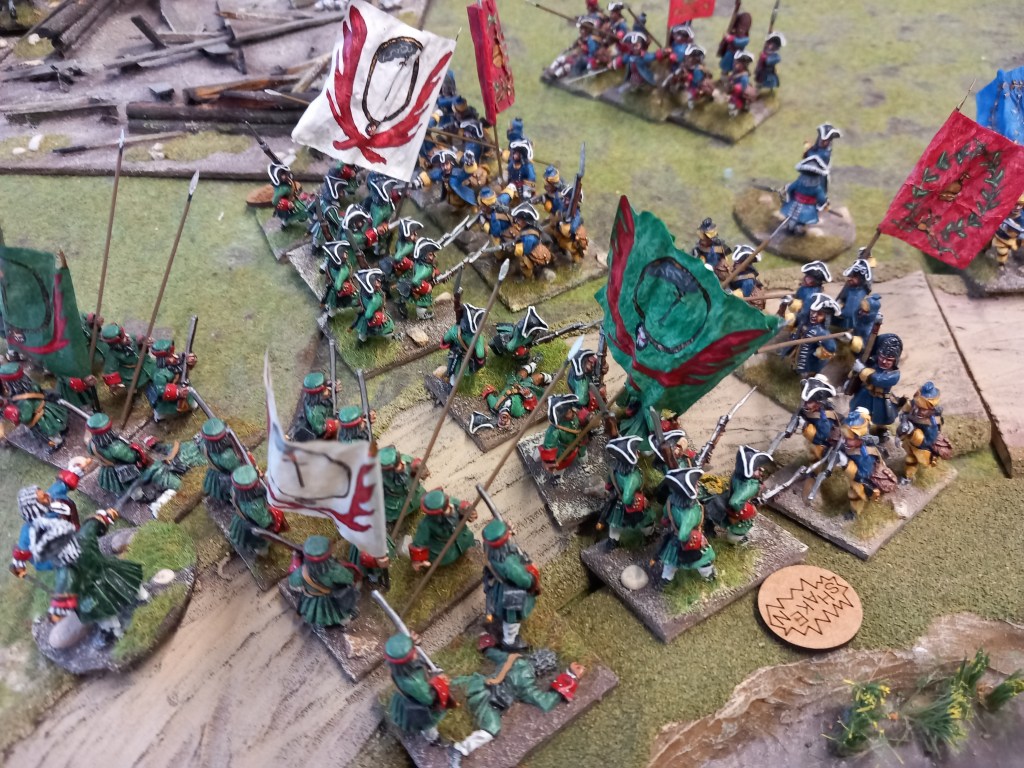
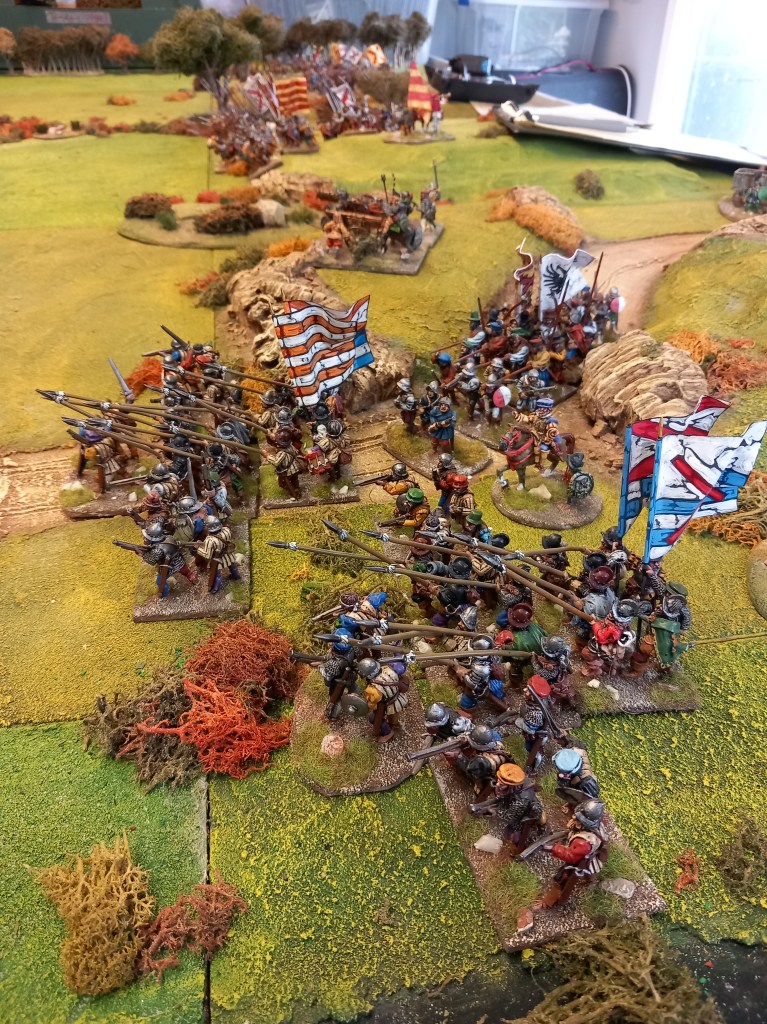
Back at the village the Swedes had sorted themselves out and orders had been given. Stackelberg’s brigade (seen above) stormed the village driving out the dragoons and entering a firefight with Pfennigbeir’s brigade which ultimately they lost – both Jonkoping battalions were seriously shot up and the brigade retired hurt.

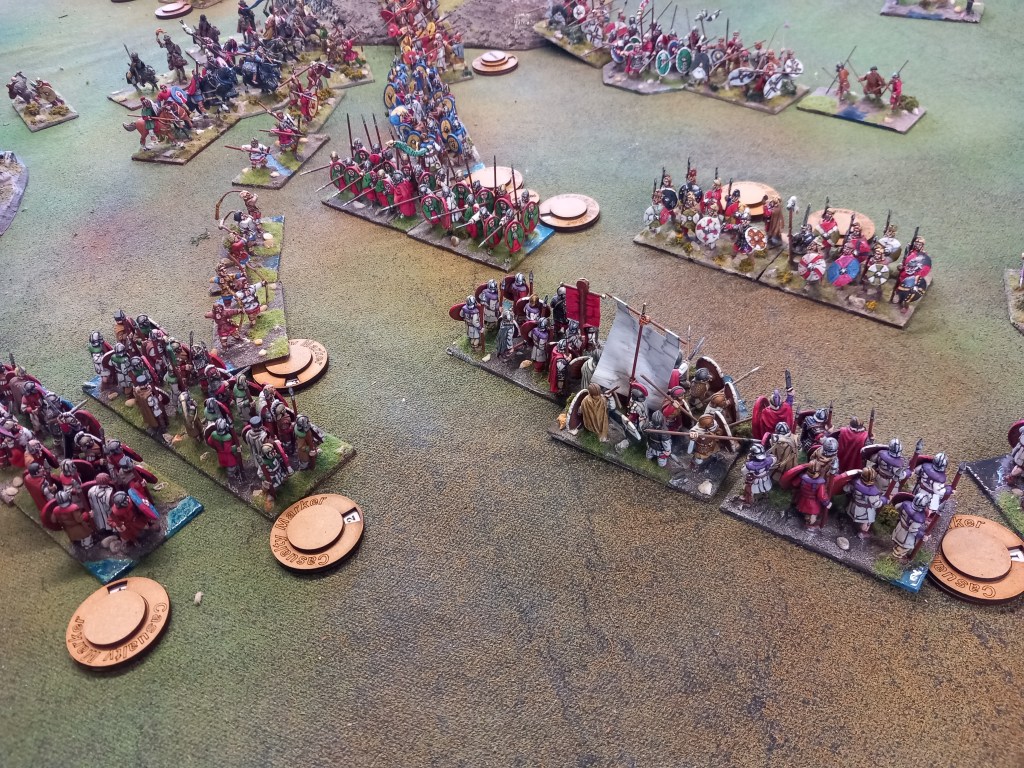
However the other two brigades of Lewenhaupt’s command, Sparre and von Liewen flanked either side of the village and took on Sheremetiev’s remaining 3 brigades – Sparre in fact took on two, Hallart and Golovin and smashed them both up.

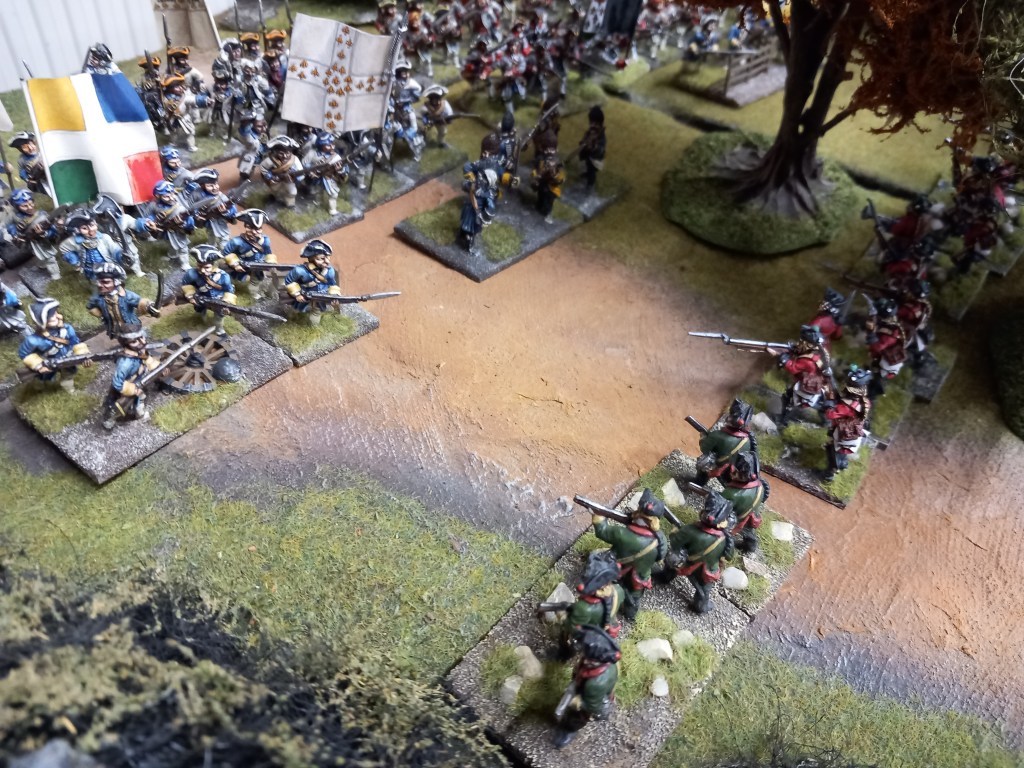
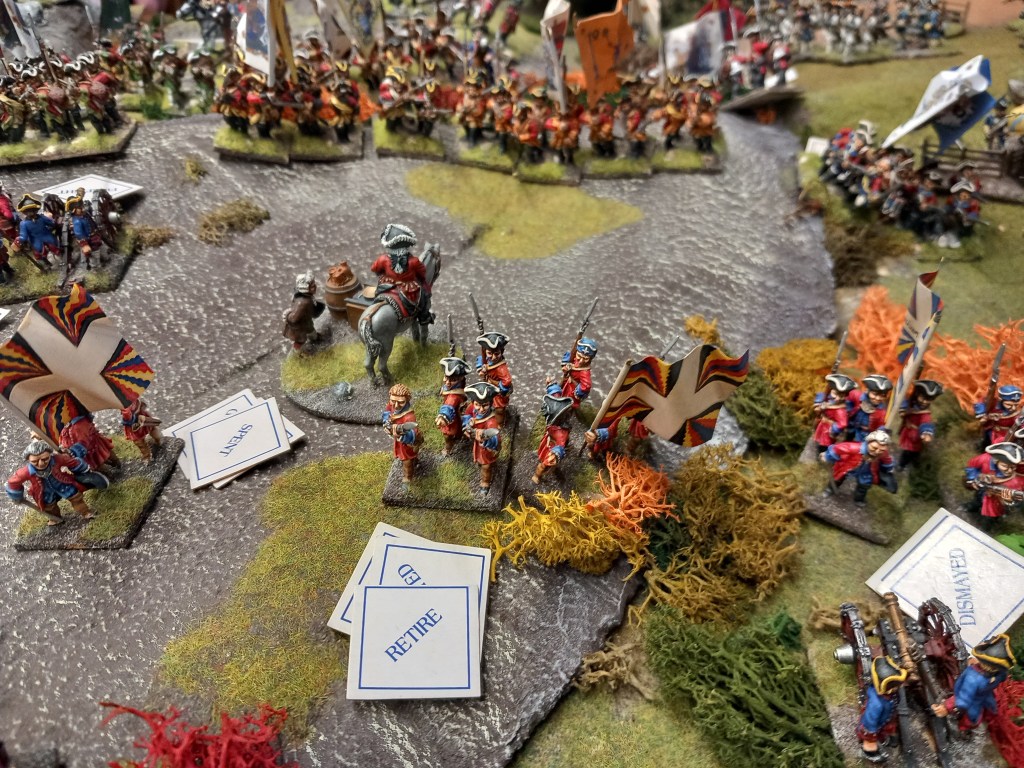
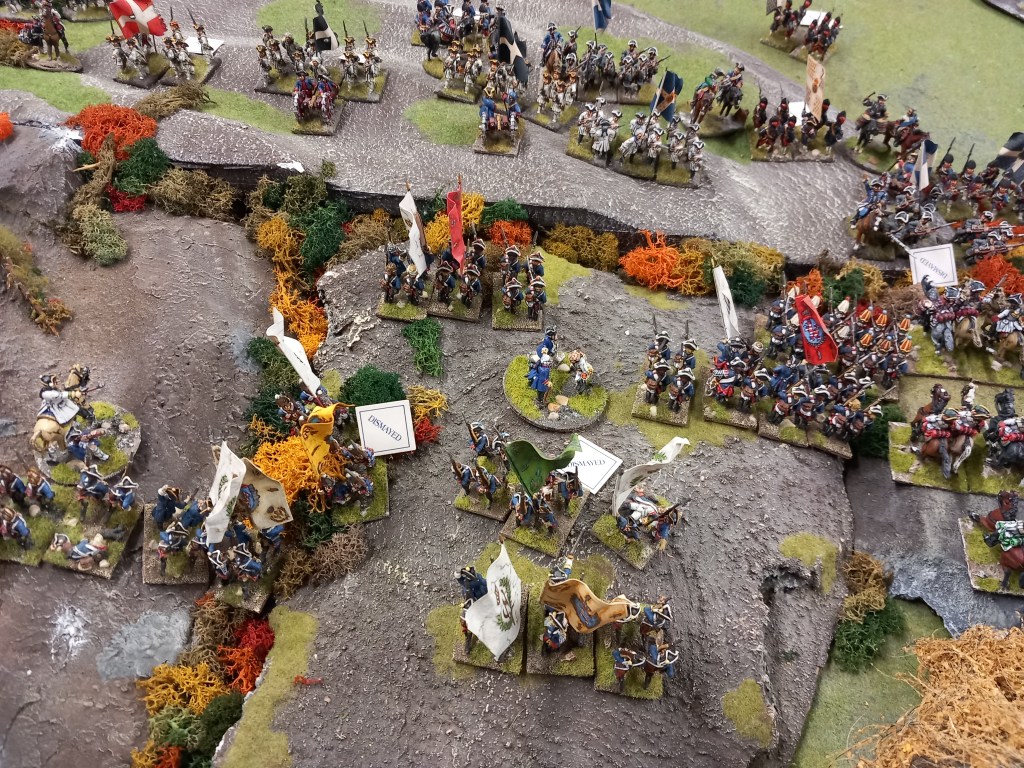
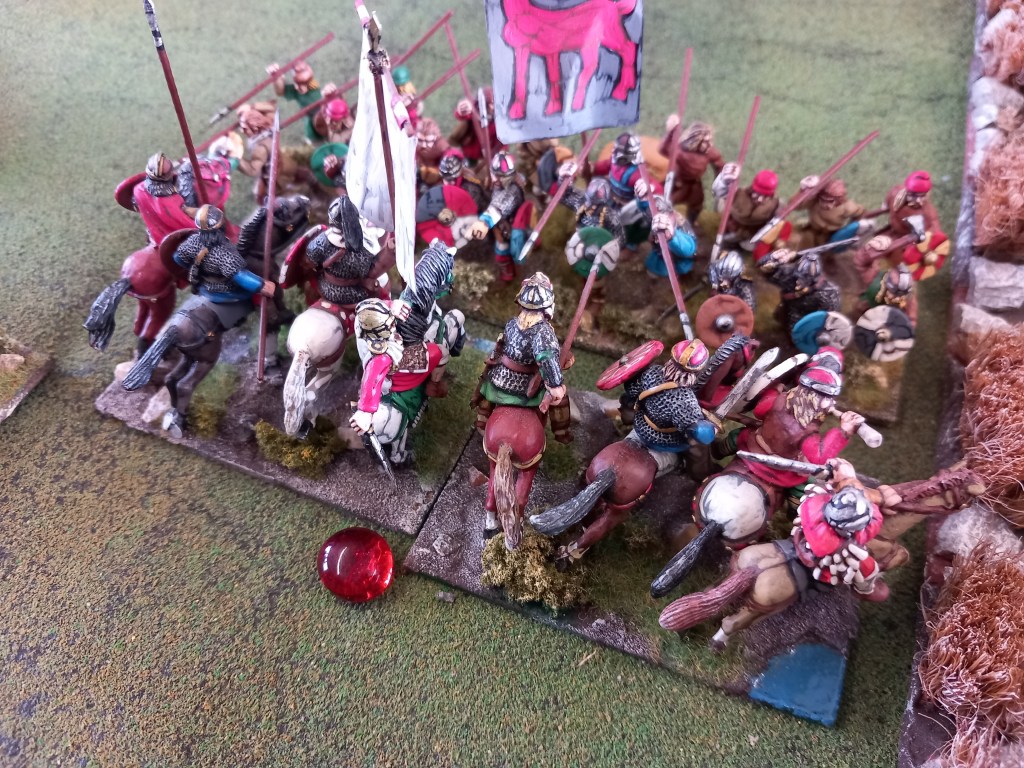
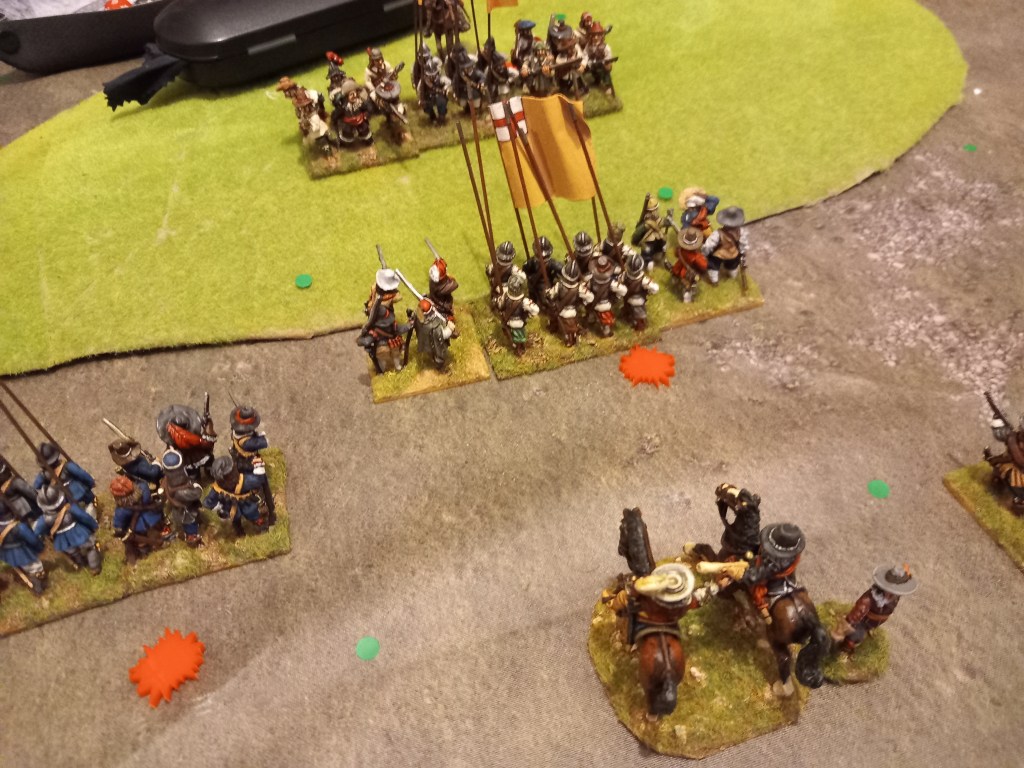
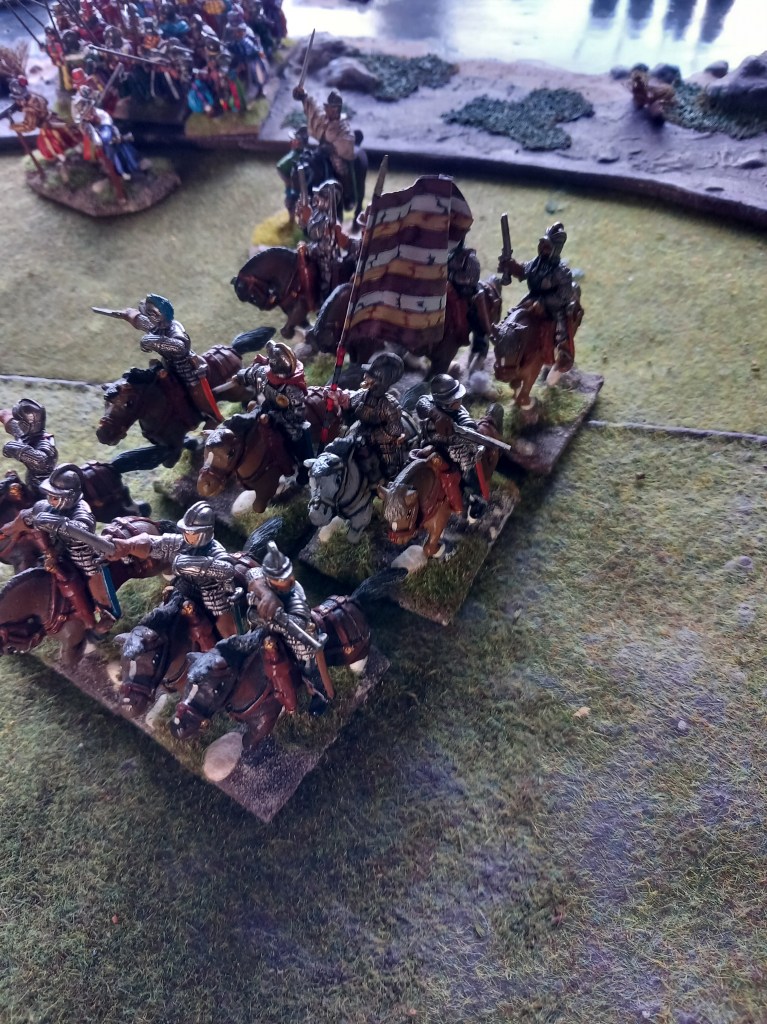
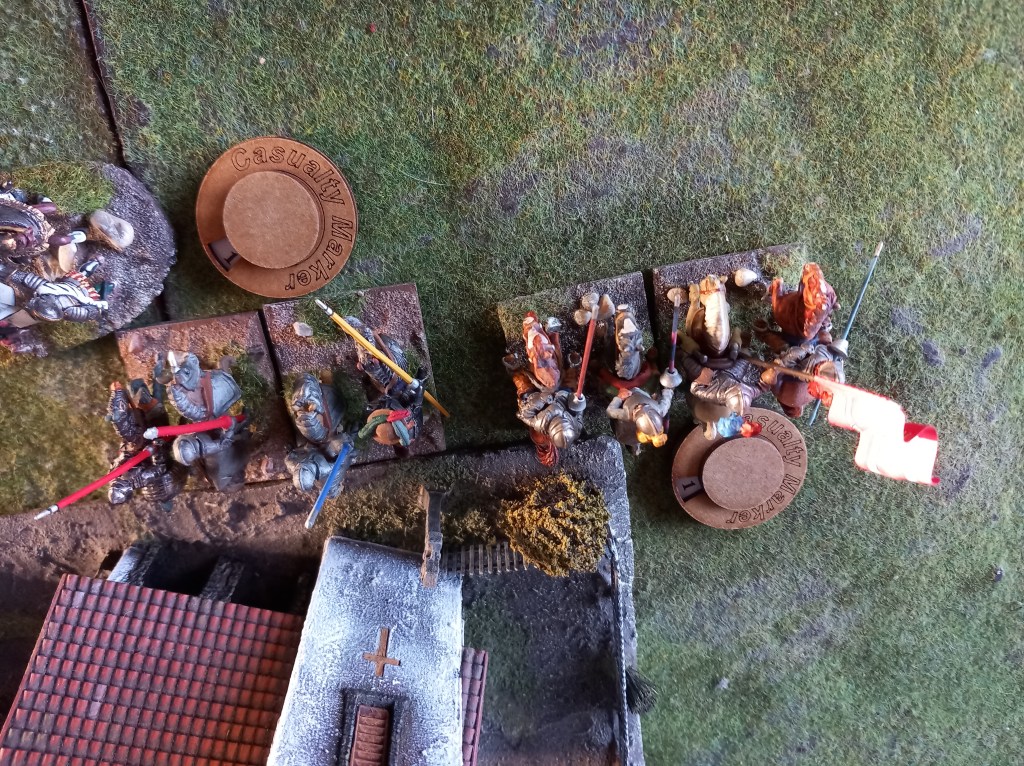
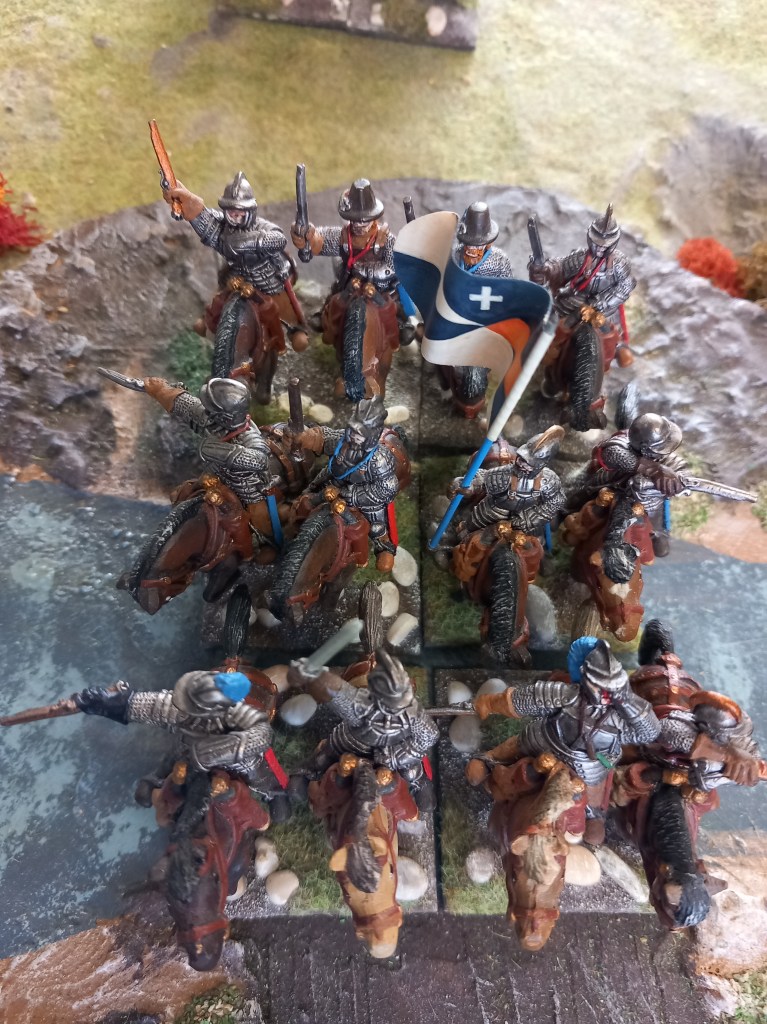
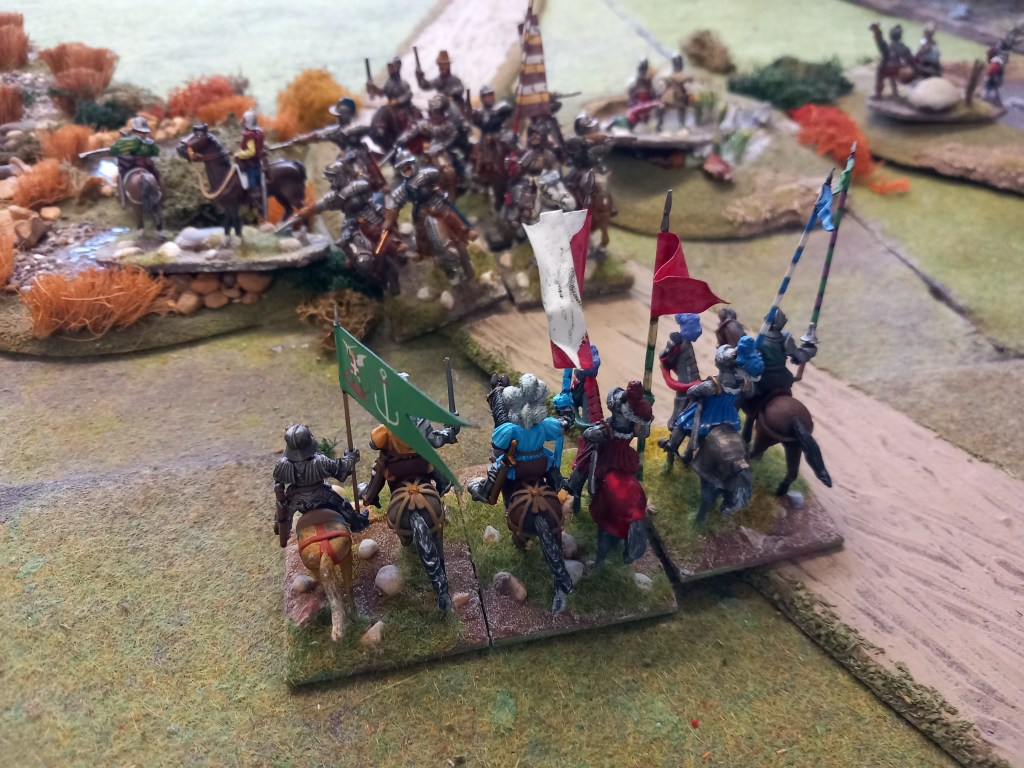
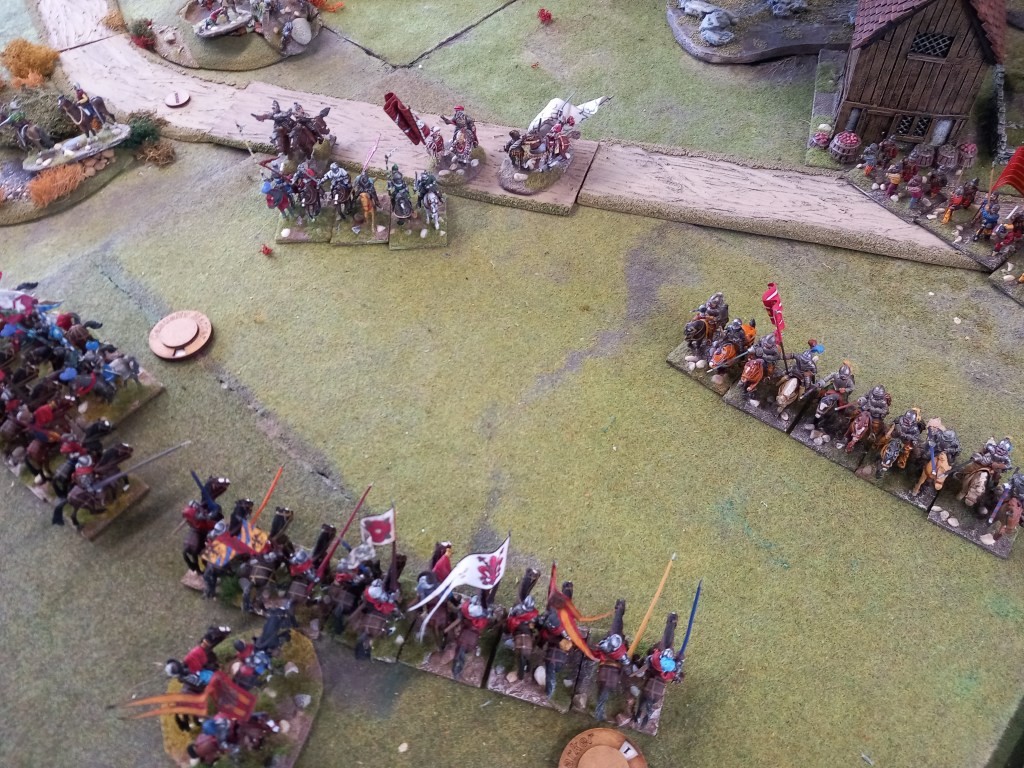
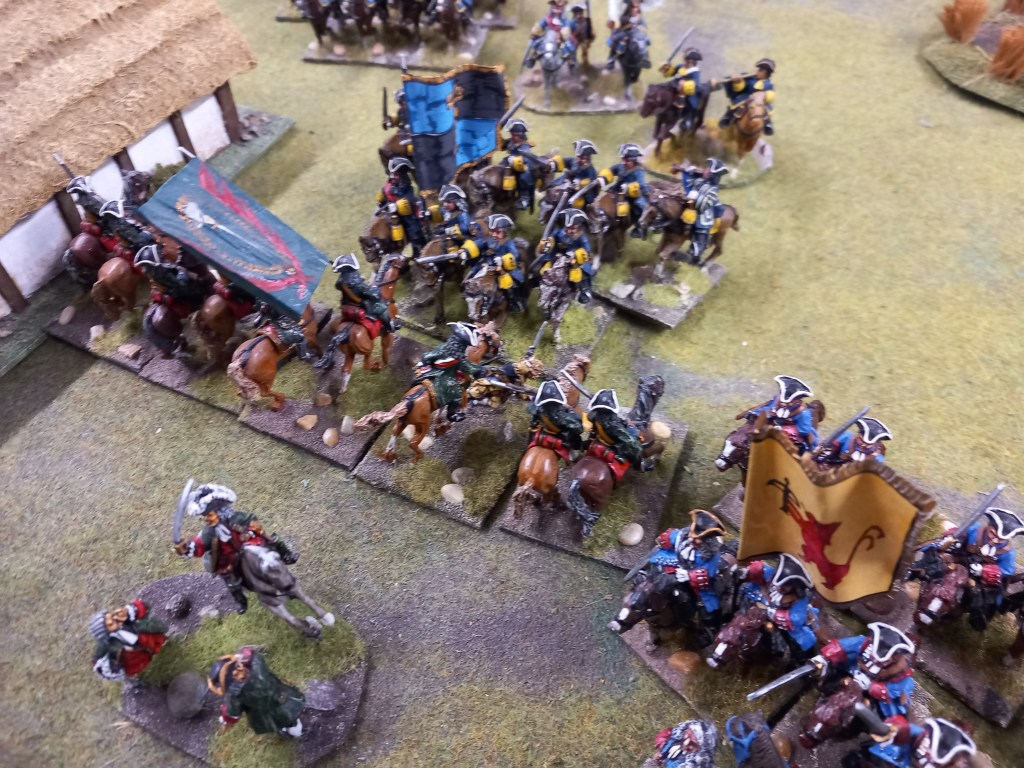
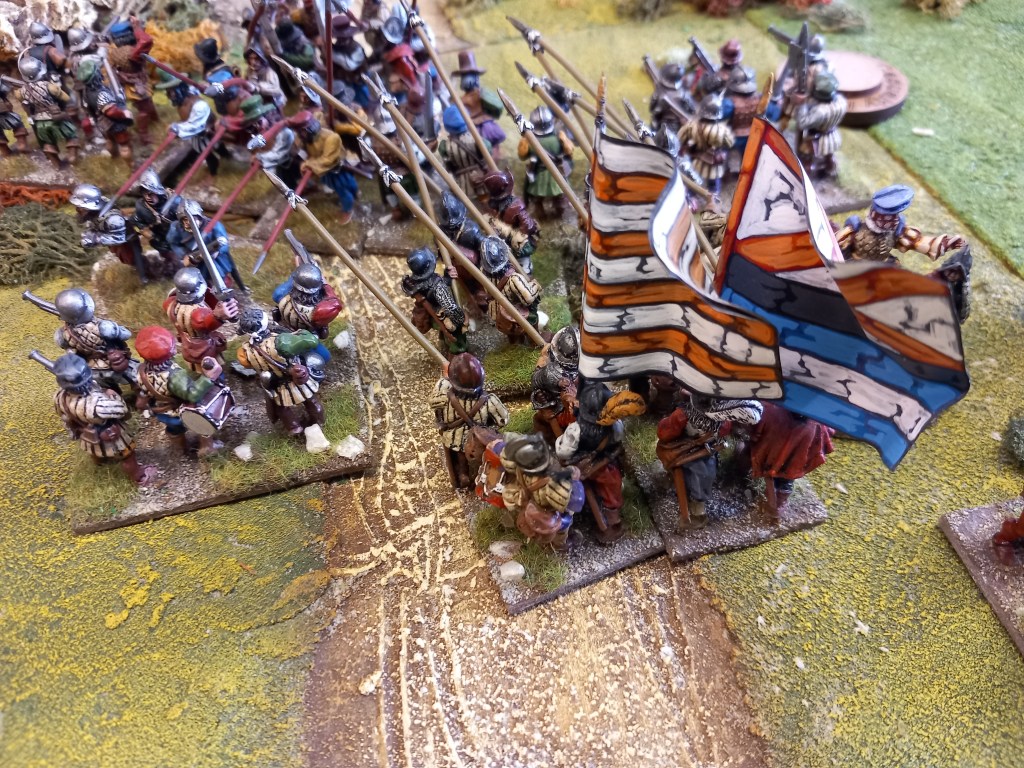
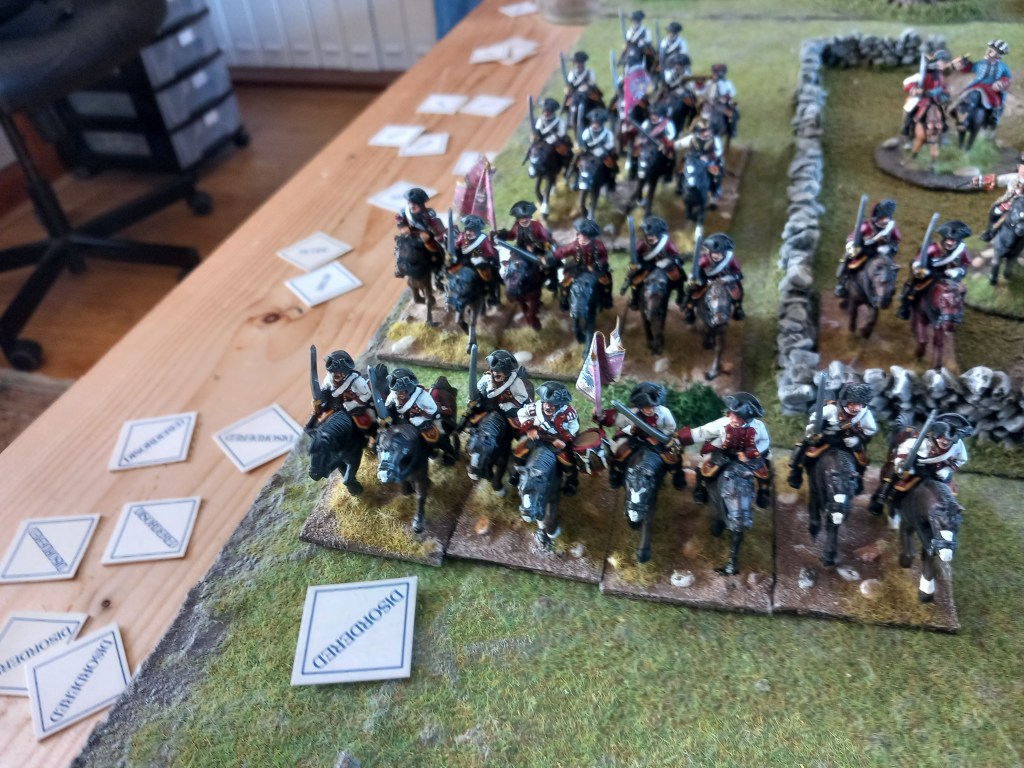
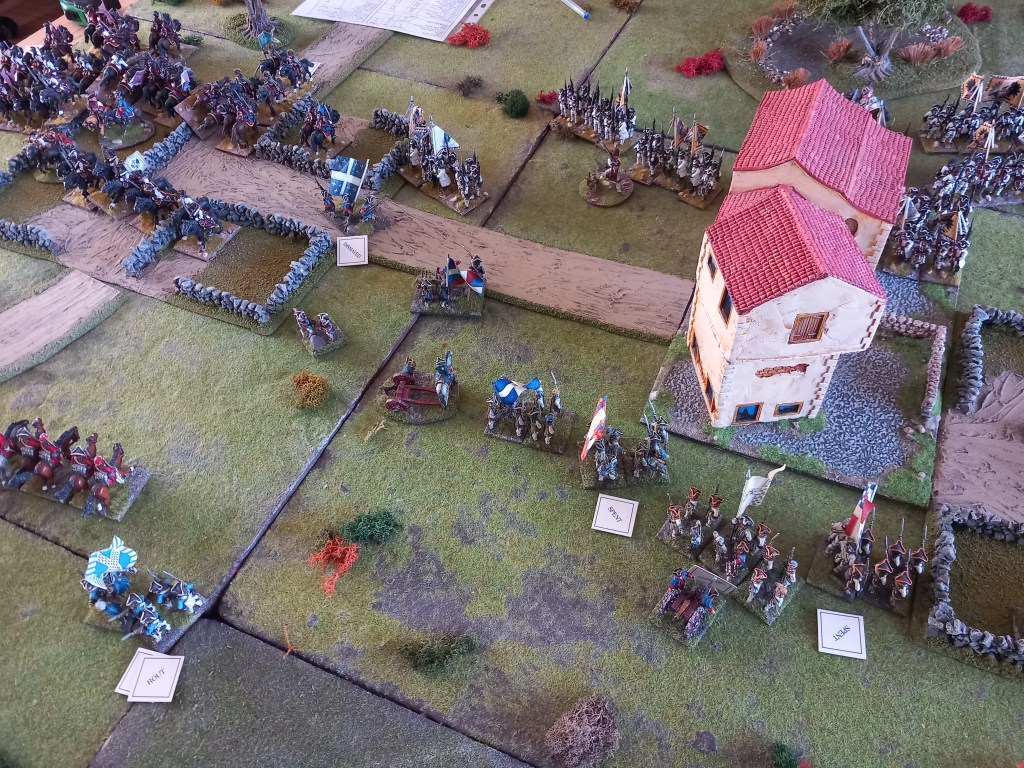
Out on the Swedish right Horn didn’t have the best of days. When he received his orders to advance on the Russian left the dragoons he should have attacked had already dismounted amongst some burnt out buildings and proceeded to shoot him up supported by Hallart’s infantry (before Sparre arrived), forcing him to retire – Ostgota in fact left the table badly depleted. However, in an inexplicable turn of events the Russians got a bit cocky, remounted and came after the Swedes who rallied and gave the Russians a bit of a drubbing (seen above), this did however see Horn and his brigade leave the table giving chase to Repnin’s brigade.

We were now getting to the end of things, Sparre was getting stuck in – none of this shooting nonsense for him!

Bauer’s command was in it’s death throws.

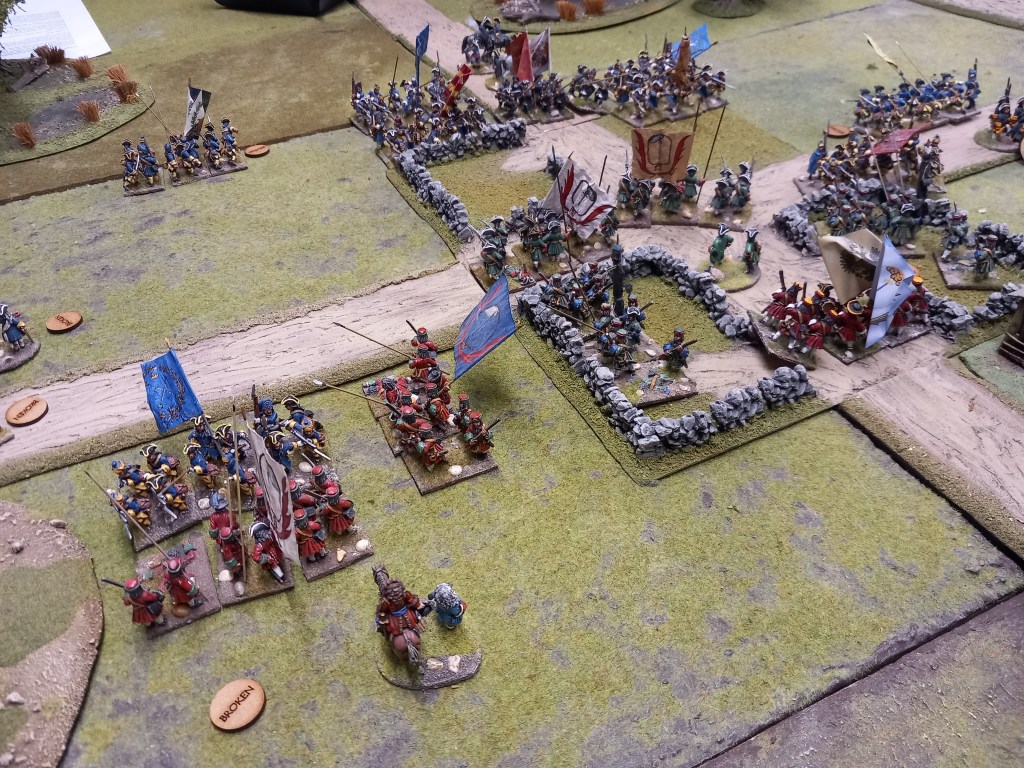
The village was surrounded – buildings removed for ease of play.

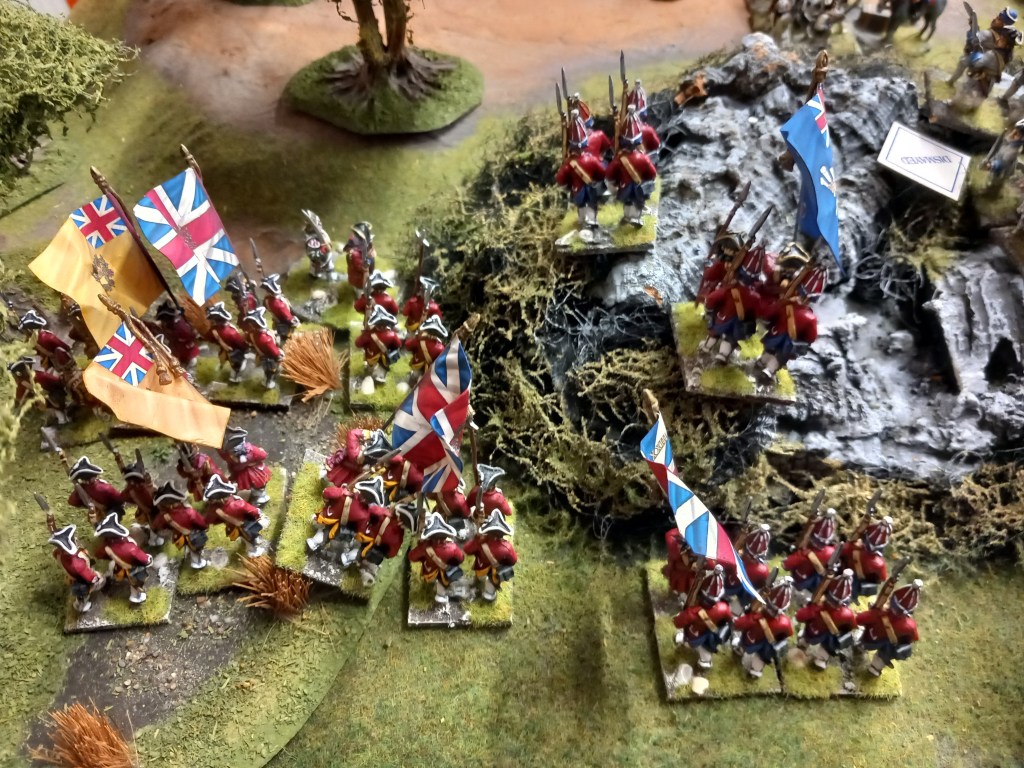
It was over. A bloody day for both sides but by the end all the Russian brigades were on the run. Great game.

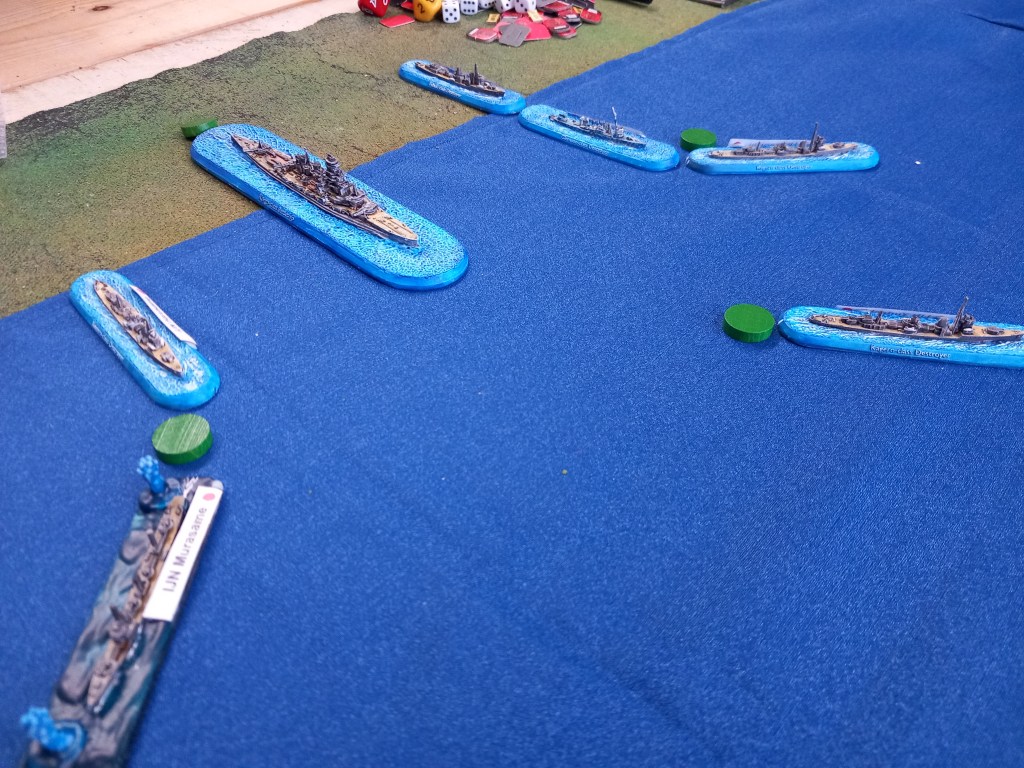
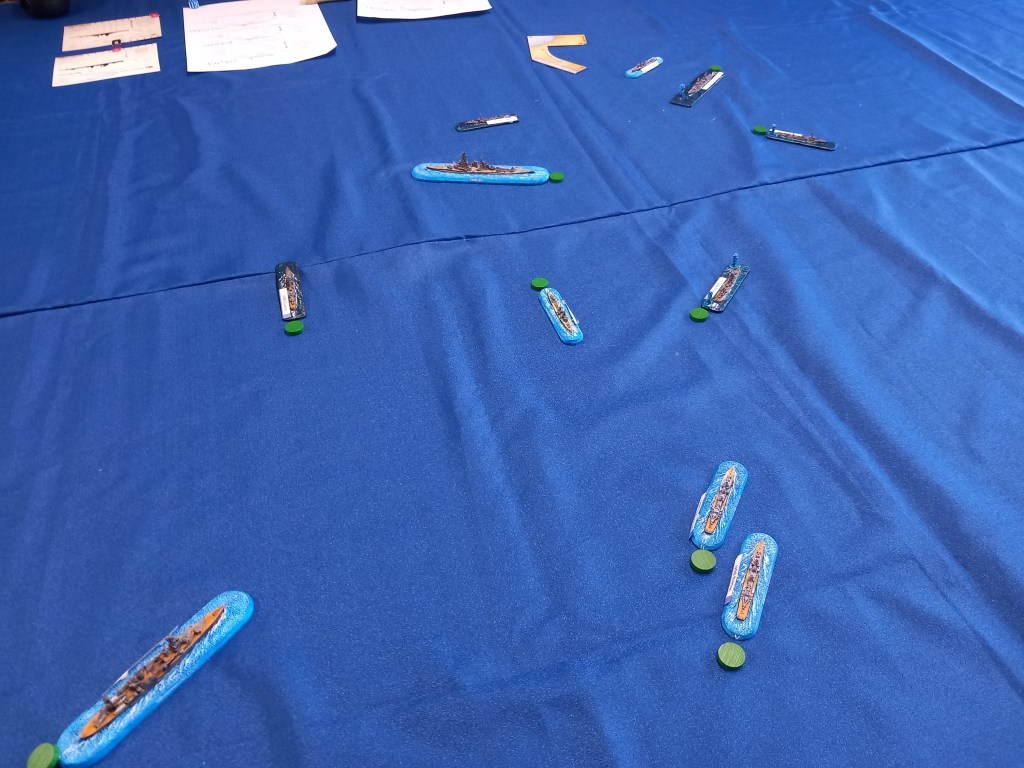
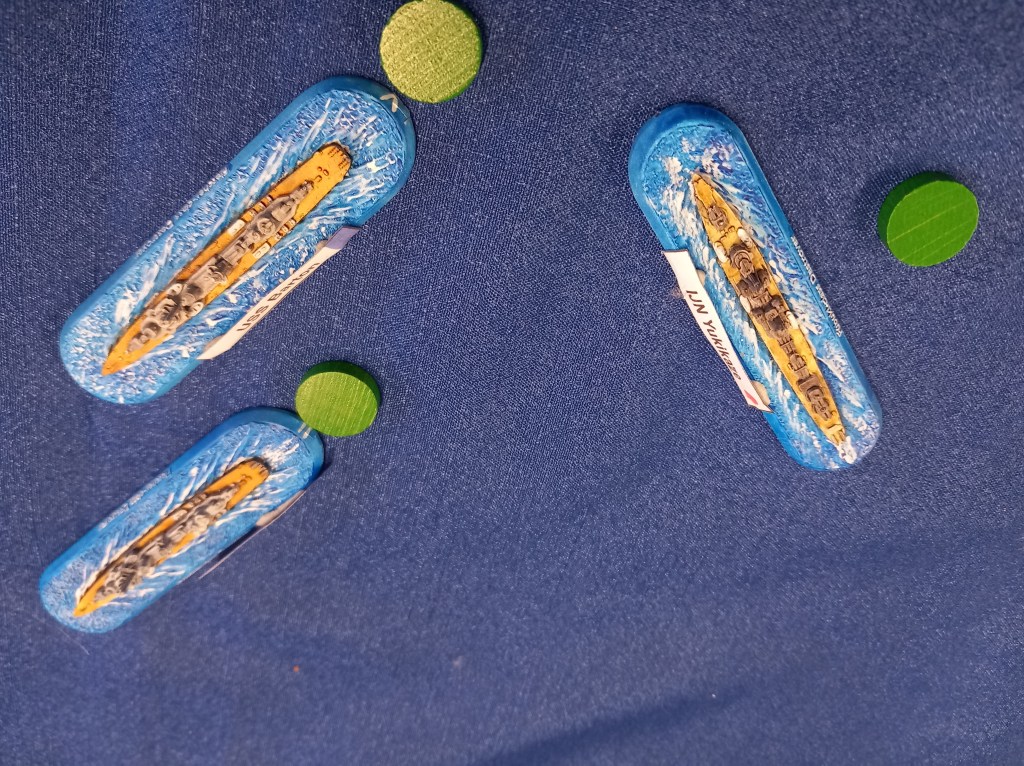
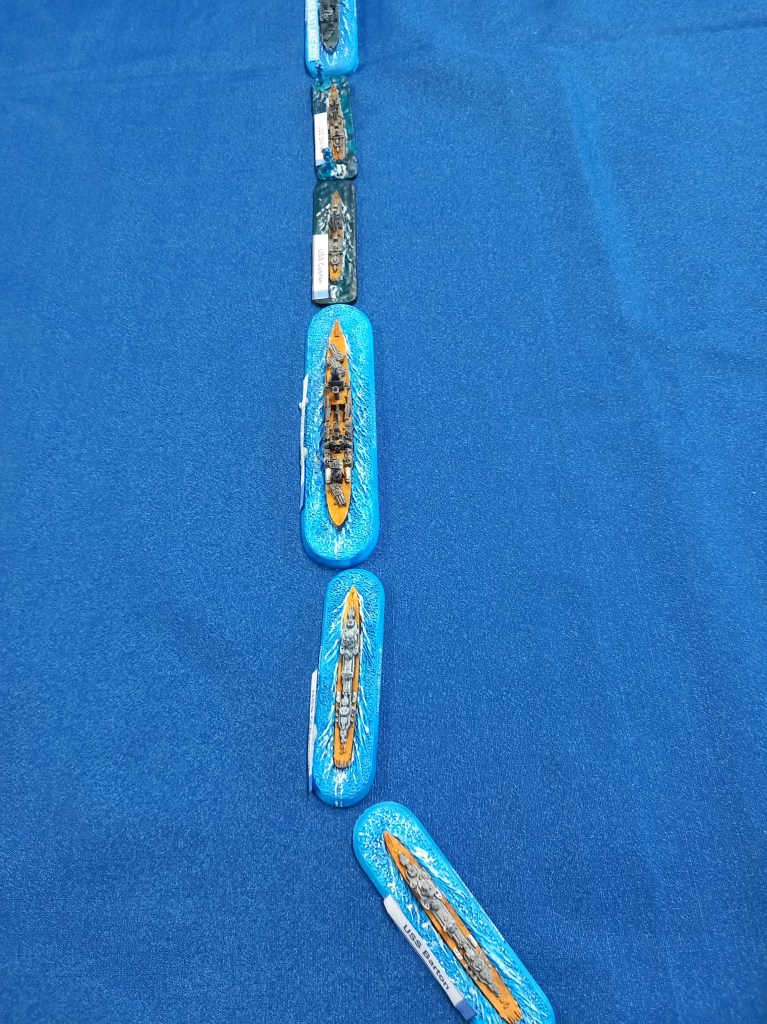
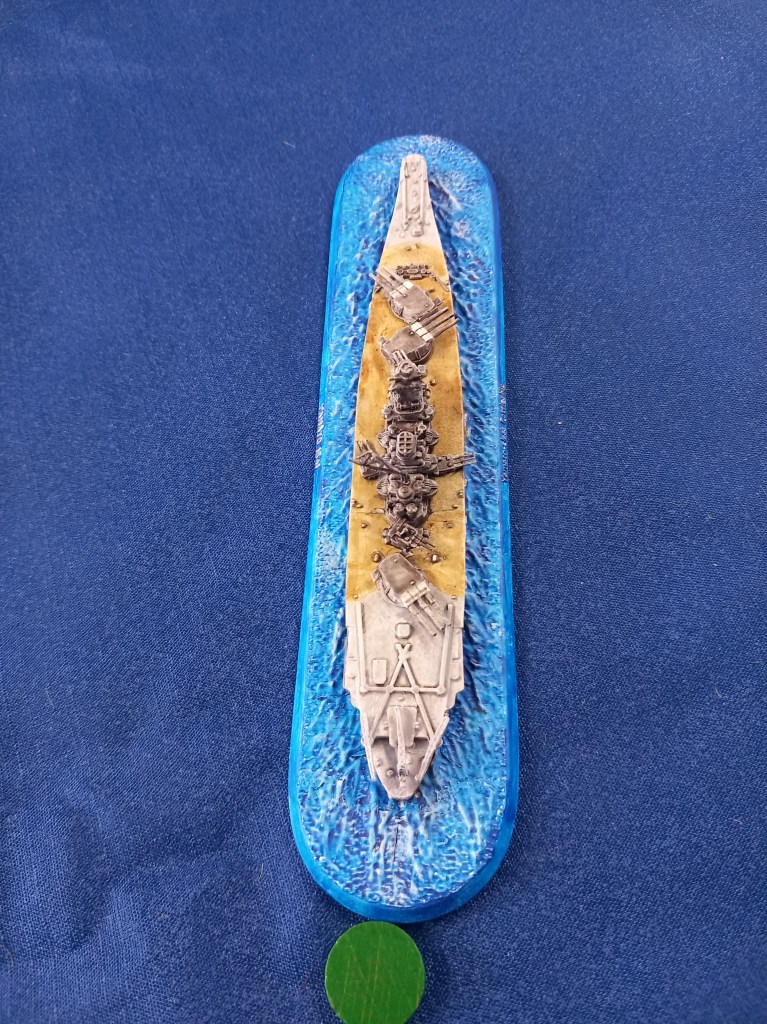
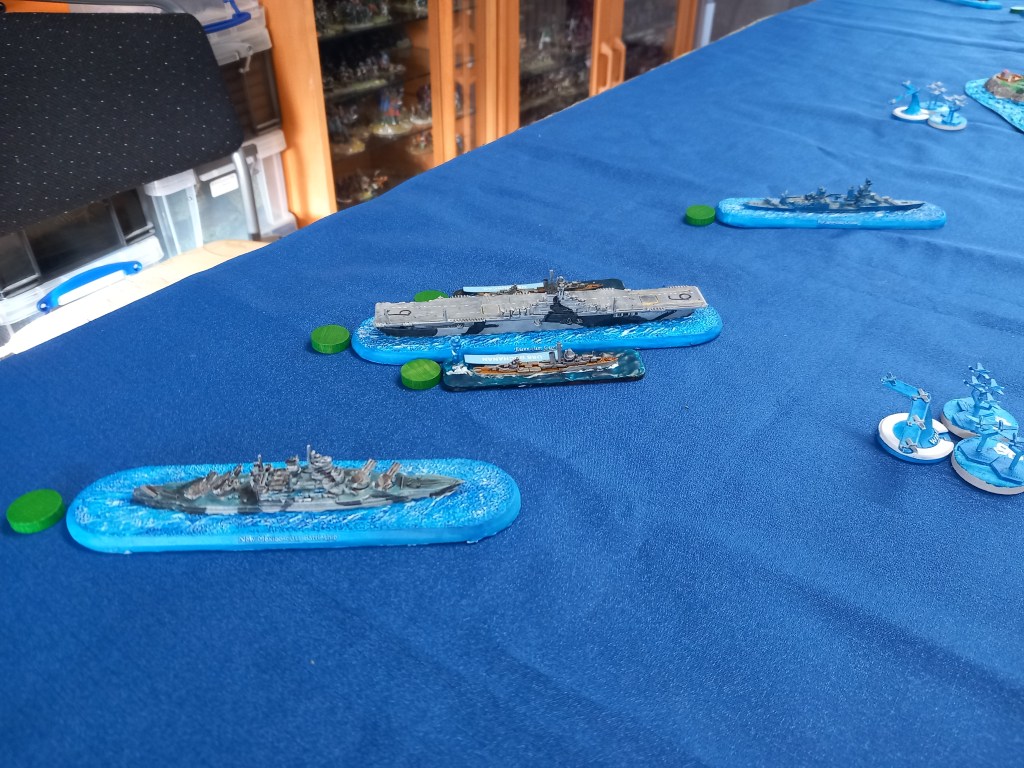
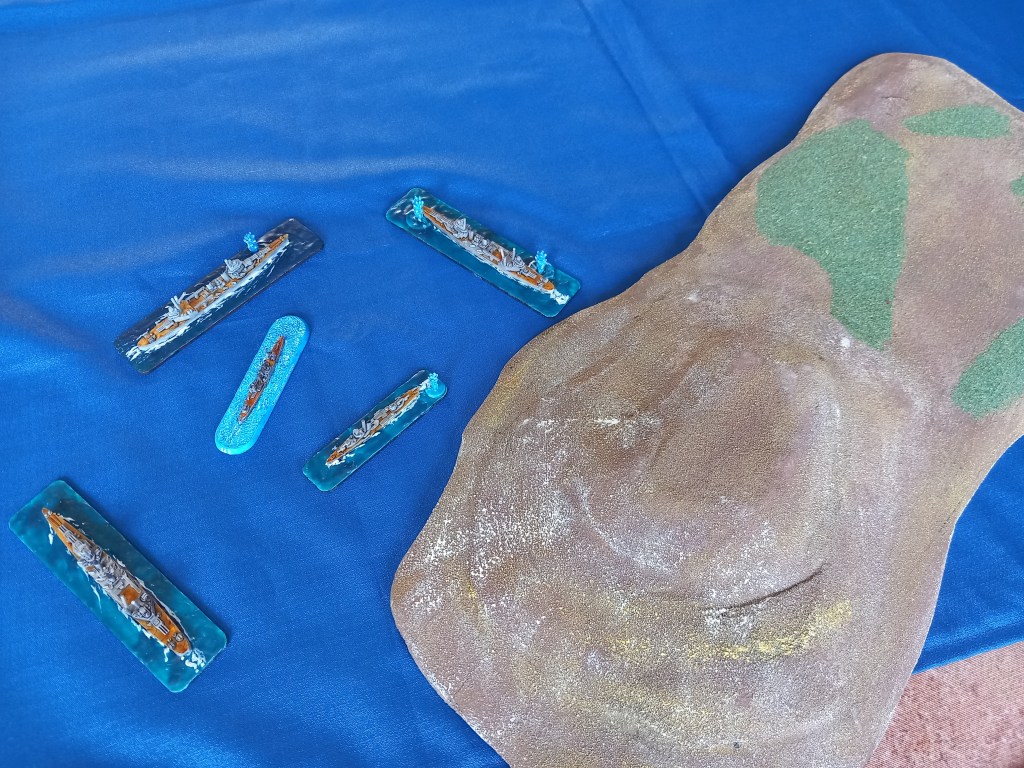
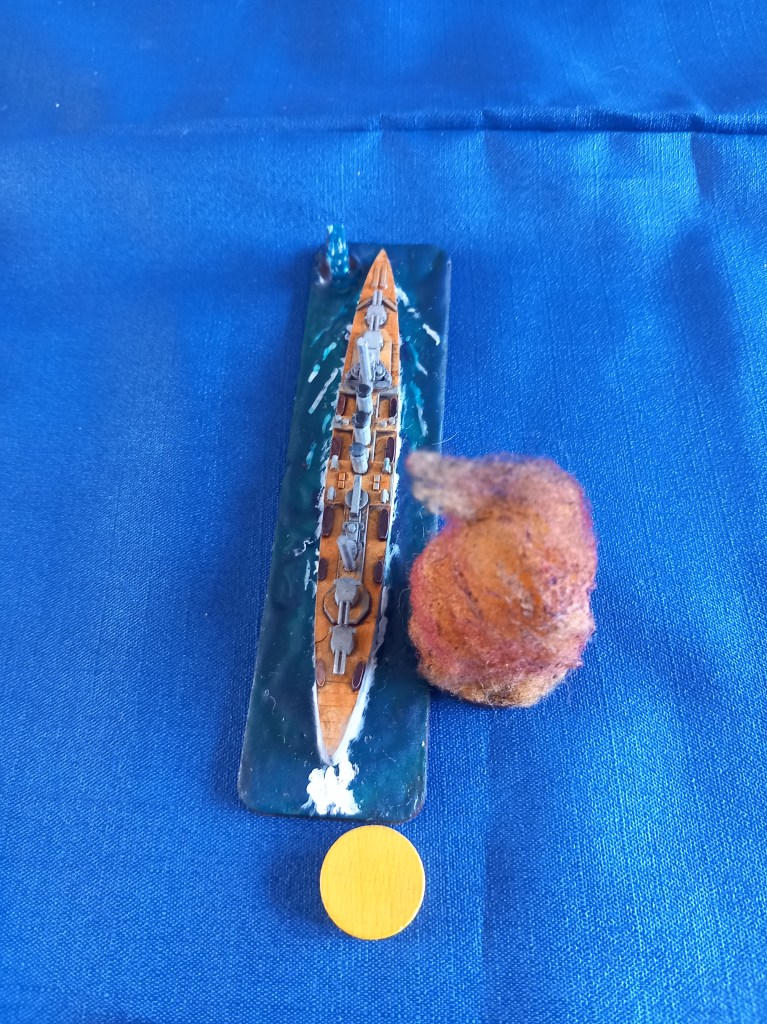
Next up a return to the Pacific with Victory at Sea. A simple equal points game this time with each side given free choice within the 1943 time frame and both sides having a “free” carrier and aircraft either on table or off. As a bit of a “can I do it?” the Japanese player chose to just have the Yamato battleship and the aircraft carrier off table – meant the air cover was slightly delayed in arriving, the Americans chose a mixed force from destroyers up to their own older battleship.

The game was essentially one of the Yamato keeping enough distance between itself and the Americans and preventing them concentrating fire. It nearly worked!

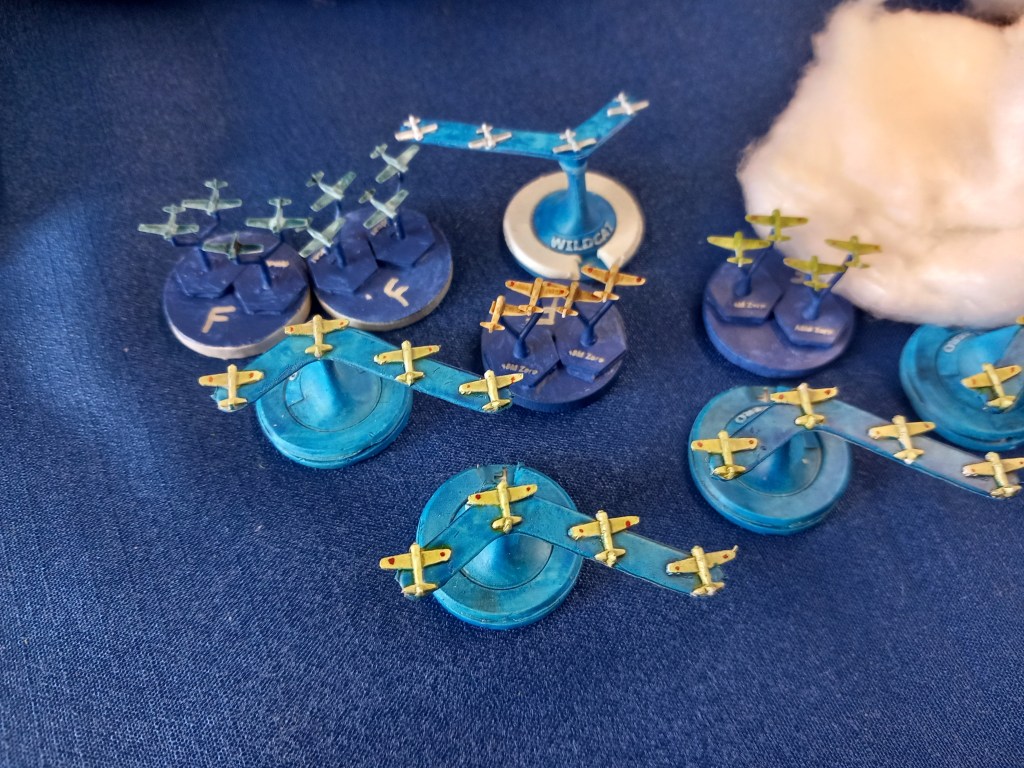
The main worry for the Yamato was the American planes and if the American player had handled them better it would have been a very short game!

However, the American chose to attack piecemeal and this allowed the Japanese player to “zero in” – see what I did there 😂and take out a lot of the American air strength.

They even got a chance to attack the American carrier.

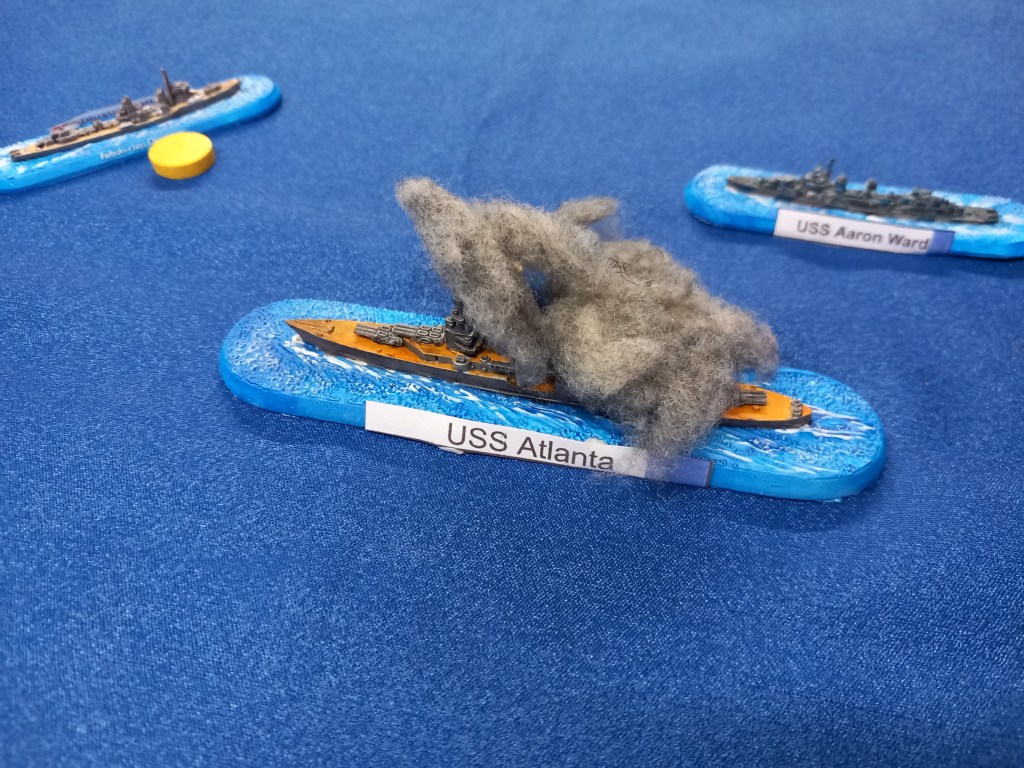
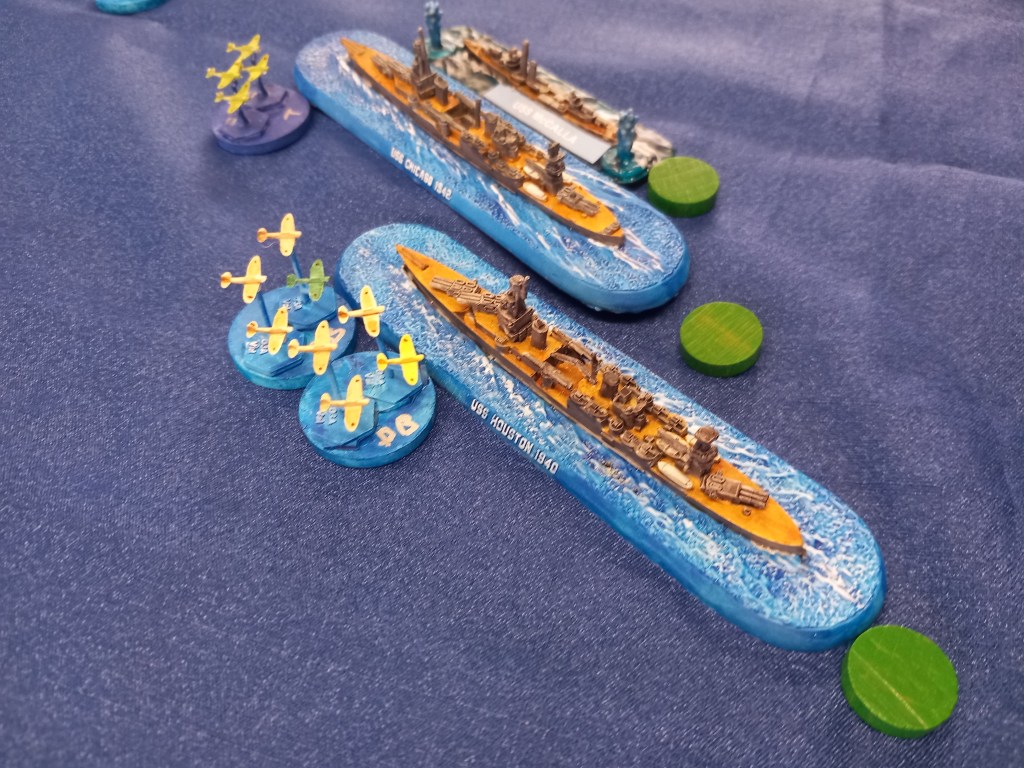
And damage the Chicago and Houston.

The duel of the “big boys” saw the sinking of the New Mexico.

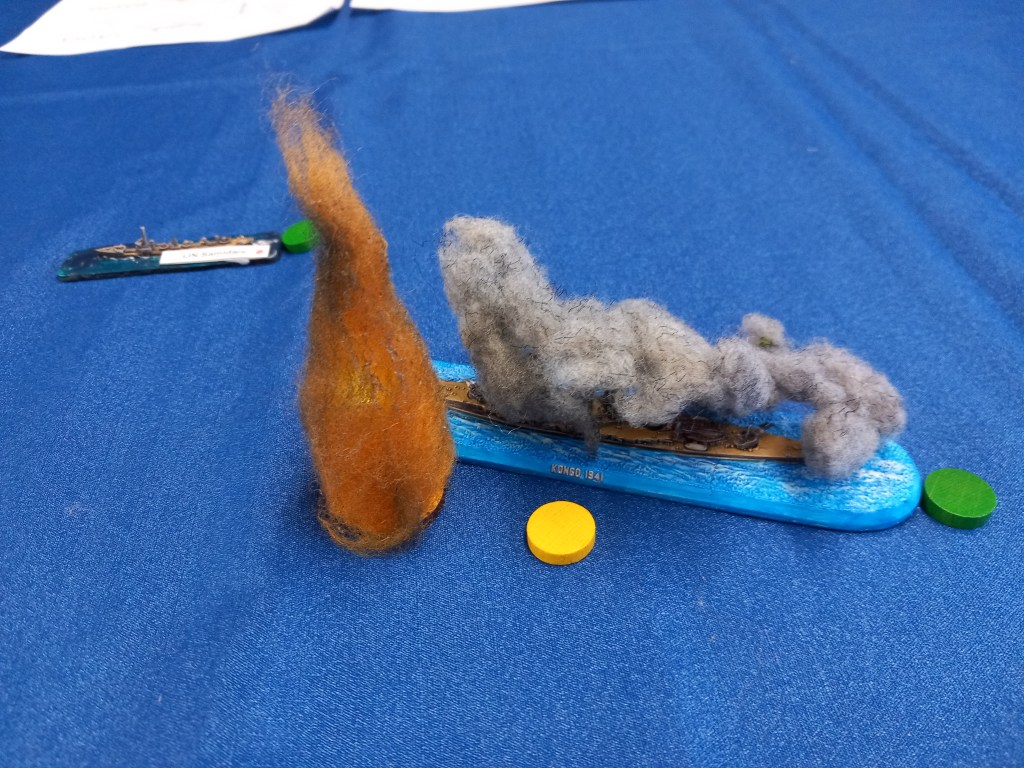
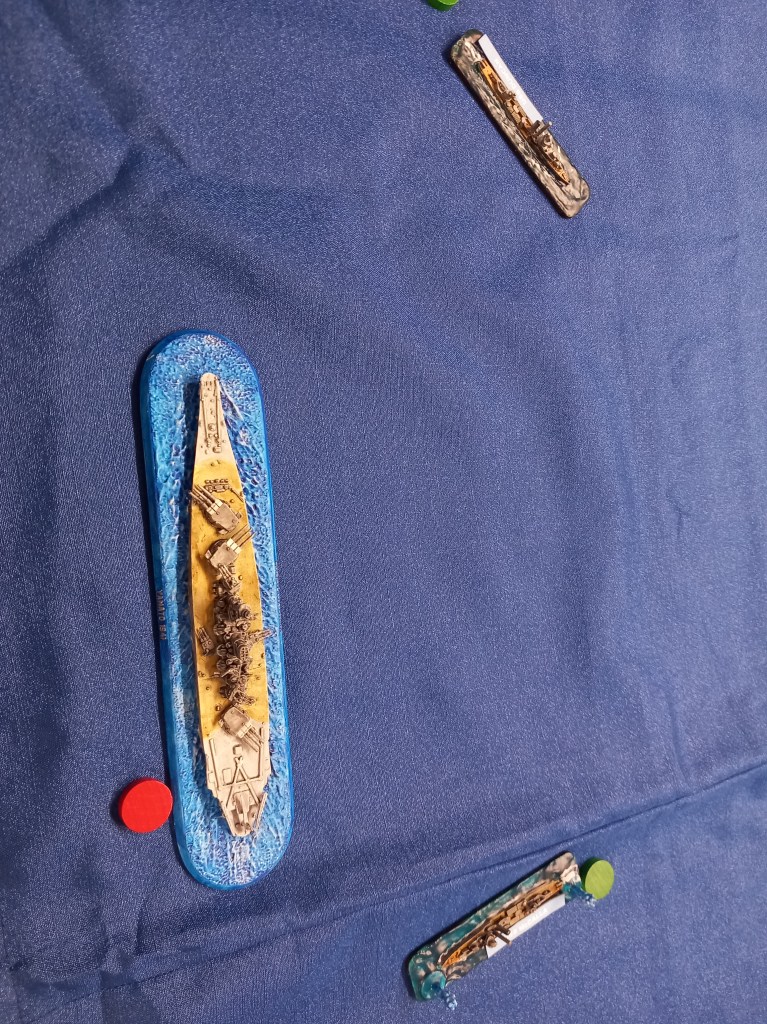
But you can’t fight against multiple ships and not take damage and the Yamato took some unlucky hits which slowed her and the sharks (aka American destroyers) began to circle.

Multiple torpedo hits and it was the end for the Yamato 😢

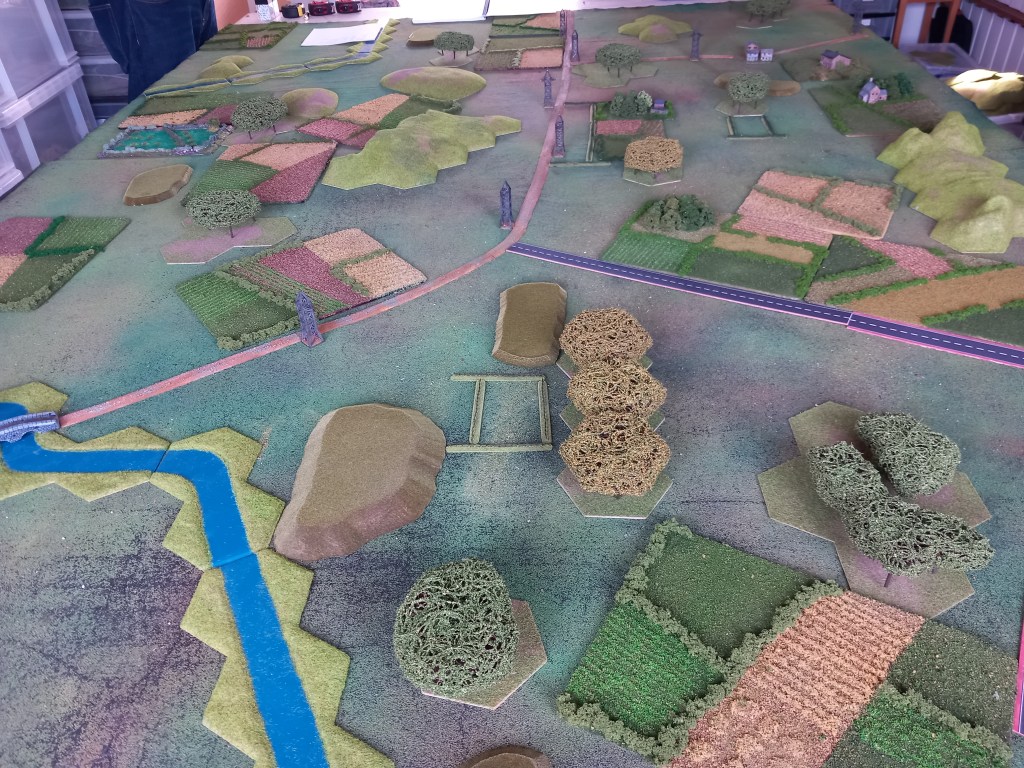
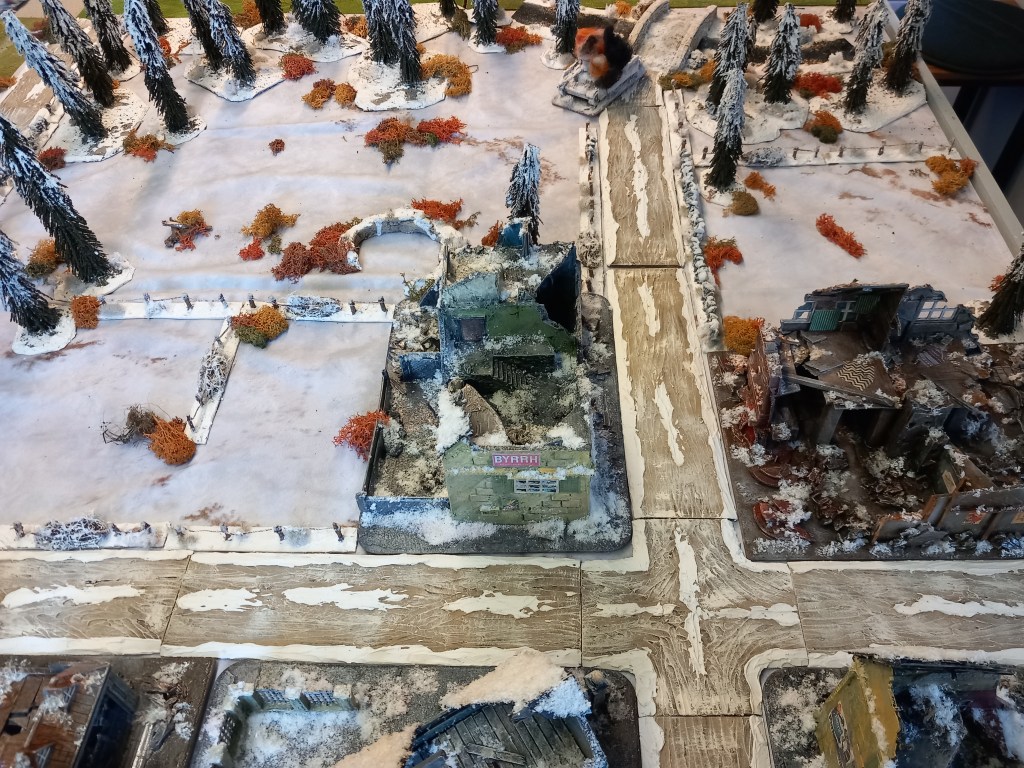
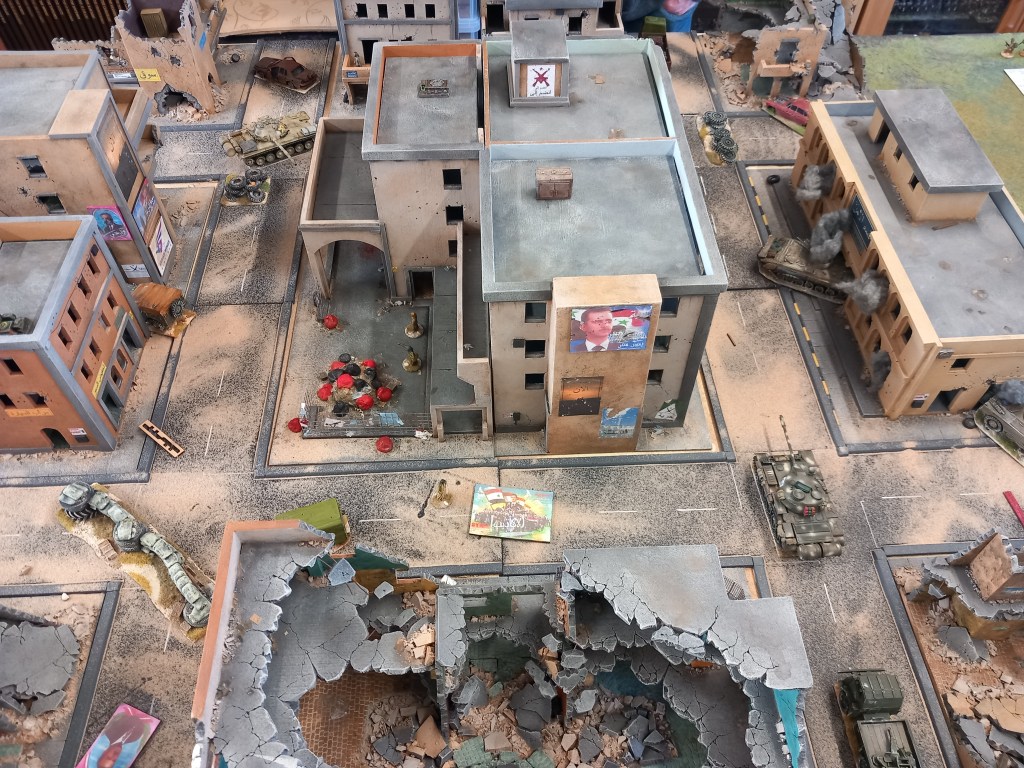
Our next game was a return to long neglected ‘modern’ skirmish, this time in our Syrian Civil War ruins set up.

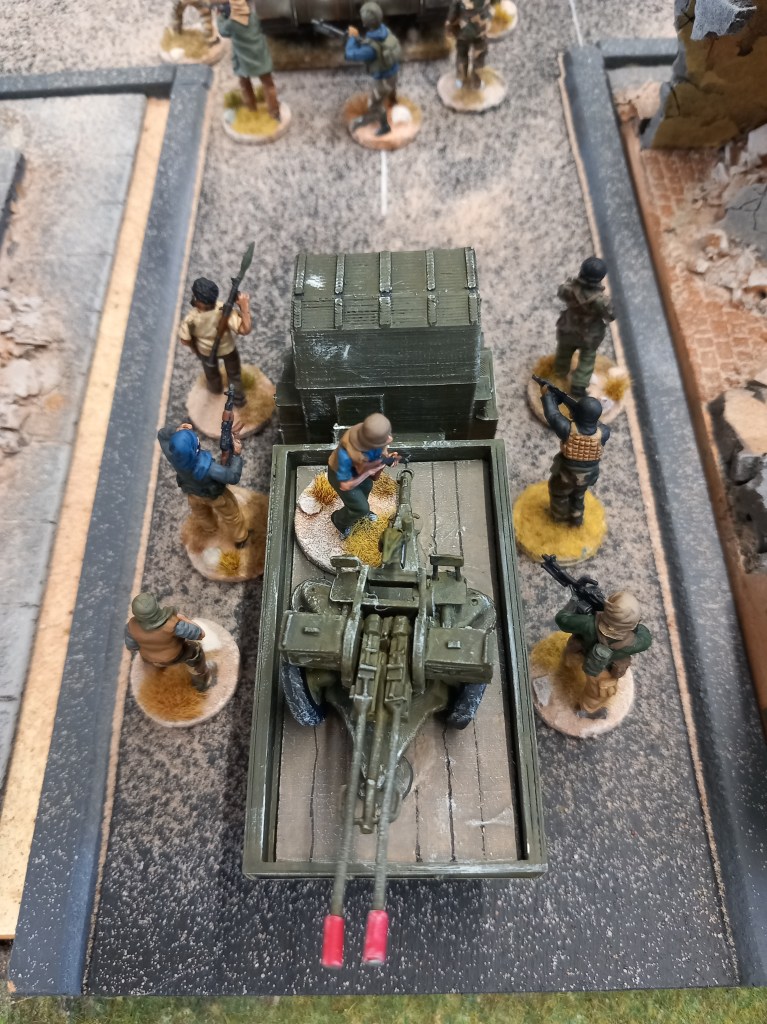
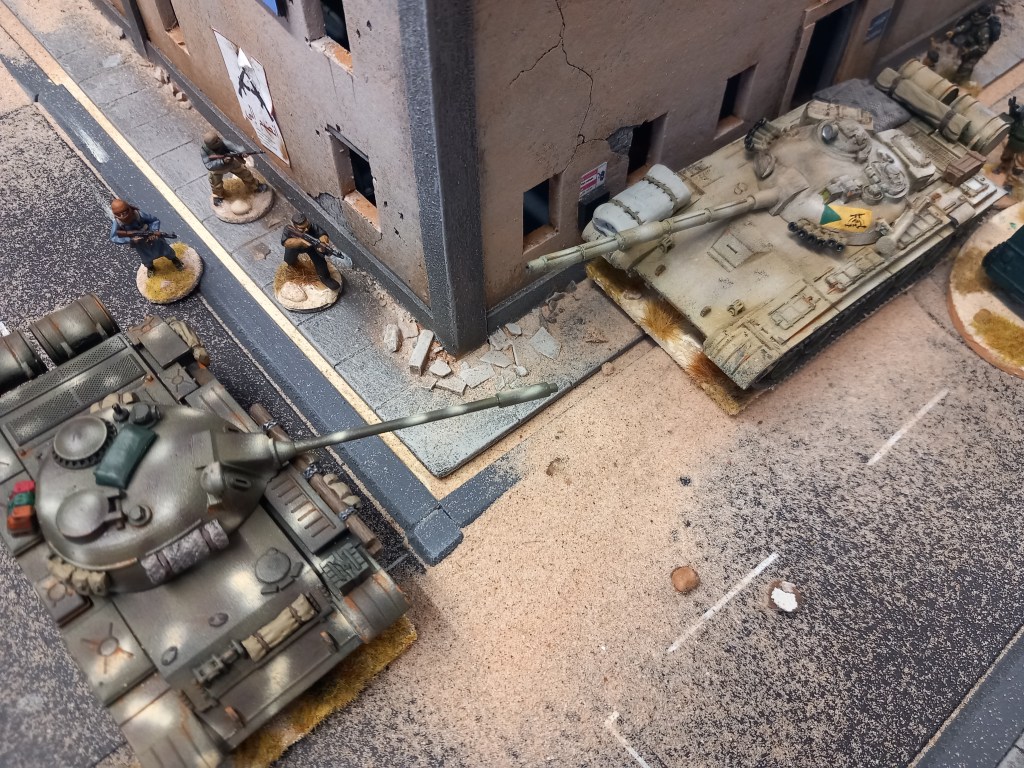
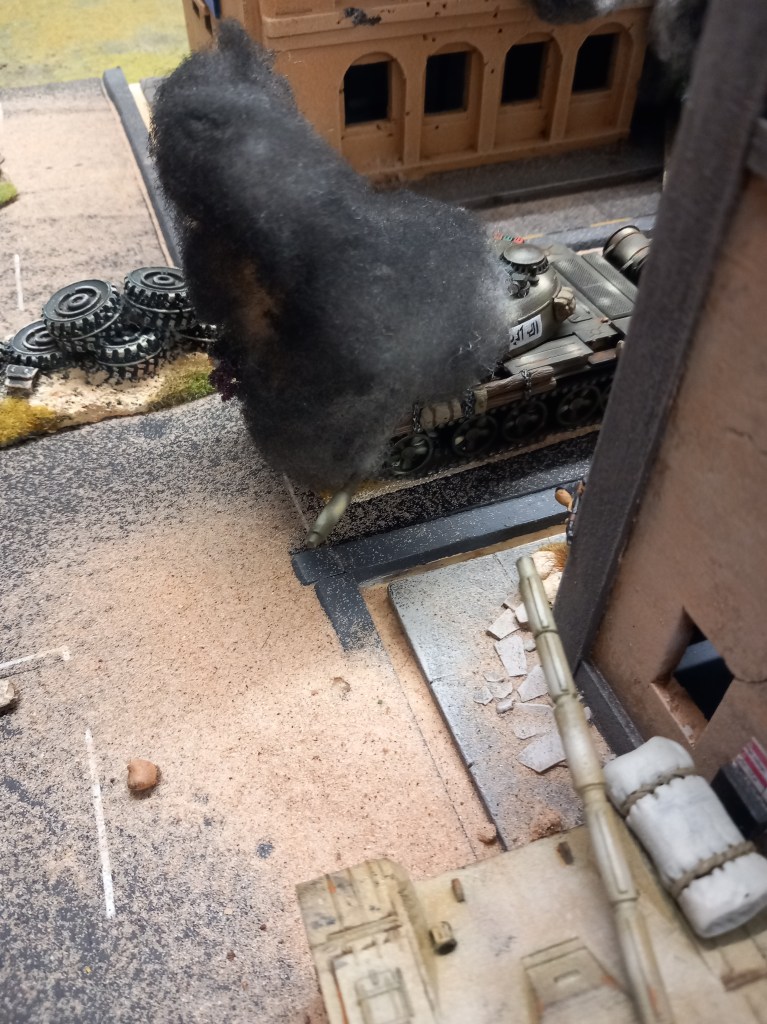
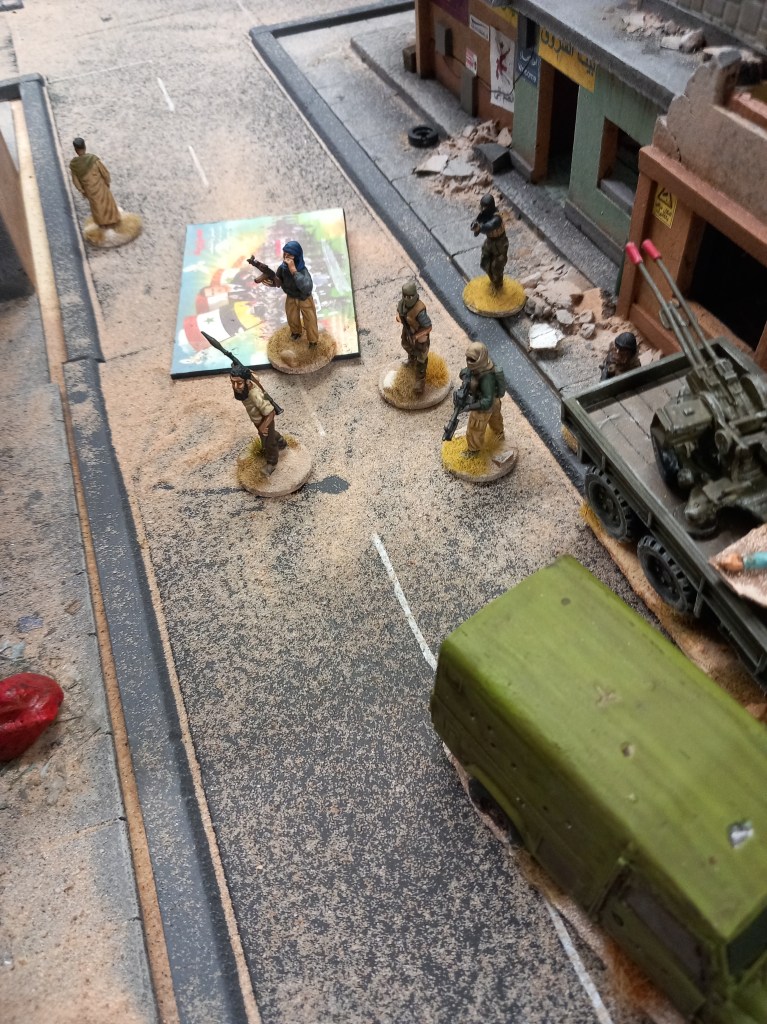
Our basic scenario was Hezbollah and Islamic Front units clashing in the ruins of Aleppo. Both sides had a couple of squads plus a tank – the Hezbollah squads were smaller but better trained and they had a T72, Islamic Front were bigger squads but their tank was a T55, although they did have a truck mounted ZSU.

Both sides advanced cautiously, partly because it was the right thing to do and partly because we were a bit rusty with the rules – it had been over a year since our last game.

Both sides worked their way around the central hospital building utilising the cover as best they could.

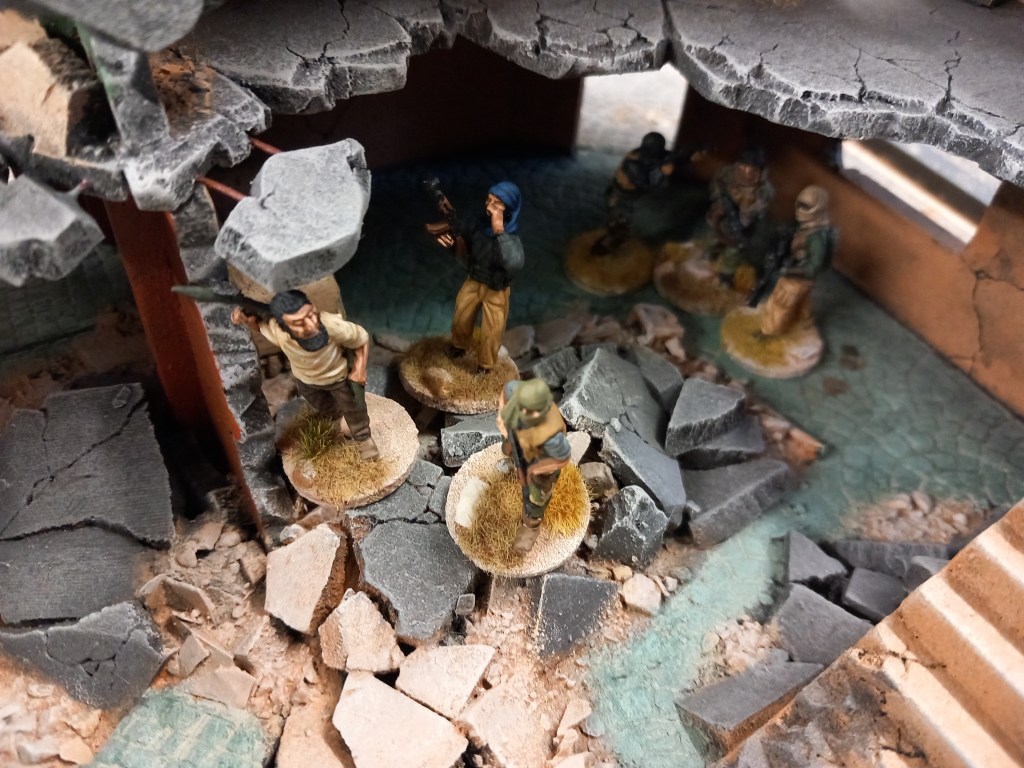
One of the Islamic Front squads detoured into one of the wrecked buildings, a bad decision which effectively kept that unit out of the majority of the game as it picked it’s way through the wreckage to no advantage.

The “oh shit!” moment that can only happen in a wargame 😂

Fortune favoured the T72. Scratch one T55.

The bad luck streak continued for Islamic Front continued when their ZSU gunner was cut down before ever firing a shot.

Islamic Front fighters press on.

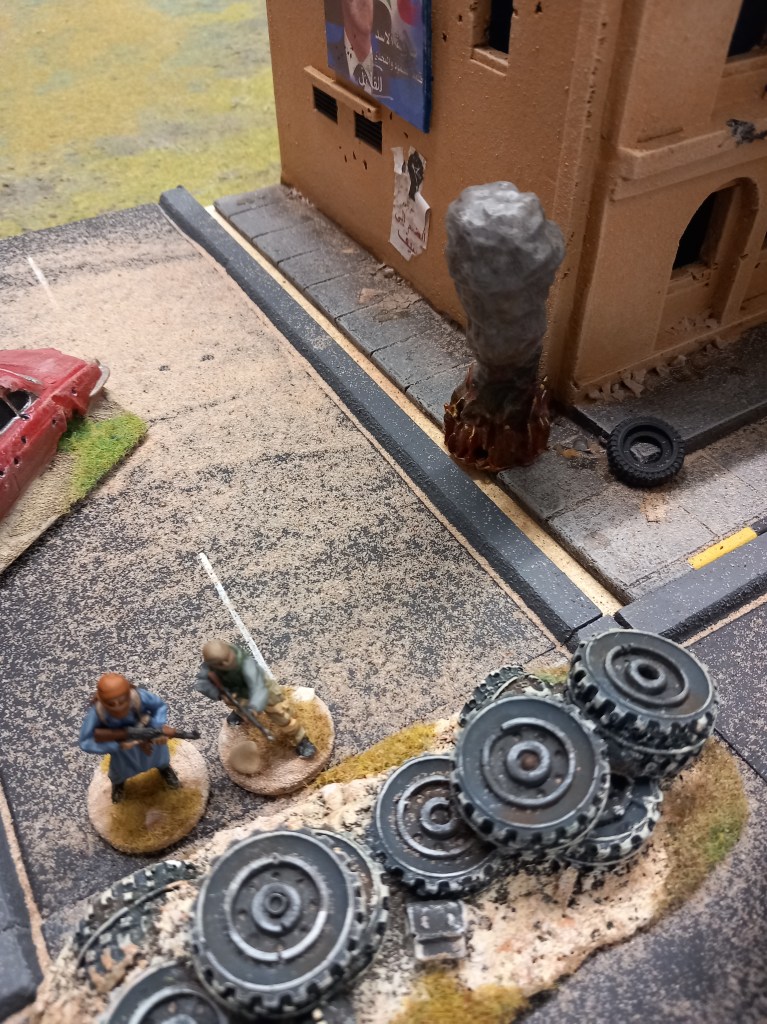
“man the barricades!”

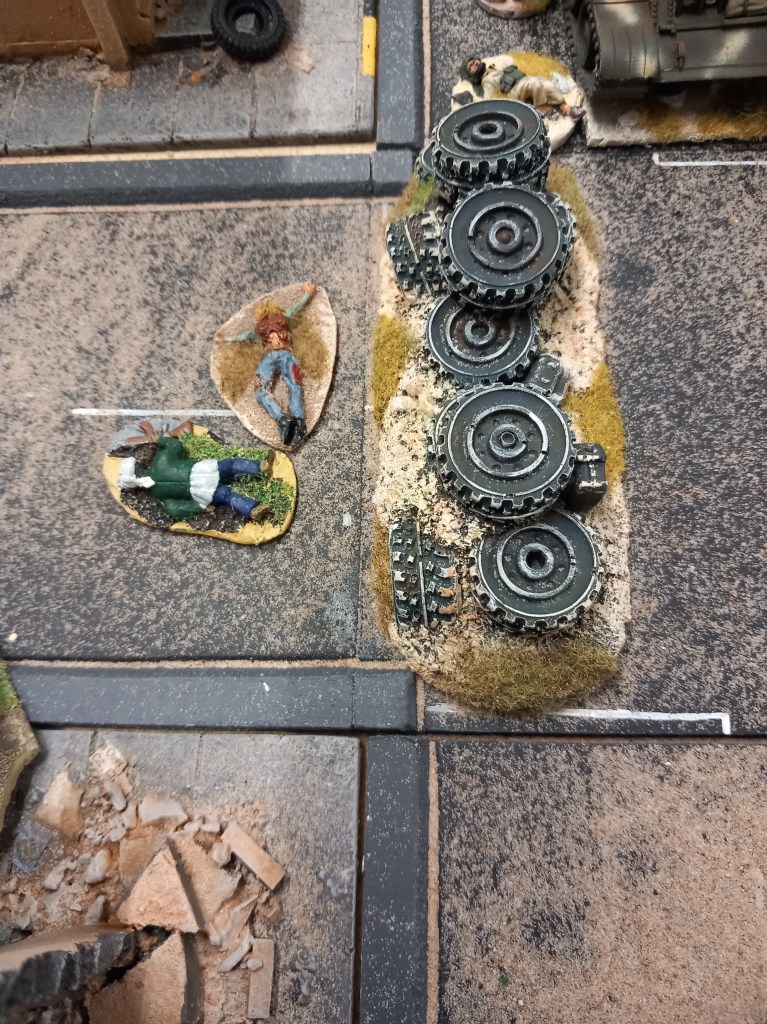
Oh dear.

Both sides took losses but ultimately the losses were more severe for Islamic Front and they withdrew, ceding this piece of war ravaged ground.

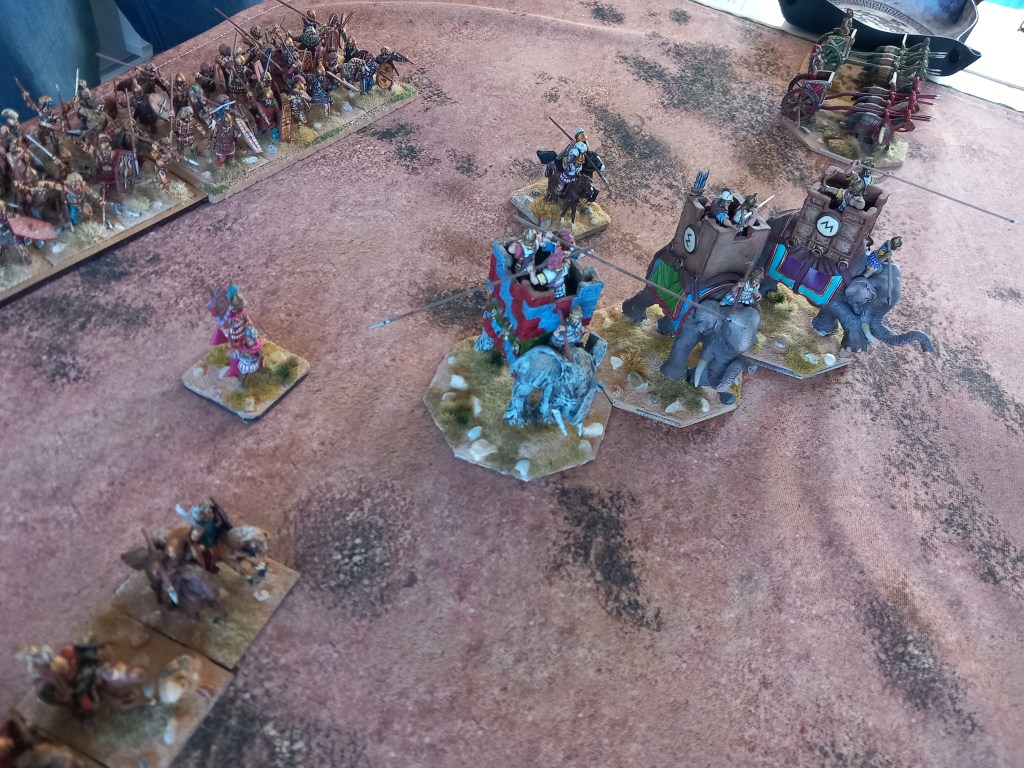
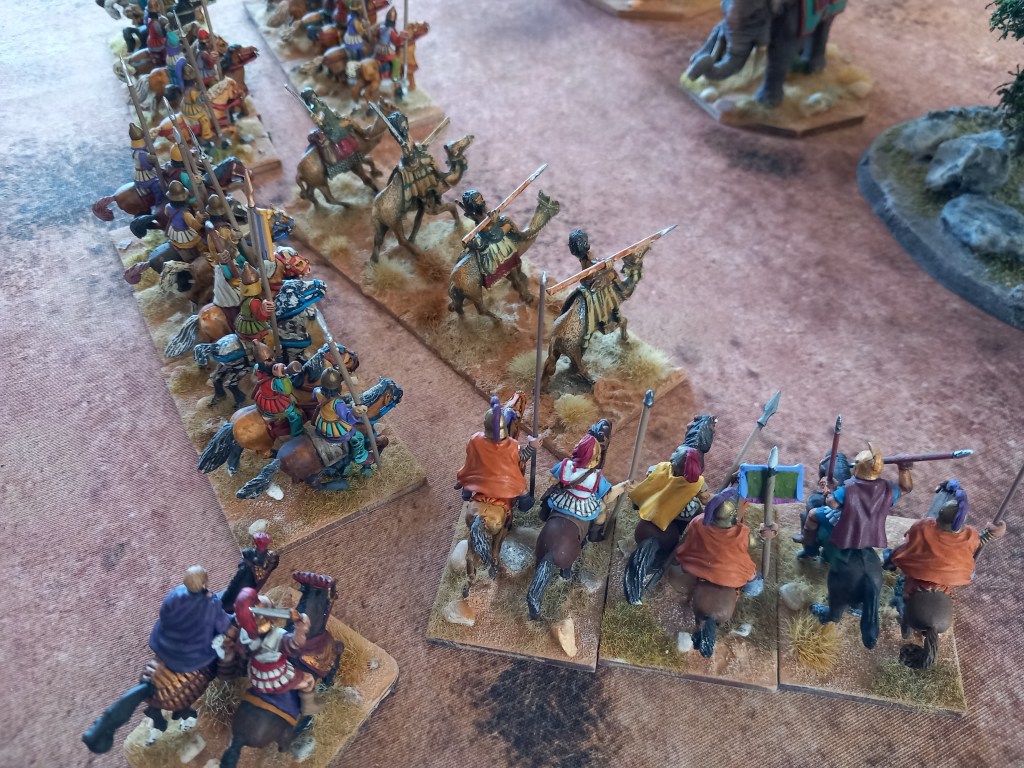
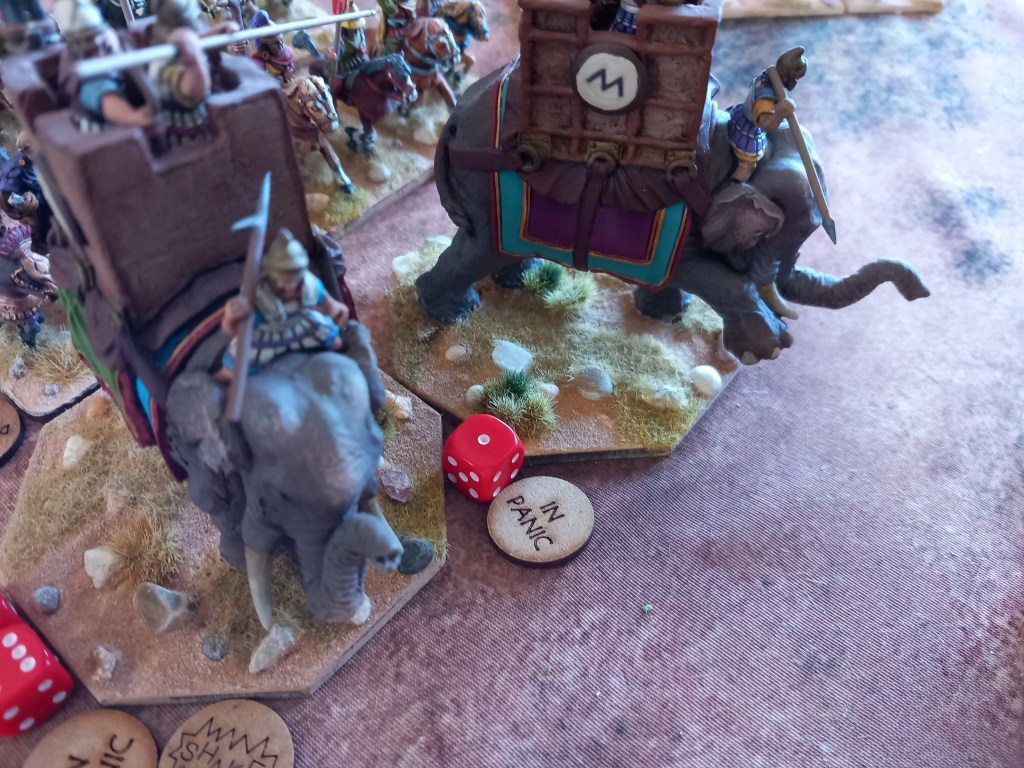
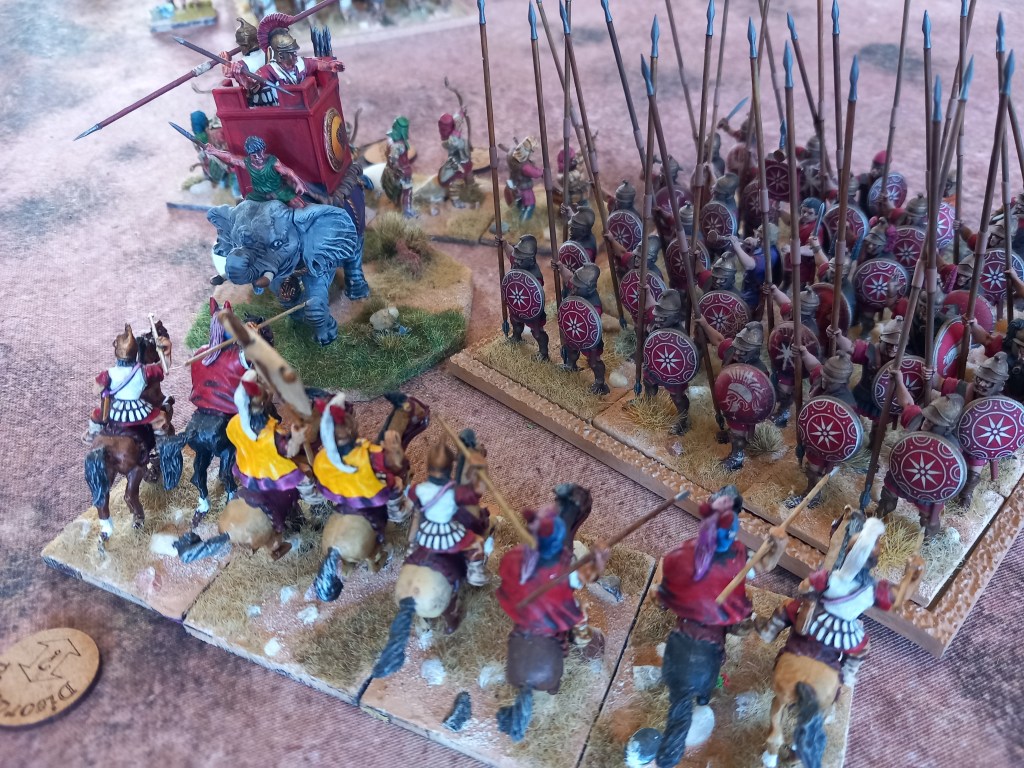
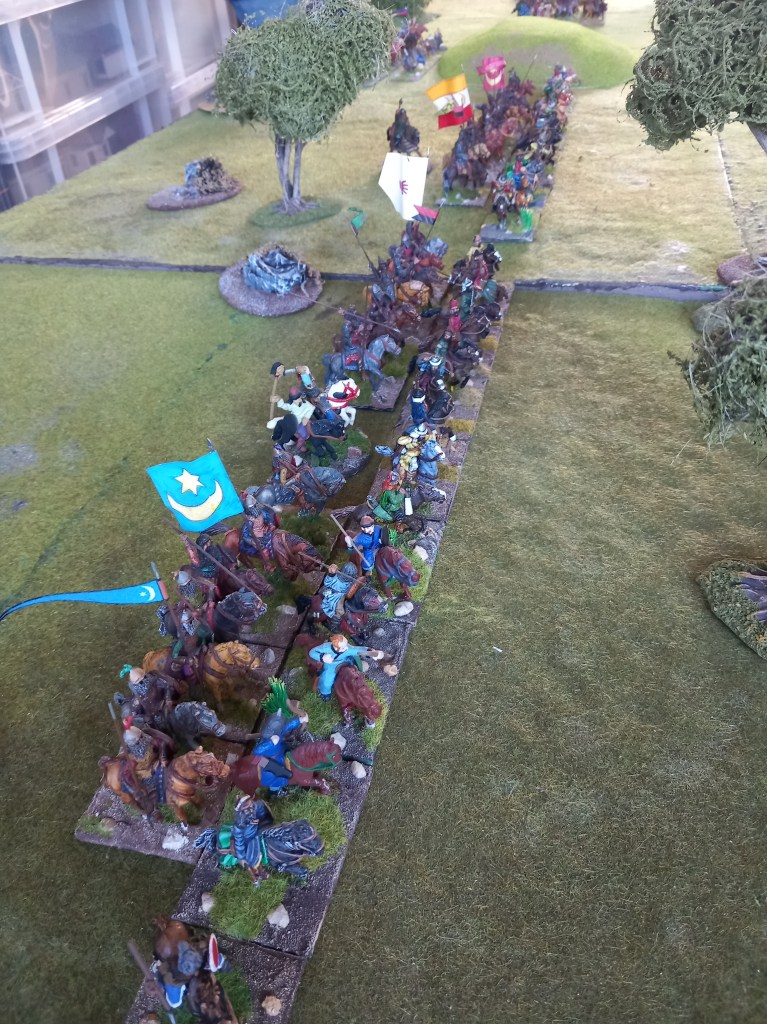
Our next effort was a roll out of the Timurid project. This has been a long running saga of me rebasing (twice!) and reconfiguring all my old Mongol, Ilkhanid, Russian, Persian and Mameluke figures into a representation of the armies of Timur, Tokhtamish and sundry others of the C14th. There are far better and more accurate figures out there nowadays but the sheer expense alone was enough to kick that idea into the bin and frankly in a lot of instances the differences are marginal and the set up is for home consumption only. The rules are a version of the proven Successors rules and as a first run out I was really pleased.

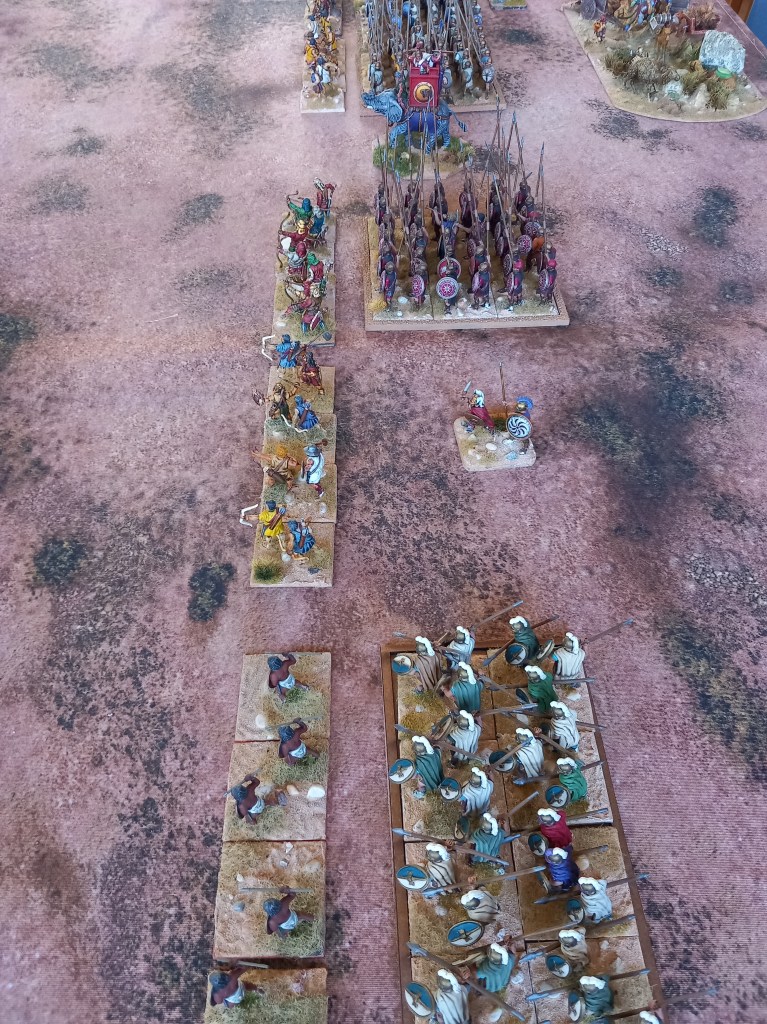
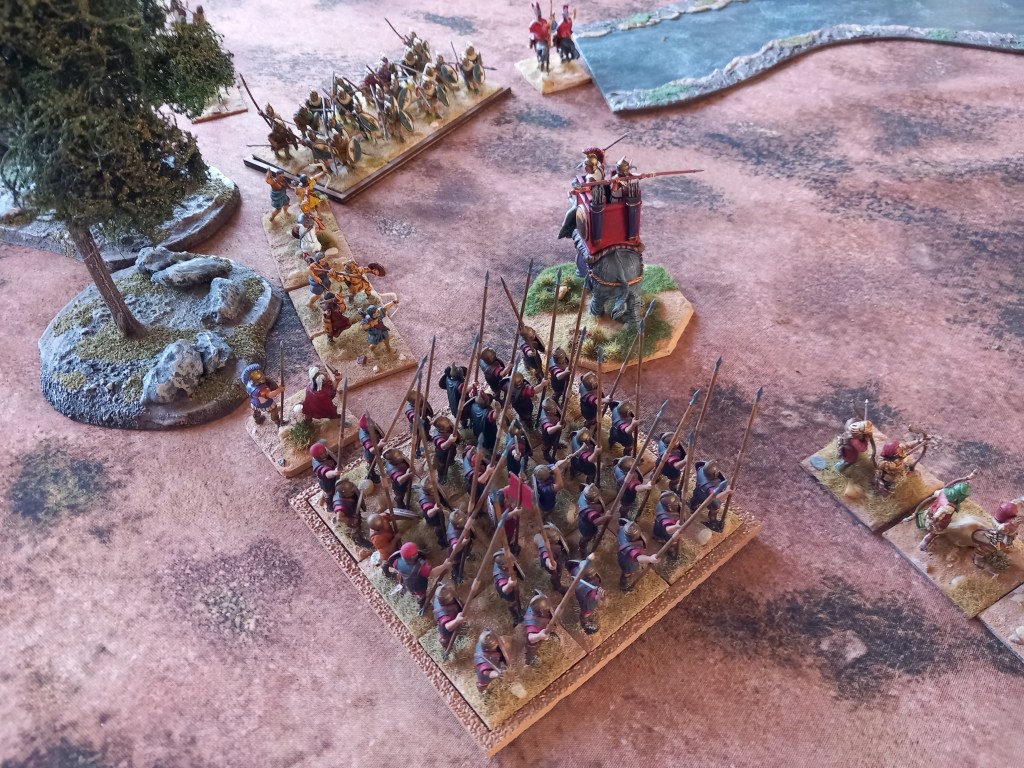
Our armies were a Timurid force in two divisions both containing formed & skirmish cavalry plus an elephant and an allied division of White Sheep Turcoman. Facing them was a Golden Horde Mongol force in two divisions containing formed & skirmish cavalry, a Guards division of elite formed cavalry and skirmish cavalry and a division of Russian allies containing boyars and Polk.

Both sides advanced steadily and the skirmishers went into the wargames representation of cantabrian circle.

Once players got the hang of the idea that is was a game about shooting – nearly everyone has a bow, the arrows started to fly.

However, the stars of the show were the boyars who hurtled across the table, shook off casualties from bow fire and smashed a hole in the centre of the Timurid line – well that was unexpected!

Elsewhere it was all about the shooting and the person who managed to concentrate the most fire at a critical point had the advantage – in this particular run it was the Golden Horde who grasped the concept quicker than their Timurid opponent.

The collapse of the Timurid centre had enough of a ripple effect for the Timurid player to concede and we had quite a chat about the rules and the game – all positive and some good suggestions to go forward with, next task, rebase all the Russians to take on the Golden Horde.

Next up was a ‘reconquista’ game featuring a Norman excursion into Andalusia where they are met by a united front. The sides were pre set out so it was just a question of writing any orders and having at it.

The Normans were deployed in three divisions, strong right wing of knights, centre of spearmen covered by skirmishers and a left of allied light troops. Naturally it was the knights that started the action and all seemed to be going well.

Into contact, encouraged by their General and still going well. This is going to be easy…..

Meanwhile the Andalusian right gets into action and as the allied light horse fell away the General leads in his nobles to stabilise the situation. You know where this is going…..

“kill!”

And then there were two dead generals and it was all over. Oh dear 😭

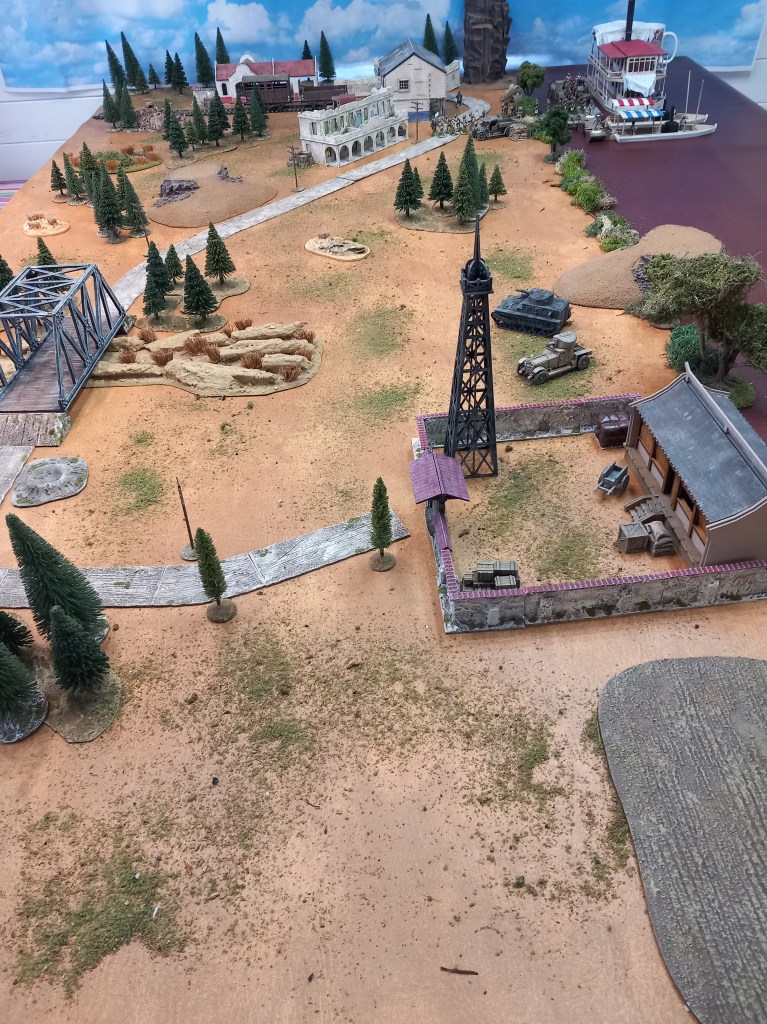
Final game was a ‘back of beyond’ away game where the British were landing once again to plant the union jack where it had no reason to be opposed by two afghan hill tribes allied to Red and White Russians – history was a distant second here.

Each side had it’s own set of objectives, some easily achieved, some downright impossible, but the scenery and figures did look very nice.

Hill tribesmen ready for the conflict – they didn’t fire a shot 😂

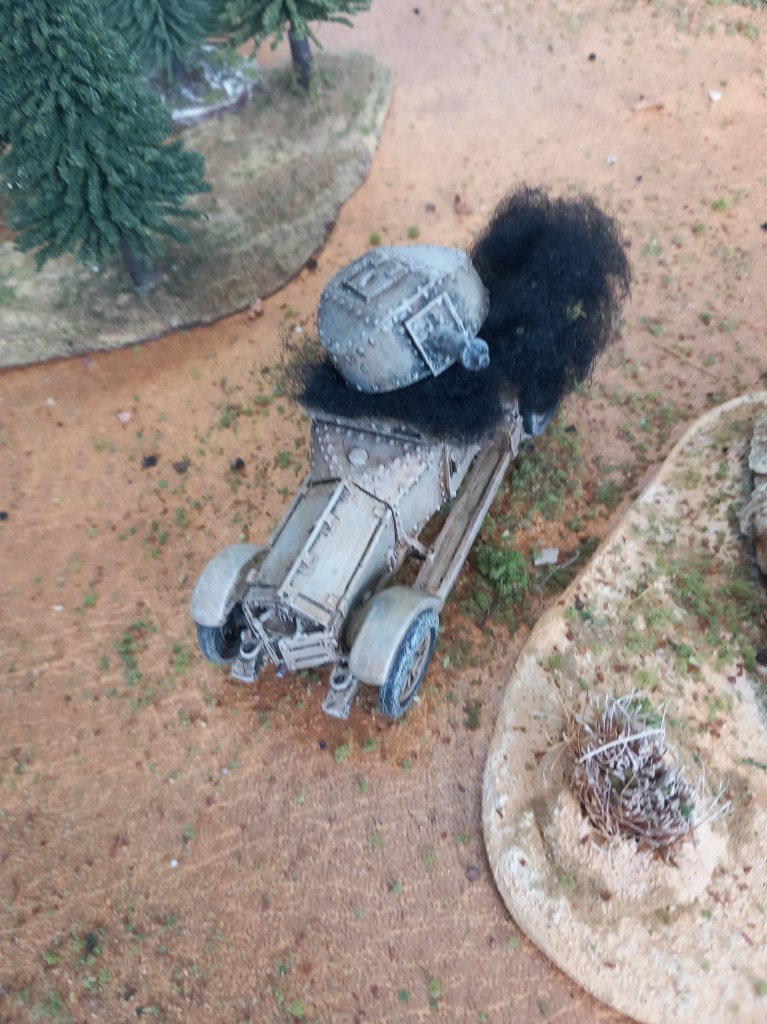
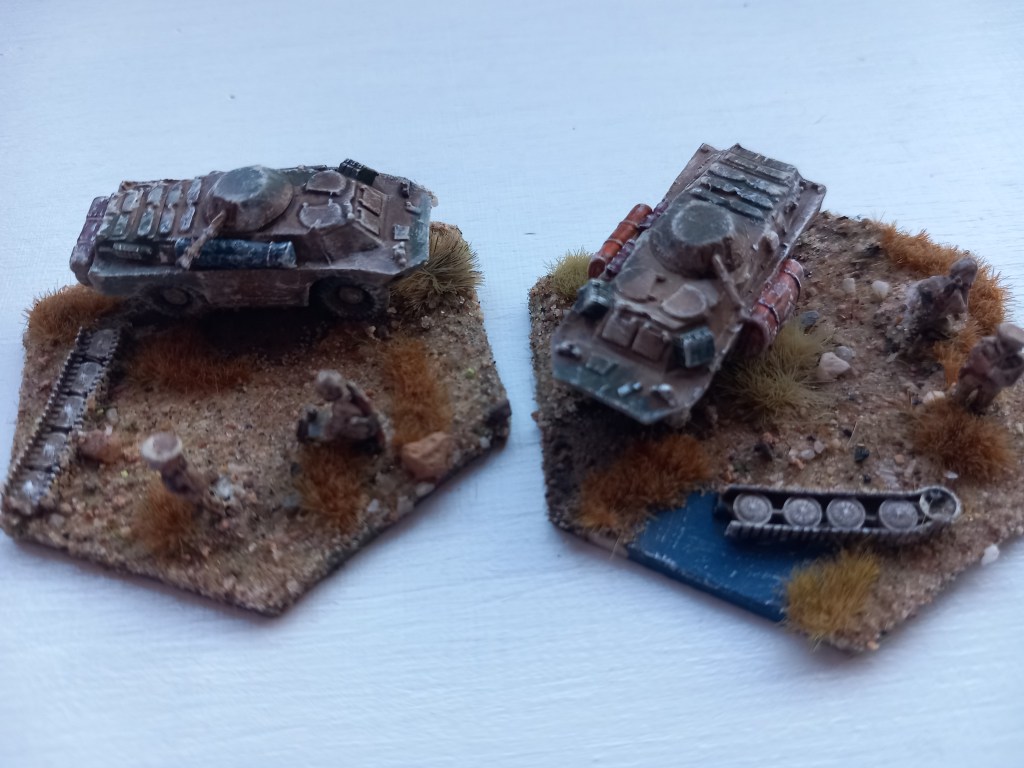
White Russian Cossacks attacking an armoured car.

And destroying it.

I’m really not sure who won the game, it was more of a case who didn’t. The White Russians and allied hill tribe definitely failed, The Reds obliterated one British force but I’m not sure that was their objective 🤔, the other hill tribe didn’t appear until the end but the second British force disembarked and captured the railway station with minimal casualties so I guess they won. In these kind of games it doesn’t really matter, they are played for a laugh and plenty of laughs were had.

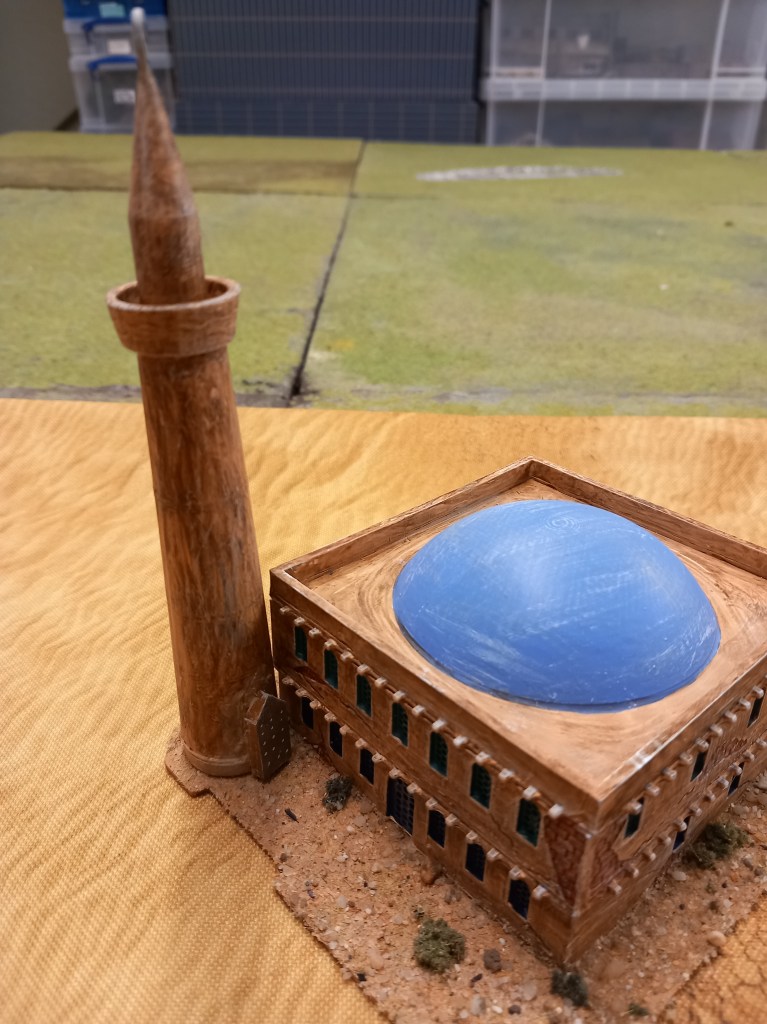
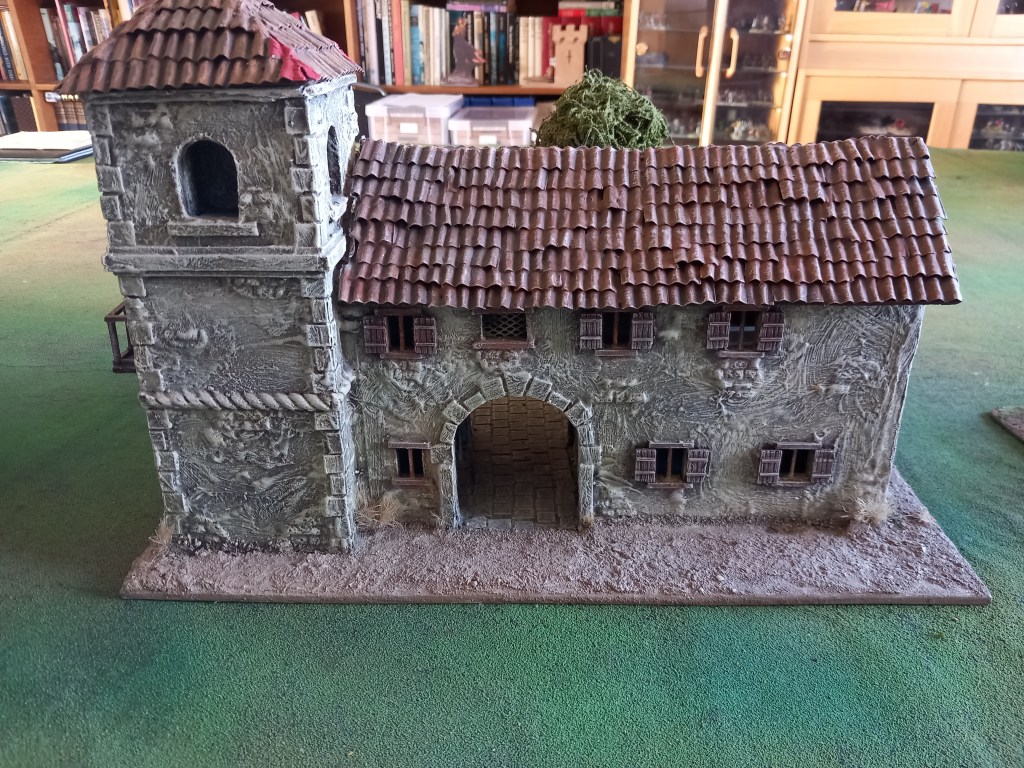
Some painting and modelling was done. Here a mosque for the 10mm set up.

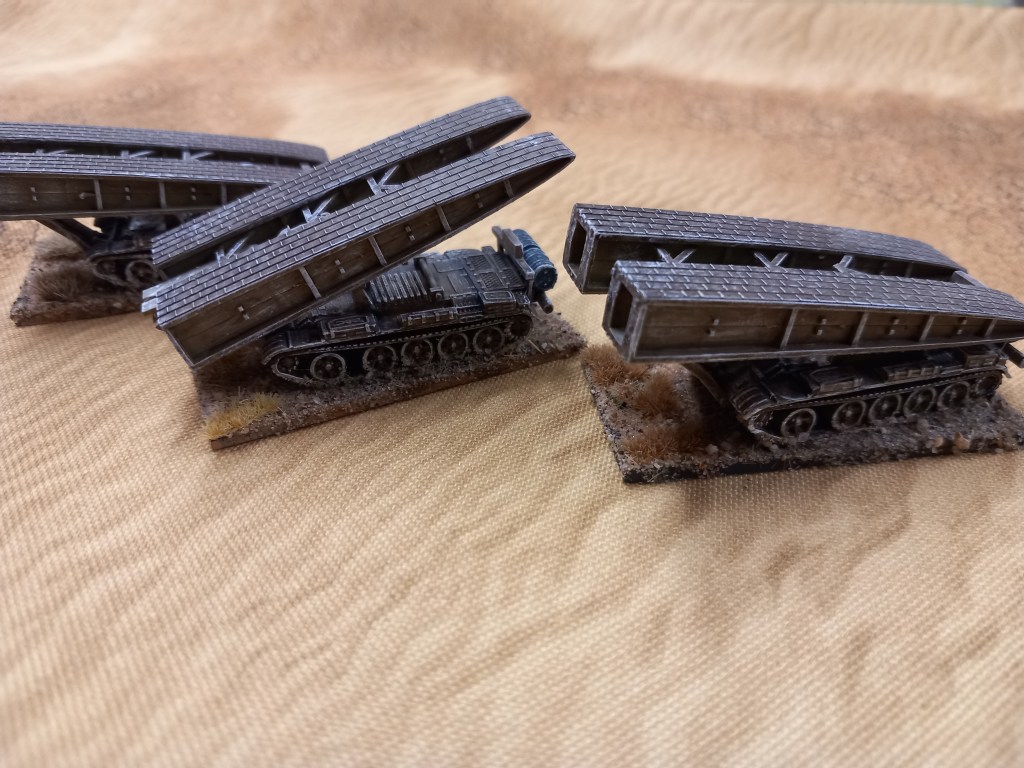
Bridging units.

AA fire support.

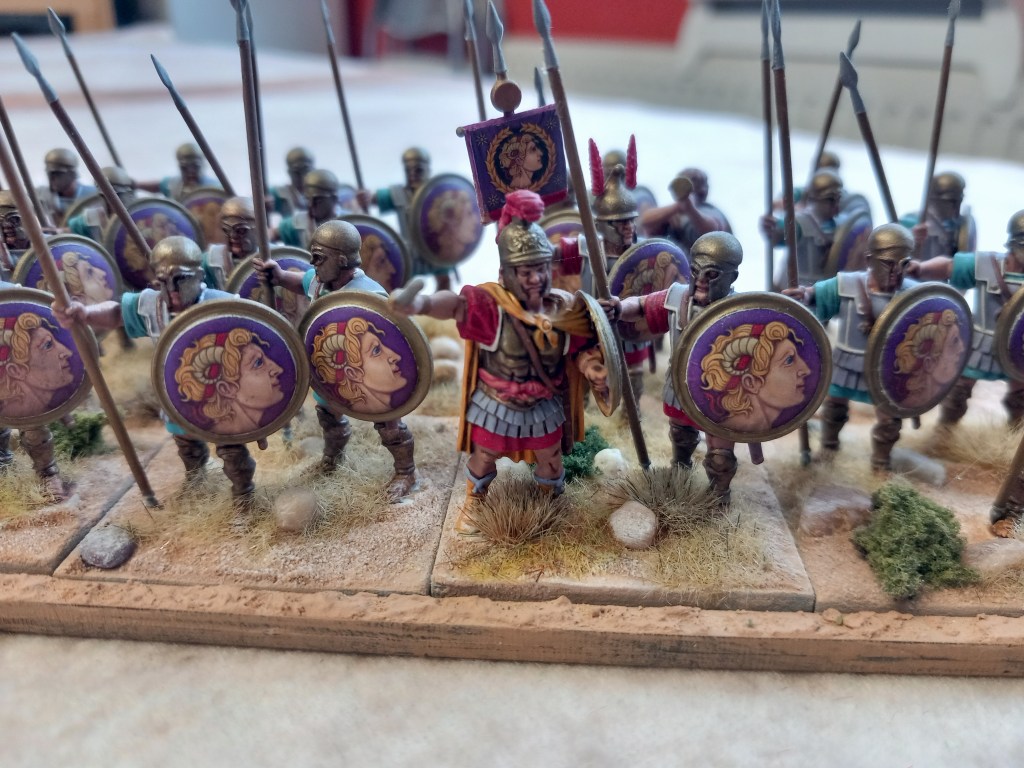
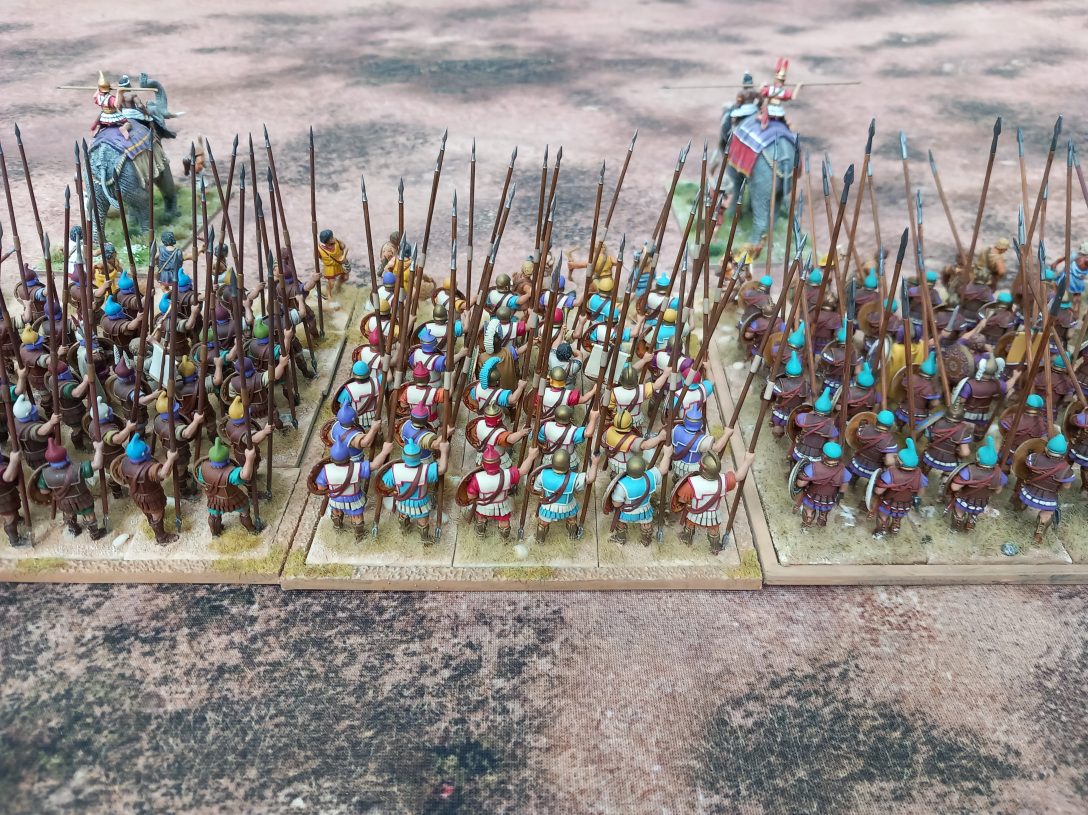
Thureophoroi for the Successors.

This months reading. The McNab was an ok generalist assessment of the Roman Army, I wasn’t completely convinced by some of his takes. The Tom Clancy I read because of our interest in Cold War gaming and all I can say is, no wonder we were all paranoid in the 80’s! Orwell’s Homage to Catalonia is very much of it’s time and obviously not a Beevor mighty tome but in a slim volume it tells you a lot about the war in the snapshot of time that Orwell was in that particular front, still worth a read.

Well that’s it for November, Christmas is coming but there are still games to play before we drink and eat ourselves into oblivion so keep well and play nice.

June 2025 Report

Wow! It’s been a hot one but we have ‘soldiered on’ undeterred by the heat 😎

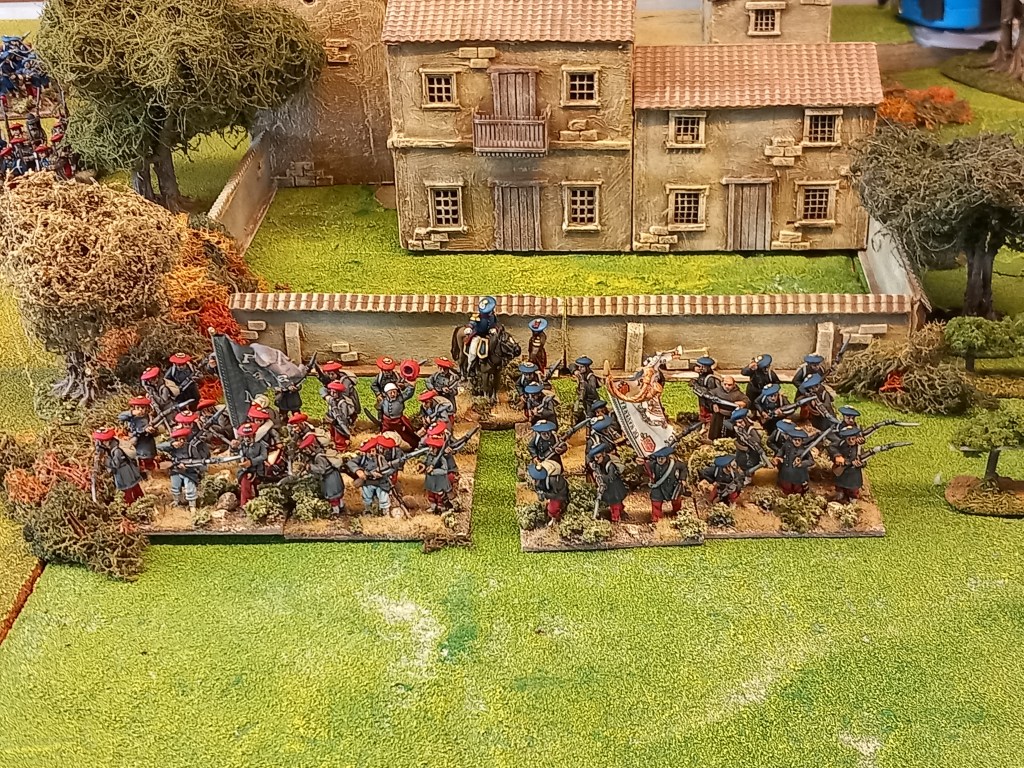
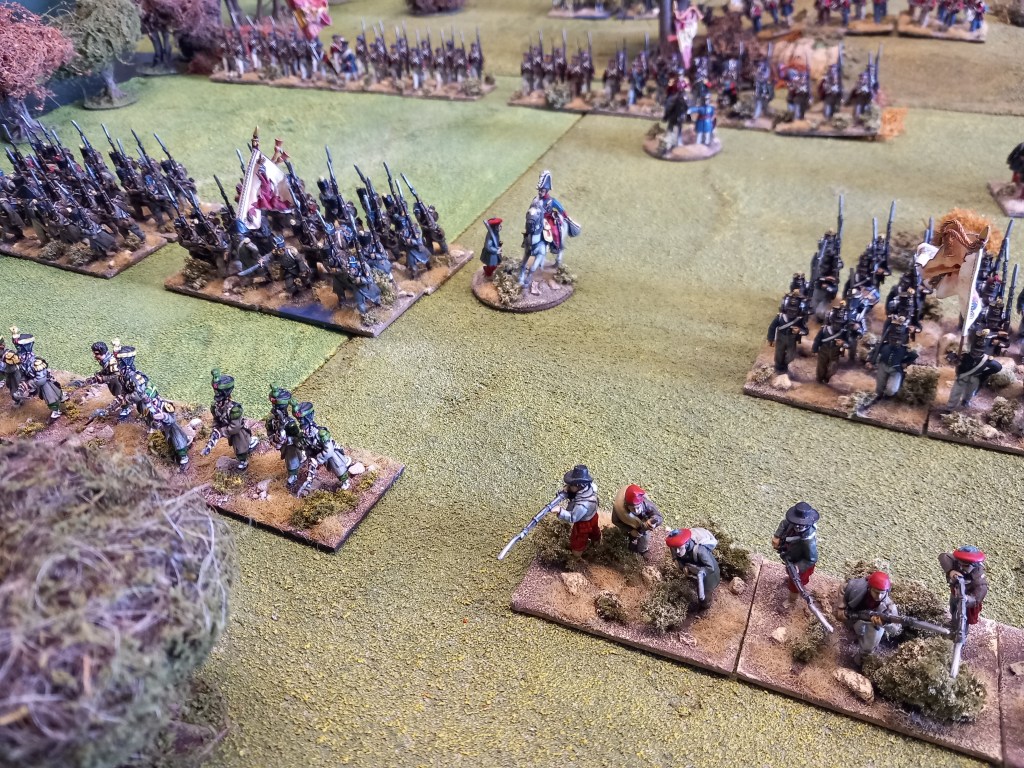
Our first game of the month was a re-fight of the battle of Oriamendi, 16th March 1837, in the First Carlist War.

In the actual battle the Carlists under Sebastian de Borbon attacked the Liberal Government forces the Liberal Government forces under General de Lacy Evans and routed them, including the sizeable British Legion who occupied the strategic hill of Ormiamendi.

Details are sketchy but we managed to scrape together enough information to put up a reasonable representation. The Government left was held by the British Legion supported by mountain guns and rockets and the right by the main government army. The Carlists had three commands, a force marching on from their right, an infantry centre in front of the town of Hernani and a strong left wing of mixed horse & foot on rising ground.

The main Government attack started on the right and in fact finished on the right. Throughout the game this mixed body of horse and foot slogged away against the Carlist left in what at times seemed like a doomed venture. Battalions routed and rallied but with the help of some well placed artillery shots they eventually stormed the high ground and turned in on the outskirts of Hernani.

On the hill of Oriamendi the British were in pretty good shape at the start of the battle and fired away unhindered.

But as the Carlist flanking force got itself into action that hill didn’t seem quite the greatest place to be.

The guns were in a pretty precarious position at one point but counterattacks saved the position enough for the Legion to hang on while the main army did the heavy lifting.

Our next effort was the first in a hoped for series of naval battles representing the Guadalcanal campaign, first up the battle of Savo Island.

We represented Mikawa’s force ship for ship and the Allied Southern Group and Northern Group ship for ship including the ill fated Canberra.

Our resident expert, Gerard, put in place rules adaptations and constrictions to represent the fact of fighting at night and the lack of co-ordination between the two allied fleets.

It was just as confused as the real battle and the Canberra went to the bottom in a re-run of history along with the Chicago.

The rest however was a bit of a divergence from history; the Japanese lost the Furutaka and the Americans came away with more of their ships intact than their historical forbearers. Looking forward to the next one.

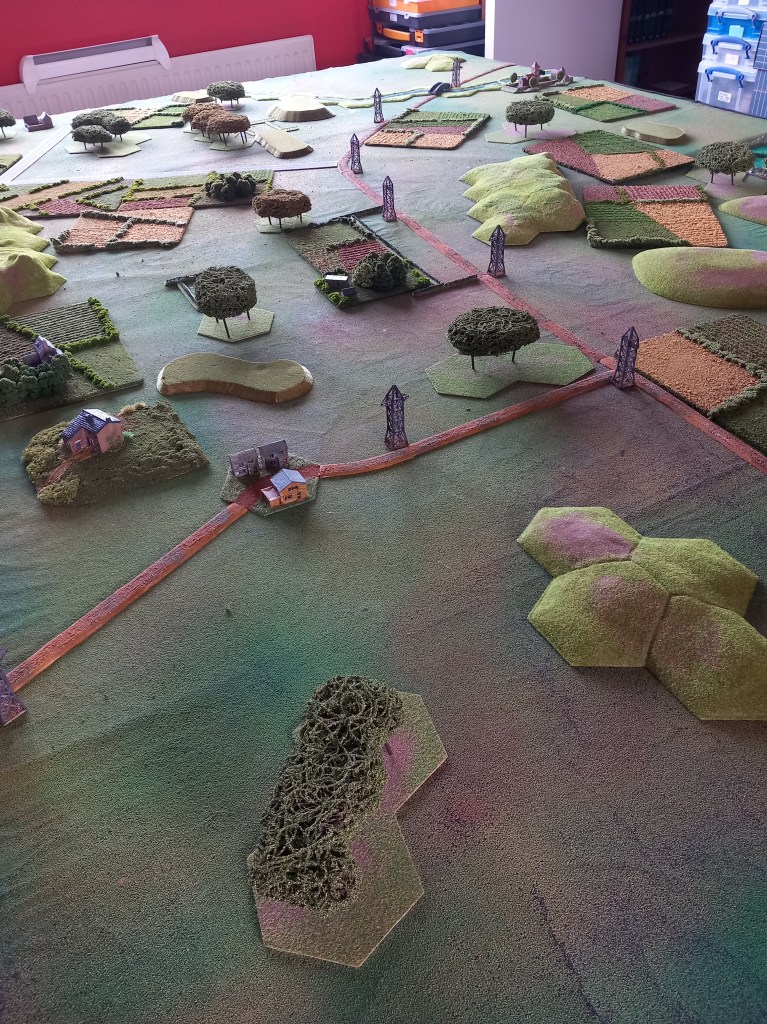
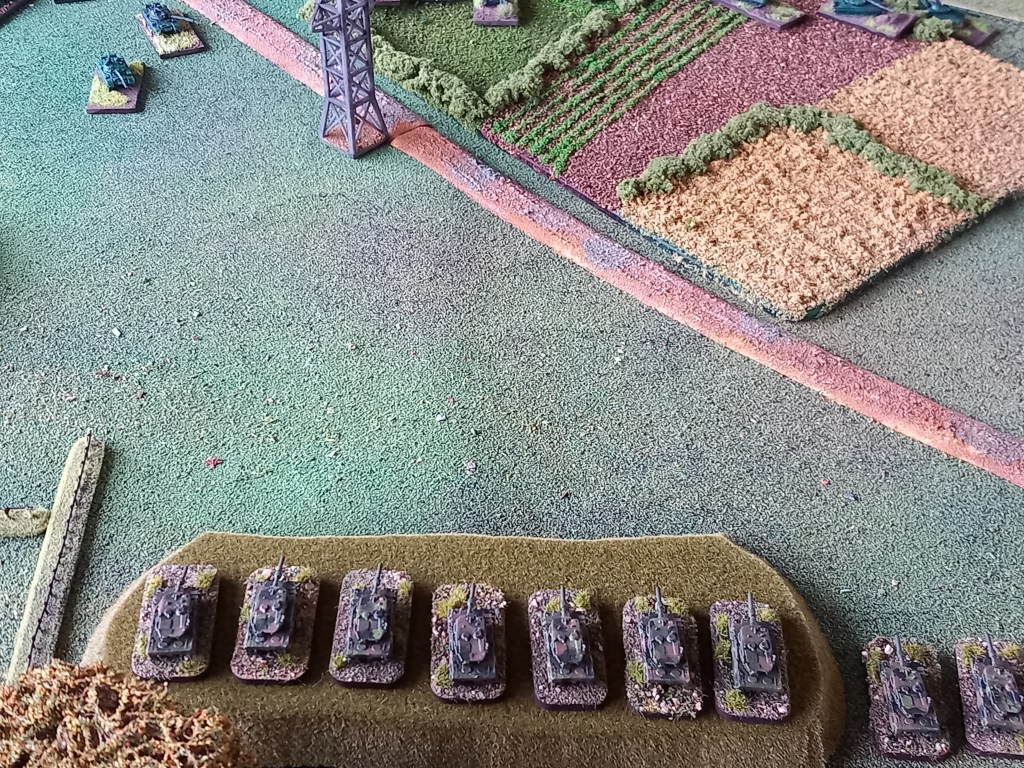
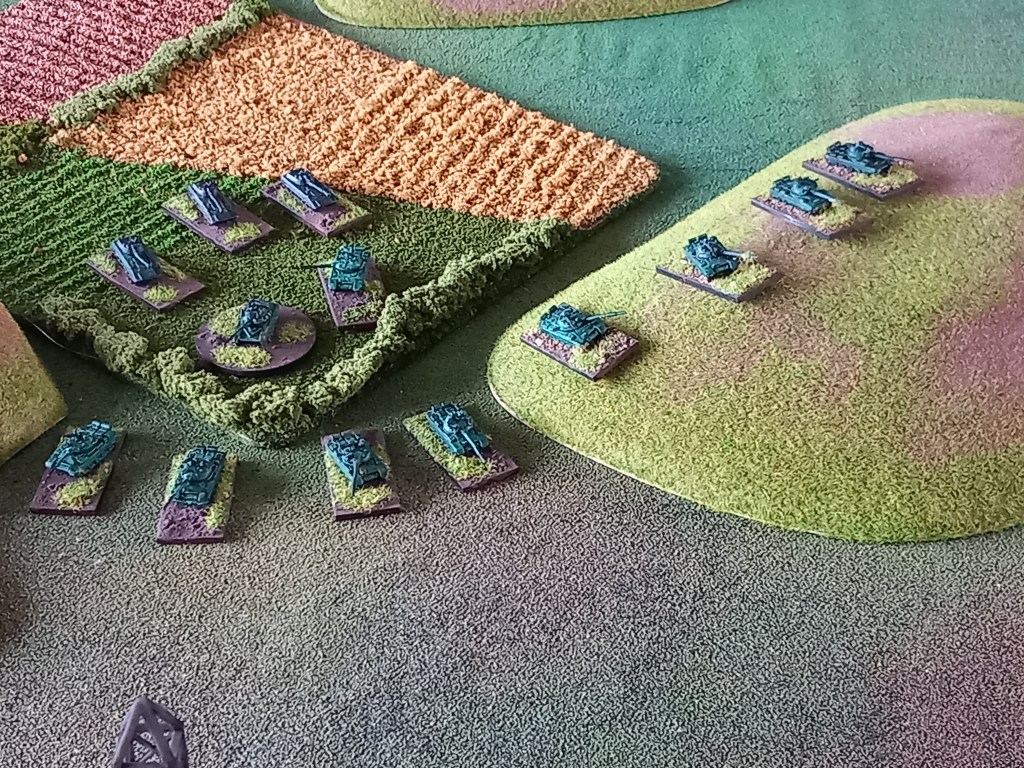
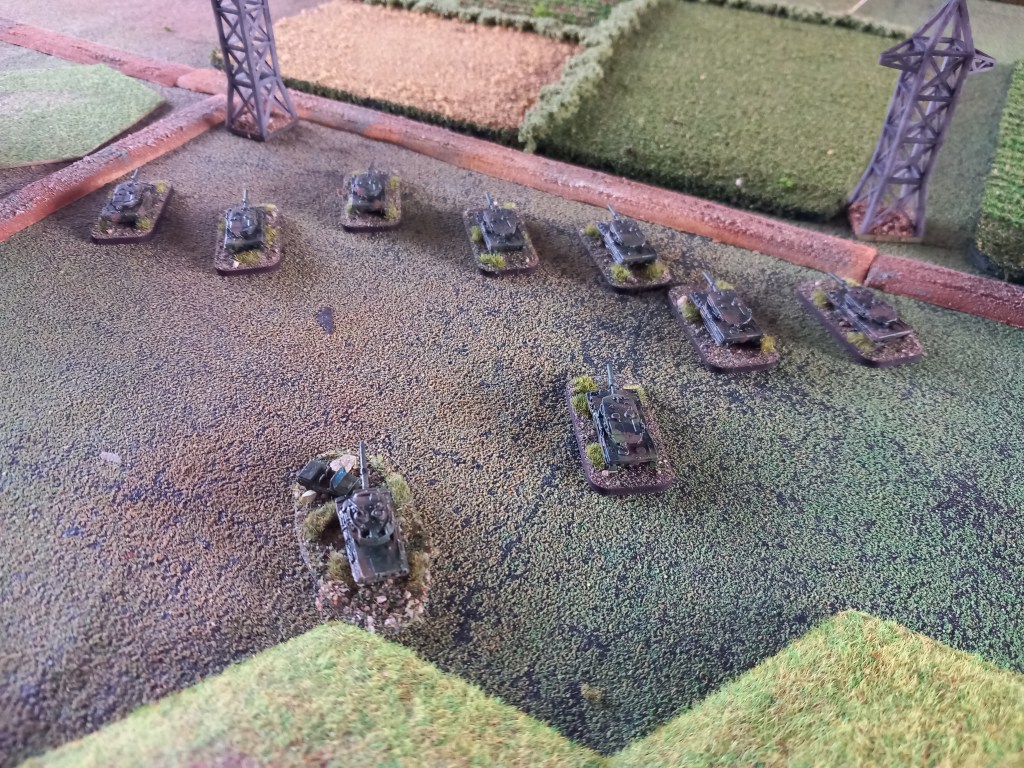
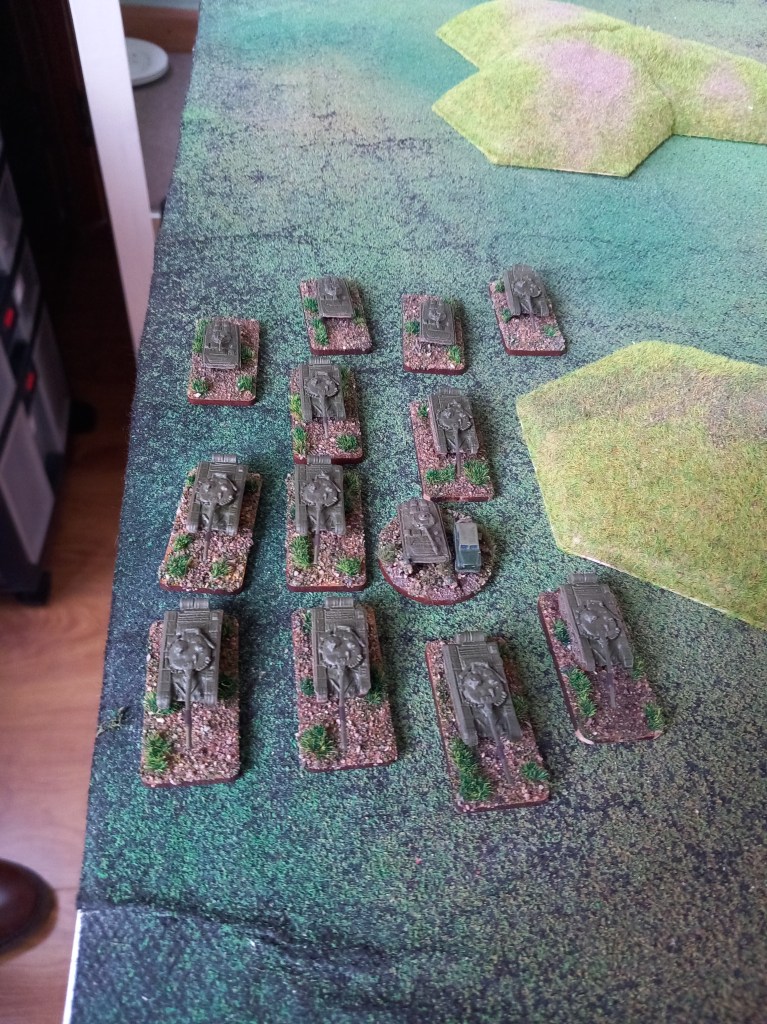
Next up was a big one! We planned a 2 day Cold War gone hot game, an encounter battle between a Bundeswehr Panzer brigade and a Soviet Tank Regiment somewhere in Germany.

We planned a 10,000 point per side game using the Cold War Commander rules with 5,000 points coming on table on the first day, but without air or artillery support, and the other 5,000 on the second day.

I wont say it wasn’t hard work, we fought both games during the intense heat, which I think affected our ability to think properly on occasion and it was a lot of stuff to keep track of.

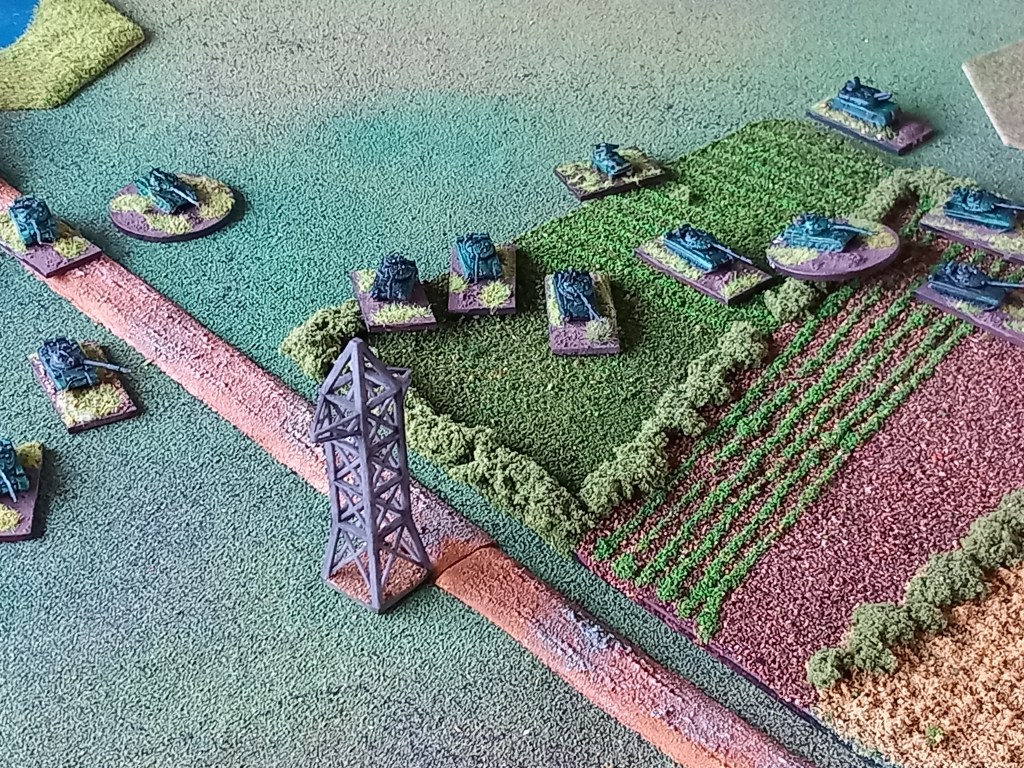
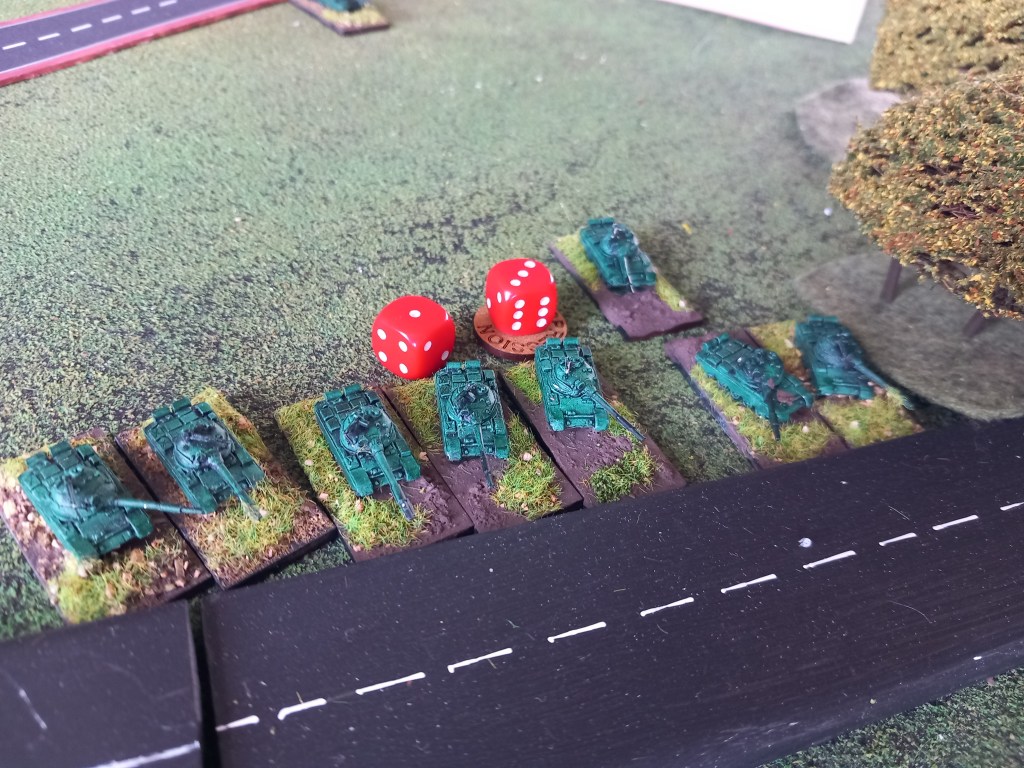
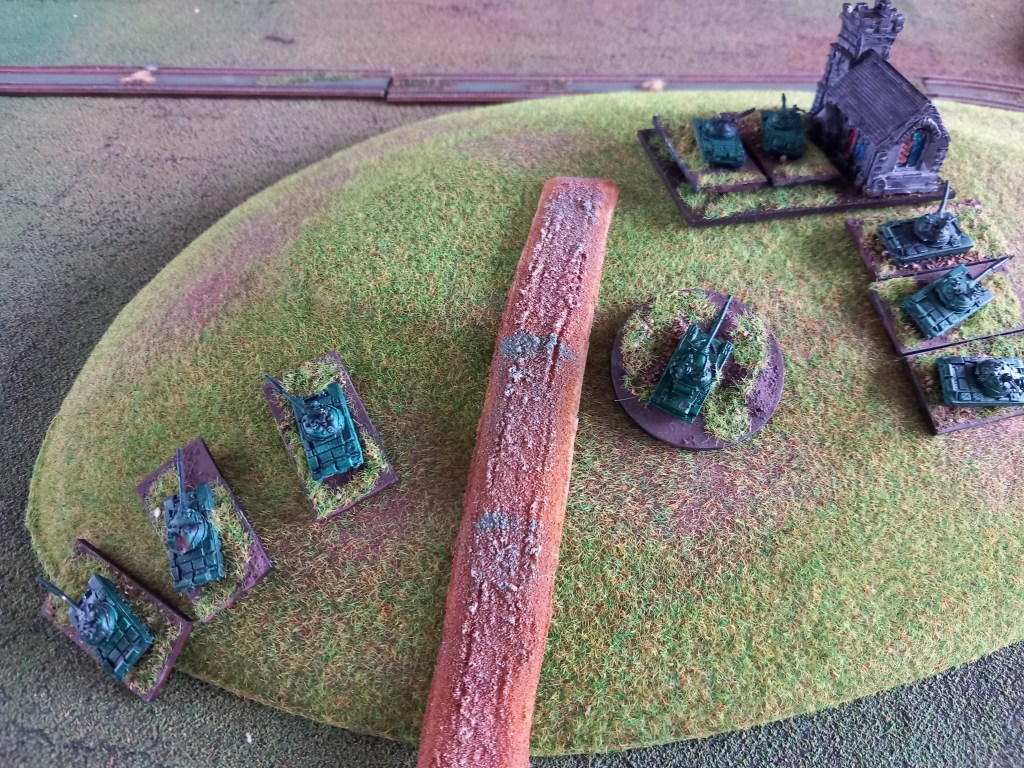
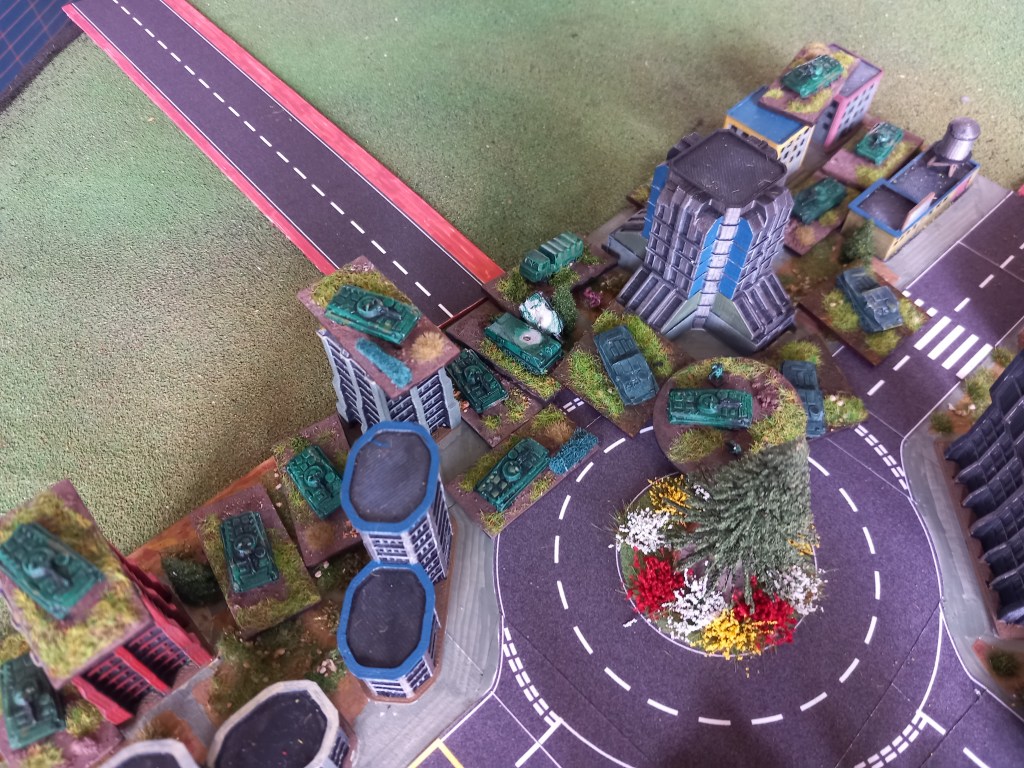
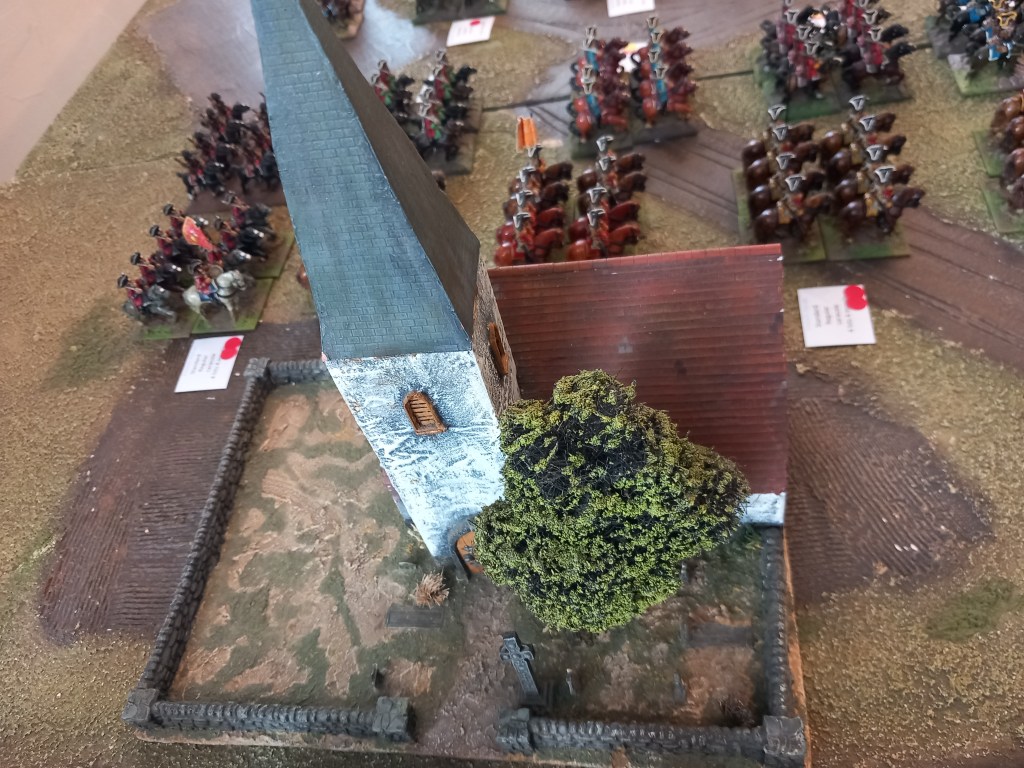
Conditions not withstanding we had a fine game. The Soviets arrived a broad front on the first day with three tank battalions, the elite T80 battalion entered the town at the northern end of the board and remained there for the bulk of the first day. The two T62 battalions entered in the centre and toward the southern end of the board, the centre battalion advanced as far as the main autobahn (on a raised embankment) and the southern advanced on a hill with a church on top for a splendid view.

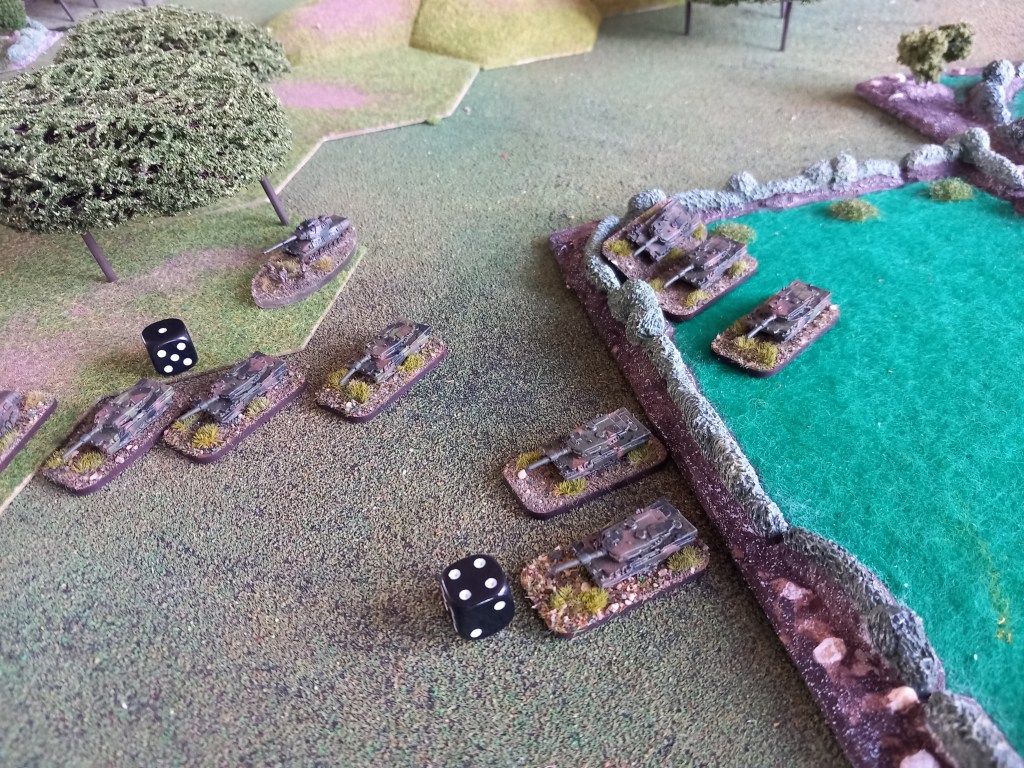
The Bundeswehr had formed into four combined arms groups, copying cold war doctrine, and on day 1 deployed two of these, one to the south and one to the north. Each group comprised two company’s of Leopard 2’s, one company of troop carrying Marders and a Gepard platoon.

Day 1 was a day of jockeying for position. In the north the centre T62 battalion took on the northern combat group, who had coalesced around a wooded area, and came off worse, retreating out of line of fire. The combat group then got themselves into a shooting exchange with the T80’s in the town which then came off badly in.

At the southern end of the battlefield the other T62 battalion got itself onto the hill and the as the day drew on on exchanged shots with the Bundeswehr below them who were slow to advance – reflecting afterwards the Bundeswehr player saw this as his major error in not pressing the attack (he would pay on Day 2).

Day 2 dawned with the arrival (or not due to the vagaries of the dice) of both sides reinforcements heralded by the dreaded HINDs.

The Soviets came with a motorised infantry battalion who headed straight into the already busy town – everyone getting in some duty free shopping 😂. The rest was off table artillery – mortars and rocket launchers, some self propelled on table guns and air cover in the guise of the HINDs plus Frogfoot and Fitter ground attack aircraft.

The Bundeswehr came with two more combat groups and some M109’s being directed off table. One of the combat groups came on to the south to beef up the push for the hill and a planned sweep up the flank of the Soviet positions and the other came on in the centre planning to push through and link up with the flanking move – it didn’t work out 😒

Although not battle winners in and of themselves the HINDs and air were a substantial threat. The Bundeswehr centre thrust got caught and slowed enough to prevent it making the progress needed to split the Soviet positions. A consolation was shooting down a HIND and forcing it out of the battle area.

The additional southern combat group did turn the tide on the hill and even overran the Soviet command post but it shouldn’t have needed 16 Leopards to take out 9 T62s. In reality this was a bit of a hollow victory because the Germans were now exposed to ATGWs being slung at them from the T80s in the town.

As we progressed it was increasingly obvious the Bundeswehr were on a bit of a hiding to nothing and when we looked at the mandated rules breakpoint check the Germans were well over it and so we called it as a Soviet victory.

A good game but hard work in the heat, The perennial problem for the Bundeswehr player is whether to follow doctrine and counterattack whenever possible or be a sensible wargamer and sit back in cover with better armour and better guns – tough choice.

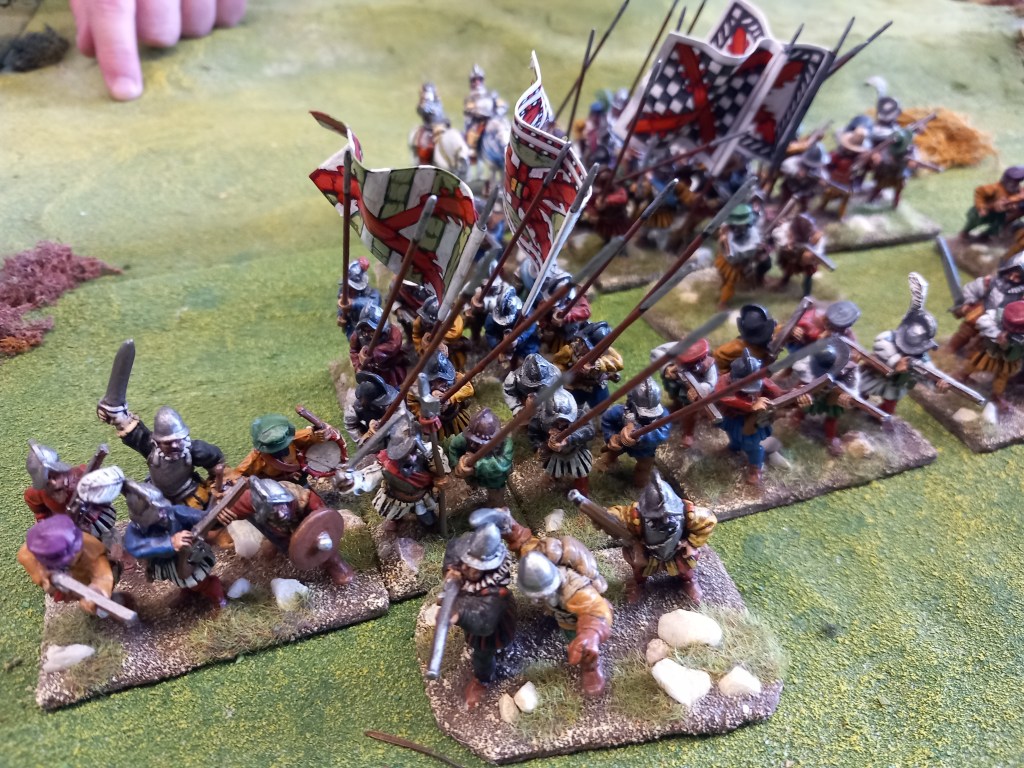
Our final game was a Wars of Religion game, Spanish v Dutch.

The deployments were pre planned, players just needed to dice for sides.

Both sides had a single massed cavalry wing conveniently placed opposite each other 😁

Elsewhere across the table the Dutch had a strong right wing of English allies/mercenaries and Sea Beggars under Sir Francis de Vere facing off to the lesser Tercio’s – Brabant and Walloons while in the centre the ‘good’ Tercios faced the Dutch centre holding a village and hill.

Not surprisingly the bulk of the action was taken up by the cavalry. The massed regiments came at each other in a rush (mainly 🤣) and then settled into grinding melee, retreat, reform and come again for the whole of the battle.

Initially the Spanish had the edge and saw off a cuirassier regiment and a Reiter regiment but the commitment of the Dutch lancers stabilised the line and the conflict swung in favour of the Dutch ultimately leaving them the battered victors.

In the infantry engagements the Dutch had an early stroke of luck when the colonel of the Brabant tercio was killed and the regiment had a catastrophic reaction, routing back to the camp. Their fellow infantry didn’t really care but the lack of numbers told when they got into harquebus range of de Vere’s command and the shooting started, they simply didn’t have the firepower to sustain the fight.

In the centre the Tercios rumbled forward supported by artillery fire but it was a long journey and the Dutch were in no hurry to come and meet them!

Ultimately the Lombardy tercio got into contact sweeping aside it’s first opponent but held by Zealand, mainly due to the slow attrition faced by Lombardy as it advanced and Zealand being fresh as a daisy.

With night drawing on and 10 colonels dead on the field we called it. From the Dutch perspective they had regained the initiative in the cavalry maul and nothing was going to change that now, on their right de Vere was wearing down the Walloons and the Germans with little loss to himself and in the centre the tercios were being held. A good day to be Dutch.

Holidays and the heat have meant that not much has been achieved on the painting table although I have got some more Iran Iraq command stands done. What time has been available has been spent on my renewed effort at sorting rules for the Timurid collection so stay tuned. In the meantime, enjoy the sun and enjoy your gaming.
April 2025 Report

A third of the year gone but still we keep playing 😊

We opened the month with my personal favourite, Successors. For this one we had, Imperial Seleucid under Seleucus III facing down Ptolemaics under Ptolemy II Philadelphus around the time of the Syrian Wars.

The Seleucids were light on pikes having just the Silver Shields and one other but had the full range of exotics – scythed chariots & elephants, some decent cavalry and those wild Galatians (foot and horse), plus of course sundry skirmish types. The pike deployed in the centre screened by skirmishers, the good horse deployed on the right and the elephants, chariots and Galatians out on the left.

The Ptolemaics were heavy on pikes, four settler units and the Agema, far more cavalry but more variable in quality and a lot of skirmishers. When deployed all the cavalry were on the right, the settler pike took the centre with their sole elephant squadron out front along with some skirmishers while the left was curiously held by the Agema pike and a unit of Thureophoroi screened by more skirmishers.

We opted to use the terrain and scouting sections from the rules rather than just bang the armies down on the plain and this should have favoured the Ptolemaics with their superior scouting strength but they fumbled and ended up with a terrain board that helped rather than hindered the Seleucids.

Being inferior in numbers the Seleucids opted to hold back their pikes and rely on the exotics to make a mess of the massed Ptolemaic cavalry wing while their own cavalry swung round a convenient ravine to menace the centre. Some of this worked 🤨

The Seleucid elephants managed to get themselves between two woods which had the effect of drawing the Ptolemaic cavalry into a funnel of disorder while out on the extreme edge of the wing the chariots did exactly what they were supposed to do, charge in, crash, cause casualties and become inconvenient wreckage.

Sticking with the Ptolemaic right, the chariots soon shot their bolt (as expected) but the Greek and Thessalian cavalry took losses and more importantly were slowed down.

The Seleucid elephants had a good game, they frightened the children (oh no, sorry, the horses), had their mahouts killed and went into panic, rampaging about randomly – exactly what you want to see 😂

Ultimately the elephants died but their nuisance value had allowed the Galatian warbands to get up and get stuck in. The Galatians in fact had their best game so far, they duffed up a settler pike battalion and routed it, they saw off charges by both the Agema and the veteran Thessalian cavalry and killed the leader of the cavalry wing which paralysed it for the rest of the game. Result!

In the centre the Ptolemaic pike mass moved confidently forward but slowly (fairly obviously) and given the decision by the Seleucid general to hang back their only bright spot was the success of their Rhodian and Cretan mercenaries in driving off the opposition skirmishers.

Out on the Seleucid right the cavalry didn’t have the battle they hoped for, the rather odd deployment of Thureophoroi, pike and elephant initially worked and both Seleucid Xystophoroi regiments were seen off, one by the Thureophoroi and one by a combination of pikes and elephant. Unfortunately the Seleucid Hetairoi regiment sneaked through and opportunistically charged a shaken and disordered settler pike battalion and routed it – the stars really did align for that combat.

As we approached the end the Silver Shields were unleashed and……..failed to charge! What an embarrassment 🤣

The embarrassment of the Silver Shields not withstanding it was clearly a Seleucid victory, the Ptolemaic cavalry were paralysed and the settler pike were not having a good day.

Could it have gone differently? I think yes. The terrain decisions by the Ptolemaic general were definitely a factor effectively limiting the ability of the big cavalry wing to do anything and having all the cavalry eggs in one basket as it were definitely was a tactical limitation for the Ptolemaics. But so what, we had a fun game and that is what matters.

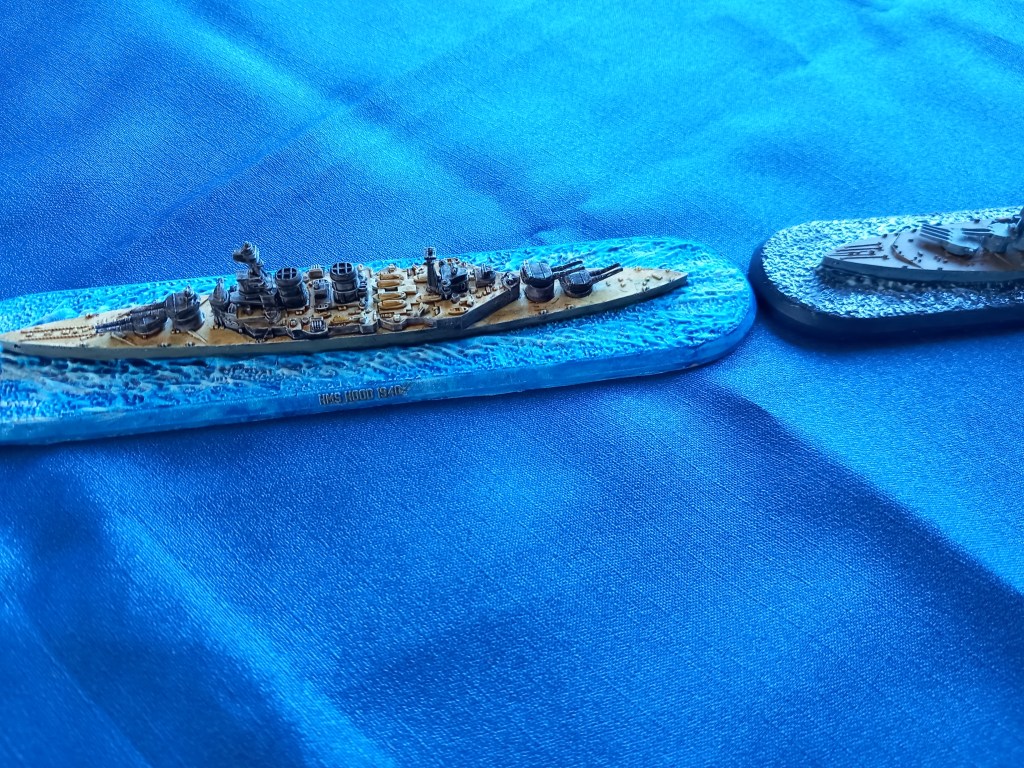
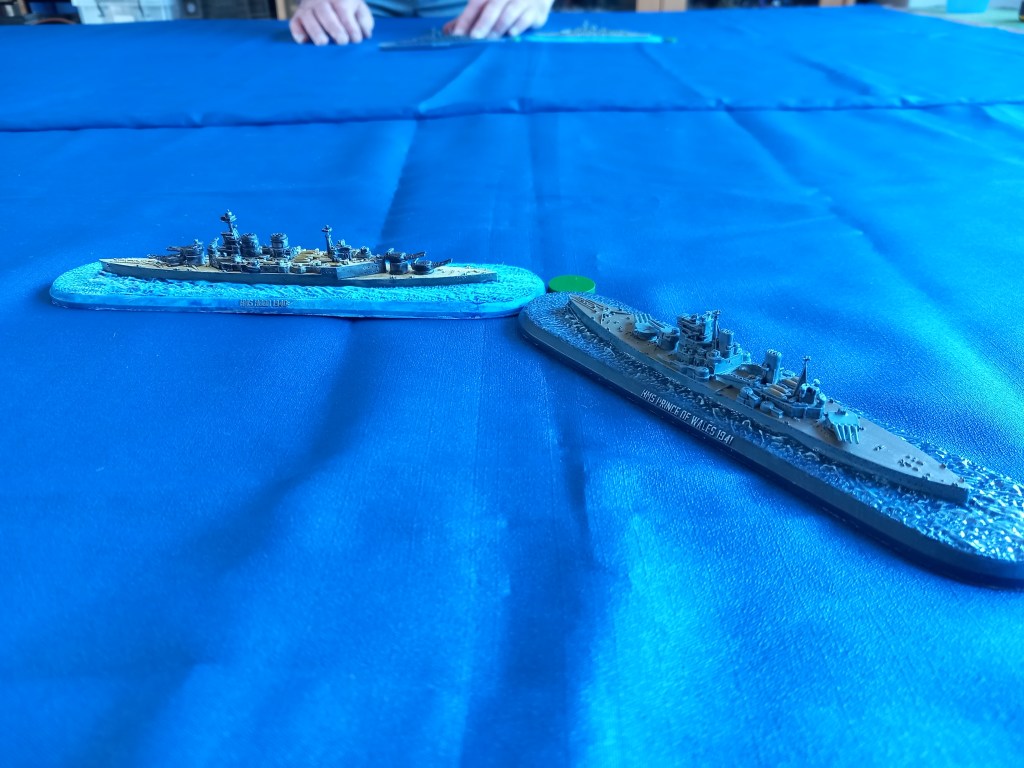
Next up was another Victory at Sea game but not the war in the Pacific this time instead we fought the Battle of the Denmark Straits. Yes two ships per side and that’s it 😲

Gerard came up with an intriguing little scenario for us and it really worked. First off we didn’t know what action we were doing until we were allocated sides and then we had restrictions on what we could see, what we knew and what we could do, all reflecting the original action.

Fairly obviously this wasn’t going to last us all day so we had one game in the morning, broke for lunch and then swopped sides for the afternoon session, sometimes it pays to go small.

In the first session the Hood was sunk quite early on in a repeat of history and Prince of Wales had its rudder jammed so was reduced to steaming in circles as the Bismarck sailed away with minimal damage leaving behind Prince Eugen at the bottom of the straits.

In our second game the British co-ordinated their efforts a lot better and zeroed in on the Bismarck ultimately crippling it to such an extent that all it could do was sail back up the straits into the arms of patrolling destroyers. The Prince Eugen was ultimately sunk.

This second game was a far more hard fought fight and at the end both Hood and Prince of Wales had serious damage but were still in the fight. A really good game and different.

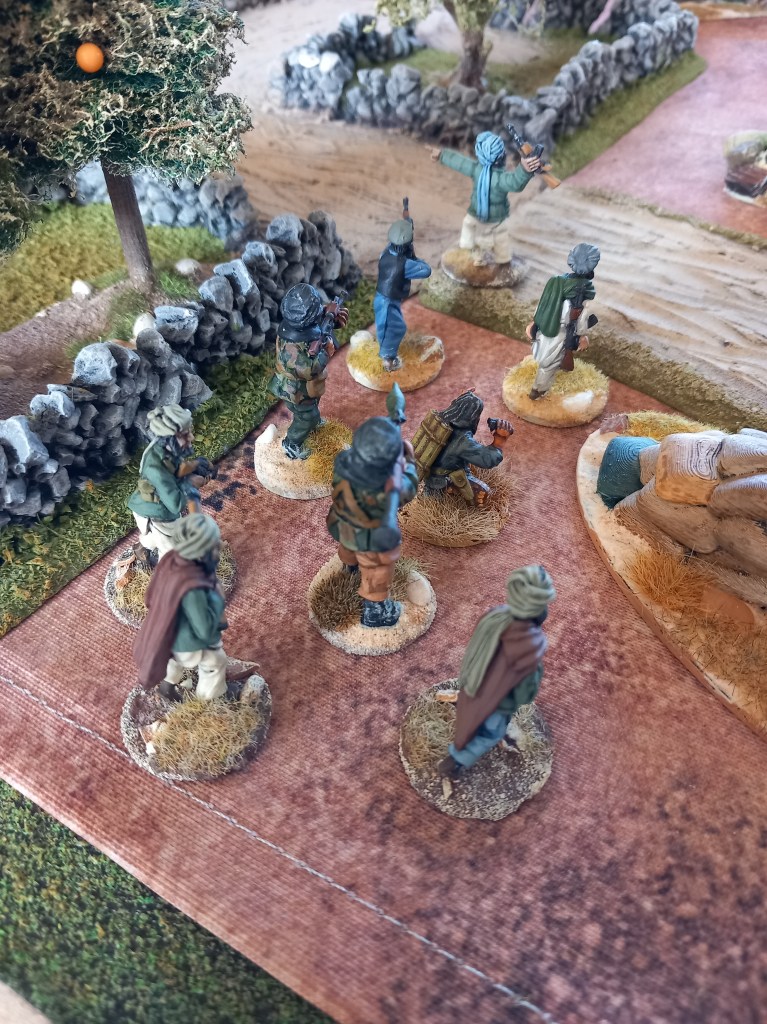
Our third game of the month was a welcome return to the skirmish genre, this time we dusted off the Soviet Afghan collection and put together a mujahedeen attack on police and army units on the edge of a town.

The police started the game on duty outside the station, across the road was a government official and his bodyguards, inside the police station an army unit was resting prior to going out on patrol. The mujahedeen started at randomly generated points around the table edges.

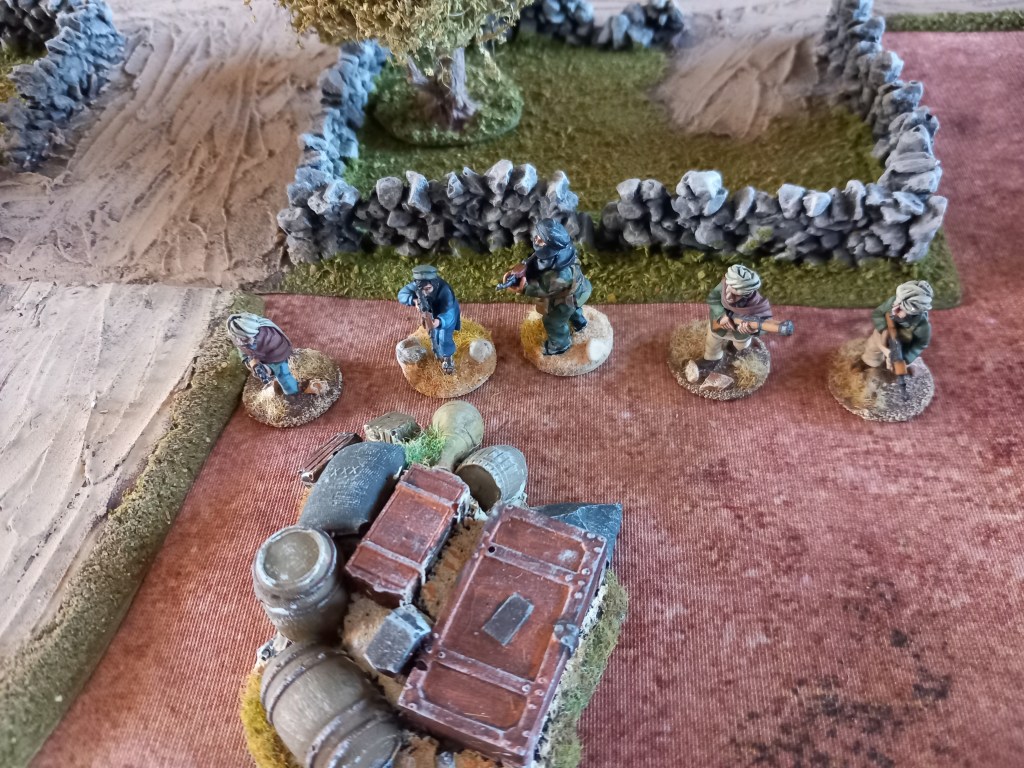
One squad of Mujahedeen advance through an orchard.

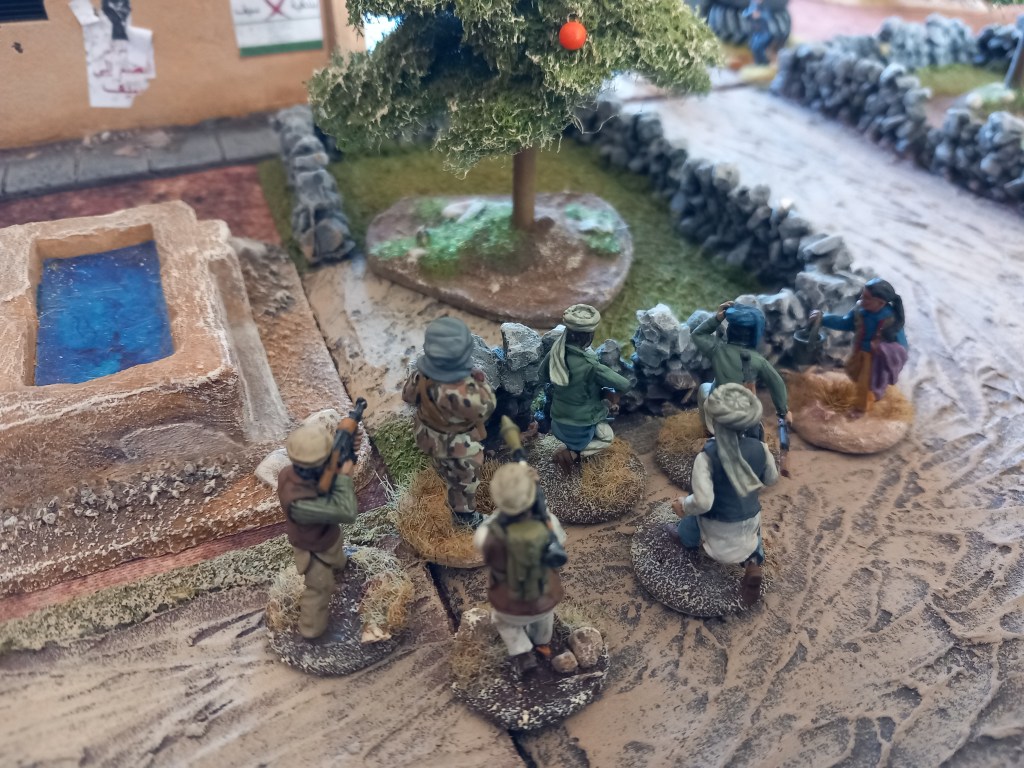
A second squad nears the edge of the police station, local boy offers water fresh from the well. Have they been spotted?

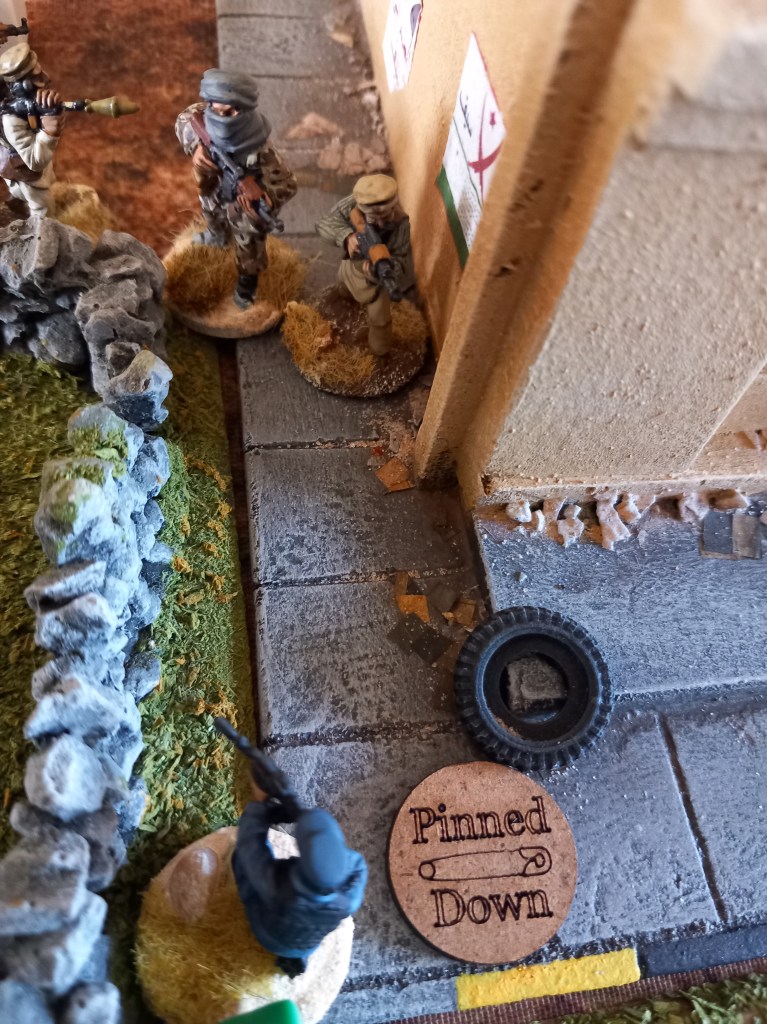
Shots fired!

No need for cover now.

The army opens up from the police station – this is getting serious now!

This guy tried to three times to blow open the doors to the government building. Literally couldn’t hit a barn door 😂🤣

OK this isn’t looking too good. Time to change sides?

Government official makes a quick exit.

“He got away!” Mujahedeen withdraw with no casualties. Afghan police 3 x KIA, 1 captured. Afghan army 1 x KIA. It was nice to get one of the many skirmish collections out but truth is some of them need to be sold on now, just taking up too much space.

Next was another in our relatively new 6mm Cold War project this time giving the newly painted BAOR their first outing.

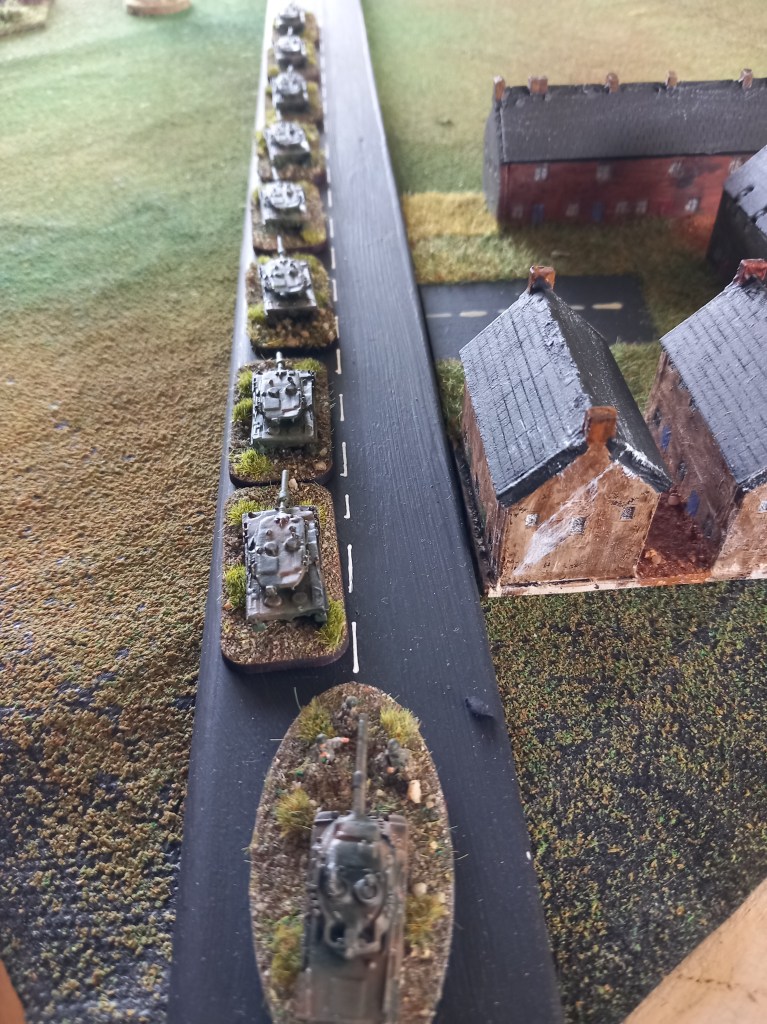
Like our March game this was another riff on the narrative in Jim Storr’s, ‘Battlegroup’. This time the 7th Armoured Brigade has been rushed forward from the divisional reserve to stop the Soviet 7th Guards Tank Division crossing the river Innerste.

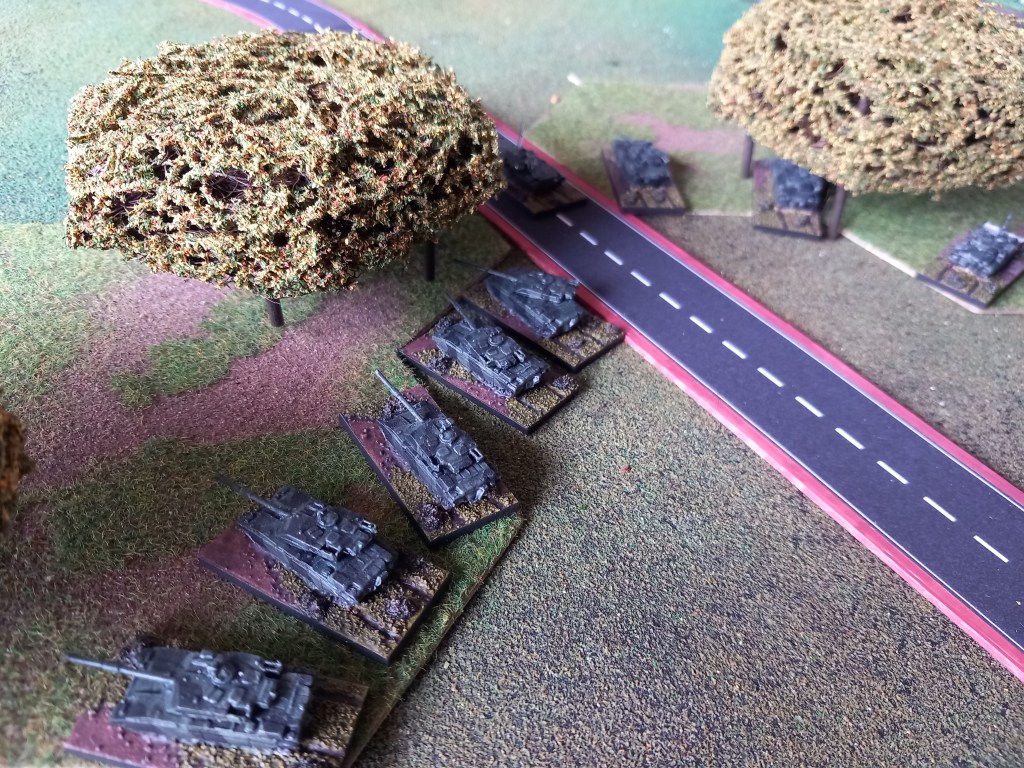
The game was essentially an encounter game with battalions deploying to the table based on successful command rolls. The BAOR deployed one Chieftain brigade and one Challenger brigade along with a mechanised infantry brigade and some SP artillery. The Soviets deployed three tank battalions, one T80 and two T62, one of which was under strength, plus a trio of HINDs. Both sides had off table artillery.

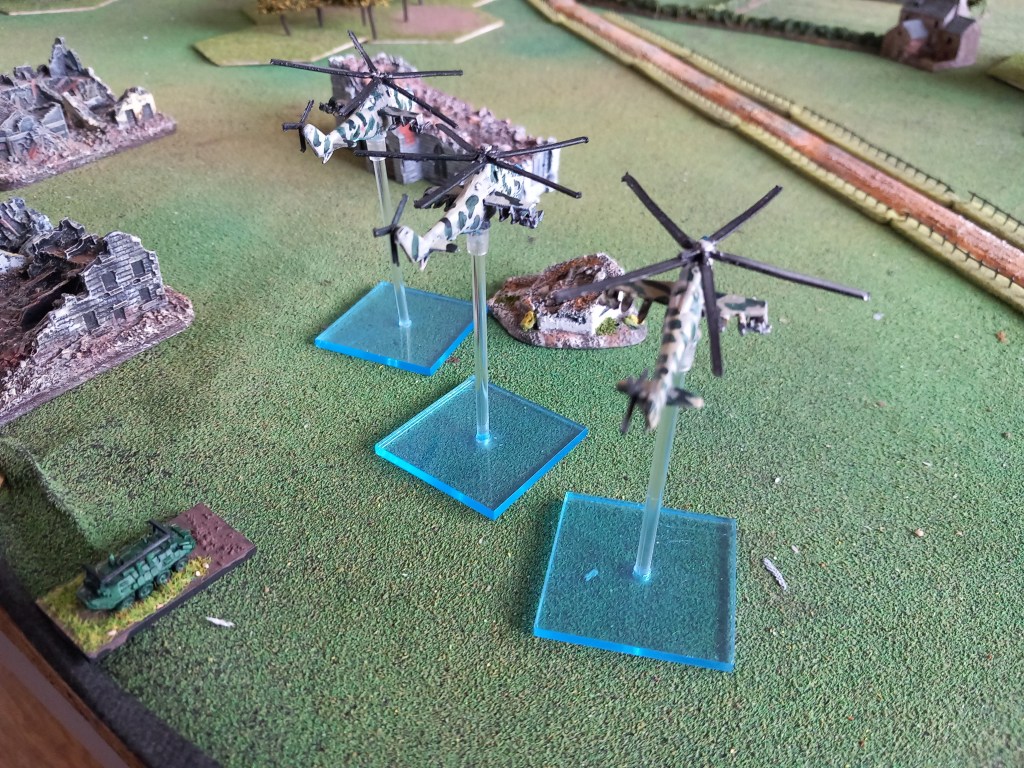
The HINDs deployed early and, as usual, caused some heart stopping moments for the Brits – these damm things really are difficult to deal with.

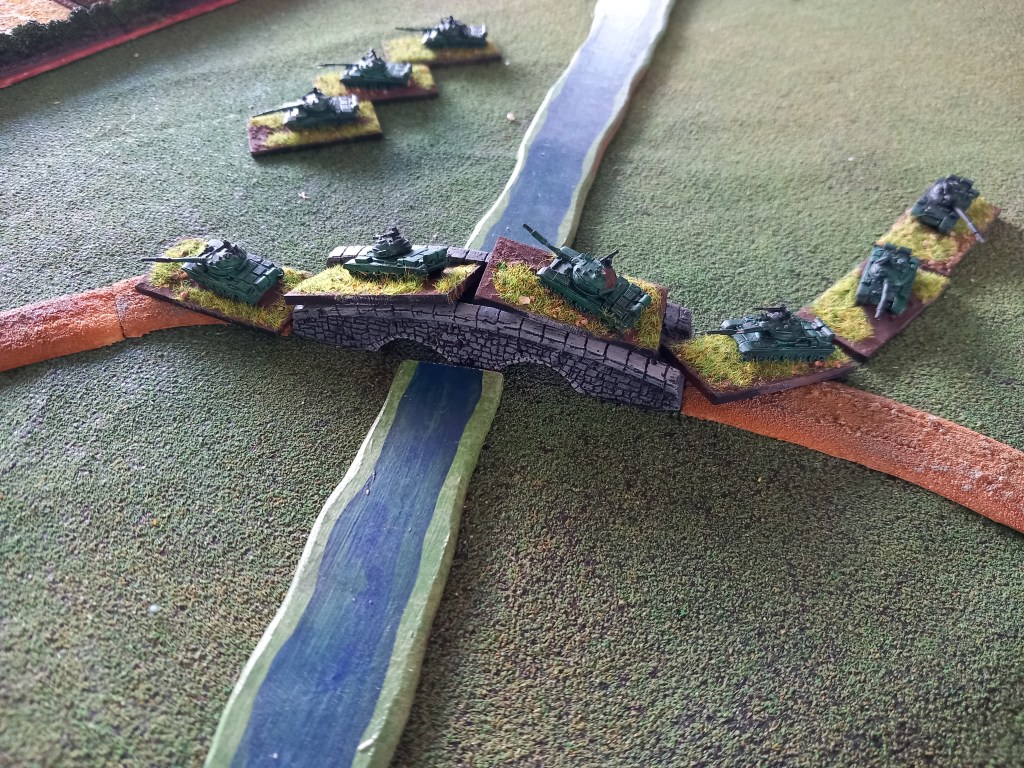
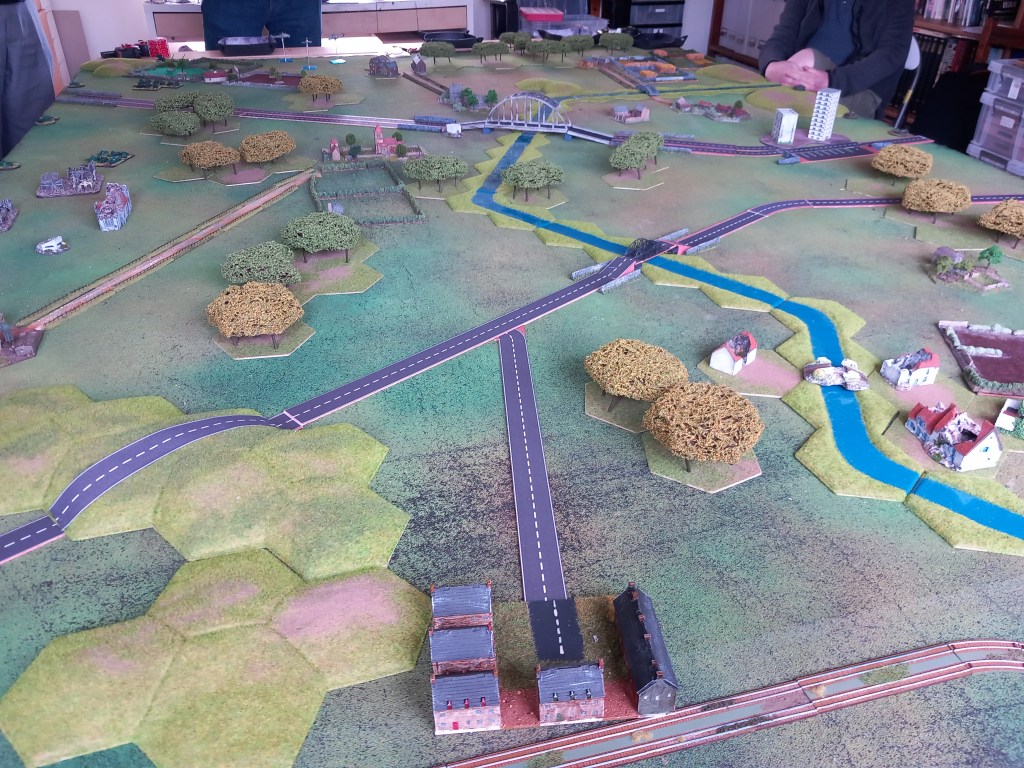
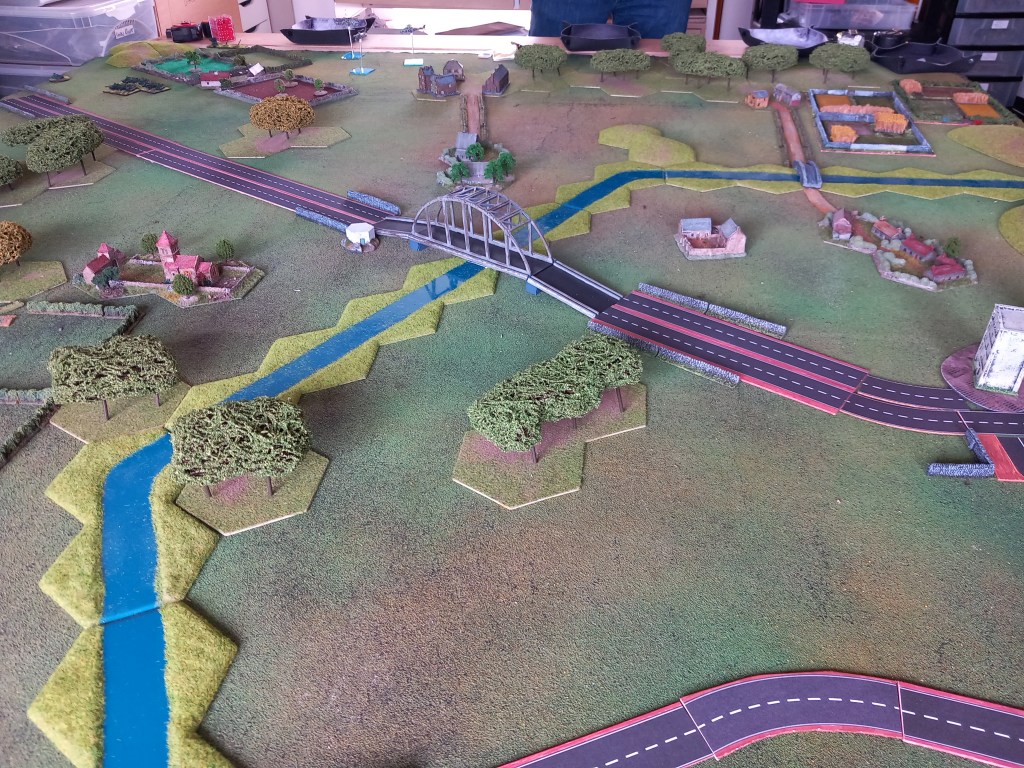
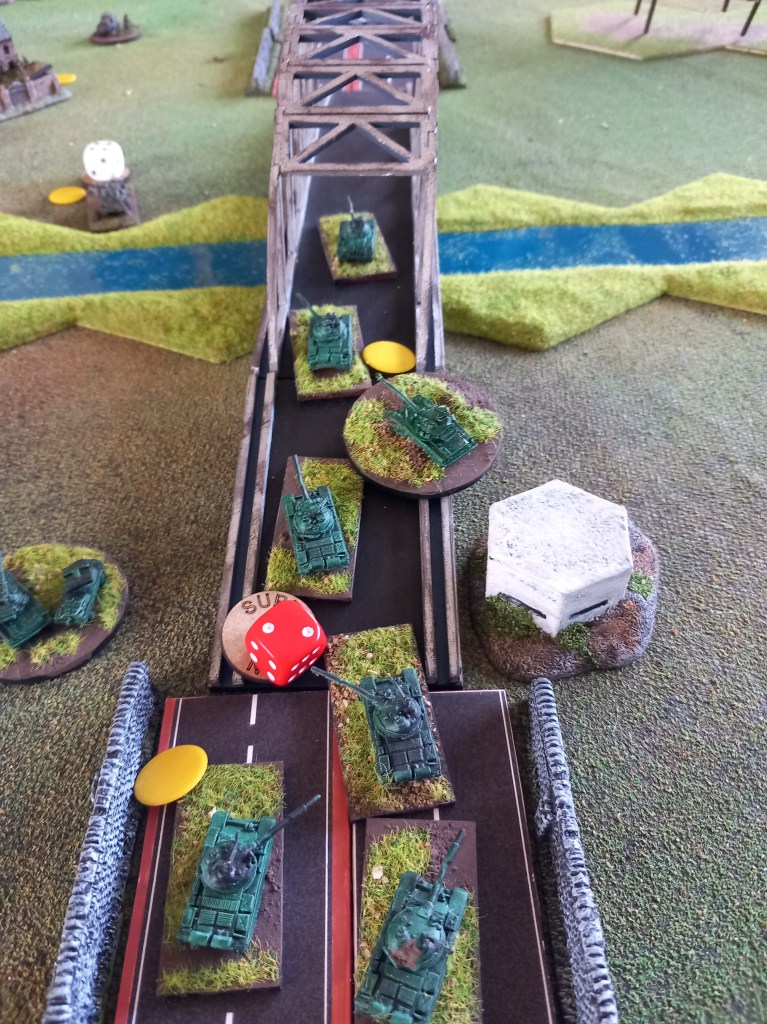
As the Brits obligingly sat back the Soviets made a dash for the main suspension bridge.

Some decent shooting from infantry LAWs stops the Soviets on the bridge.

British infantry occupy villages on their side of the river.

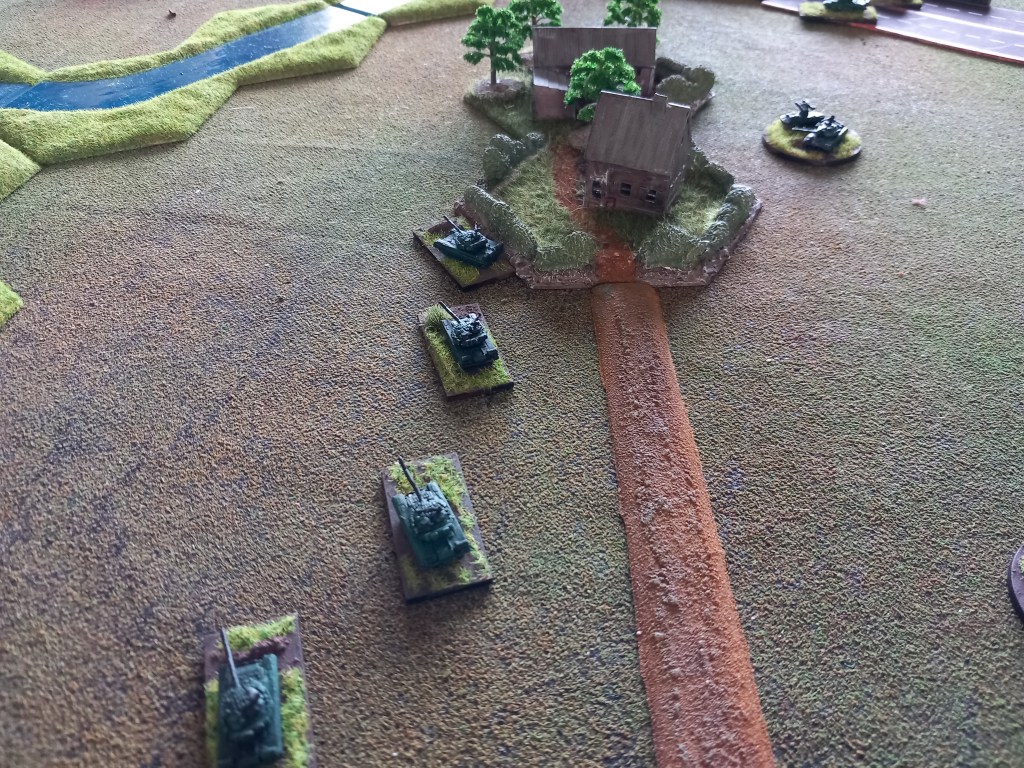
Soviet advance continues.

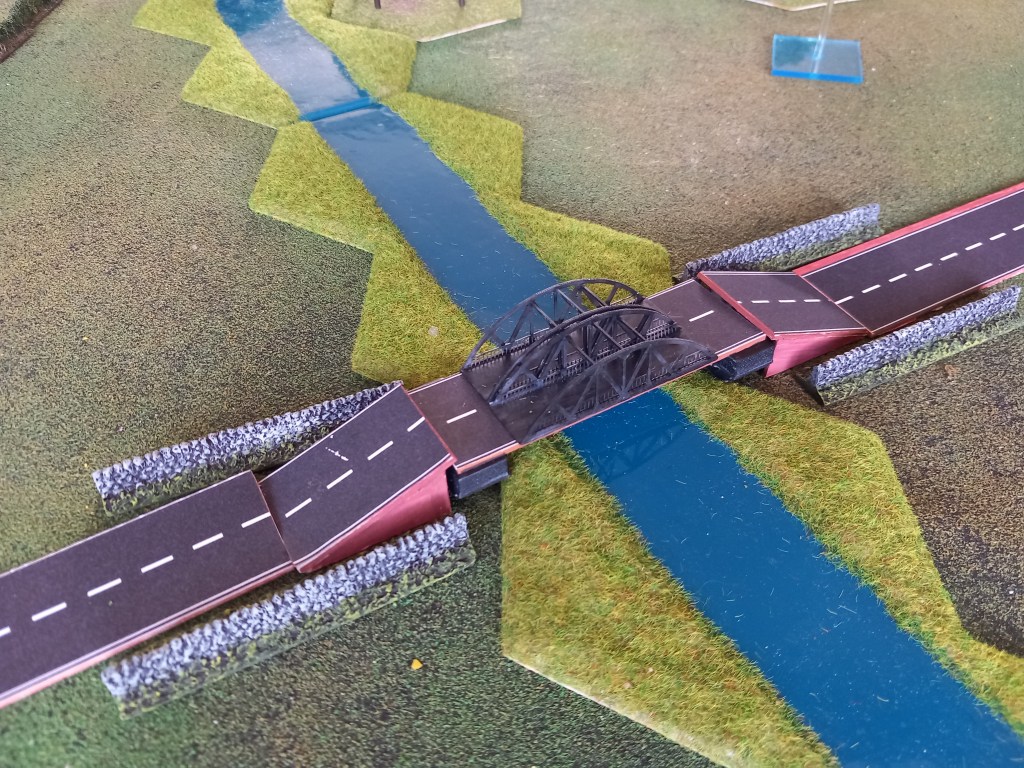
The second bridge, ripe and ready for the taking.

Ultimately the Soviets seized both bridges and the British failed their breakpoint morale role so it was on to the Wesser for the Soviets.

On reflection this wasn’t one of our better games. The British overall commander was getting to know his army and so played an overly cautious game which manifested itself in some curious deployment decisions.

What turned out to be our final game of the month was a War of the Austrian Succession game set in northern Italy with a French army on one side and and an Austro Piedmontese army on the other approaching a town where there is thought to be a supply of shoes – sound familiar?

It wasn’t planned this way but this turned into a two day affair and it’s probably worth talking about that.

This was a lot of troops; the French fielded 6 brigades, the Austrians 5 and the Piedmontese 4, all marching to the table and in some cases getting each others way (that was the intention). What this meant was that by the end of the original day the battle had only really just got going and we were stuck with falling back on that old staple of “well I think this brigade would probably do this and that brigade would fall back…..” Then in a kind of epiphany moment, which we really shouldn’t have had to have, we realised that we could just leave the game up (because that’s what a permanent wargames room is all about 🤔) and because we’re retired we can game whenever we damm well please! And there was me thinking we were all pretty bright blokes 😂🤣

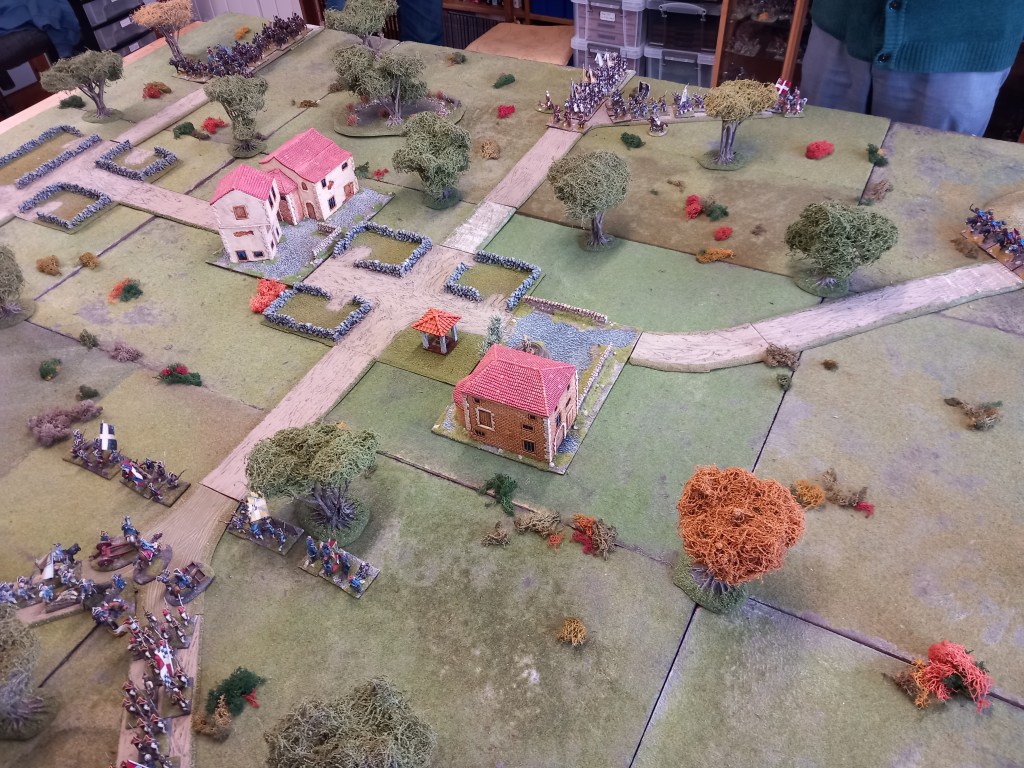
Anyway. The two brigade strong Austrian cavalry brigade marched up the right hand road aiming to pass through some walled gardens and smash some French cavalry seen deploying near some woods. On the opposite flank the Piedmontese single cavalry brigade was repeating the same scenario. In the centre all roads led to the town; the French foot had a only a single road to march down so were more strung out but there was less of them, the Austrians and Piedmontese had a road each but it met at a fork outside of the town and a road block was inevitable – the columns had to come down the road to enter the gaming area.

The first action of the game was the clash of the French and Austrian cavalry at the walled gardens. The French caught the lead Austrian dragoons as they shook out of column but failed to bounce them back and fell back themselves, a potential disaster which was rescued by the second French unit that charged in to stabilise the line and send the Austrians themselves packing. This set the tone for the whole game, the Austrians were stymied by the walls and gardens and just could not make enough headway against smaller and weaker opposition.

Out on the other wing the Piedmontese and French cavalry had a more even contest which ultimately saw the Piedmontese bounced back behind their gradually developing infantry lines which later in the game would save them.

In the centre the fight for the town was developing. The town consisted of two built up areas at the sides and one central walled garden area into which the French were establishing themselves just ahead of the Austro-Piedmontese who had been held up by the now infamous fork in the road.

The Austrians just keep on coming! Numbers are beginning to tell at this stage and the French have already recognised they don’t have enough to occupy all the built up areas.

It’s about what would be seen as the mid point of the game. The French hold the central gardens and the whole of the right built up area, the left is contested with the Austrians. The cavalry on both flanks are holding their own. This is the high water mark of the French effort.

Emboldened by their success the French cavalry right spurs its horses forward scenting victory. An infantry brigade is supporting to the rear. What could possibly go wrong?

In a bizarre turn of events the French left cavalry received orders to pull back to their original starting point allowing the Austrians the opportunity to sort themselves out and exit the gardens. The reasoning of the French CinC was that he thought the cavalry would be overwhelmed in due course but what this order did was to allow the Austrians to fight with the advantage of their numbers and it also exposed the left flank of the infantry brigade trying to stop the Austrian juggernaut coming round that side of the town.

The right hand side of the town (as seen from the French side)has fallen to the Piedmontese assault. Frankly they made hard work of this, this part of the town was only held by two skirmish regiments as the French didn’t have the numbers, none the less the French in the central gardens were now under serious threat.

The situation worsens in the town. The left hand side built up area has been given up to the Austrians and the weight of Austrian fire on the centre (look at all those battalions!) has driven the French out allowing the Piedmontese to begin occupying the ground.

Out on the Austrian right, their cavalry prepare to seize their moment, now it is their time!

“Onward to victory!”

Oh dear 🤣😂 In a stunning turn about the Austrians lost their bottle and retired without even crossing swords!

And it got worse. It just wasn’t the Austrians day. The French breathed a sigh of relief.

However out on the French right the cavalry brigade has all but been destroyed by Piedmontese musket fire and the supporting infantry brigade has also collapsed. Yes the Piedmontese have suffered losses but the French are in no position to do anything about it.

With night falling the French are finished. Despite the unlooked for success on the right the rest of the army is spent and retreat is the only option covered by the very lucky right flank cavalry.

I for one was really glad we carried this on to a second day. There was plenty of fight left in the game, in fact the bulk of the fight was in the second day. We had some knife edge moments, some lucky moments and some disastrous moments, in fact everything you could want in a good game. Well done all!

In theory that should have been it for the month but not for me because I went down to Basingstoke for a refight of the battle of Malplaquet hosted by Mark Freeth at the Wargames Holiday Centre. I say ‘at the Wargames Holiday Centre’ when in fact the WHC comes to you, because these days Mark sets up the 27 foot long playing area in an extended conference room at the local Holiday Inn, so you stay, eat and drink in the hotel and game in the conference room all very convenient.

I’d love to give a detailed account of the ebb and flow of the grand battle but I can’t. The one disadvantage (oh the trauma of it all!) of playing on such a large table is that you only really know what’s going on in your six foot square of action.

I can say that on the Friday night and all day Saturday we played a series of games that were a loose simulation of contacts leading up to the battle but were in reality a means to get people used to the rules – Kampfe In Reihen by Steve Thompson. Personally I think this this was a bit too long and it kind of took you out of the moment, maybe Friday night and Saturday morning would have been enough.

Sunday was the main event and as best as I could tell it went something like this. The French left cavalry (me) fought a long and bloody battle against superior numbers of allied cavalry but finally gave up the struggle. Way down on the French right a mixed force of horse and foot made little headway against inferior opposition. In the centre sheer weight of numbers drove in the French centre.

I’m, glad I went, it was an itch that I had wanted to scratch for years. I had been to the WHC in the very early years under Pete Gilder when I was a callow youth and then continued with it when Mike Ingham took over from Pete and amongst other things instigated the Marlburian period as a staple on the menu but despite meeting Mark at the centre under Mike and forming a friendship I had never been able to attend under his stewardship so that’s done now.

This kind of mass gaming can be seen as a bit of a relic of a different time in wargaming and I get that, certainly it’s not for everyone and it does have a cost attached to it. I’m glad I have finally got to play in it’s third iteration, whether I will again remains to be seen, but it was a nice note to end the month on.