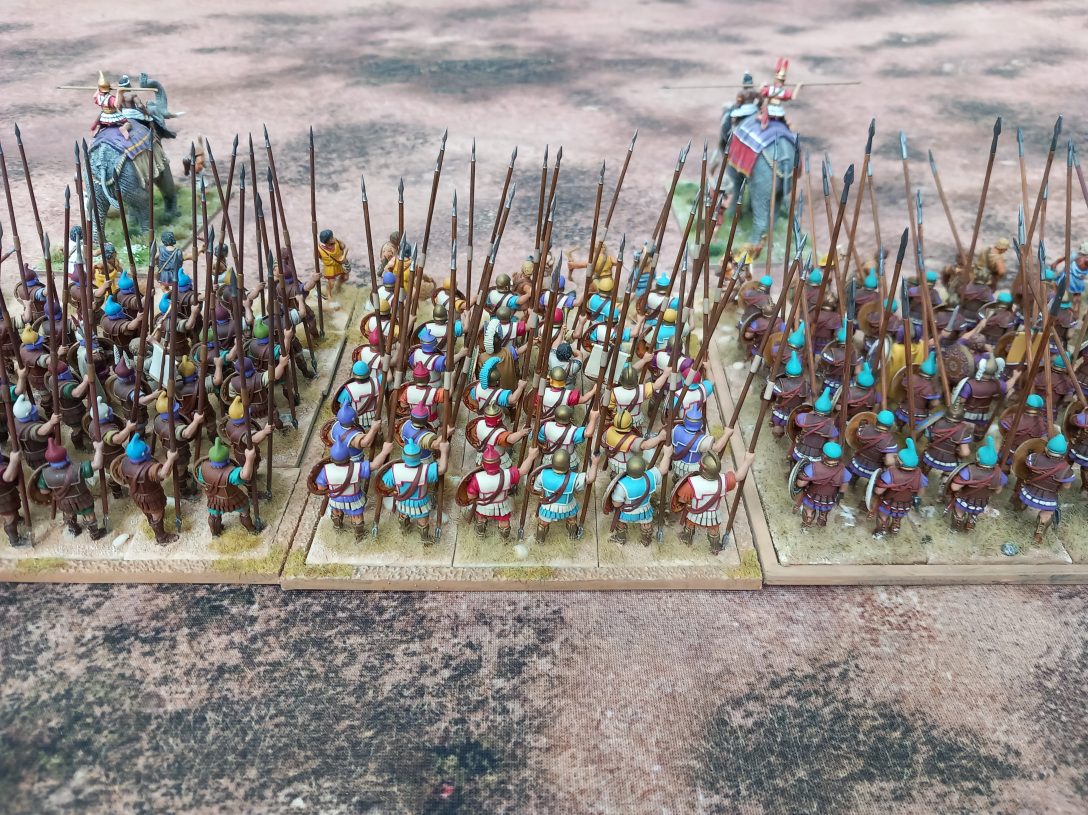
The inescapable Christmas illnesses and Christmas events thinned our ranks a bit over the month but we struggled on manfully 😂
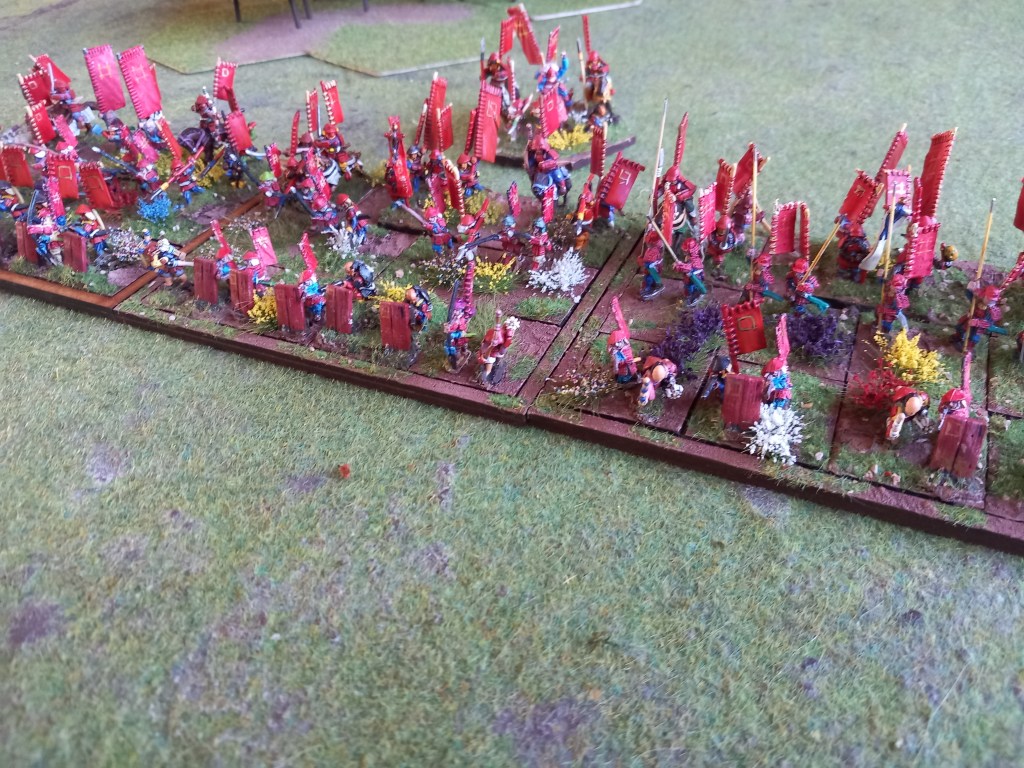
Our opening game was a return to Gerard’s 15mm Samurai with Ieyasu Tokugawa facing off to Ishida Mitsunari using our amended version of Battles in the Age of War.

A large portion of the game time with the rules is taken up in the pre game activities sorting out the quality levels of the various general under the Daimyo and the number of dice assigned to army traits such as treachery, spies, leadership, politics, etc. For us this generally takes about an hour which might be of putting for some players but we have all day to play so what the hell.
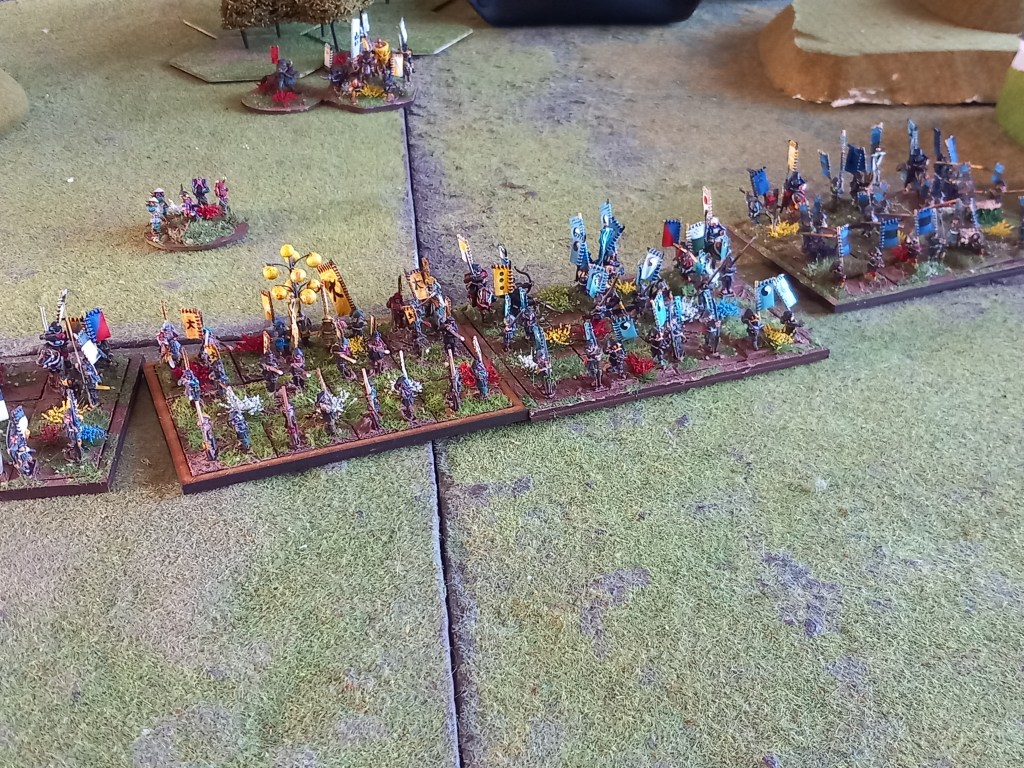
Notionally,Tokugawa was the attacking side with 3 clans distributed evenly over the table edge while Mitsunari, with 1 clan missing off table, made the best use of the terrain for his 2 on table clans.

The early couple of moves saw the Tokugawa army advance on its broad front. Opposite them the Mitsunari army tried to buy time until the third clan returned, Kenshin, on the left, fell back and Shingen, on the right, manoeuvred to the centre hoping the marshy stream to its right rear would delay the advancing Noataka clan long enough.
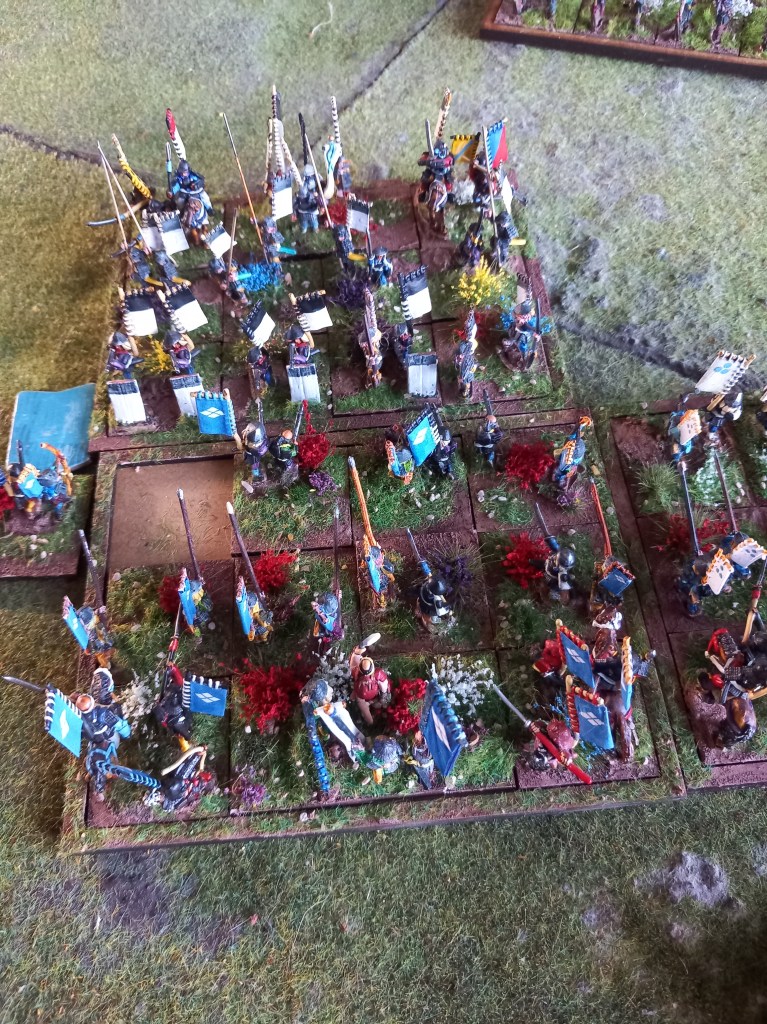
The first clash came with the centre clan of the Tokugawa line, Toshiie, hitting Shingen and ultimately collapsing it.
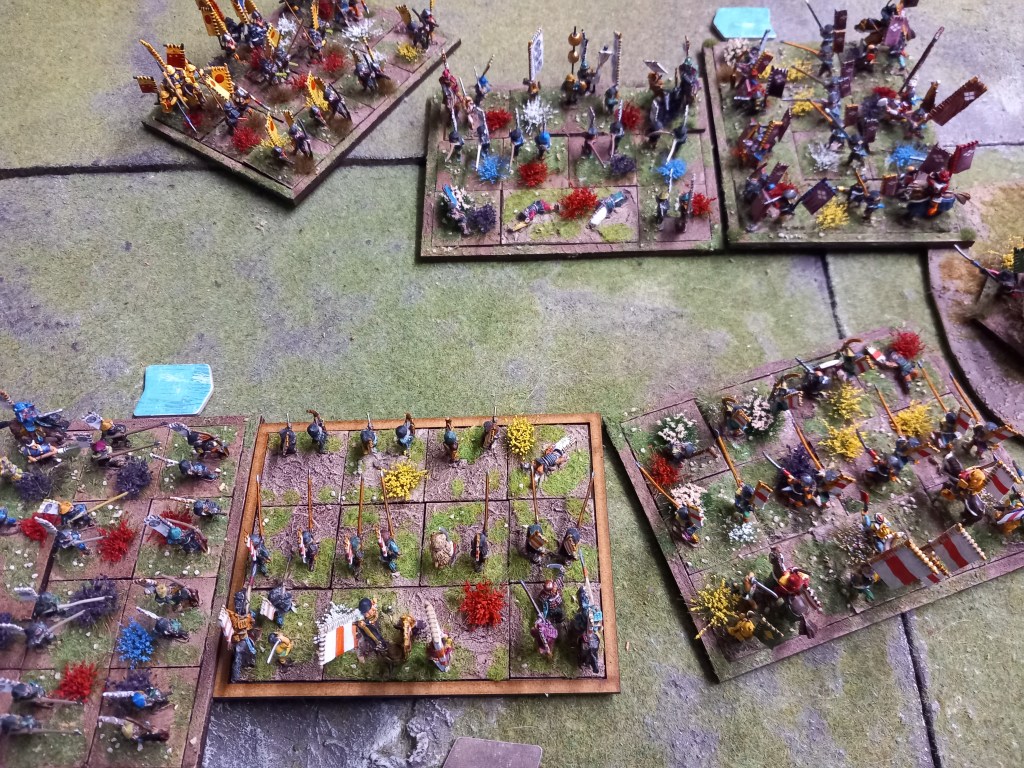
On the Mitsunari left, Kenshin and Honda met in a brawling conflict which ultimately saw Kenshin leave the field in defeat.

In the centre of the Mitsunari line the unnamed third clan had turned up and got itself organised but it was too late, two thirds of the army was gone, retreat was the only option.
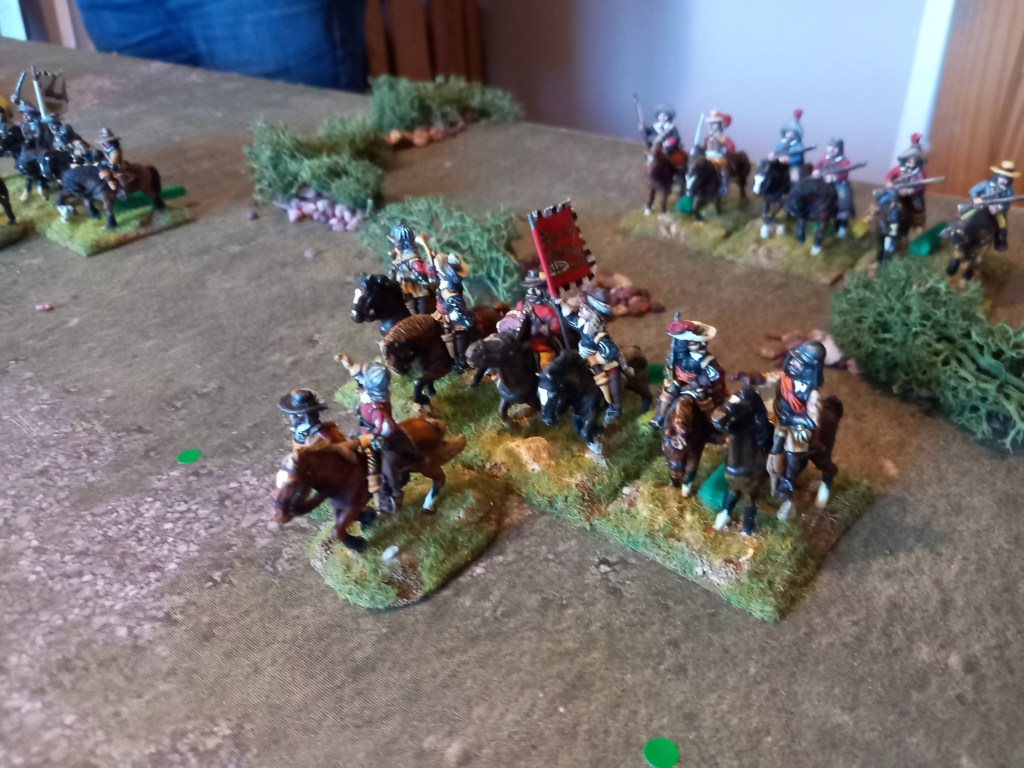
Next up was a game of ‘For King and Parliament’ refighting a minor battle I’ve forgotten the name of 🤣
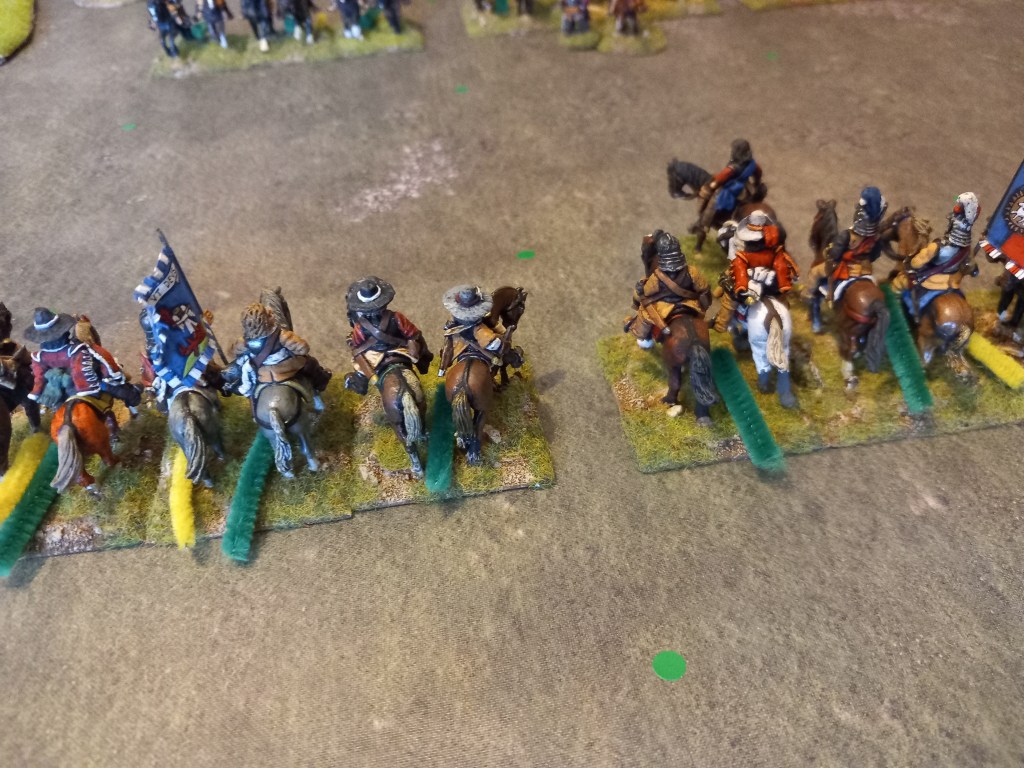
Full disclosure here, I’m not a particular fan of the mechanics of the Simon Miller stable of rule sets, they are too much like a board game for me and the playing cards and markers distract from the aesthetic. That said, if someone invites you to a game and you accept then you are obliged to keep your thoughts to yourself and play with a good grace.
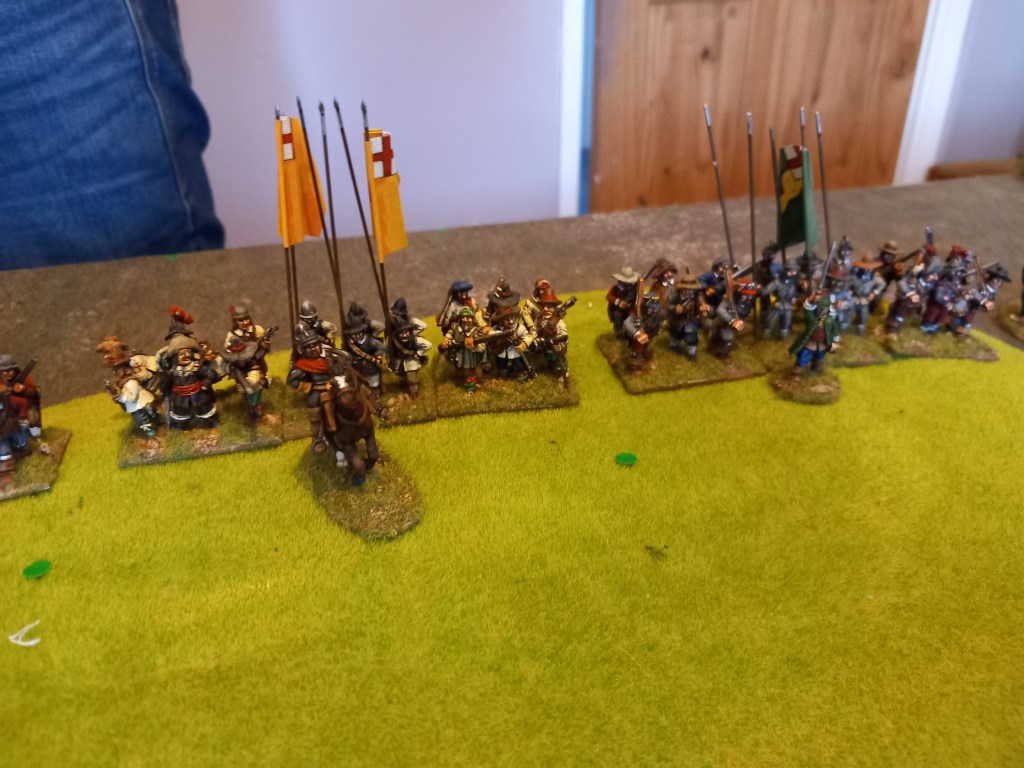
Both sides were deployed more or less historically which meant the Parliamentarian foot had the advantage of the higher ground and largely kept to it forcing the Royalists to do the attacking. The cavalry from both sides was out on the flat land beyond the hills.
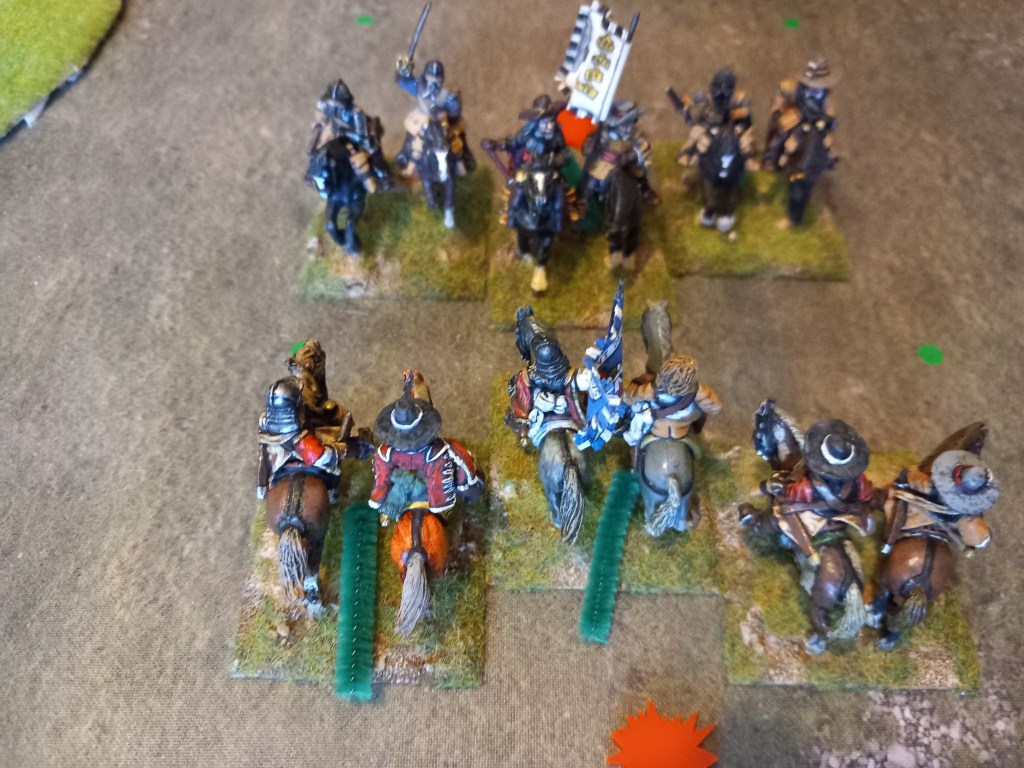
The cavalry actions occupied a good deal of the playing time with regiments being thrown in, rallying (sometimes) and being thrown in again. This was pretty brutal stuff (I think we might have got something wrong 🤔) but fun in a kind of abstract way.

Ultimately the cavalry space was largely empty with honours going to the parliamentarians.
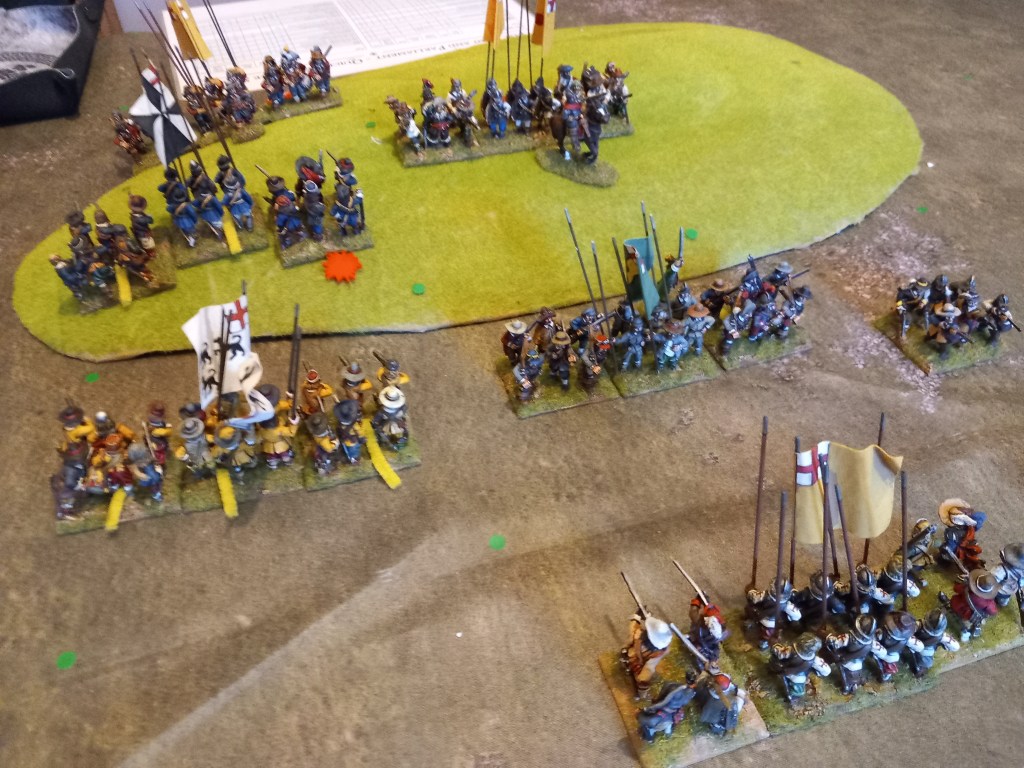
The fight for the hill started while the cavalry struggle was going on and then occupied us solely until we called time.
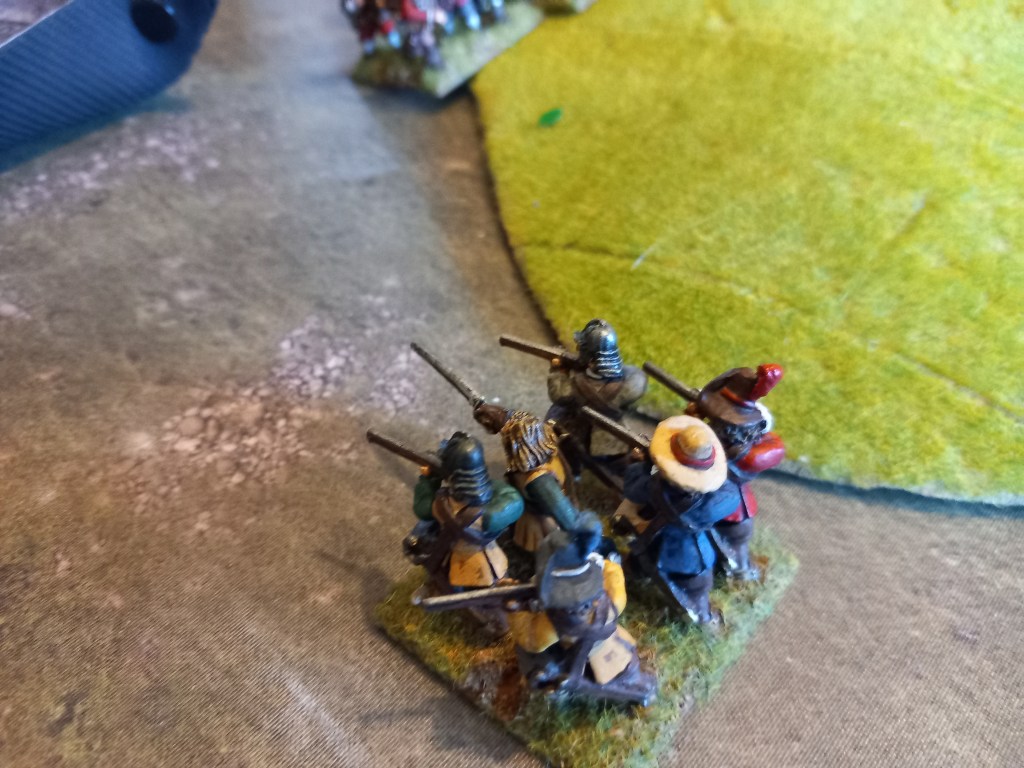
My takeaway from the infantry combat was that the forlorn hope were especially effective…
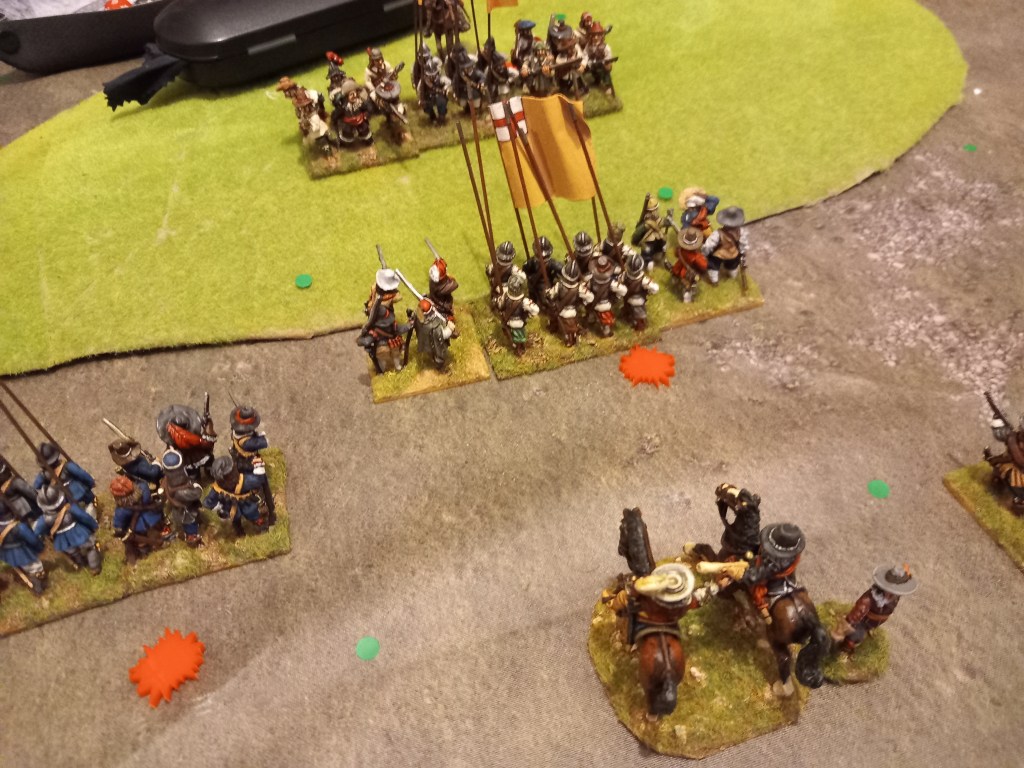
And the ‘proper’ fighting was a bit of a lottery. But maybe that is as it should be?

Next up was what could be called a series of unfortunate (or fortunate, depending on your viewpoint) events. Someone suggested we play French Wars of Religion a period we had not played for quite sometime and so we took on the second battle of any note, Saint Denys 1567, having fought Dreux 1562 twice already. The rules were our tried and trusted ‘For King or Faith’.
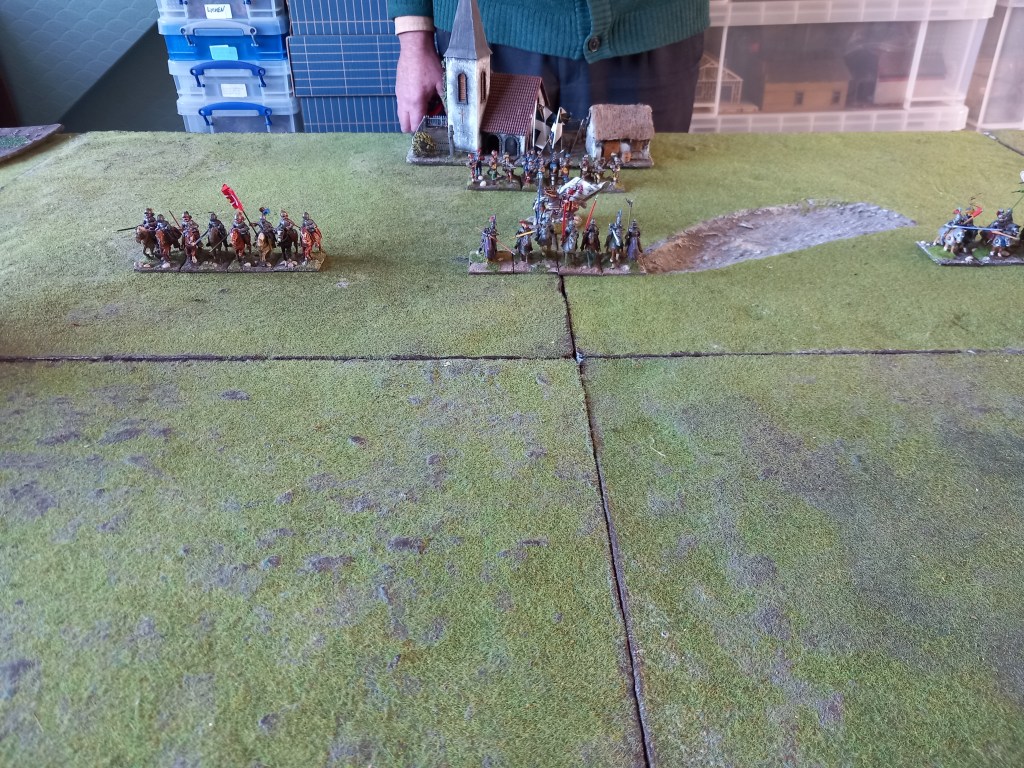
As a game this is a difficult call. Historically the Royalists far outnumbered the Huguenots as demonstrated by the time it took for the army to march out of Paris and deploy. No self respecting wargamer would willingly line up with 3 bodies of cavalry on the flat to face of to double their number, especially when those opposing cavalry were backed by Swiss, artillery and substantial bodies of home grown foot – the Huguenot foot were a few arquebusiers hiding in flanking villages. None the less that was the history so off we went!
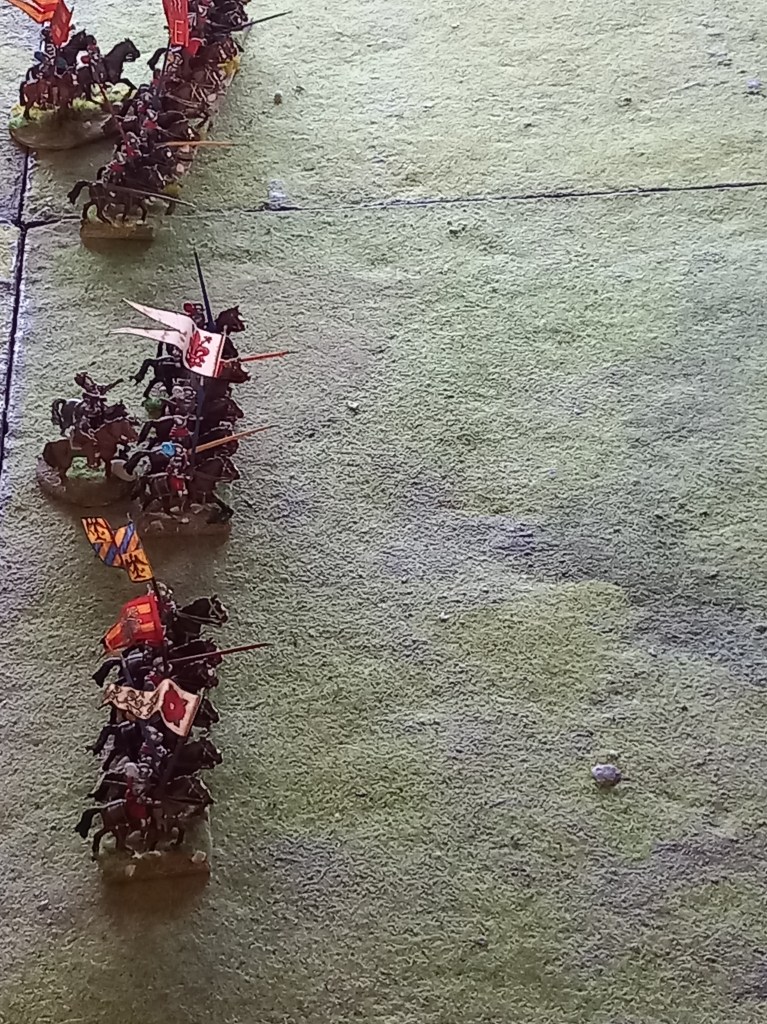
Historically, the Royalists attempted to outflank the shorter Huguenot line but strayed too close to the villages and became disordered from arquebus fire. The Huguenot cavalry then charged these horse and saw them off into the Royalist main line where an inconclusive melee saw the Royalist commander, the Connestable Montmorency, killed and the Paris militia fleeing back to Paris. The Huguenots rallied back to the villages ready for a second round but the leaderless Royalists showed no inclination to fight on and the action petered out.
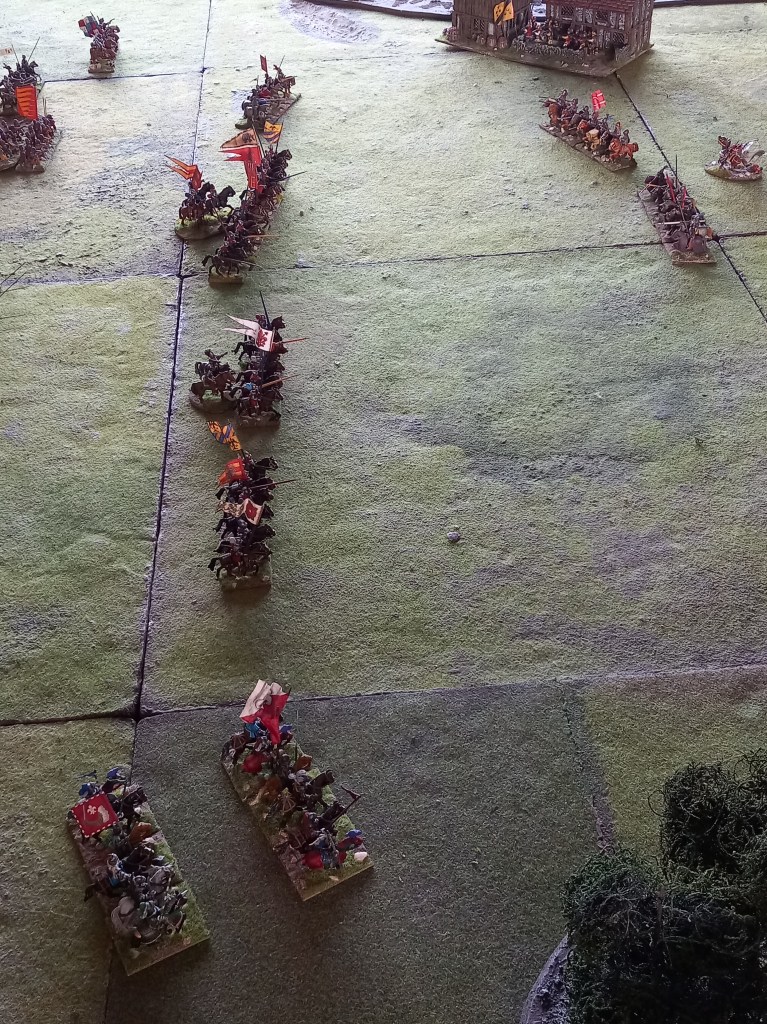
In our refight the Royalists were far better organised and managed to advance their whole cavalry line forward (more or less) – the rules restrict the number of units that can action to the skill rating of the commanders of the battailles.
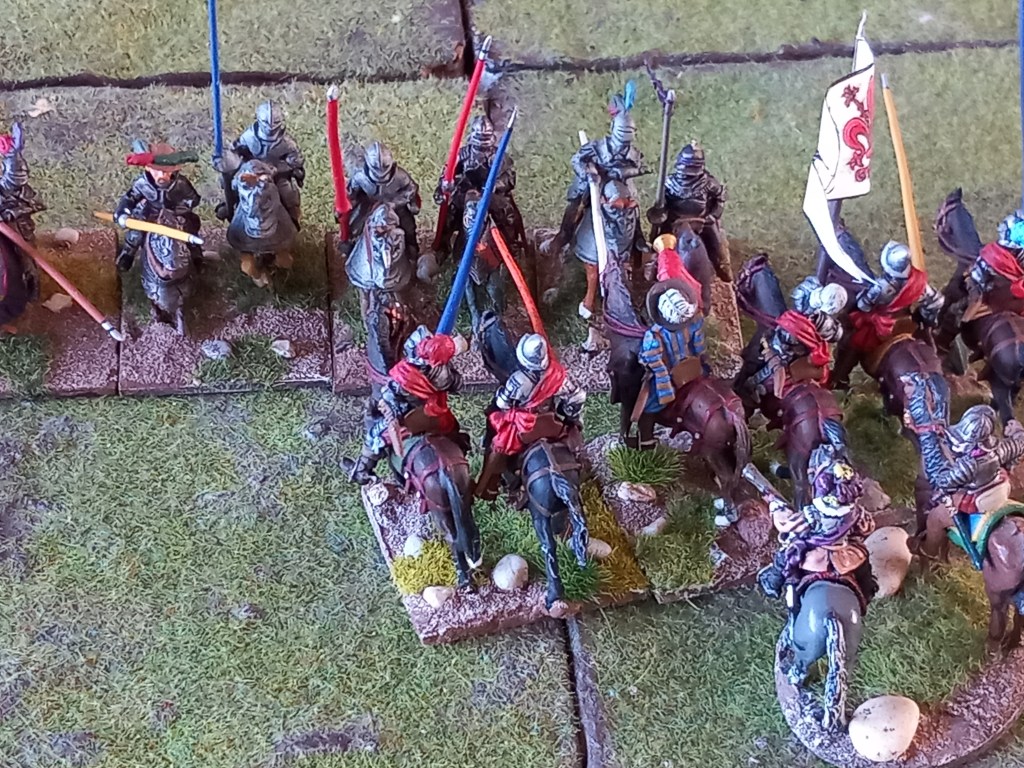
First contact was between Francois Montmorency (Royalist) and Conde (Huguenot) which ultimately resulted in the death of Montmorency.
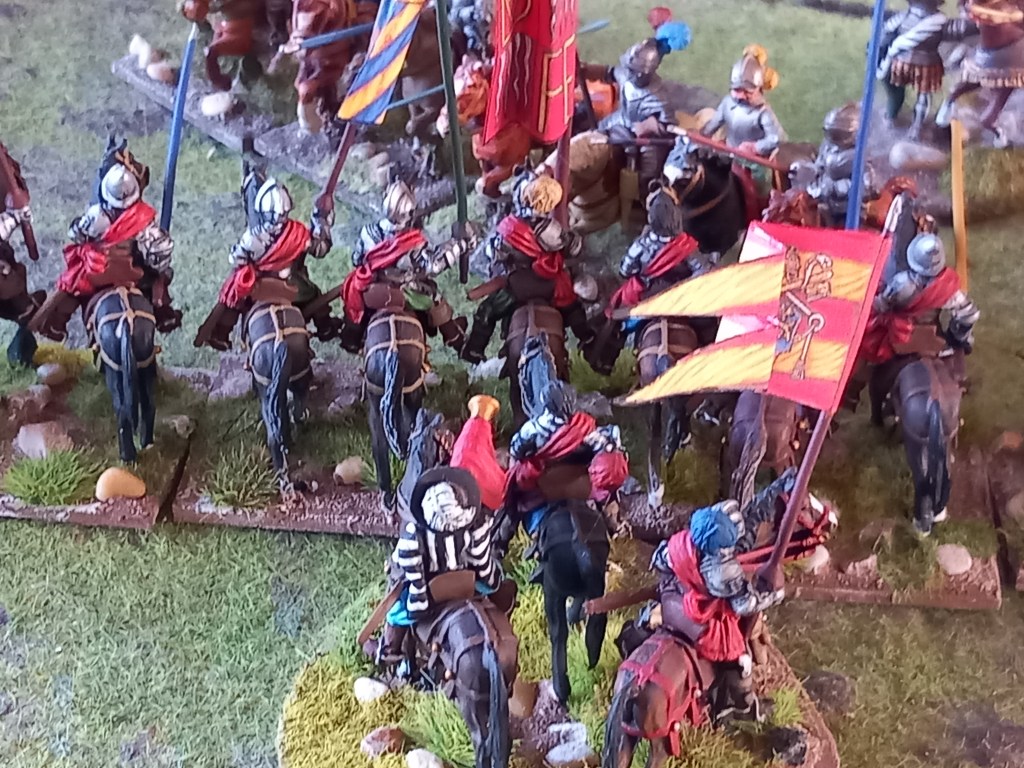
Next along the line the Connestable clashed with the Admiral Coligny and the Connestable defied history and didn’t die.

Despite their lack of numbers the Huguenots hung on.
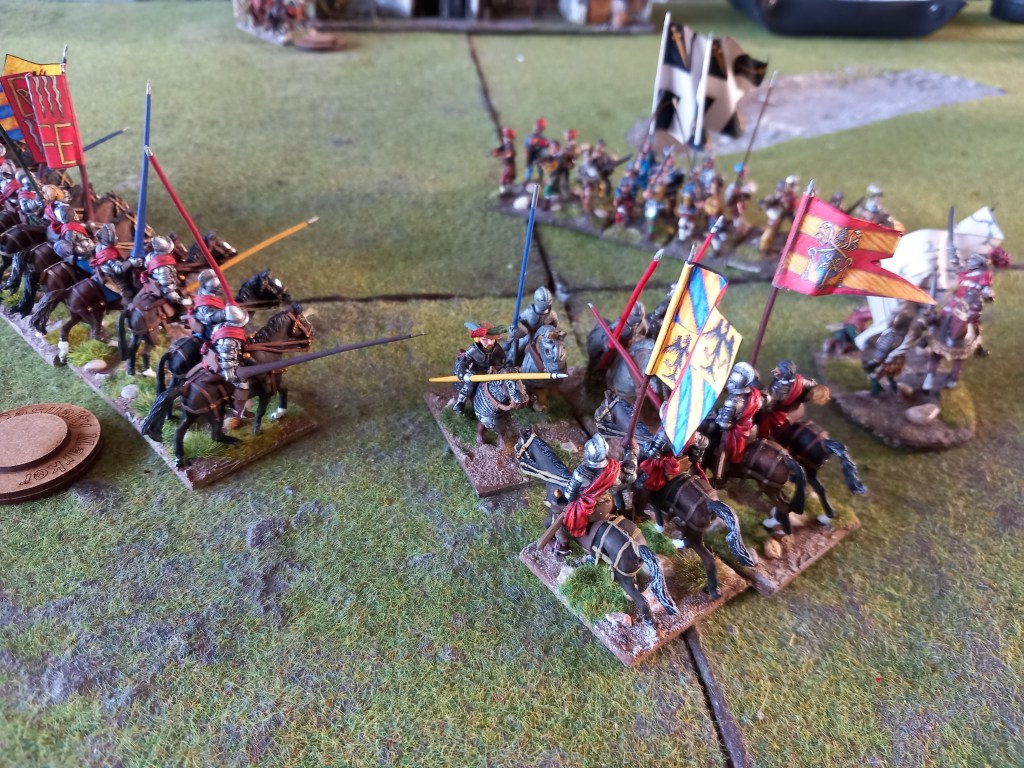
Coligny retreated and the Huguenots committed their reserve infantry to stabilise the situation.
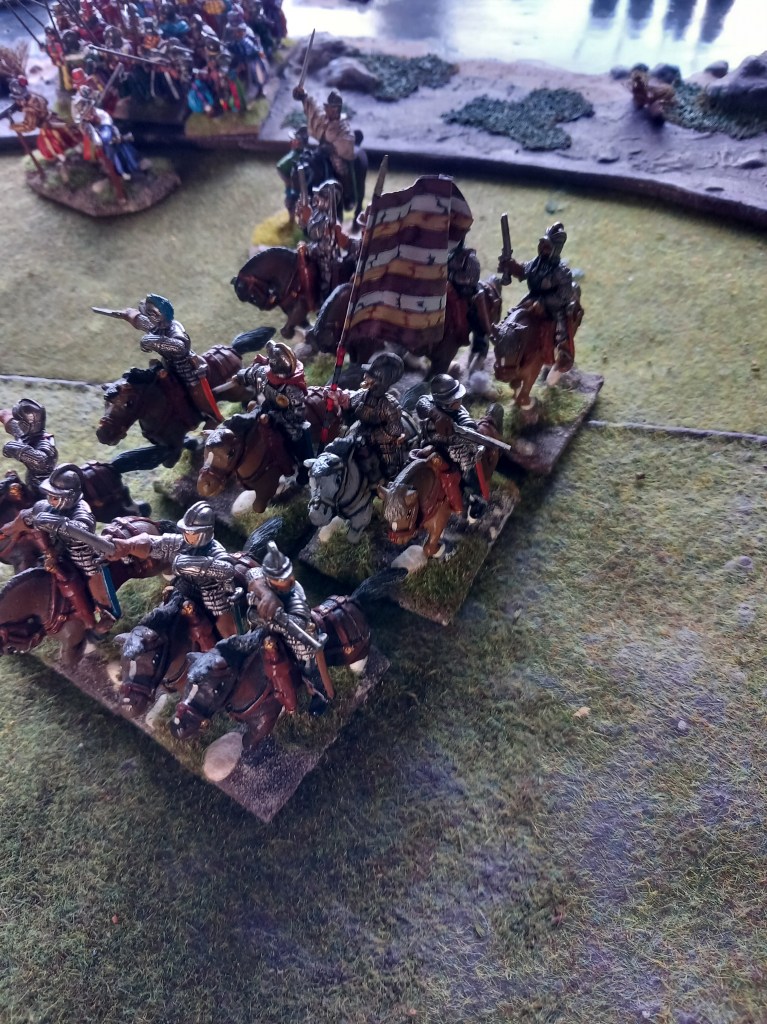
We had a random option for the Duke d’Andelot to cross the river Seine on the Huguenot right and he arrived late in the game – he actually arrived on the next day.
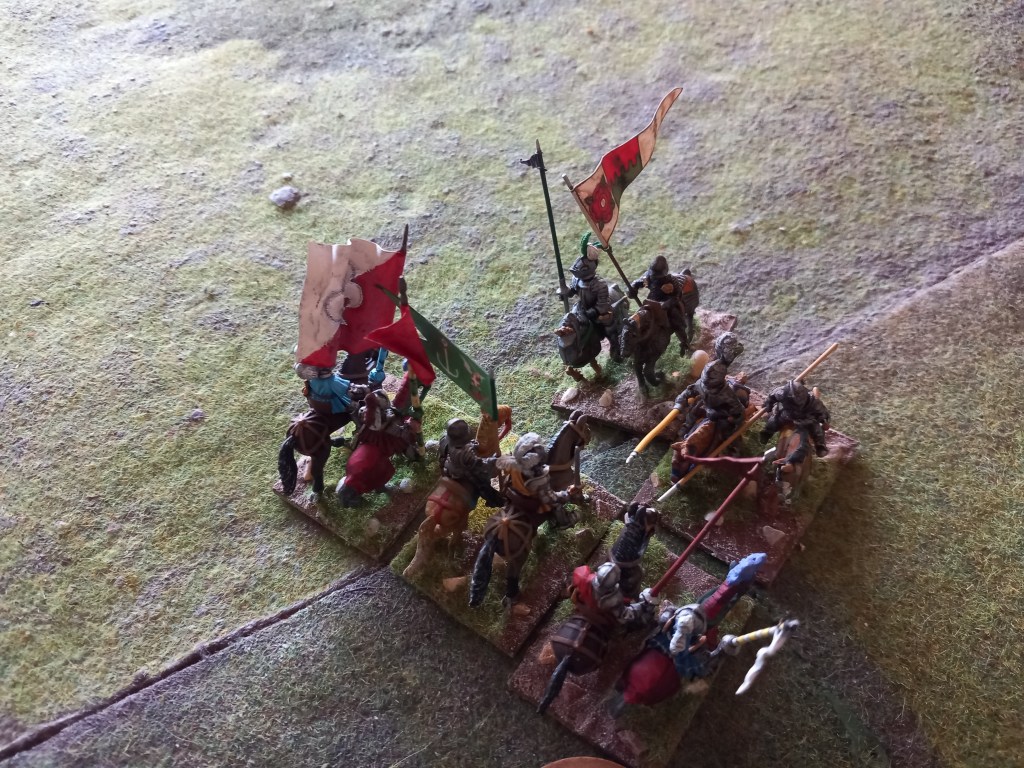
Out on the Huguenot left Biron (Royalist) charged and saw off Genlis (Huguenot).
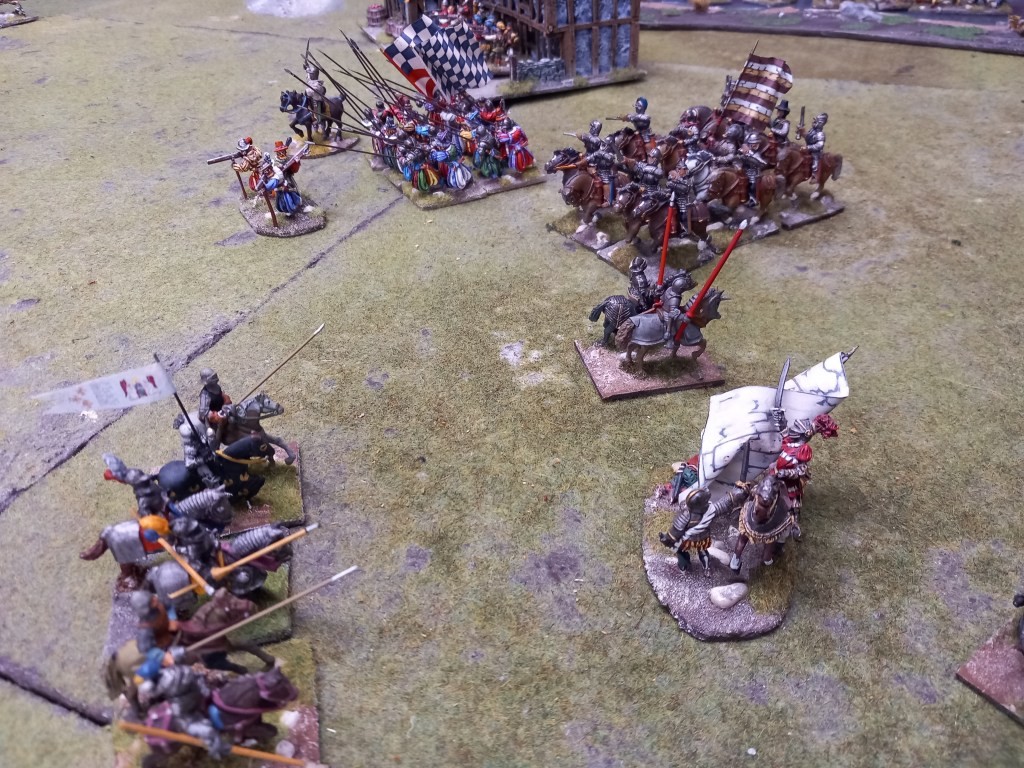
With only a few scattered squadrons left the fight was over for the Huguenots and rallying on d’Andelot they yielded the field.
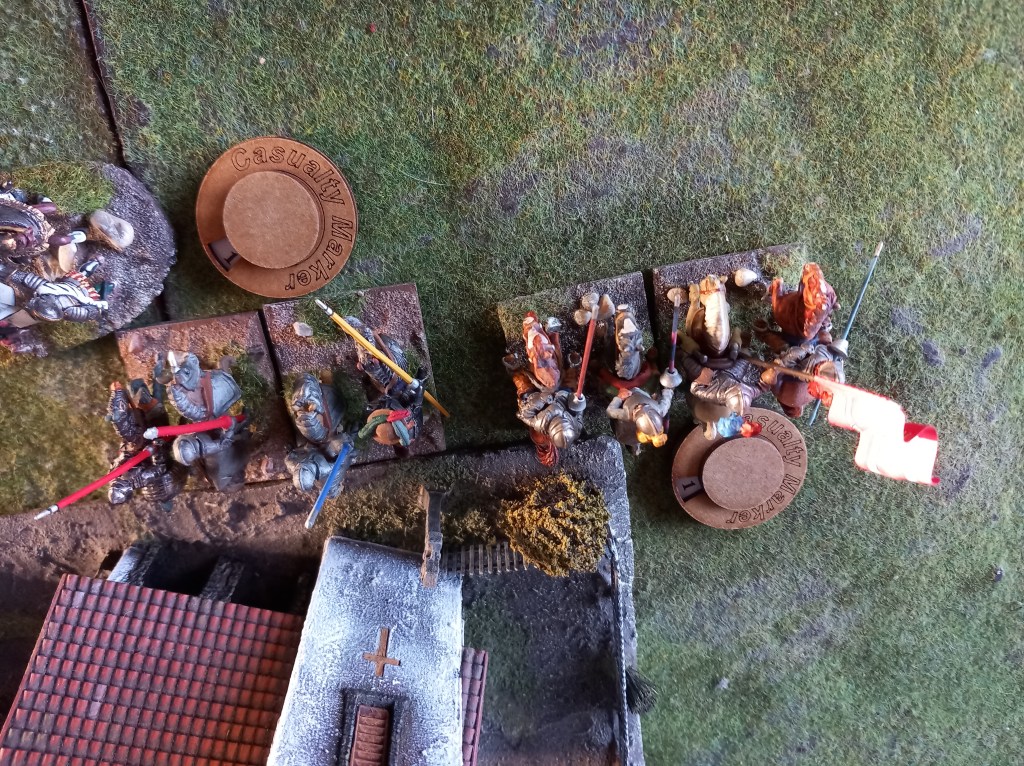
This is a tough ask for the Huguenot player and our Huguenots made a decent fight of it so well done them.
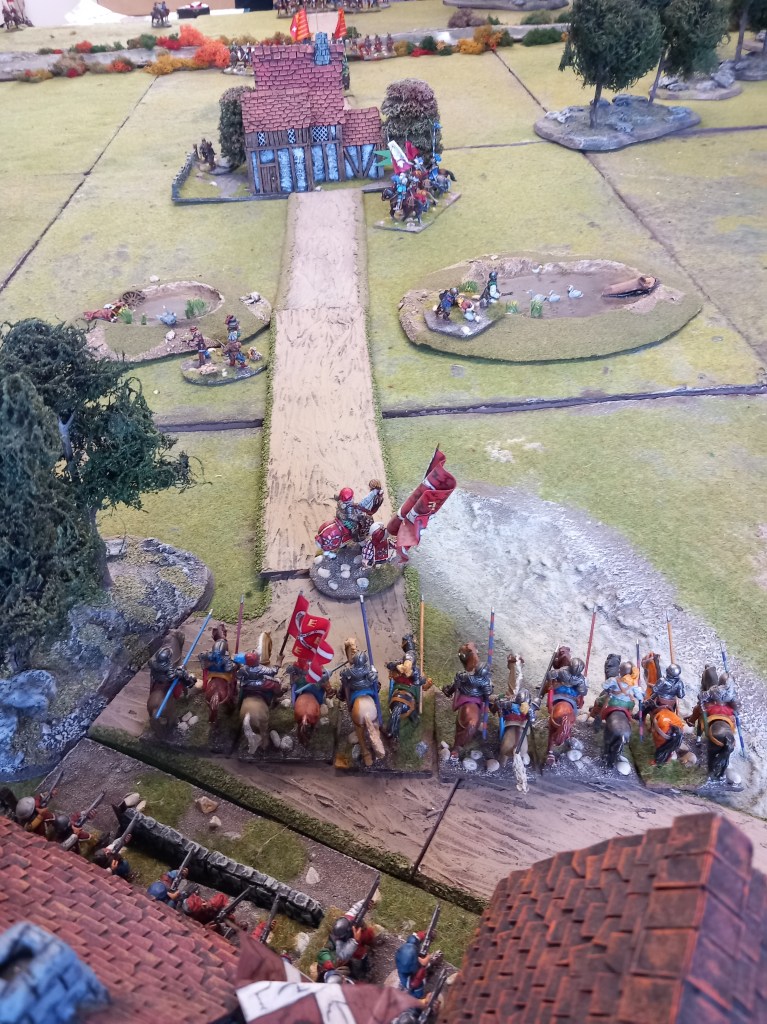
The Wars of Religion vibe had now got a will of its own and so we rolled into the next documented battle, Jarnac 1569, a confused mess which is difficult to unpick.
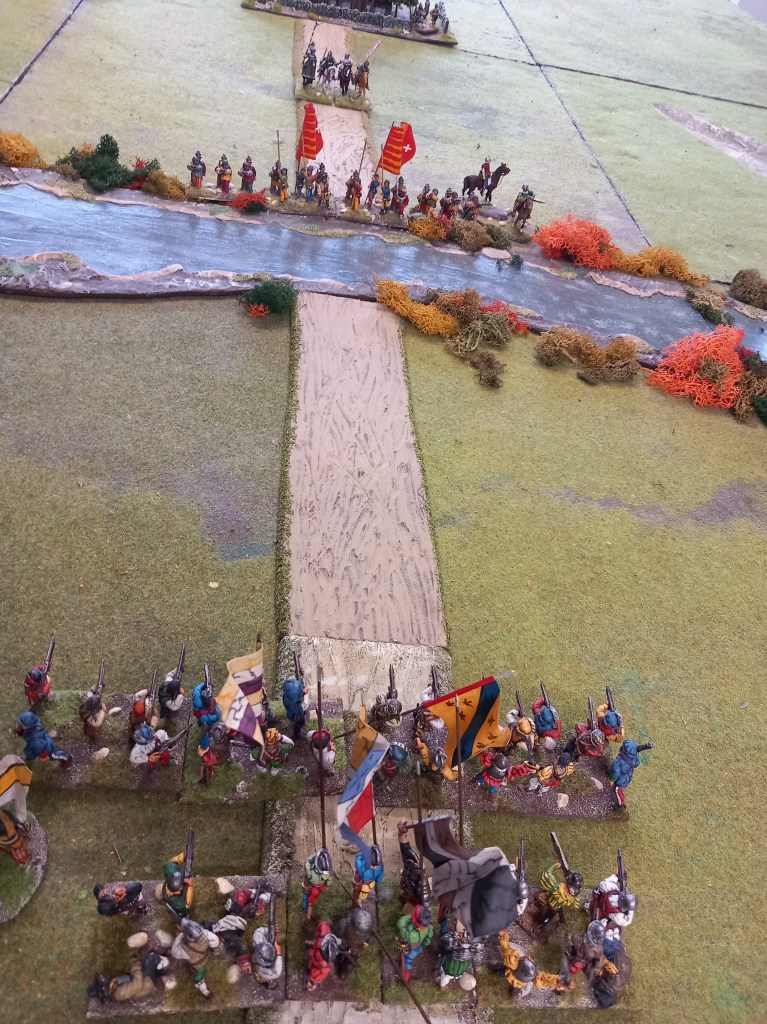
In brief the Huguenots under Conde and Coligny were spread out along a river line trying to prevent the Royalists under Tavannes from crossing but failed and their position was turned. This left Coligny with his half of the army spread over three villages and the only defensible point a marshy stream being approached by the Royalist advance guard. The ensuing battle saw the Huguenots defend the stream against superior numbers of Royalist foot until outflanked by cavalry who found a crossing point upstream. The fight then rolled back to the next village, cornettes of Huguenot cavalry were committed piecemeal to stem the flow and were swept away as the Royalists committed more cavalry to the fight. Ultimately the Huguenots were back at the third village as Conde arrived with the other half of the army. This completed what chose to call Jarnac part one and fought as our next game.
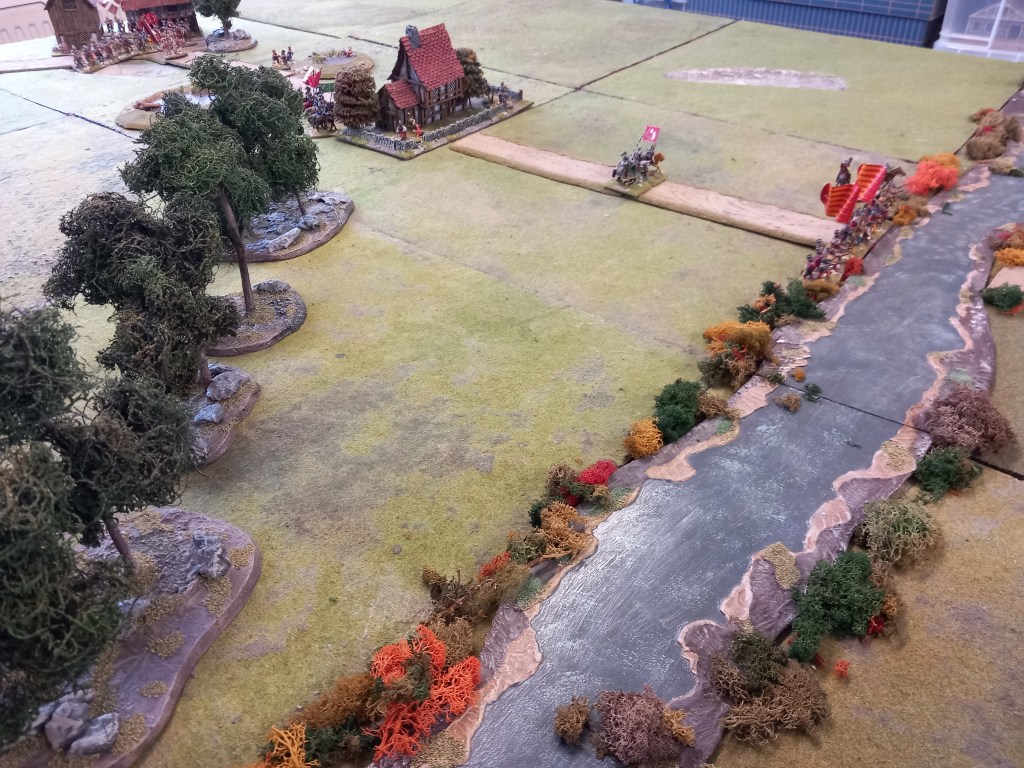
Our refight was as close as we could get to the small numbers of the original. A regiment of Huguenot shot defended the stream facing off to twice their number advancing on them. Behind them were a couple of cornettes of cavalry, then a village with enfants perdus, then some more cornettes, then the last village with a full body or horse and foot. Besides the foot facing across the stream the Royalists had a body of horse poised at the designated crossing point and then 3 regiments of reiters ready follow on at a predetermined point but who might arrive early on a random die roll – they didn’t.

The early moves saw the Huguenots do as well as their historical prototypes and hold off the larger Royalist force (above) – this was helped a bit by the Royalist player keeping one unit behind the other and not expanding out to one side to get more shots in.
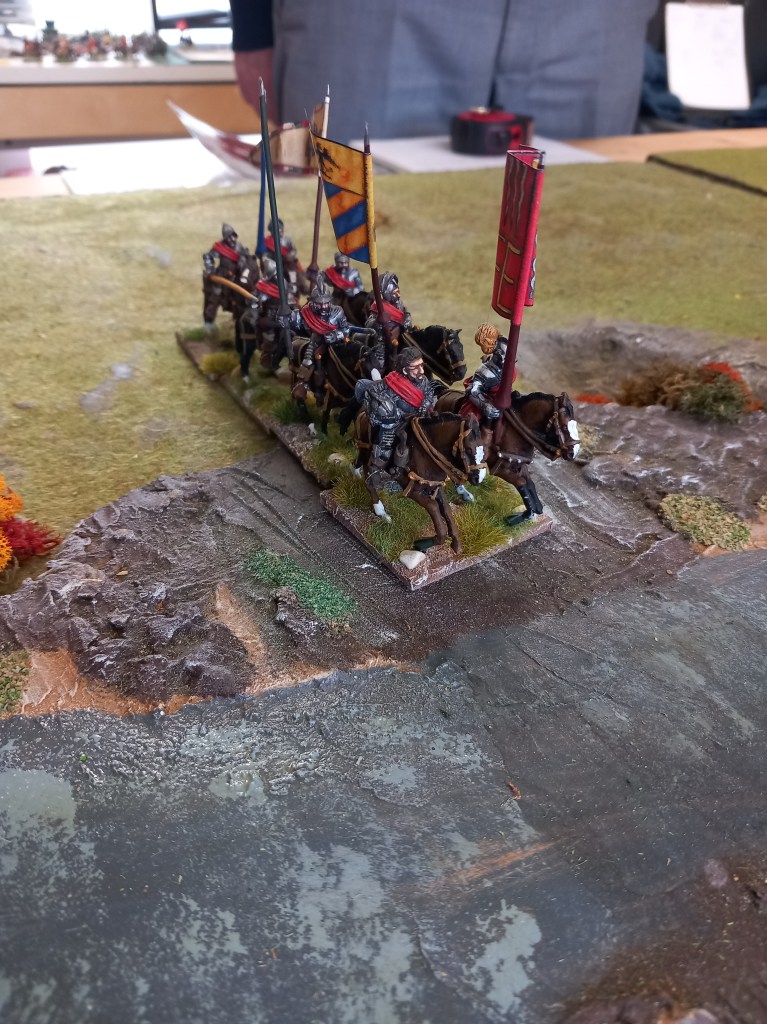
The Royalist horse under de Guise crossed the stream and now the Huguenots were aware.
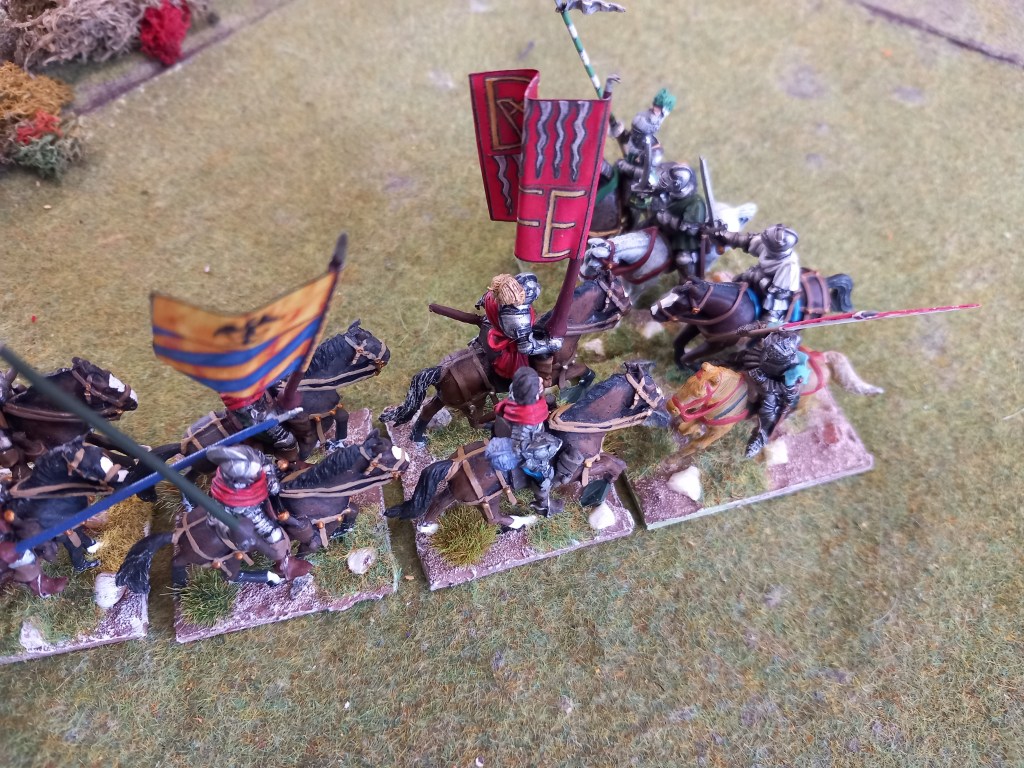
Partly due to luck and partly due to Royalist lack of concentration, de la Noue’s Huguenot horse caught de Guise in column and sent his force reeling back across the stream.
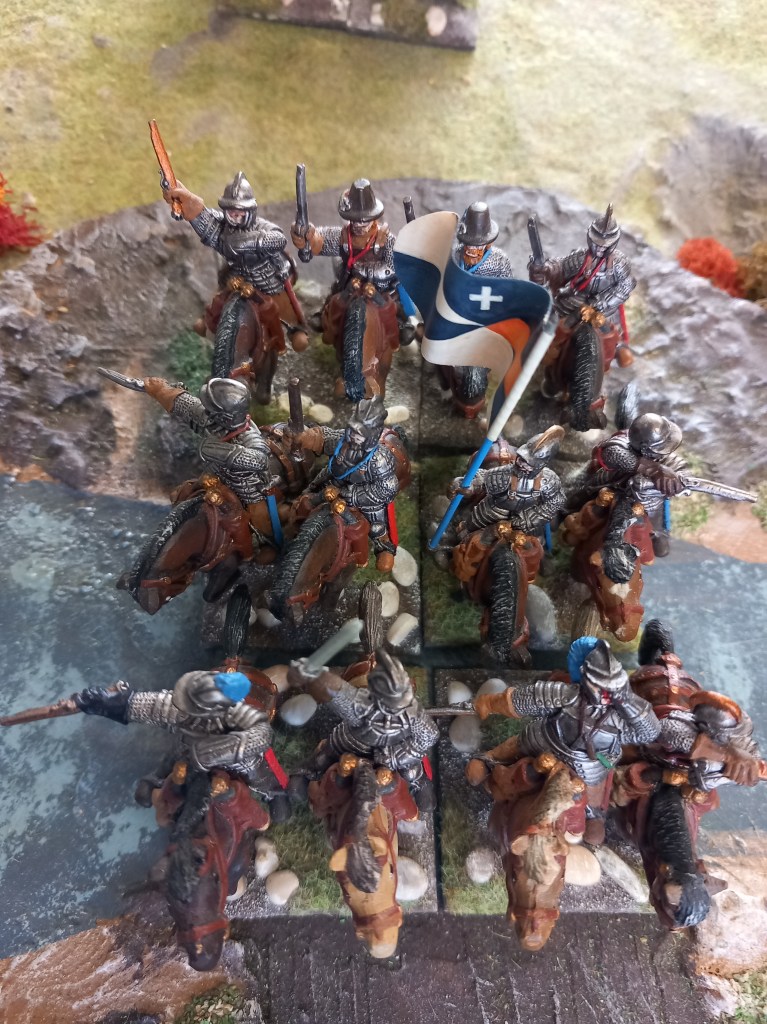
As de Guise was sent packing on came the reiters.
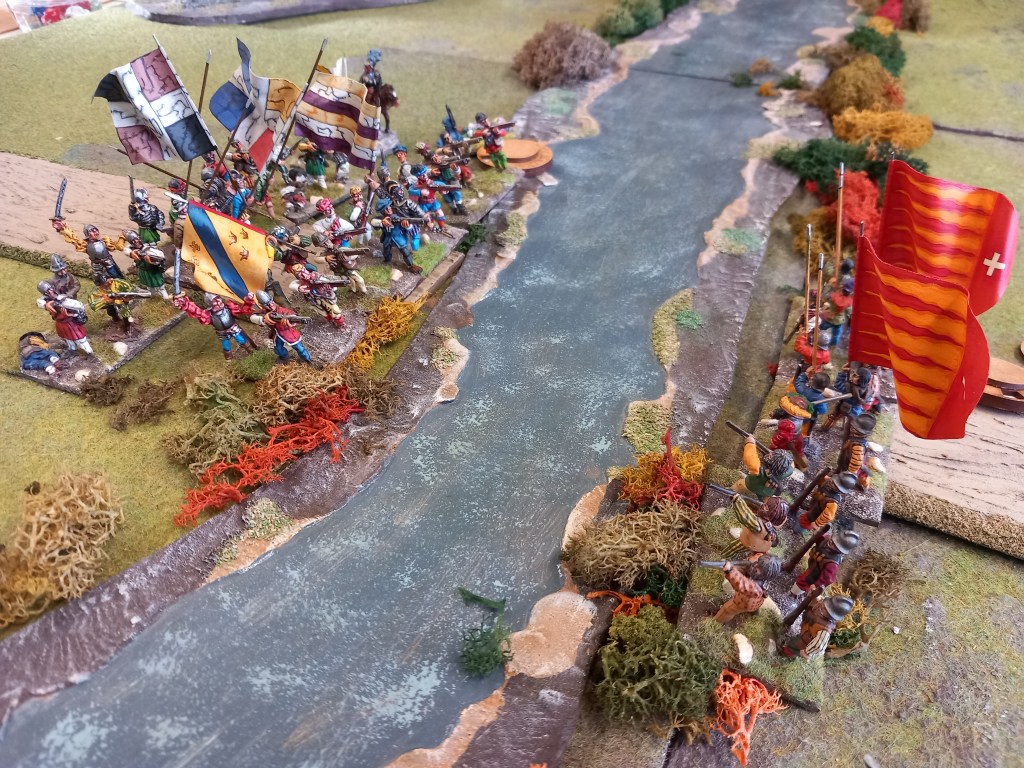
The fight at the stream went on with both sides losing regimental colonels.
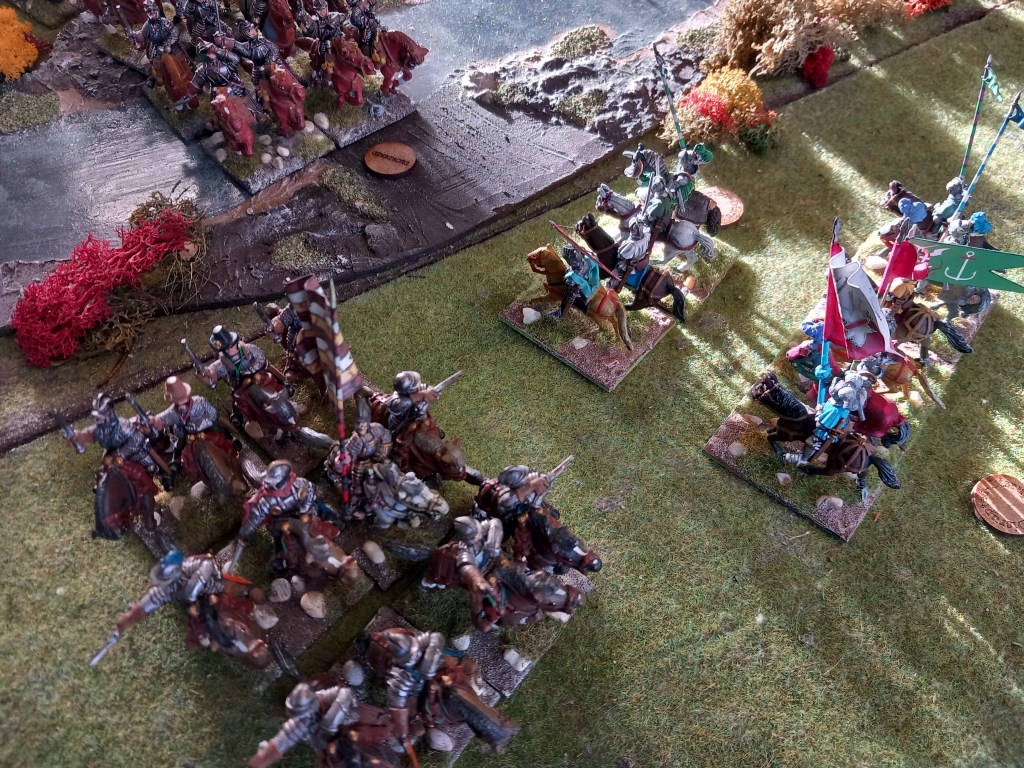
At the stream de la Noue is reinforced by d’Andelot. Who will prevail, lance or pistol?
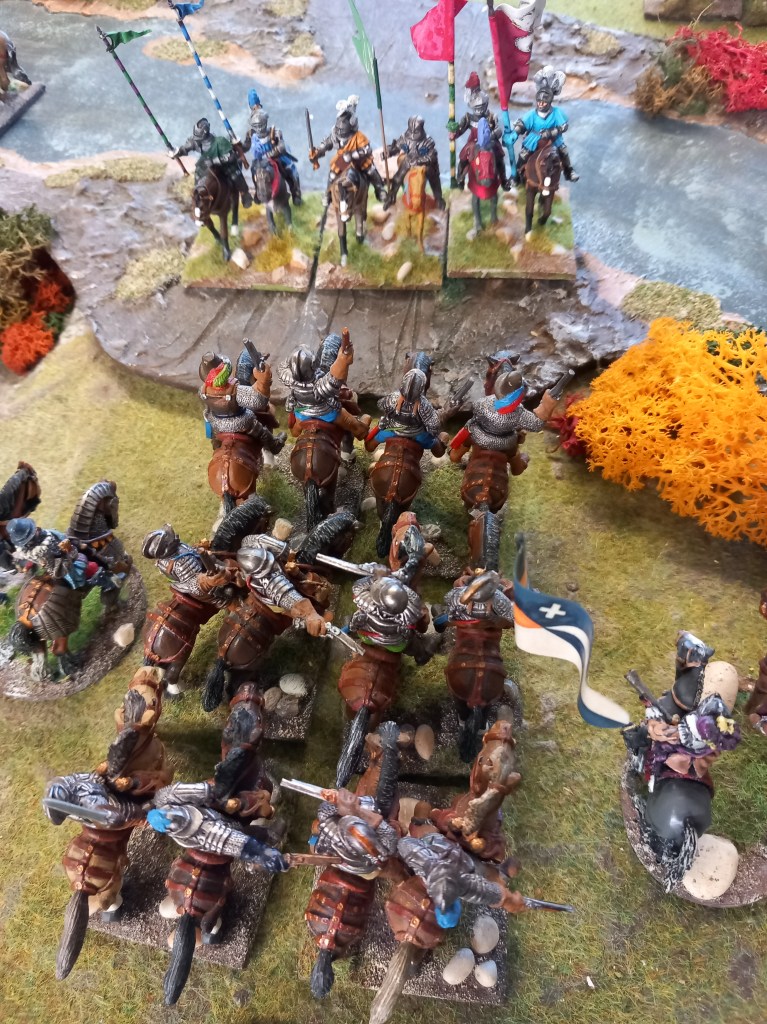
De la Noue and his cornettes are shot to pieces but d’Andelot presses his attack.

One of the reiters are stopped but d’Andelot is forced to retire.
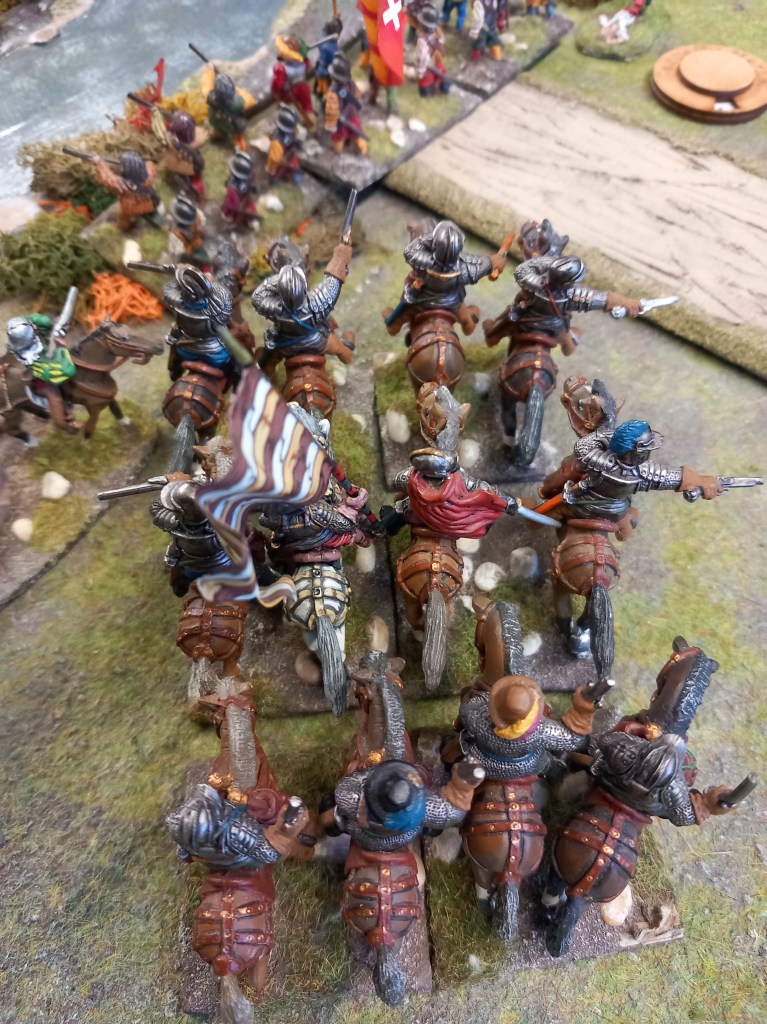
One of the reiters that got through shoot up the foot at the stream.
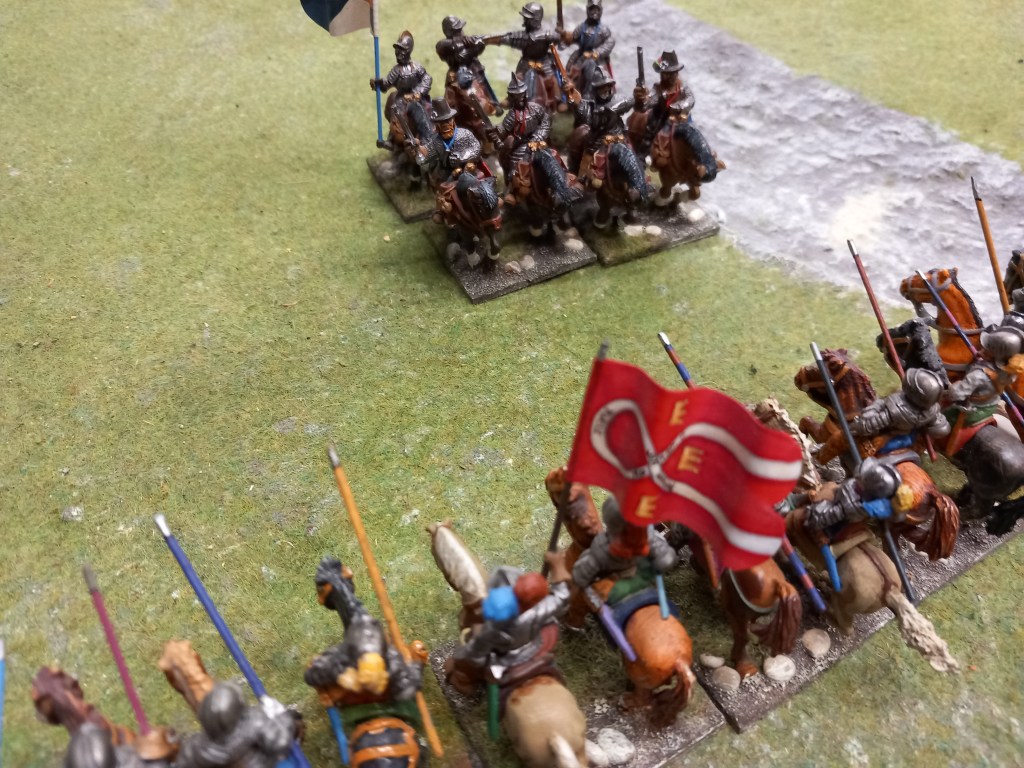
The second (and somewhat reduced) reiters ride forward to be confronted by Coligny’s full regiment. I think we know how this is going to end….
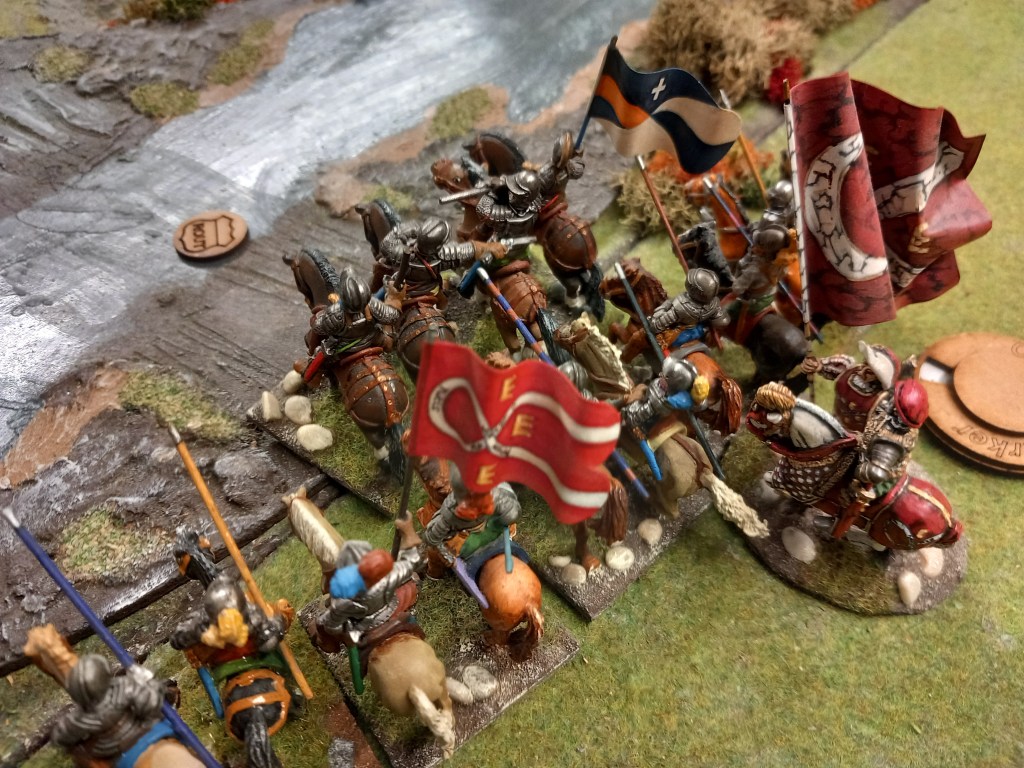
Yep. Coligny sweeps away the reiters.

The Royalist advance is stopped. Losses will be adjudicated for part two.
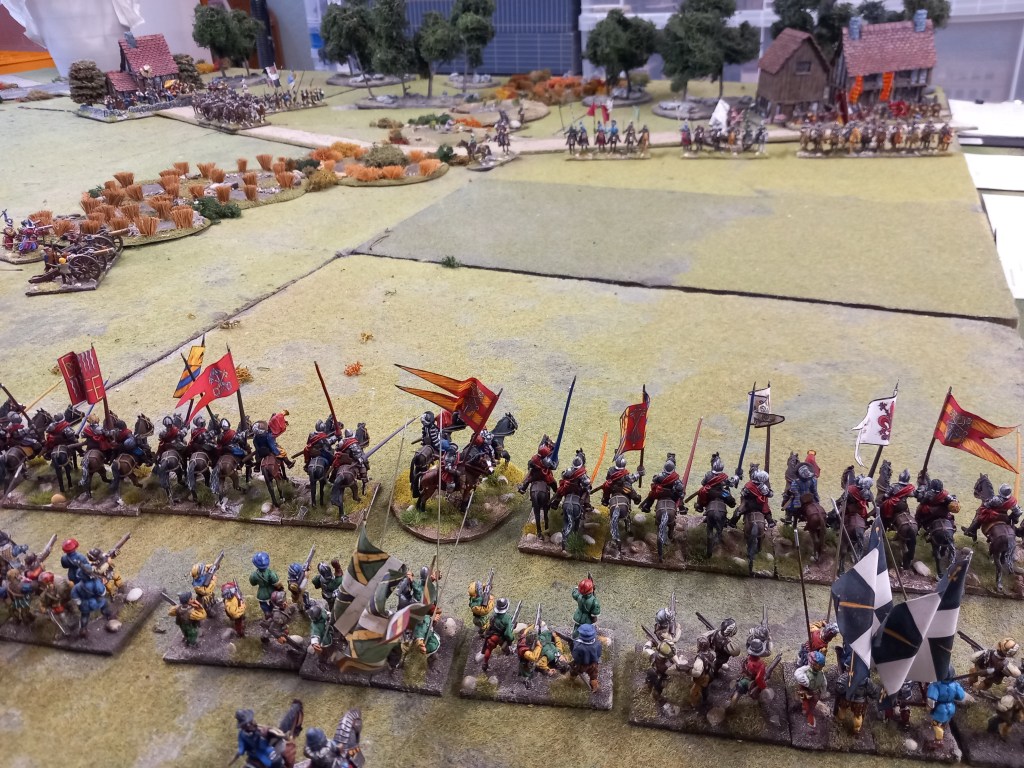
In the historical version of what we called Jarnac part two (essentially later that afternoon) the battlefield had swung 90 degrees with the Royalists advancing in a wide arc from their crossing point and the Hugenots conforming. This left Coligny and Conde with 3 bodies of horse facing around three times their number in Royalist horse backed by several regiments of foot, the royal swiss and artillery while their own reduced infantry defended a line of swamps and ponds off to their right against the reiters. Just like Saint Denys the Huguenots attacked with massively inferior numbers but this time it went very badly, they got through the first line but the royalist infantry held firm giving time for the reiters to sweep onto the flank. In the confusion Conde was killed and the Huguenots extricated themselves as best they could.
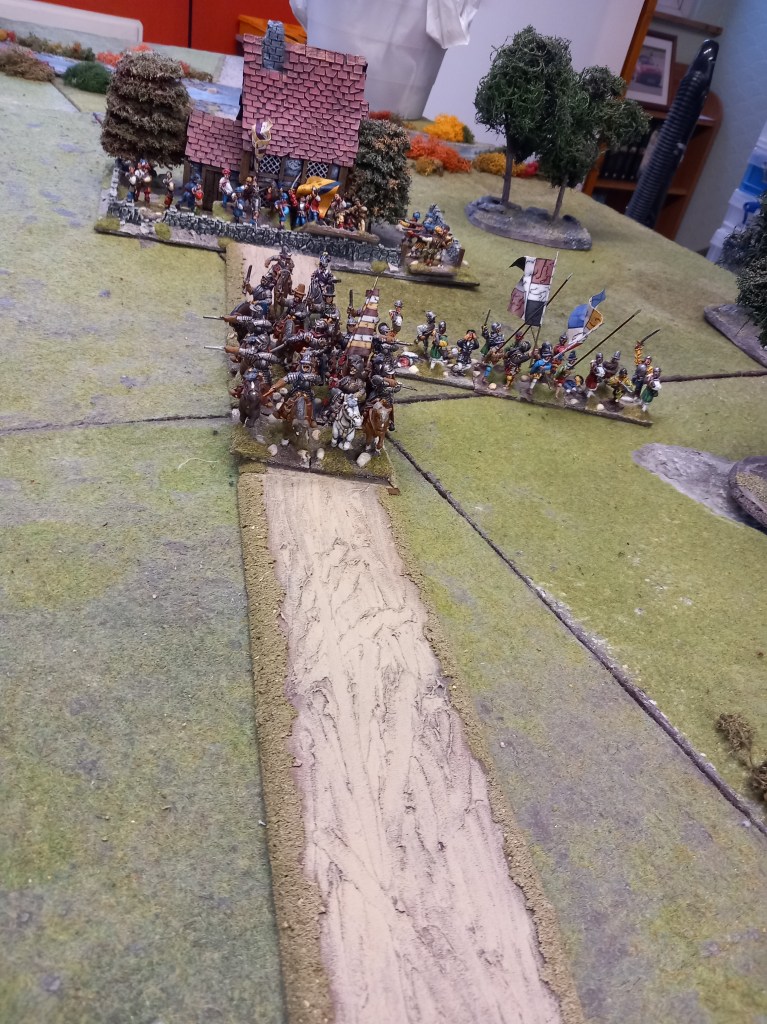
In our refight the royalist flanking force was much reduced and this made a significant difference to their contribution, also the numbers of royalist horse were down, all a reflection of part one.
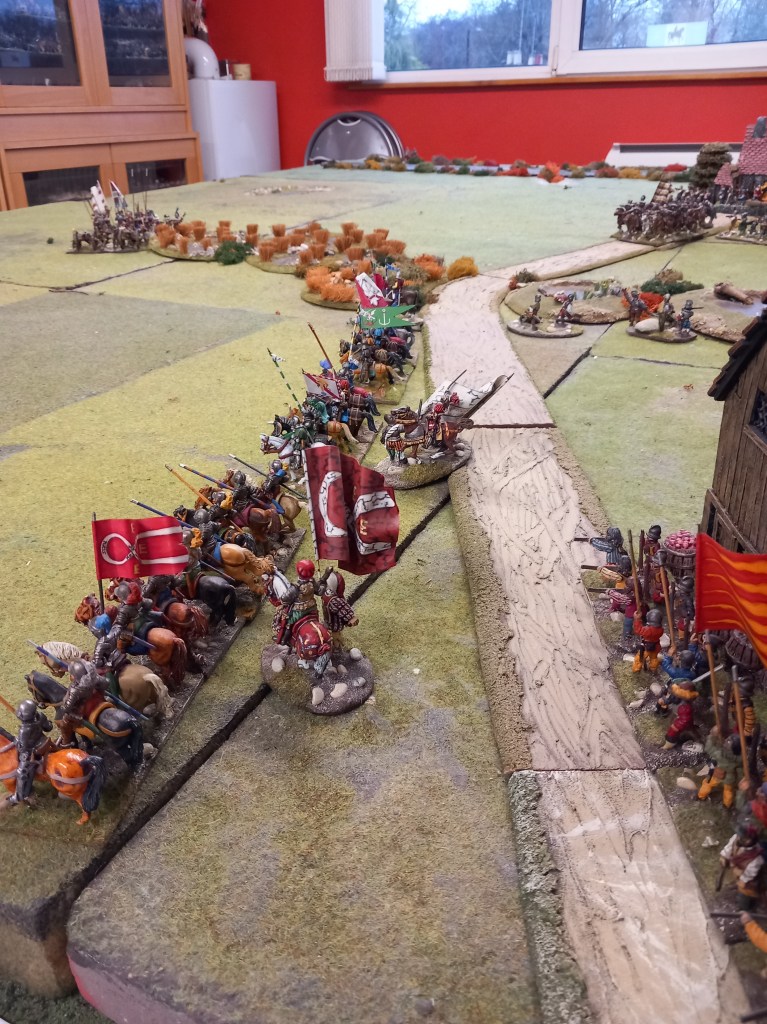
As our refight kicked off the Huguenots rather surprisingly turned about and retreated back across the road, reasoning that it would enable one of their units to face off to the advancing reiters and give the royalist cavalry more ground to cover before they got to grips.
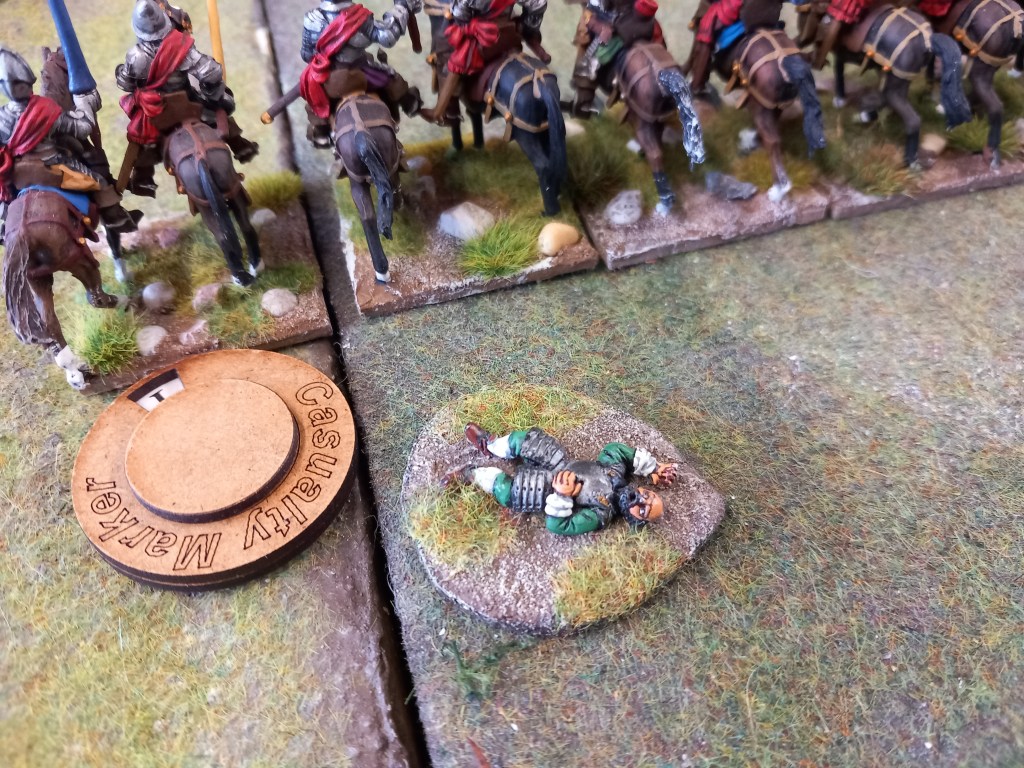
The opening moves didn’t go well for the royalists; the Huguenots used some of the enfant perdus defending the ponds to take pot shots at their cavalry and managed to shoot oth Montpensier and d’Anjou out of the saddle essentially halting those units for a brief while and buying the Huguenots time – they were very lucky shots!
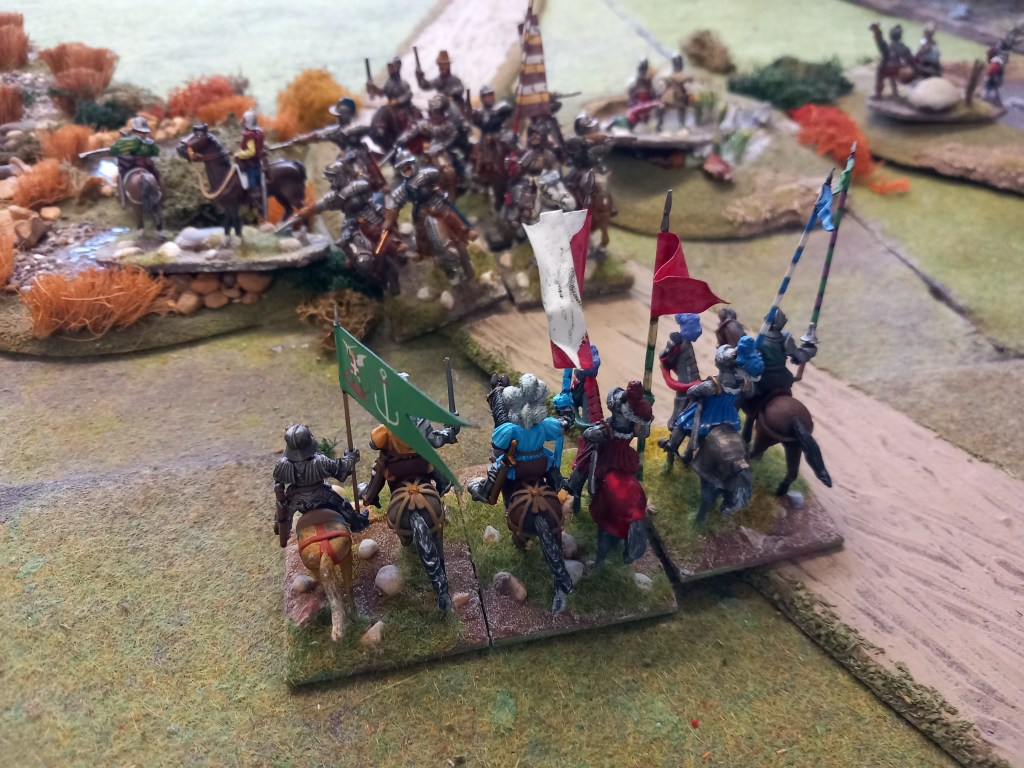
Out on the Huguenot right flank Montgomery’s horse stalled the brave breakthrough by the royalist reiters, three regiments might have been a very different story 🤨
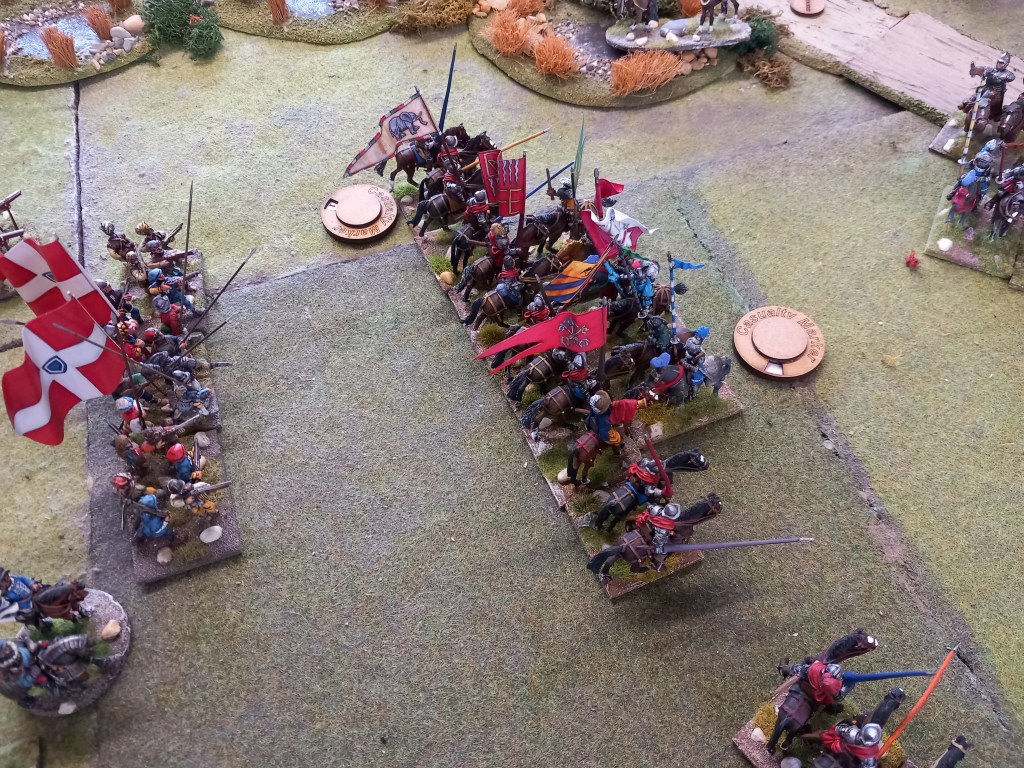
In the centre the main bodies of horse clashed.
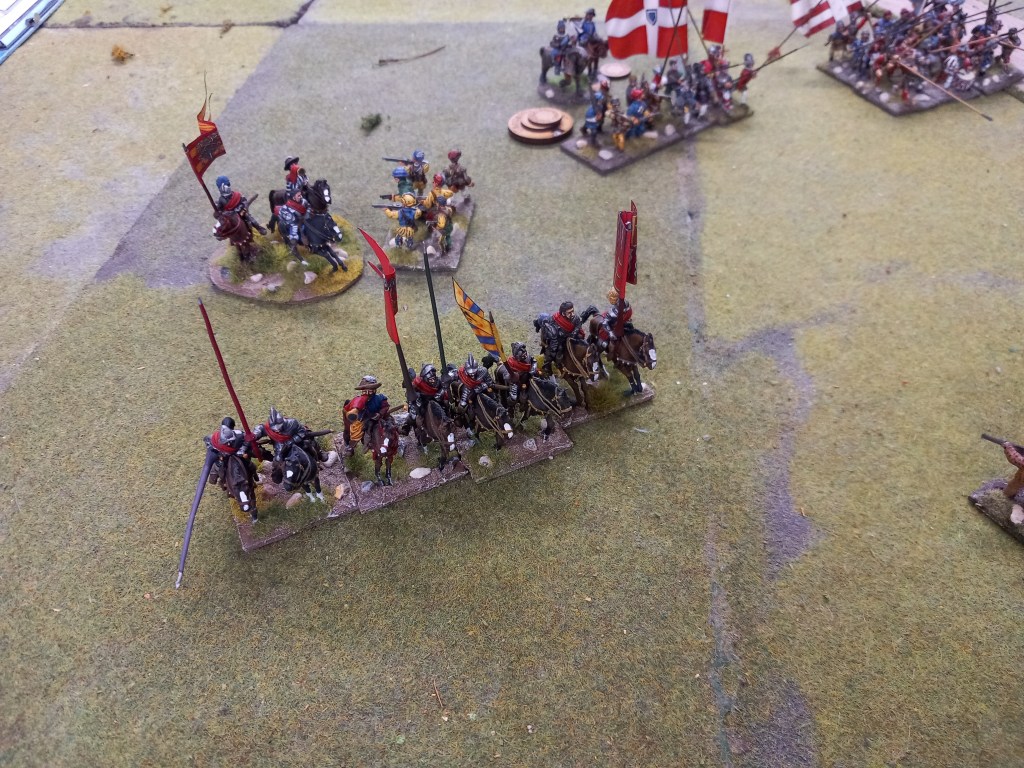
Numbers told for the royalists.

The advance of the Swiss ended it for the Huguenots.
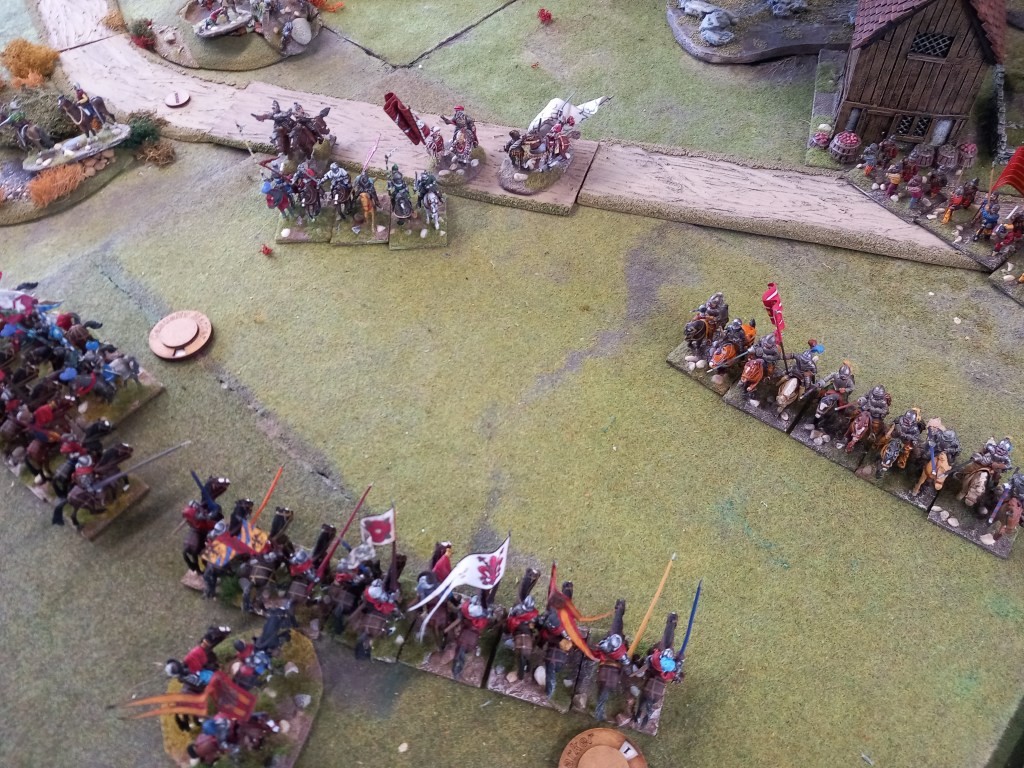
I think we’ve killed off our Wars of Religion mania for a while now but it was a very useful experience for me at least. It reawakened my love of the period and has spurred me on to rework the rules in the light of new research and better ideas of how to play; a new year resolution before the year was out 😂🤣
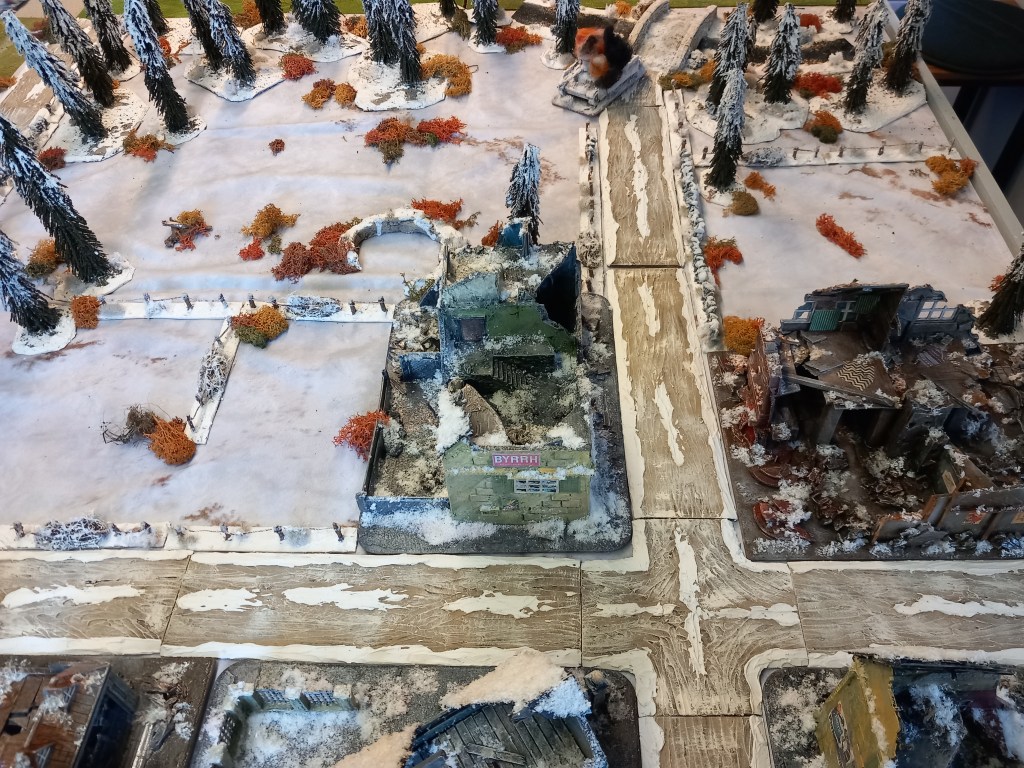
In between the Wars of Religion mania we managed to experience a WWII skirmish game, rather appropriately using our snow covered Ardennes terrain.
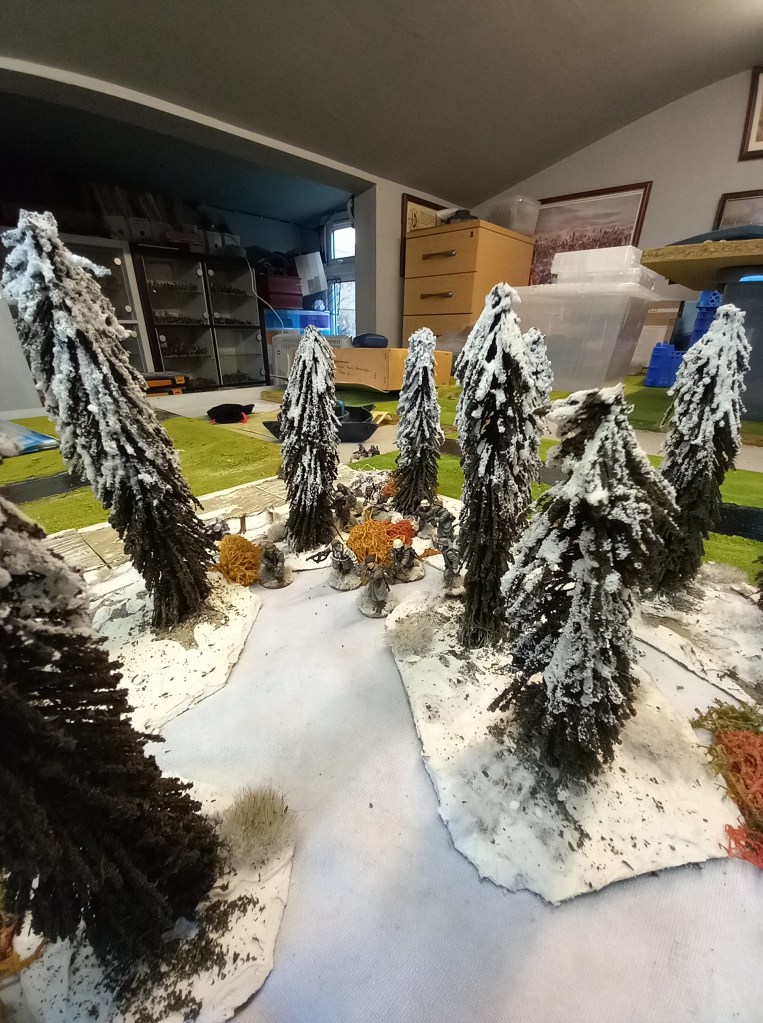
Three squads of Americans were holding a crossroads unaware of an advance by two reinforced German squads.
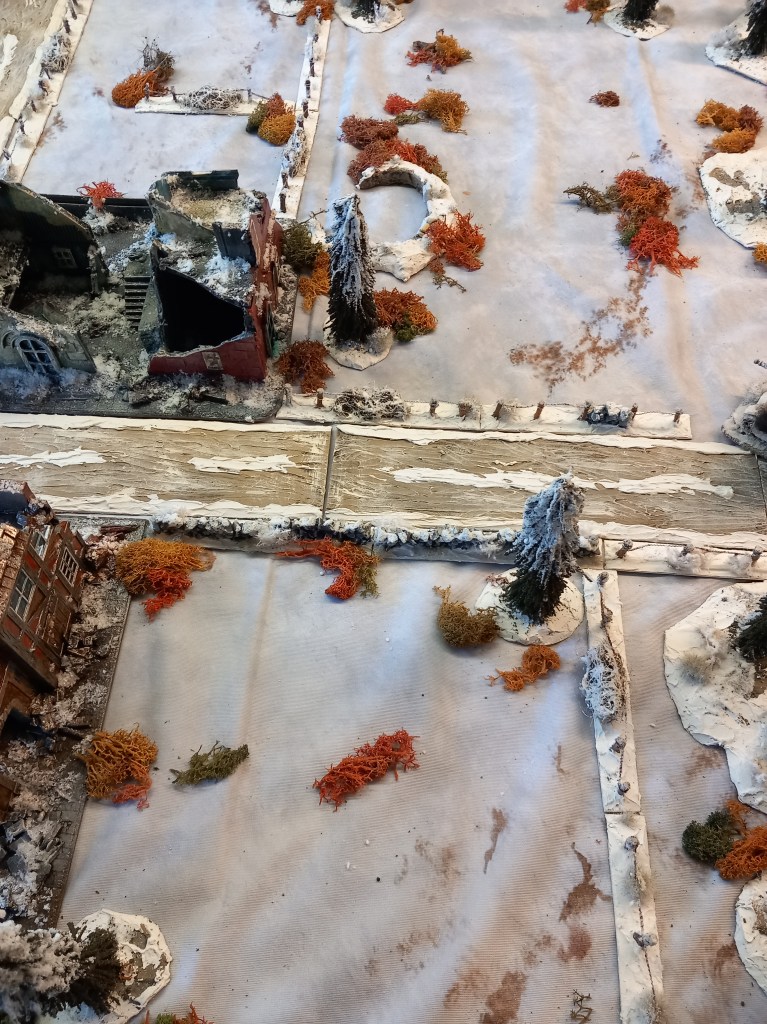
The Germans had several rounds of off table mortar fire to plot prior to the game commencement and the Americans had three minefields that could be laid. Neither did a damm thing 😂🤣
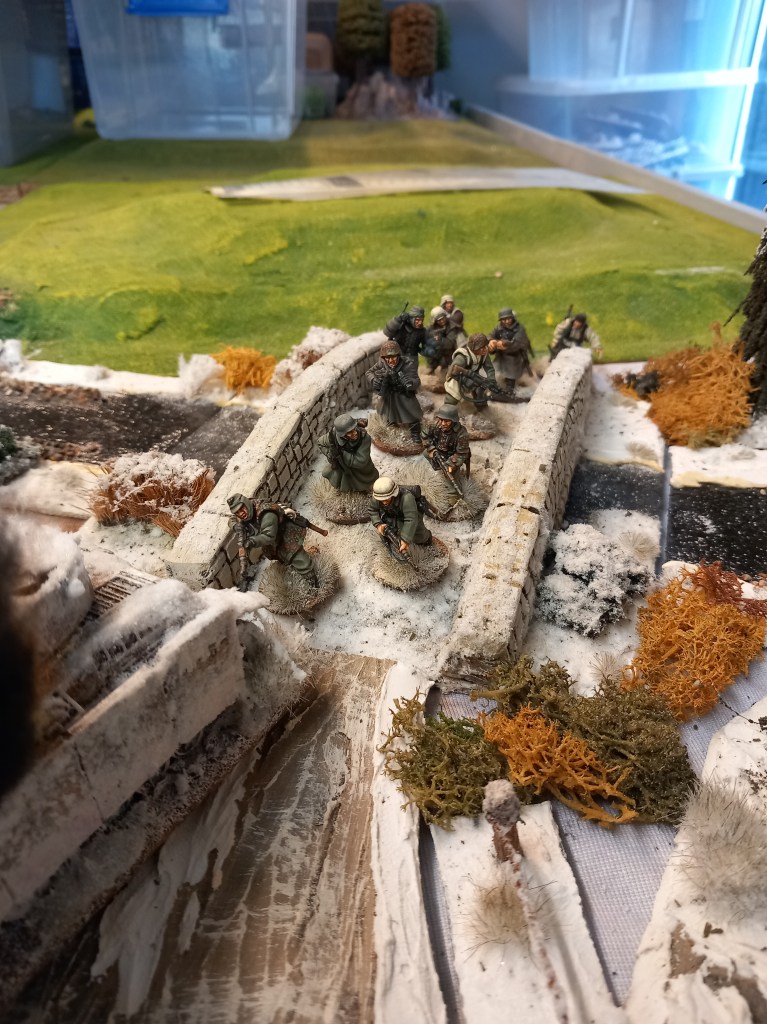
The Germans approached by two routes north of the American positions, one over a bridge and into a wood, the second through the main wood and out onto the road flanking the American position.
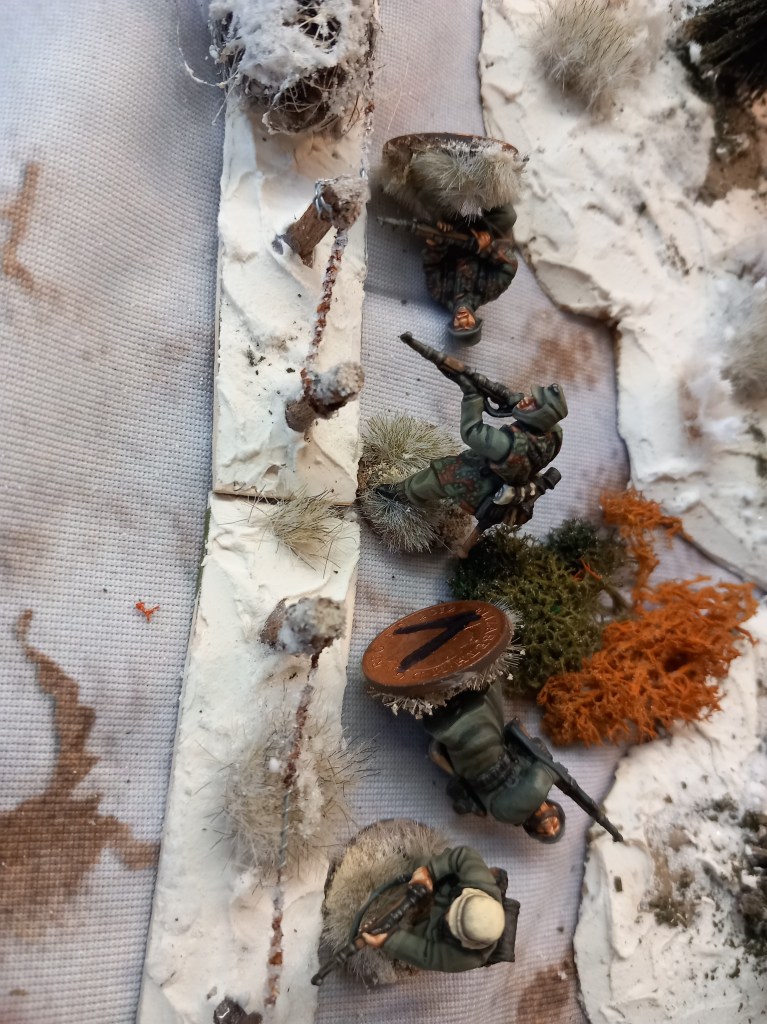
Caution was the name of the game until it wasn’t. The Germans had to advance and used as much of the cover as they could, the Americans waited and when they did open up it was only with a single man to start so as to draw the Germans out and then open up fully.
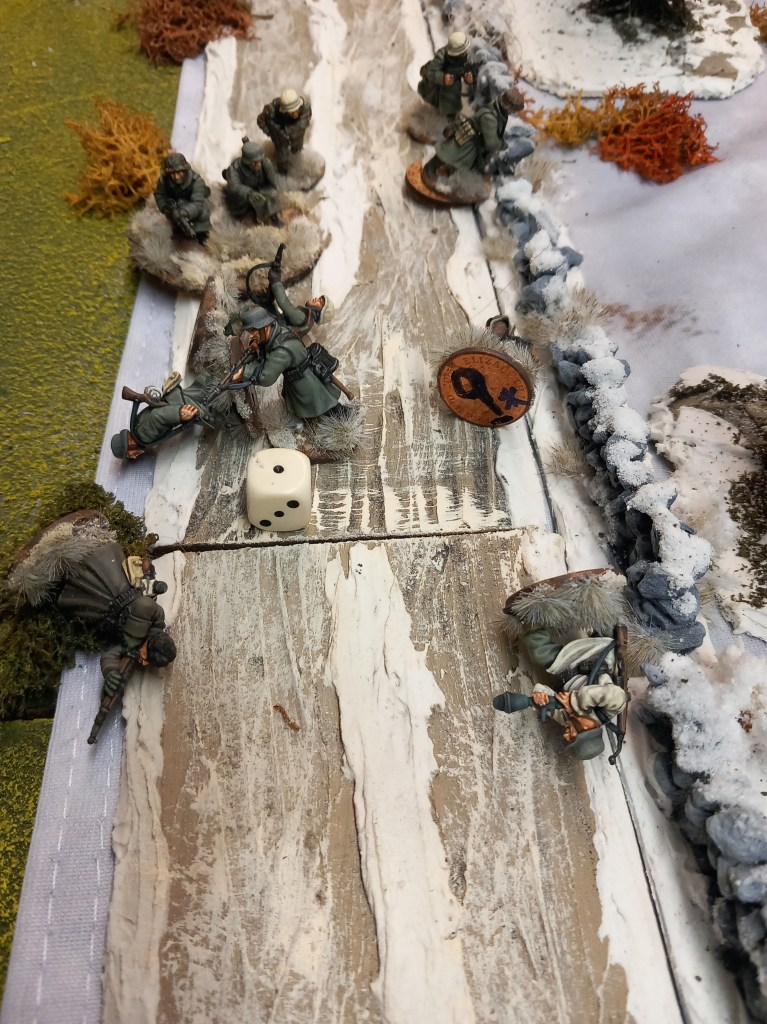
The German advance down the road nearly worked except that as a last minute deployment whim the American player had deployed a sergeant with a Thompson forward in a stand of trees mainly to observe and what a gift a column of infantry presented. Merry Christmas!
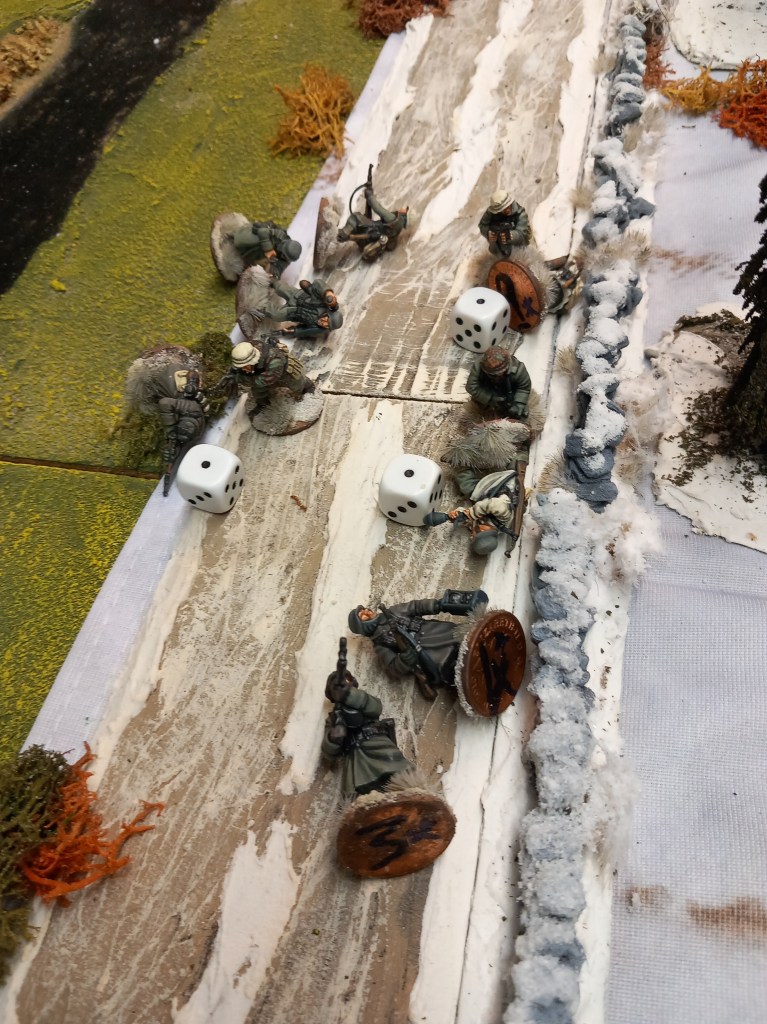
Then it just got worse as a fire team down the road joined in.
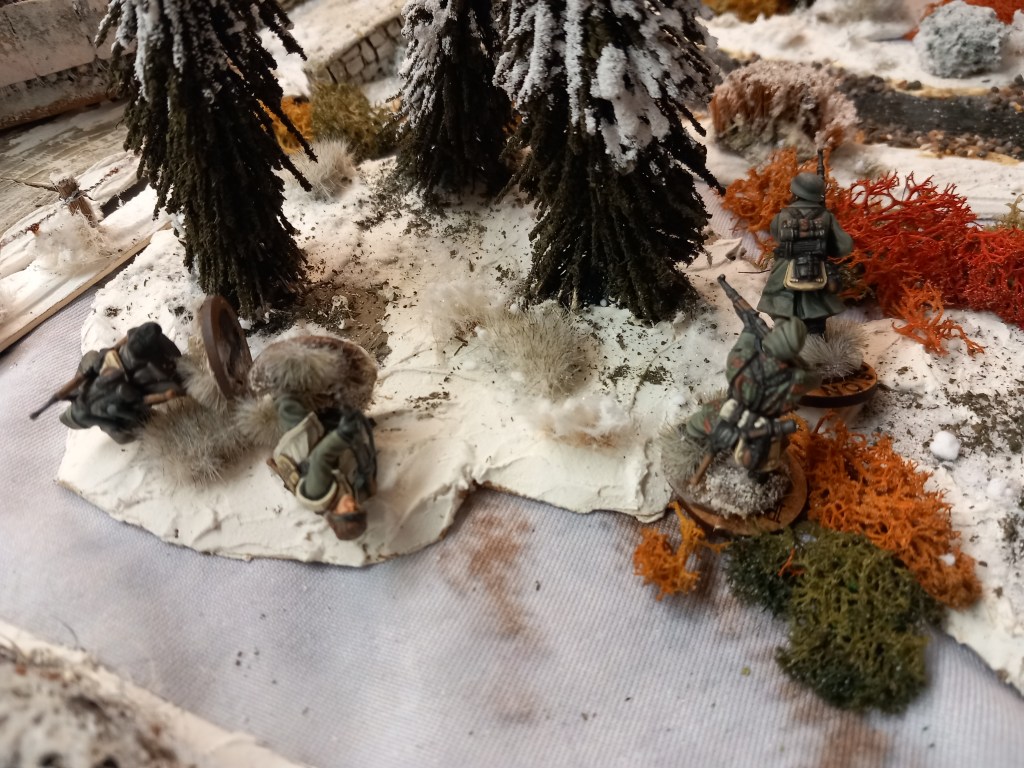
It was officially a German disaster. Next time look before you move 🙄
And that was the month and the year over. No real hobby work done during this month, too many distractions but back into it next year. So it remains to wish everyone who reads this a Happy New Year and see you in 2026.
 Westbury Wargamers
Always like to see your wars of the religion battles.
LikeLiked by 1 person
Thanks very much. Going to take a break for a little while to allow me to do some rule updates.
LikeLike